





© ROOT-NATION.com - Use of content is permitted with a backlink.
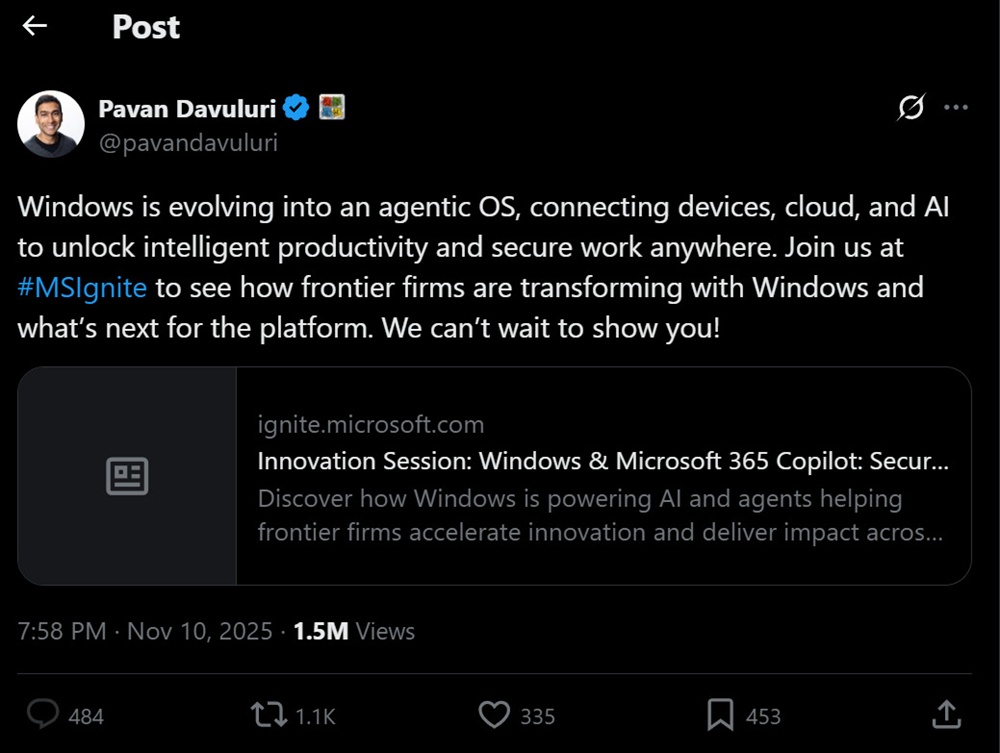
Today, let’s talk about whether Windows has any real chance of becoming an agentic operating system – and what that would actually mean for an average user. We first heard about the possibility of Windows evolving into an agent-driven OS from Pavan Davuluri, the head of the Windows division at Microsoft. His statement triggered a wave of reactions from users – some positive, but mostly negative.
Read also: Instructions, Guides, How To for Windows
Let’s figure everything out.
TABLE OF CONTENTS:
A new revolution ahead?
We’re used to thinking of operating systems as a basic software environment that allocates computer resources, manages hardware, and ensures that applications run properly. But today, this traditional model is rapidly losing relevance. With the rise of autonomous agents, local AI models, and increasingly complex automation systems, the OS is no longer just a “middleman” between the user and the hardware. It is turning into an active participant in the digital ecosystem – an intelligent platform capable of acting, analyzing, and making decisions.
In this context, Windows – as one of the largest and most influential platforms in the world – is increasingly being seen as a candidate for becoming a fully agent-based operating system. Not just a shell, but an environment where autonomous applications, agent services, and local AI models can work together, complement each other, and perform complex multi-step tasks without direct user involvement.
This approach opens the door to a new stage in Windows’ evolution – from traditional process management to the integration of intelligent services: automated workflows, self-learning tools, preventive security systems, and personal agents that understand context and initiate the necessary actions on their own. Essentially, this is about transforming Windows into a platform where traditional applications coexist with autonomous digital “assistants,” and the OS itself becomes the coordination hub of this agent ecosystem.
The Concept of an Agent Operating System
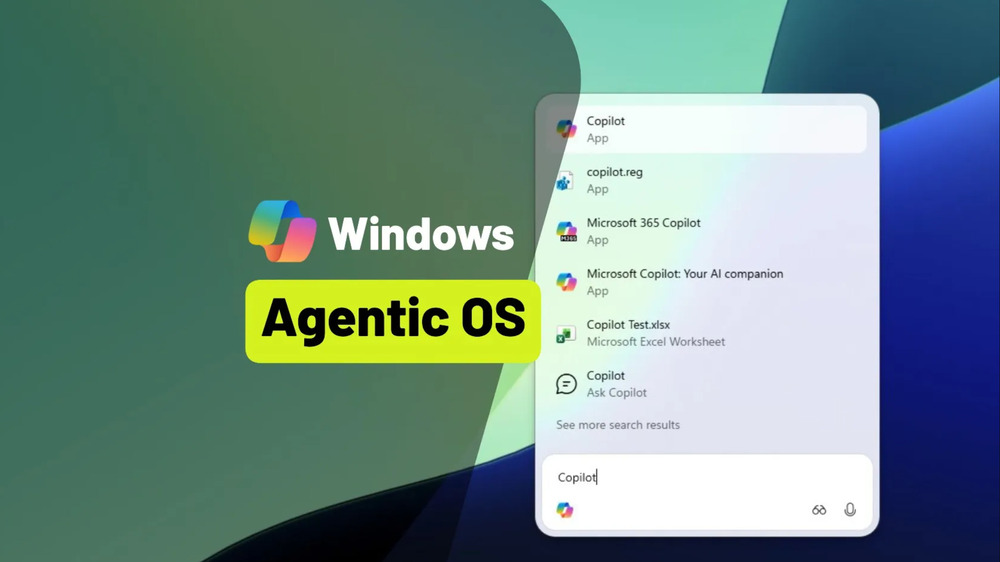
An agent operating system (AOS) represents a new stage in the evolution of computer platforms – a system where the OS stops being a passive resource manager and becomes an active participant in the digital process. Such a system doesn’t just respond to user requests – it can initiate actions, coordinate processes, and create an environment in which traditional applications, services, and autonomous agents operate as a single intelligent mechanism.
Key features of an AOS include:
- Autonomous task execution based on context, user behavior, and system priorities. The OS determines the optimal moment and method for carrying out an action on its own.
- Inter-agent interaction, which allows applications and devices to exchange data, synchronize actions, and form a distributed network of collective intelligence.
- Analytical decision-making – the system processes data, compares scenarios, and can choose the most efficient action without direct user involvement.
- Learning and adaptation, where the OS gradually improves its own algorithms, optimizes resource usage, and adjusts workflows to match the user’s working style.
In such an environment, the operating system ceases to be merely a platform for running programs – it becomes an intelligent coordinator that manages an ecosystem of digital agents.
That’s why Windows is increasingly viewed today as a foundation for building a hybrid agent-based infrastructure. Its classic architecture – which for decades has been a benchmark of compatibility and scalability – is gradually being supplemented with modular AI components, local models, and autonomous services. As a result, what emerges is not just an operating system, but a platform capable of combining the familiar user experience with a new level of agent autonomy.
Read also: 5 Windows 11 Settings You May Want to Disable Right After Buying a Laptop
Windows and Modern Agent Technologies
Microsoft is gradually but consistently building a foundation within Windows for a true agent-based ecosystem. This goes beyond adding isolated AI features; it represents the development of an architecture in which the operating system itself acts as a coordinator for autonomous processes, services, and digital assistants.
Cortana to Copilot: Evolution from Voice Assistant to Multi-Level Agent
In its early stages, Cortana functioned as a traditional virtual assistant. With the introduction of Microsoft 365 Copilot, however, the paradigm shifted: the AI no longer simply “assists” the user – it integrates into workflows, generates content, analyzes data, and suggests optimal actions across applications such as Word, Excel, and Outlook. This represents the first systemic layer of agency in Windows: a tool capable of performing certain tasks on the user’s behalf and proactively initiating solutions.
Power Automate: Building User-Defined Robotic Agents
Power Automate is a key component in the development of a future agent-oriented OS. It enables the creation of complex workflows connecting local and cloud services, effectively forming chains of autonomous “robots” that carry out routine or multi-step tasks. In a traditional OS model, such workflows would be implemented as scripts or macros. In this new approach, they function as full-fledged agents capable of operating independently of the user and scaling across large work environments.
WSL: Integrating Linux Agents into the Windows Ecosystem
The Windows Subsystem for Linux (WSL) allows the platform to run Linux-oriented services, scripts, pipelines, and agent applications without the need for virtual machines or dual-boot setups. This significantly expands Windows’ capabilities as an agent-based platform:
- Linux automation tools can be executed directly.
- DevOps agents can be connected seamlessly.
- Monitoring and machine learning systems can be integrated without rewriting them for Windows.
Effectively, WSL transforms Windows into a hybrid agent environment, capable of combining the ecosystems of two distinct operating systems.
Edge, Azure, and AI-Powered Computing: Cloud Infrastructure for Agency
The integration of Windows with Microsoft Edge and Azure adds another strategic layer of agent capabilities. Azure already supports autonomous AI agents for:
- Security and SOC analysis
- Infrastructure optimization
- Load forecasting
- Enterprise automation
Through Edge and Azure cloud modules, Windows can delegate complex tasks to the cloud, forming a distributed agent system: local device → cloud → enterprise services.
Read also: All About the New Windows 11 25H2: Not a Revolution, but Stability?
Key Facts and Trends
Microsoft is steadily transforming Windows into a platform where AI is not an “add-on” feature but a structural component of the operating system. Regular updates enhance the integration of Copilot, local AI models, and OpenAI-based tools through Edge, further embedding intelligent capabilities into the system.

As a result, Windows increasingly functions as an intelligent coordinator, one that not only responds to user actions but also analyzes context, optimizes tasks, and can initiate actions autonomously.
Agent Interaction with Applications and Services
Modern Windows APIs, Microsoft 365, and the Graph API ecosystem already enable the creation of autonomous digital agents that interact with documents, corporate databases, email, calendars, and internal business processes. Effectively, users can build mini-ecosystems of personal agents that handle repetitive or strategic tasks without manual intervention. This goes beyond traditional automation, representing a form of operational delegation to the system, similar to what would be expected from a full-fledged agent-based OS.
Autonomous Security as a Core Component of Agency
Windows Defender has evolved beyond traditional antivirus logic. The system now leverages AI models to:
- Automatically detect anomalies and malicious processes
- Analyze application behavior in real time
- Autonomously block threats
- Generate dynamic security recommendations
This establishes a fully functional security agent that operates independently of the user, making decisions based on data rather than static signatures.
Read also: Microsoft Ends Windows 10 Support: Is There Life After the End?
Prospects for the development of Windows as a full-fledged agent OS
Deeper AI Integration at the Kernel Level
In the coming years, Windows may shift from a model of “OS + AI add-ons” to an architecture where AI is embedded within the operating system itself. This could involve kernel-level agent modules capable of:
- Predicting workloads and resource allocation in real time
- Dynamically adjusting process priorities
- Coordinating local and cloud-based agents without user intervention
Effectively, Windows would gain an internal “intent controller” that understands user context and optimizes the system proactively, before issues arise.

Scalable Autonomous Workflows
The combination of Power Automate, Copilot, Graph API, and Azure already establishes a foundation for large-scale autonomous systems. In the future, Windows could act as a central orchestrator for agents operating across multiple levels:
- Local automation: documents, files, and applications
- Cross-system workflows: business processes and analytical cycles
- Autonomous infrastructure agents: networks, cloud services, and servers
Together, these capabilities position Windows as a platform for building multi-layered AI ecosystems, where the majority of operations can occur without direct human intervention.
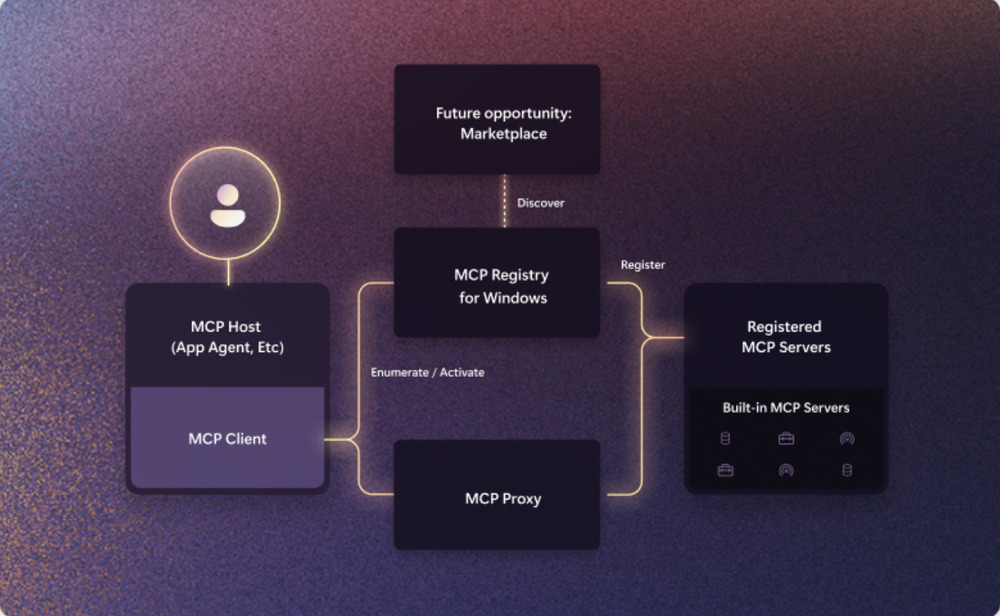
Support for Hybrid and Distributed Agents
Future versions of Windows are expected to function increasingly as both a local and cloud-based OS. In this model:
- Local agents operate on the device with low latency
- Cloud agents handle intensive computations, analytics, and coordination
- The system automatically determines the optimal environment for each agent
This approach enables truly distributed AI structures, positioning Windows as a component within a broader intelligent network.
Ethical, Security, and Governance Challenges
The shift toward agent-based OS behavior inevitably increases the need for transparency and control. Key challenges include:
- Defining the boundaries of autonomous OS actions
- Transparent logging of agent decisions
- Ensuring users can always review and revoke AI-driven actions
- Maintaining data privacy within a hybrid local-cloud ecosystem
Microsoft is already moving toward Auditability & Explainability policies for AI components, but scaling an agent-oriented OS will make these issues critically important.
Windows is showing early signs of transformation into an agent-based operating system, integrating intelligent services, workflow automation, and AI assistants. Current tools such as Copilot, Power Automate, and WSL already allow users to create autonomous processes and agent modules.
The development of Windows as an agent-based OS points toward deeper AI integration, the creation of distributed agent systems, and autonomous resource optimization, making the platform more adaptive and intelligent. At the same time, the importance of ethical and security mechanisms is growing to ensure control and transparency in agent operations.
Read also:
- Windows 11 Open Source: Myth or Reality?
- How to install and use Windows without a key
- Power saving modes in Windows 11: Which one to choose?

