





© ROOT-NATION.com - Use of content is permitted with a backlink.
While I generally prefer in-ear headphones, particularly true wireless (TWS) models, full-size over-ear designs still play a role in my daily use. In this review, we’ll look at the Kiwi Ears Ardor – a versatile device that supports both Bluetooth and wired connections. At first glance, it may seem like a straightforward model with standard features, but it has some notable characteristics that set it apart. After testing, I decided to keep it for my own use. Let’s examine its details to see whether it’s a product worth considering.
Read also: Kiwi Ears Airoso Review: 5-driver IEM Headphones for Audiophiles at an Affordable Price
TABLE OF CONTENTS:
Why I plan to use Kiwi Ears Ardor
A compact wireless TWS headset is my go-to audio device for mobile use outside the home – currently, the Huawei FreeBuds Pro 4 serves as my daily driver. However, when I’m gaming or working at my desk, I prefer large over-ear headphones. Most of the time, I use them with my laptop – in this case, a high-performance ASUS ROG Strix SCAR 17 G733PY-LL020X. I also occasionally connect them to a smartphone or an amplifier via cable when I want to listen to high-quality music through larger drivers.
Back when I primarily used a desktop PC, over-ear headphones were mainly for gaming, so I often bought wired gaming headsets. Over time, I switched to more versatile over-ear headphones with built-in microphones. They tend to be lighter, more compact, offer multiple connection options, and provide broader functionality – suitable for gaming, music listening, or voice communication. The Kiwi Ears Ardor fits squarely into this category.
Read also: Huawei FreeBuds Pro 4 Review: Possibly the Best All-Around TWS Earbuds for Everyday Use
Kiwi Ears Ardor features and specifications
- Headphone type: closed-back on-ear
- Wireless connection: Bluetooth 5.4
- Wired connection: USB-C, 3.5mm coaxial
- Built-in DAC/AMP chipset
- 5-microphone system
- Noise cancellation: active -32dB±3dB
- Drivers: Dual dynamic coaxial 40 mm + 10 mm
- Codec support: SBC, AAC
- Additional features: spatial audio support
- Sensitivity: 100±3dB @1KHz 1mW
- Frequency range: 20 Hz – 40 kHz
- Impedance: 32Ω
- Battery capacity: 1100 mAh
- Battery life: 72 hours (with ANC), 140 hours (without ANC)
- Fast charging: 10 minutes = 8 hours of playback
- Product page on the official website
Positioning and price
The Kiwi Ears Ardor is a typical all-purpose headphones for daily use – lightweight, relatively compact, wireless, and foldable for easier transport. At first glance, the price may not seem budget-friendly, especially considering you can find models with similar specifications on AliExpress for as little as $20–30. However, Kiwi Ears positions itself as a brand with an audiophile and professional focus, adding value through quality dual drivers, a custom DAC/AMP chipset, and proprietary audio tuning. At the time of writing, the official retail price is $79.99, placing the Ardor at the higher end of the budget over-ear wireless headphone segment (under $100).

Interestingly, a closer look at Kiwi Ears’ over-ear lineup reveals another model with similar specifications – the Aventus. It’s $8 cheaper, offers slightly less battery life, but includes RGB lighting and is marketed toward gamers and DJs.
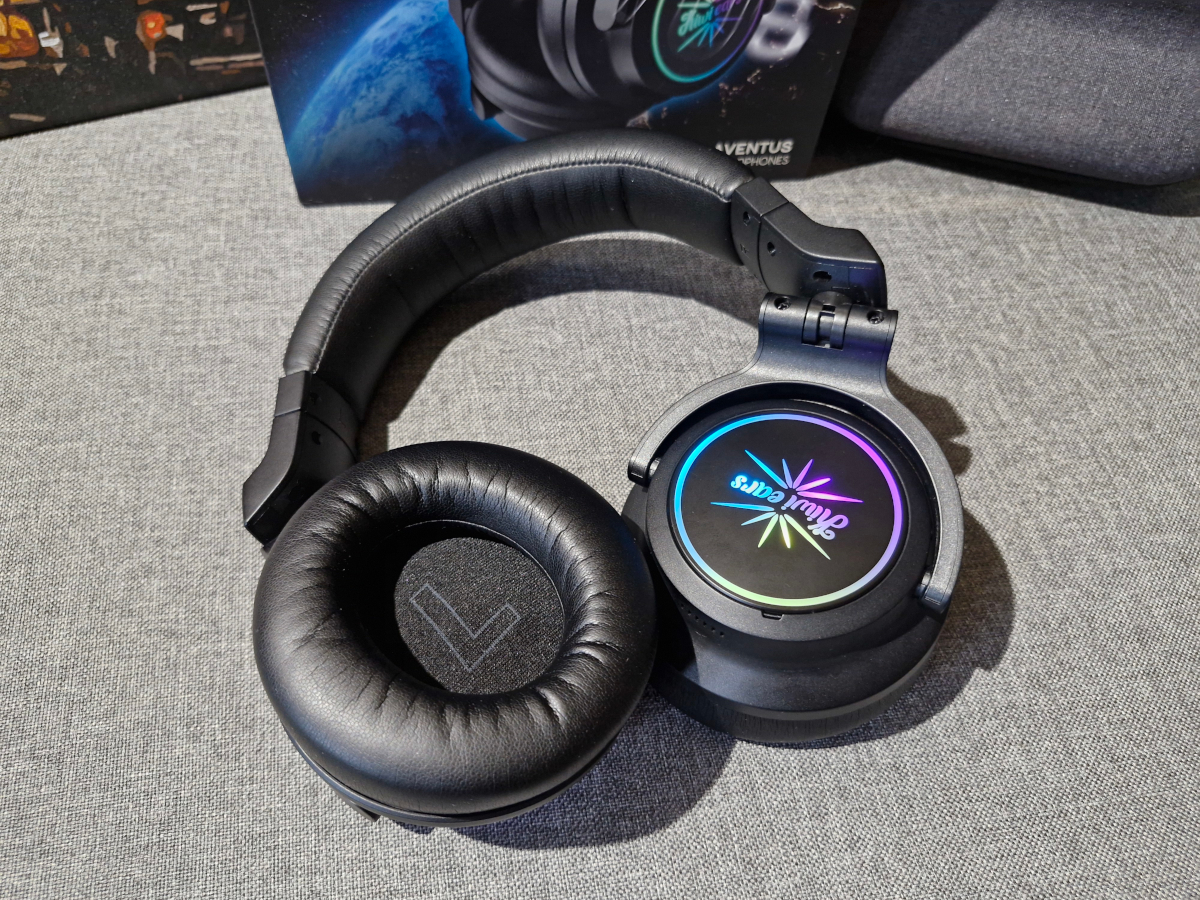
Although the Ardor and Aventus differ significantly in design and construction, I’m fairly confident they share the same underlying platform. I’ve had the chance to try both models, compare their sound, and found no noticeable differences in audio quality. The Aventus, however, features larger driver housings, round ear pads, and a thicker padded headband. Overall, it’s slightly bulkier but also more comfortable for extended use. A full review of the Kiwi Ears Aventus is already available on our site.
Read also: Anker Soundcore Liberty 4 Pro Review: Flagship TWS Headset with Unique Features
What’s in the box?
The Kiwi Ears Ardor comes in a sturdy thick-cardboard box with a drawer-style design that slides open by pulling a fabric tab.


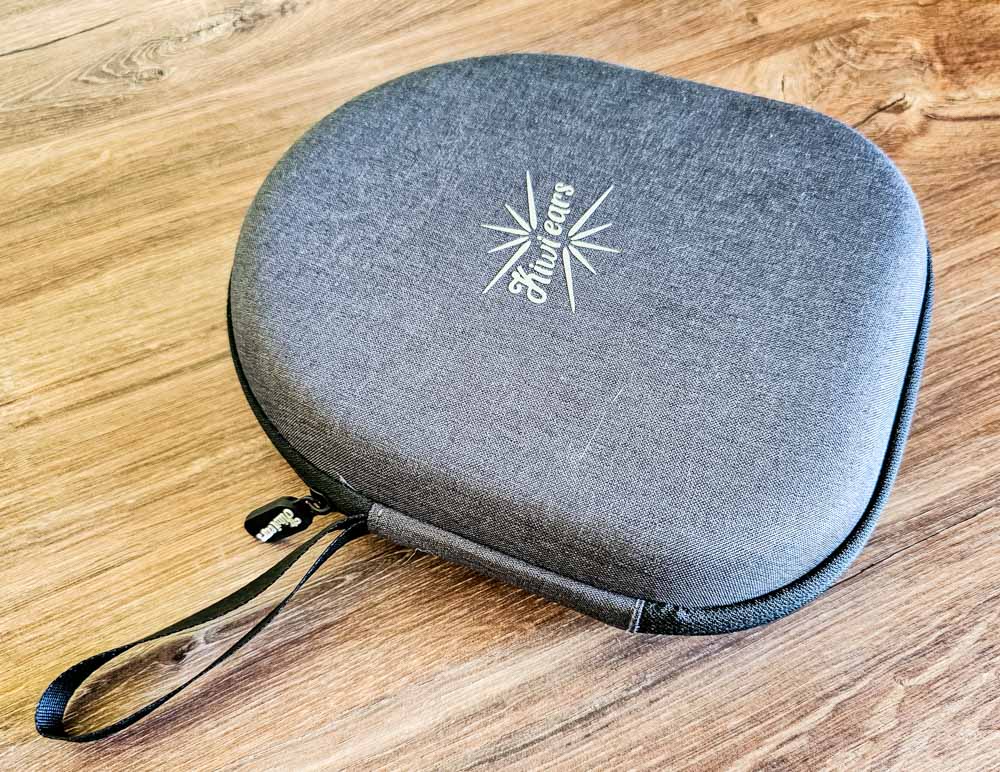
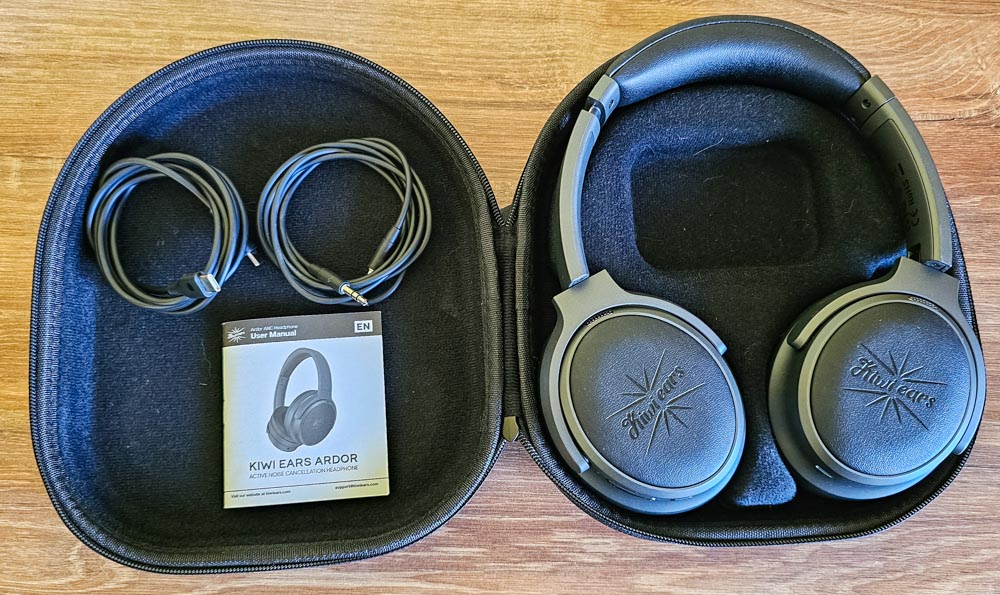
Inside the drawer, there’s a well-made hard case with a zipper, covered in gray fabric and featuring the brand’s logo.
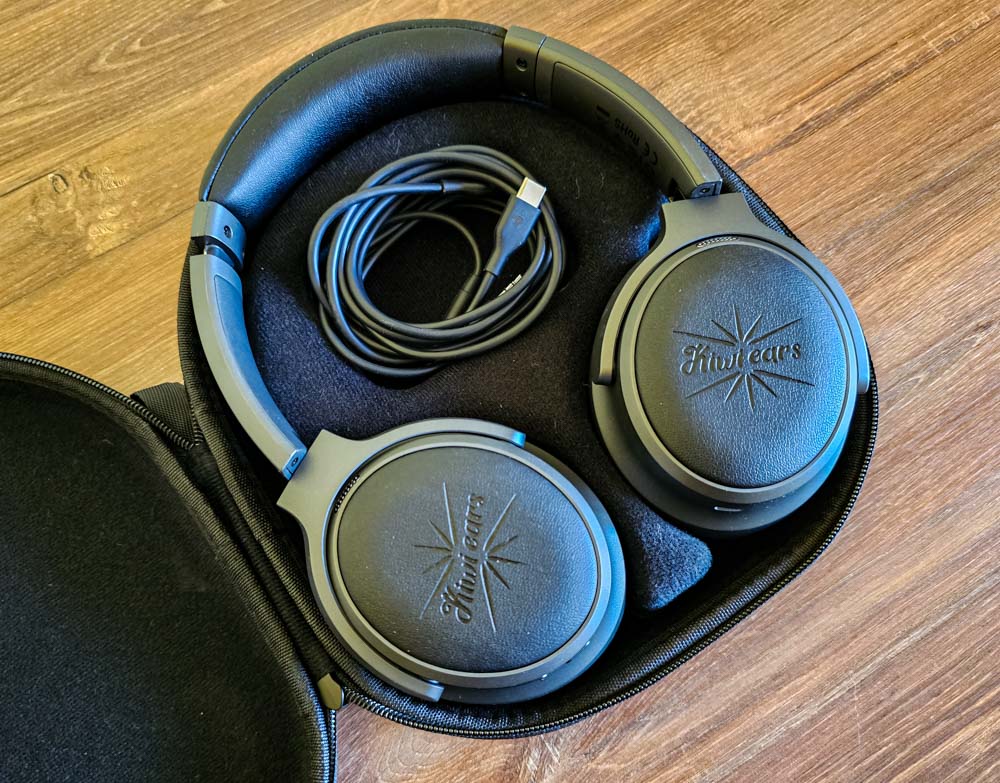
Inside, you’ll find the headphones, two 120 cm cables (USB-C and 3.5 mm jack), and a paper booklet containing the user manual.
Read also: SoundPEATS Engine4 Review: TWS Earbuds with Good Sound at Affordable Price
Design, materials, build
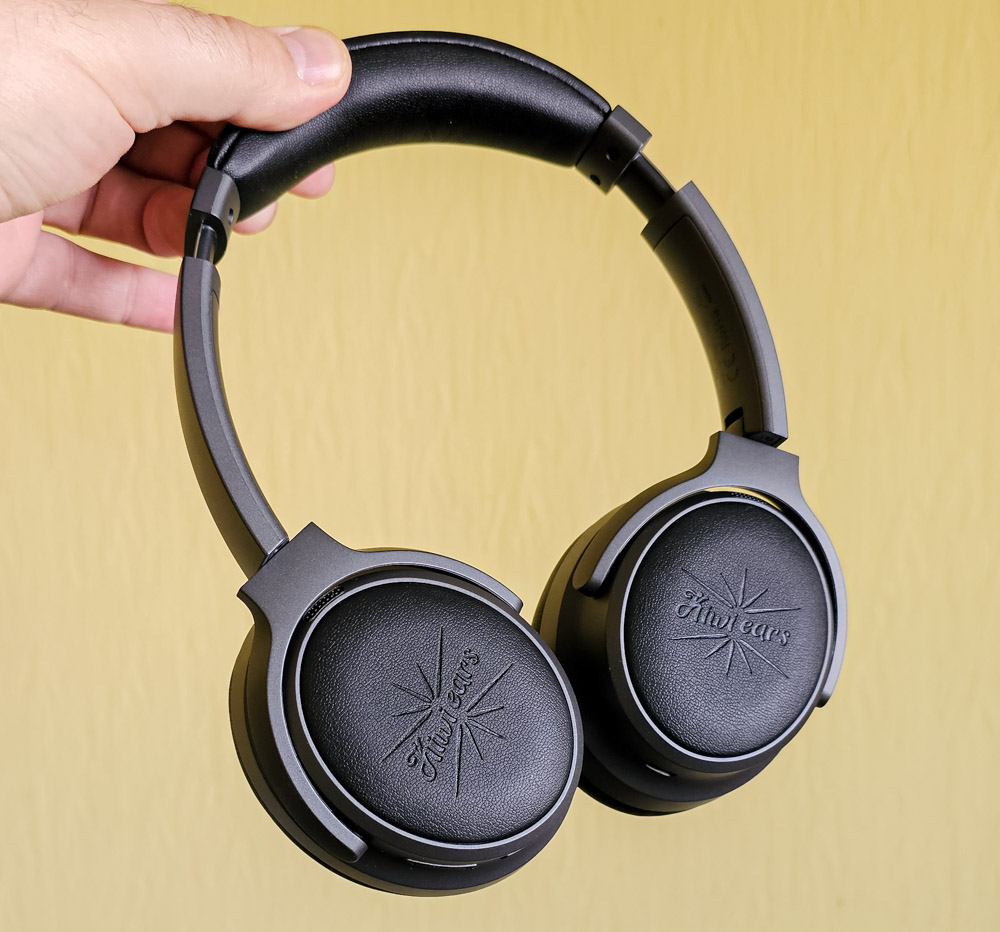
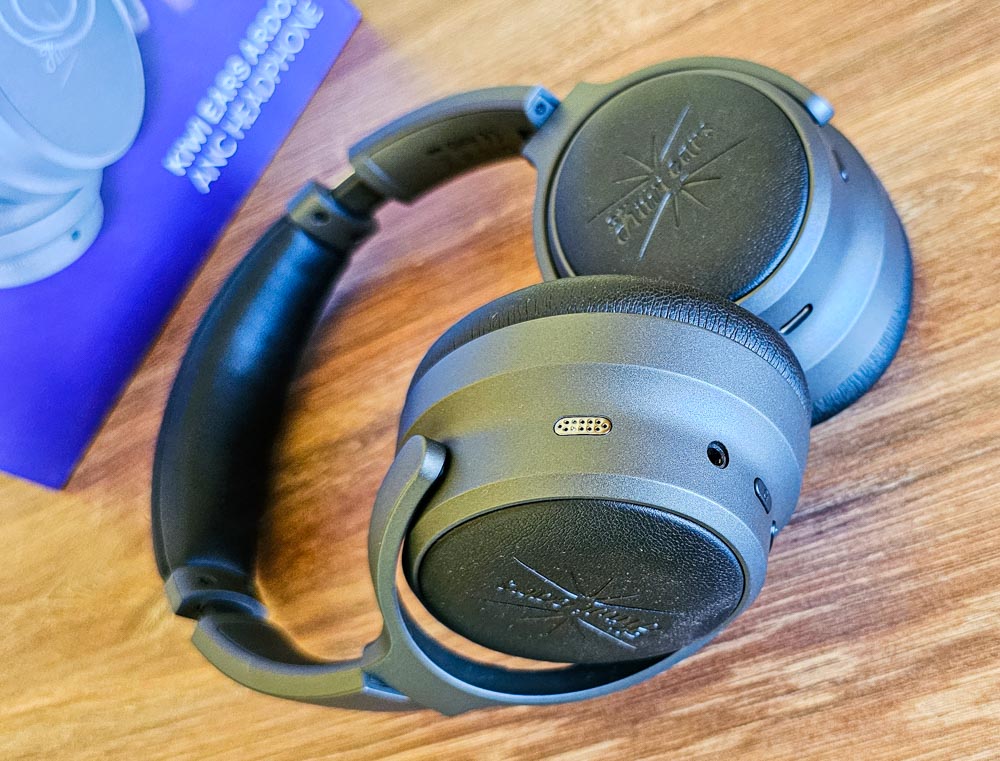
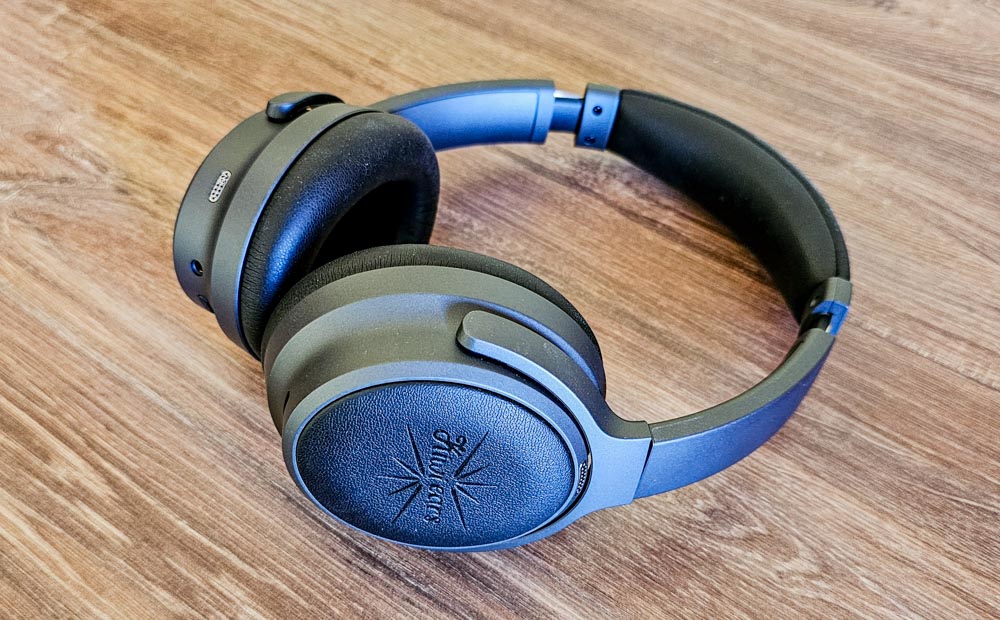
The Kiwi Ears Ardor features a classic over-ear design with foldable oval ear cups and an adjustable padded headband.

The headphones are primarily made of a fairly high-quality dark gray matte plastic with a subtle metallic finish. The headband frame is spring steel, and the top padding is covered in synthetic leather.
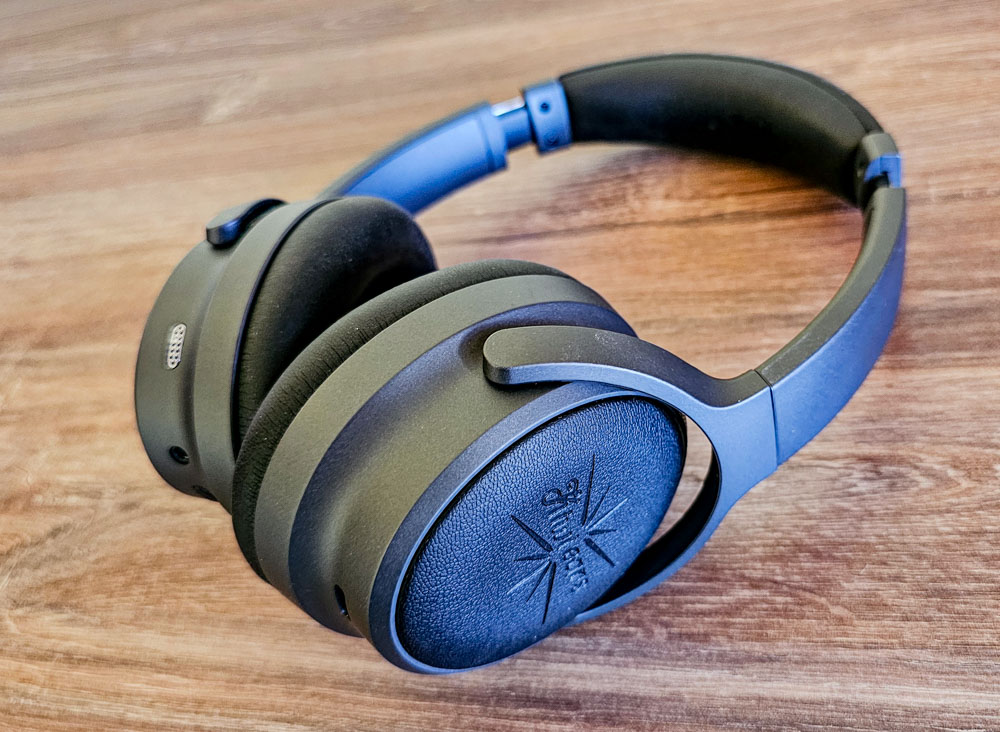
The hinges connecting the arms that allow the driver housings to rotate are made of black metal. The outer panels of the ear cups are covered in synthetic leather embossed with the brand logo. The memory foam ear pads are also wrapped in thin synthetic leather. Inside, the drivers are protected by foam inserts marked “L” and “R.”
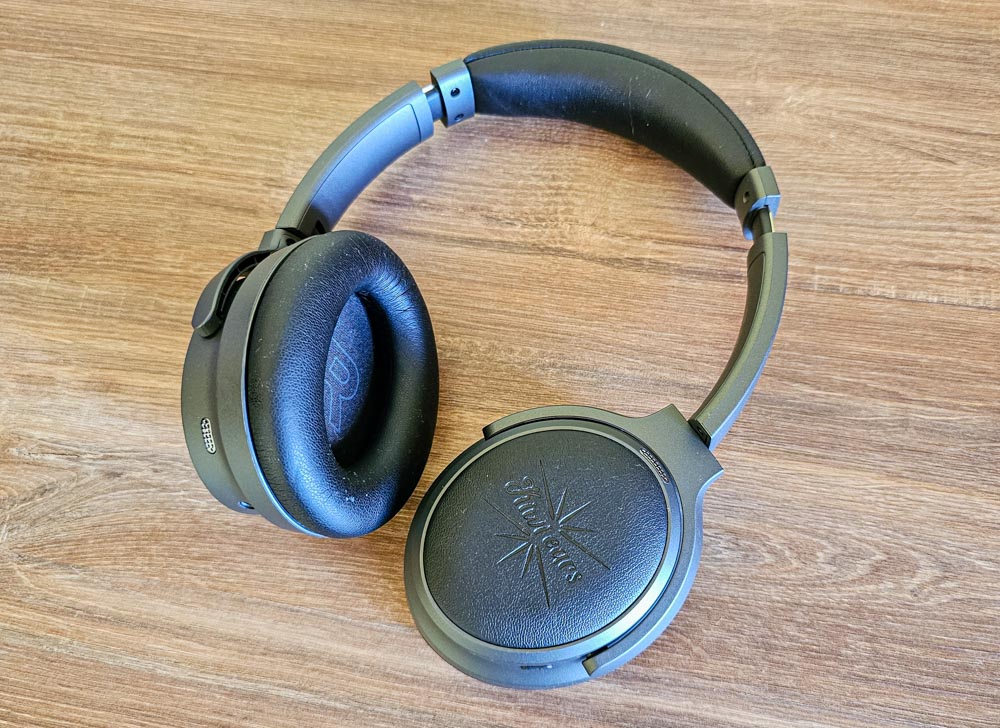
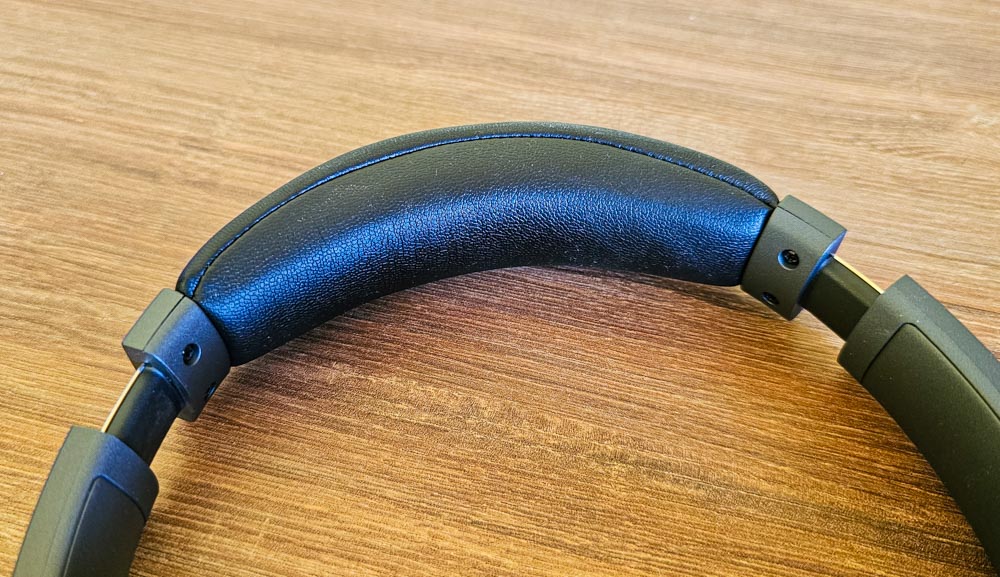
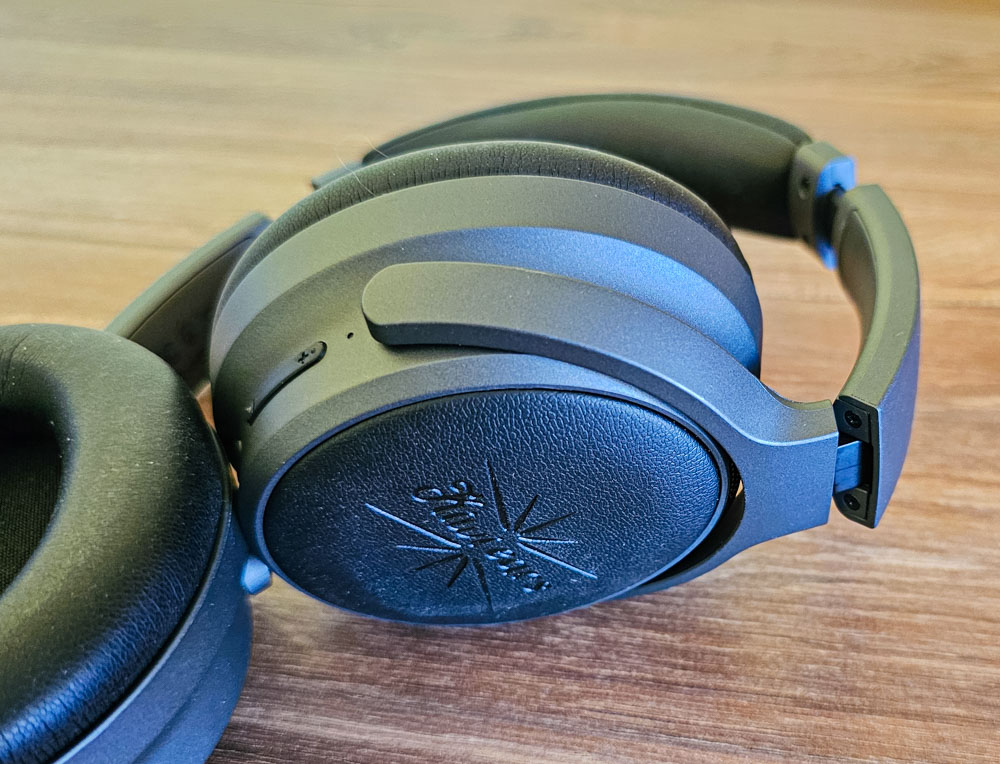

Overall, the materials are simple but of good quality, and the build feels solid. The Kiwi Ears Ardor isn’t a premium device, but its appearance leaves a generally positive impression. The quality matches its price and positioning as a practical, everyday-use product.
Read also: Kiwi Ears Orchestra Lite IEM headphones review: Wired, modular, honest
Layout of elements
Nothing unusual here – all controls are located on the ear cups. On the right cup, there’s an LED indicator, a volume dial, a power/pause button, a 3.5 mm jack, and the main microphone grille. The left cup houses the ANC mode button and a USB Type-C port.
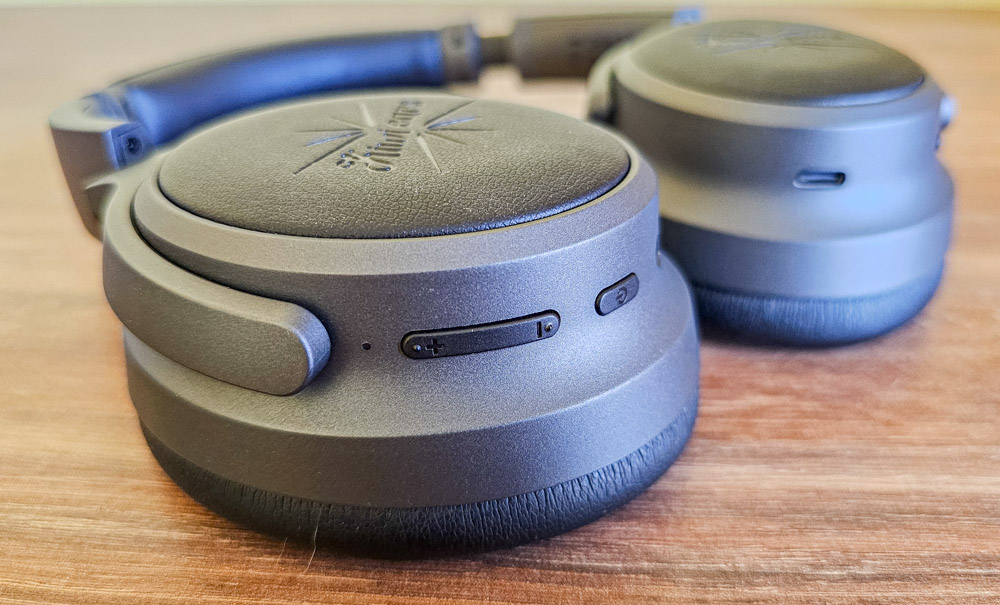
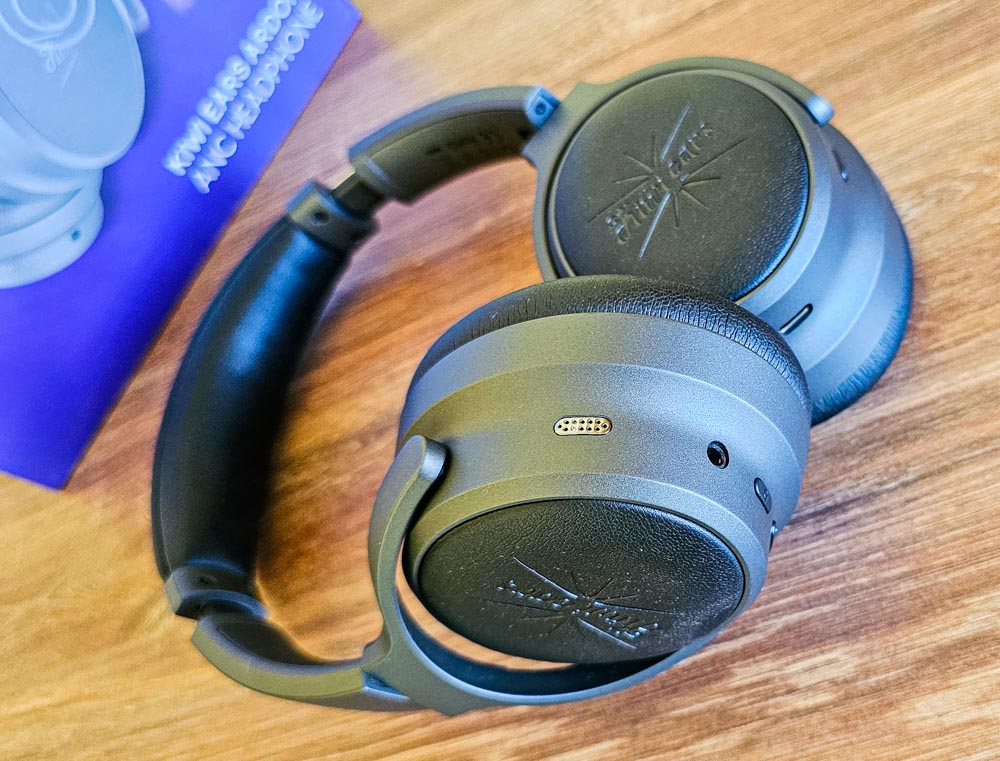
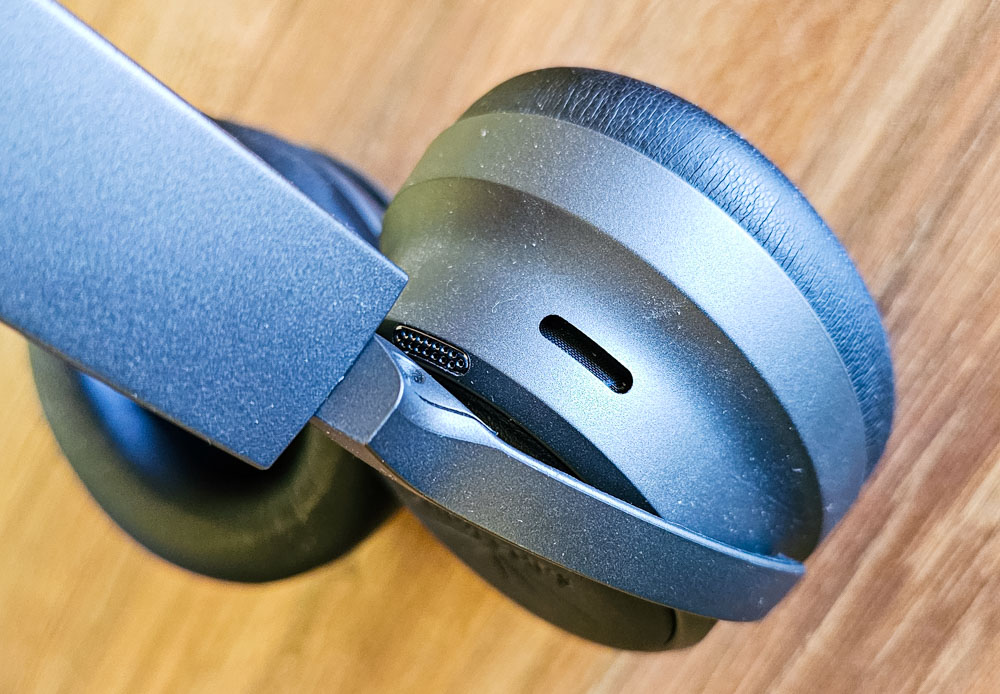
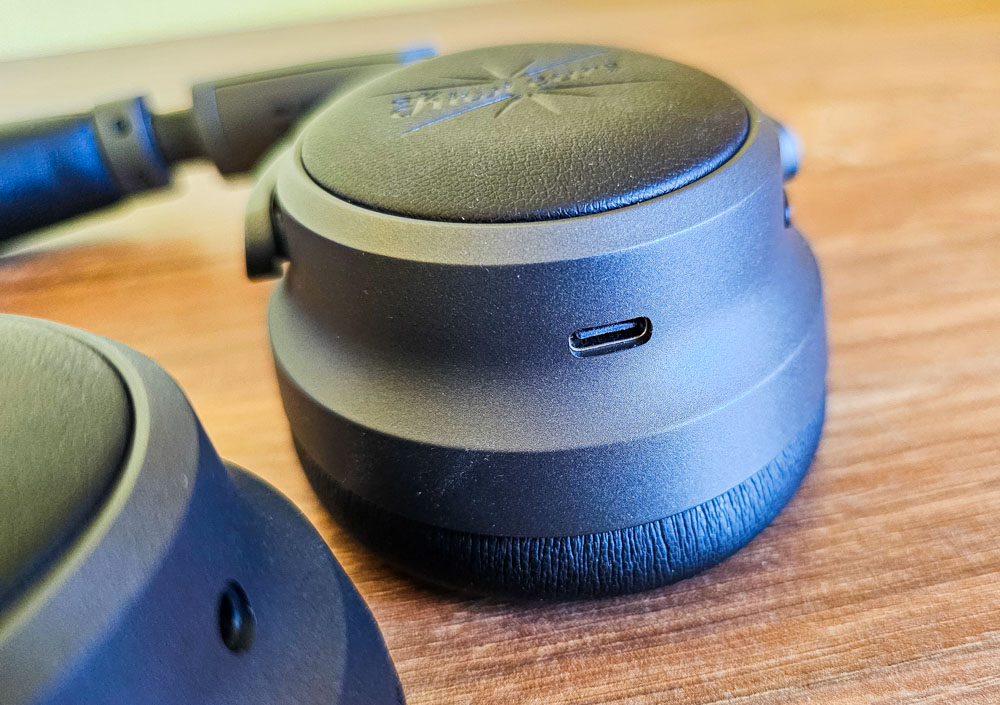
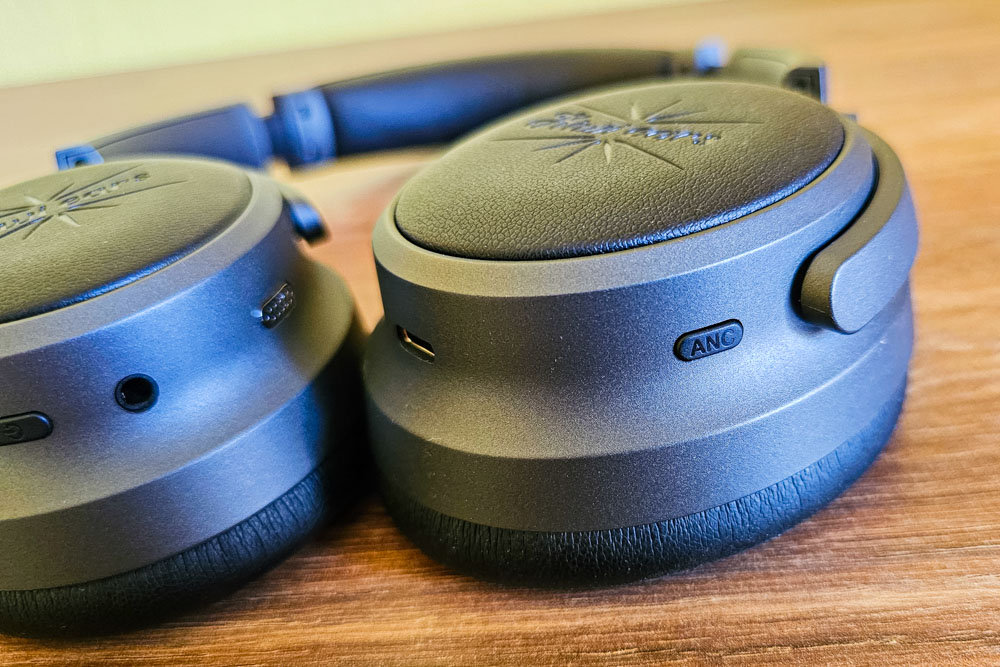
On the outer top side of each ear cup, there are silver grilles covering two additional microphones used for the noise-canceling and transparency systems. Beneath the hinge arms, you can also see small openings for driver housing decompression.
Comfort of use Kiwi Ears Ardor
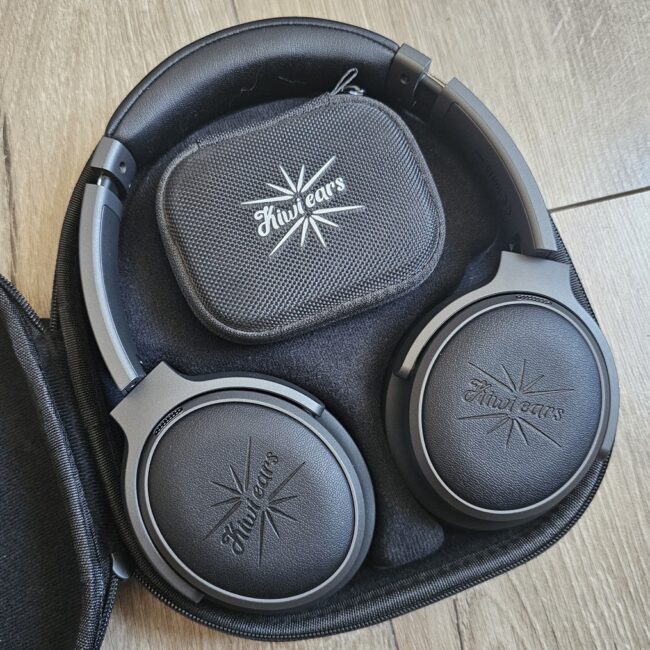
First, it’s worth noting the included hard case, which genuinely enhances the overall user experience. It’s a bit unusual that the headphones fit in the case unfolded, but this might actually be a plus – the case, while large, is flat, making it potentially easier to carry in a backpack or bag than a smaller but thicker case would be.
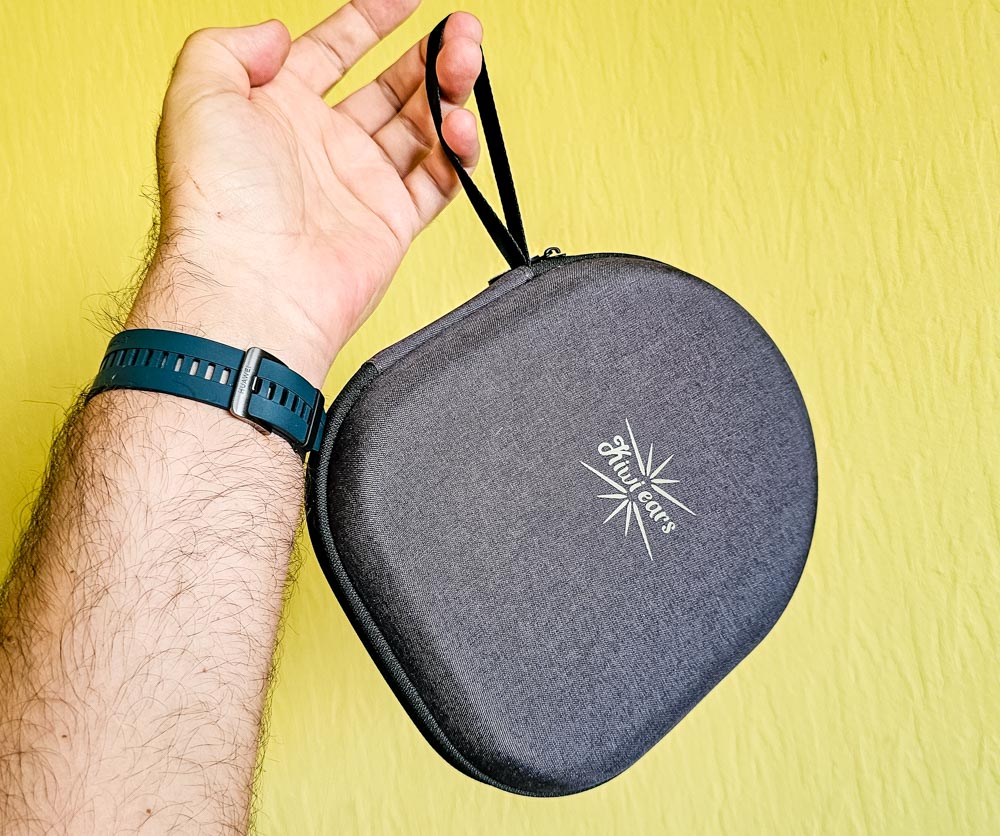
Overall, the case is quite spacious. It can easily accommodate a smaller case containing my favorite IEMs, the Kiwi Ears Quintet (review here). You could also fit a large charging adapter inside, which can be useful when traveling.
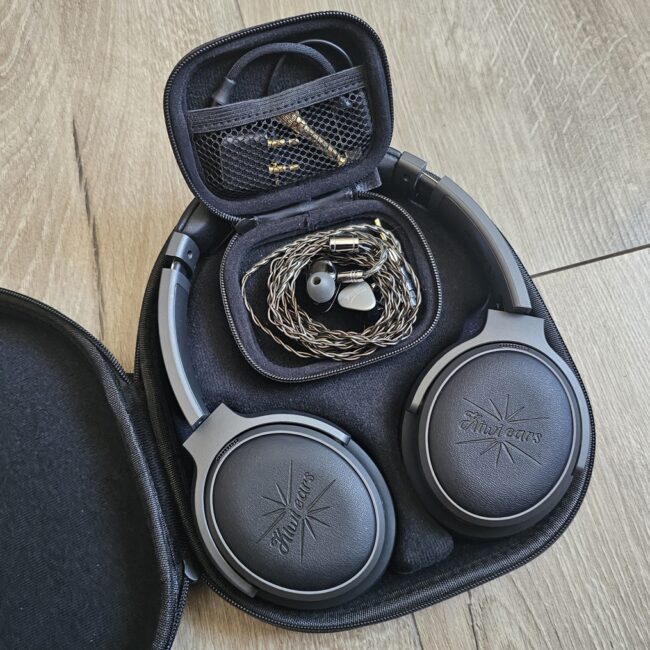

As for how the headphones fit, there’s nothing noteworthy to criticize – likely because this design has been refined over the years. The headband is moderately padded and doesn’t press on the top of the head, while the ear cups fully encompass my larger ears without causing discomfort.

I can wear the headphones for hours without discomfort. Naturally, the synthetic leather isn’t ideal in hot weather and can cause some sweating where it contacts the skin, but this is a common issue with most headphones of this type. Since the ear pads are non-removable, the only partial solution would be to use alternative fabric covers.
Read also: Kiwi Ears Quartet Review: Impressive IEM Headphones With Built-in Tone Switches
Connection
Wireless connectivity is straightforward and standard. There’s no dedicated app for these headphones. To pair them, you simply hold the power button for a few seconds after turning them on to enter pairing mode. Then, locate “Kiwi Ears Ardor” in your device’s Bluetooth menu and confirm the connection.
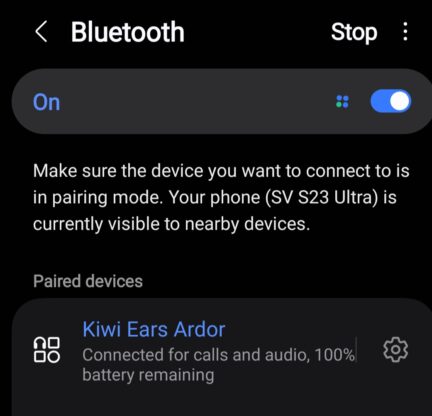
If needed, the same pairing process can be repeated for a second device.

The headphones support simultaneous dual-device connections and can automatically switch between audio sources – I’ll explain how this works later.
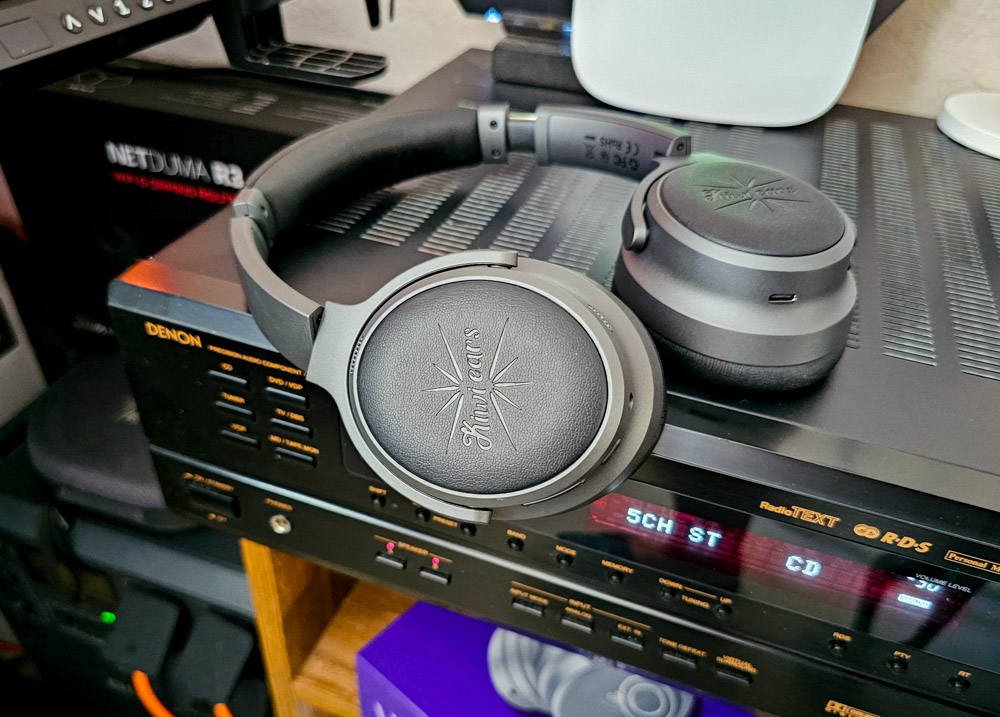
The Kiwi Ears Ardor can also be connected via cable, offering three usage modes. The first is the classic analog connection through the 3.5 mm jack. In this mode, if the headphones are powered off, they function like standard wired headphones, and the analog sound quality depends on the external DAC – whether it’s your computer’s sound card, a smartphone chip, or an amplifier in a music system or player. Volume and audio effects are all controlled by the source device.
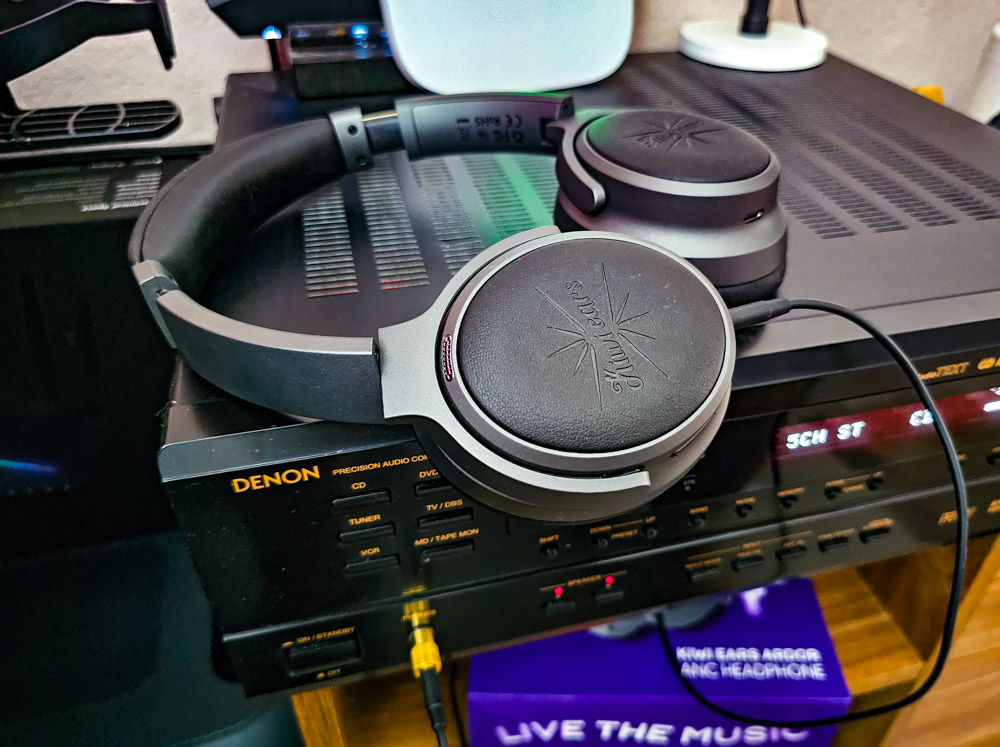
The second option is similar to the first, but with the headphones powered on. In this mode, you still use the external audio processor, but can control playback (play/pause) and volume directly from the headphones, as well as access noise-canceling and transparency features. The microphone is also active, allowing headset functionality for calls.
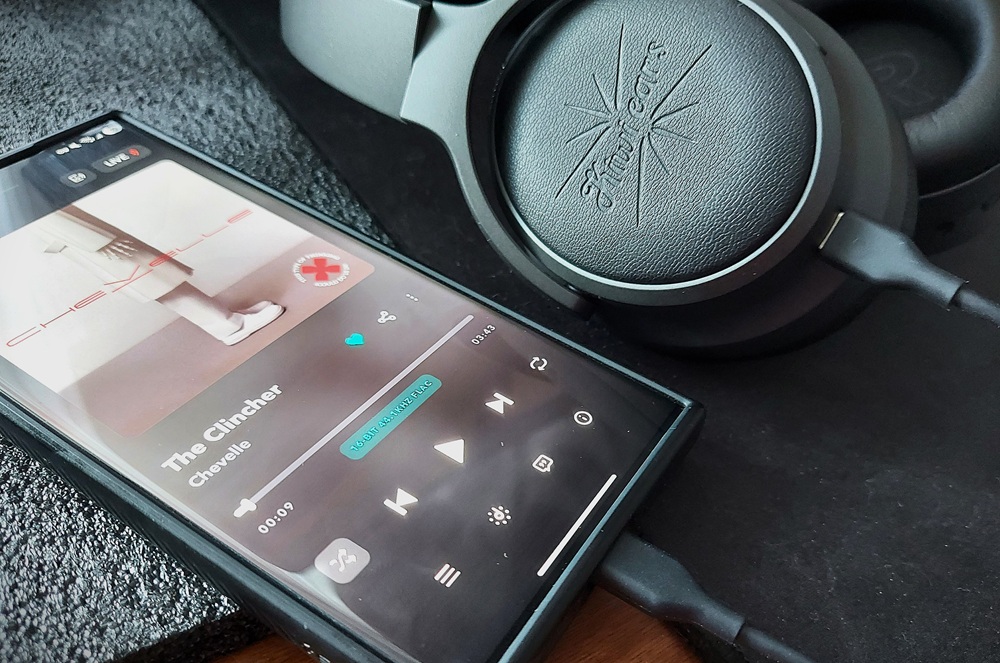
The third option is a digital connection via the USB-C port. Here, the built-in DAC/AMP handles audio conversion from digital to analog for playback through the headphones. In this mode, the microphone and ANC functions are also available.
Read also: Kiwi Ears Quintet Headphones Review: Symphony of Balanced Sound
Function control
During use, the headphones are controlled via the buttons located on the ear cups. Overall, they’re easy to locate by touch, so operation shouldn’t be difficult. You just need to remember the control scheme, as there are quite a few functions but only three buttons.
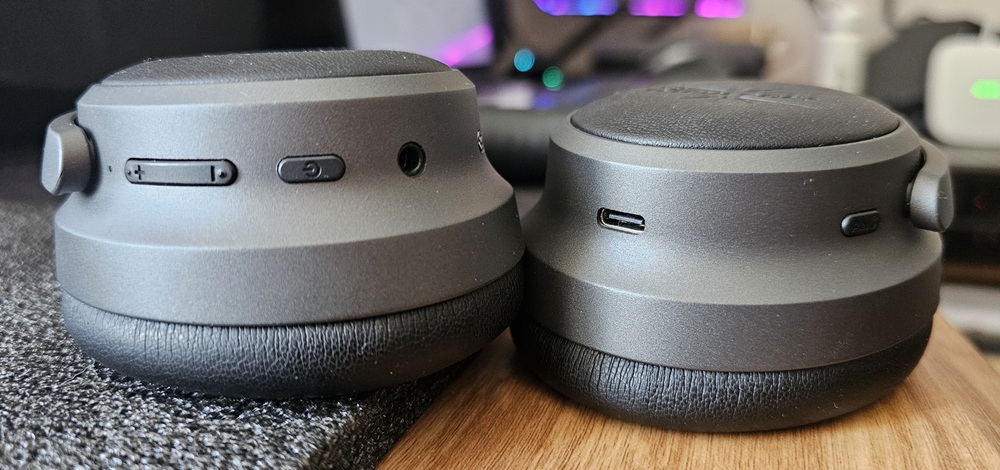
The single multifunction button on the left ear cup controls ANC modes. A single press cycles through noise cancellation, transparency, and off. A quick double press switches between normal mode and low-latency mode for video playback. When the headphones are connected via the analog jack, holding the button for three seconds activates or deactivates ANC.
The right ear cup has a separate multifunction button. By default, it controls power (long press) and playback (play/pause). A short press answers or ends an incoming call, while holding it during a call rejects the call. A double press activates the smartphone’s voice assistant, and a triple press switches between gaming and music modes. The volume button also allows track skipping – holding it for one second moves to the next or previous track.

Kiwi Ears Ardor sound quality
It’s worth noting upfront that the headphones are not Hi-Res certified and don’t support lossless Bluetooth streaming, as there’s no LDAC or aptX HD – only AAC codec is available. However, I consider the lack of certification mostly a formality, likely to keep the price accessible. In practice, the sound quality is very high, even over wireless connections. When connected via cable to a quality player and playing high-resolution audio files, the Kiwi Ears Ardor can deliver a performance comparable to some mid-range HiFi headphones.
The dual drivers significantly expand the frequency range and improve the dynamic response at the extremes of the spectrum, reducing distortion. The built-in DAC/AMP chipset also helps compensate for shortcomings in lower-quality external audio equipment.

For example, when listening to music on a budget smartphone, it’s best to connect the headphones digitally via USB-C port. This way, the digital-to-analog conversion is handled by the built-in DAC/AMP in the headphones, with additional amplification, which helps minimize any loss in sound quality.
By default, the Kiwi Ears Ardor delivers a very “monitor-like” sound, reflecting a professional level of tuning – the response is even across the spectrum without dips in any range. Detail is excellent, highs are clear and crisp, bass is tight rather than boomy, and sub-bass is well-defined where it should be. Using a quality player, wired connection, and lossless files allows you to fully appreciate the music through these headphones. I was impressed by this high level of sound quality at a relatively low price, although I had some expectations based on experience with other products from the brand.
The sound of the Kiwi Ears Ardor might feel a bit flat to listeners unaccustomed to a studio-like presentation. That said, the headphones’ potential is nearly limitless within the bounds of human hearing. If you want more impact or a different tonal balance, you can enable Dolby Atmos or a similar effect, or boost bass using an equalizer to taste. Personally, I’ve been trying to listen to music as the artists and producers intended, and I generally avoid electronic or algorithmic effects, as they tend to distort the sound, reduce detail, and muddy the mix. Of course, this is just my personal preference.
Read also: Anker Soundcore Liberty 5 Review: Multifunctional TWS Headphones
Microphones and voice transmission
The Kiwi Ears Ardor comes equipped with a solid system of five quality microphones. They perform very well indoors when background noise is minimal or moderate. This makes the headphones versatile, allowing easy switching between music listening and voice communication in home, office, or gaming environments. Voice transmission is clear and natural, preserving tone and clarity.
Outdoors, voice quality predictably declines as the noise reduction algorithms start cutting certain frequencies, giving the voice a slightly “digitized” character. In such conditions, clarity becomes more important than tonal quality – the goal is simply to be heard and understood. Overall, the Ardor performs respectably in headset mode, even in challenging environments, especially considering the microphones are built-in rather than external.
Connect reliability
I’ll probably start skipping this section in future reviews, as the story is largely the same each time. In short – there are no issues. Even with the smartphone several walls away, music streaming continues without interruptions.
It’s worth highlighting that the headphones handle simultaneous connections to two devices well over Bluetooth. For example, if you’re listening to music on a laptop and receive a call on your smartphone, the music automatically pauses, you hear the ringtone, and you can answer the call using the built-in microphone. After the call ends, the headphones switch back to the laptop and resume playback automatically.
Kiwi Ears Ardor battery life
Another strong point of these headphones is their impressive battery life: up to 72 hours with active noise cancellation (ANC) and 140 hours without. I can’t personally verify the exact factory figures, as such measurements are difficult to perform, but I see no reason to doubt them. In practice, after a month of fairly active use, I only needed to charge them once. The presence of fast charging is also a welcome feature, especially for travel.
Read also: FiiO FT1 Pro review: Another triumph
Conclusions
The Kiwi Ears Ardor is a solid example of versatile over-ear headphones suited for everyday use and a wide range of situations – at home, in the office, while traveling, for work, video or movie watching, gaming, and voice communication. Its key strengths are high-quality sound, comfort, and long battery life.
Considering the relatively modest price, solid design, and reliable performance in various conditions, I see no reason not to recommend these headphones. I plan to continue using them as my regular daily set.
Advantages of Kiwi Ears Ardor
- Compact and lightweight, foldable design with carrying case
- Comfortable fit – soft adjustable headband and memory foam ear cushions that completely cover the ear
- Wireless and wired connection to the sound source
- High-quality noise cancellation and sound permeability features
- High sound quality
- Good microphones and high-quality voice transmission
- High level of autonomy
Drawbacks of Kiwi Ears Ardor
- No support for lossless Bluetooth codecs
- No mobile app for configuring settings and updating firmware
Kiwi Ears Ardor competitors
If you’re looking for a cheaper alternative to the Kiwi Ears Ardor and aren’t focused on HiFi sound, there are options on AliExpress worth considering. Brands like Haylou, QCY, OneOdio, Baseus, offer decent headphones at a reasonable price.
I can also recommend a specific model that’s very similar to the one reviewed here – likely built on the same reference platform – the EarFun Tune Pro. With comparable specifications, features, and functionality, these headphones cost about $10 less. However, the plastic feels less premium, and there’s no included carrying case. On the plus side, they carry the Hi-Res certification logo on the box and support the brand’s mobile app.
Read also: EarFun Air Pro 4 Review: Solid Hi-Res Earbuds Under $100

