





© ROOT-NATION.com - Use of content is permitted with a backlink.

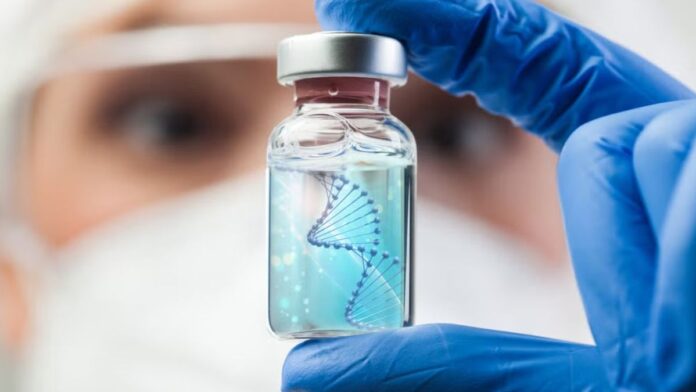
Representatives from Moderna and Merck stated that a personalized mRNA cancer vaccine reduced the risk of recurrence and spread of melanoma in a late-stage clinical trial. This marked a major breakthrough in a new field of cancer treatment and caused Moderna’s stock to surge by 160%.
Read also: AERONAUT – everything that flies above the ground: aviation, UAVs and drones, rockets, and space
The companies tested the vaccine in combination with Merck’s immunotherapy drug Keytruda, which is widely used to treat melanoma. Thousands of patients who have had high-risk melanoma tumors surgically removed could gain access to the treatment as early as next year if the vaccine receives regulatory approval, said Moderna President Stephen Hoge.

This is the first positive result from a trial of an mRNA vaccine against late-stage cancer. The mRNA vaccine trains the patient’s immune system to fight tumors by targeting specific mutations in those cells. It is also the first study to show that adding another treatment to Keytruda works better than treatment with Keytruda alone. Merck, Moderna, and other companies are currently investigating similar approaches for lung, breast, and pancreatic cancers.
Read also: How to Make an AI Explainer Video: A 7-Step Workflow
Karen Knudsen, CEO of the Parker Institute for Cancer Immunotherapy, stated that these results could usher in a new era in cancer treatment. “This positive result paves the way for the next real step in immunotherapy,” she says. “It’s a promising start – this is where it all begins.”

The results marked a turning point for Moderna, which had struggled to develop new products beyond its COVID-19 vaccine and had faced criticism of its mRNA technology from the administration of President Donald Trump. U.S. Secretary of Health and Human Services Robert F. Kennedy Jr. criticized the safety and efficacy of mRNA vaccines and cut funding for mRNA vaccine projects by $500 million. At the same time, the National Cancer Institute has continued to fund trials of cancer vaccines, including those based on mRNA.
Following the news, Moderna’s stock rose, increasing the company’s market capitalization by nearly $40 billion. Merck’s stock rose 12%. In addition, the trial results sparked renewed investor interest in the biotechnology sector as a whole. The Nasdaq Biotechnology Index rose 5.2% to a record high.

The vaccine, which is a personalized treatment, may be difficult to manufacture and scale up to commercial volumes, but Moderna says it will be able to meet demand over the next few years. Detailed results will be presented at an upcoming medical conference. However, the company does not yet have overall survival data showing whether patients receiving the treatment live longer than those who do not.
Read also: Console breakthrough on Android: ARM announces Neural Dawn on Unreal Engine 5.6.1
Melanoma is the deadliest form of skin cancer. According to the National Cancer Institute, more than 1.5 million people in the U.S. were living with melanoma in 2023. Interim results from the ongoing study showed that Intismeran achieved both of its intended goals: reducing the risk of cancer recurrence as the primary endpoint and preventing the spread of tumors to other parts of the body as a secondary endpoint. After the vaccine is administered, the patient’s cells create copies of the mutations, which the immune system is then supposed to recognize and destroy.
Read also: Can a Modern Human Live to 150 Years?
“This is the first time we have observed truly clinically and statistically significant improvements compared to immune-system inhibitors such as Keytruda in this group of patients, and this is the first time we have been able to achieve this through personalized treatment,” Hoge noted.

Merck stated that the company is already in discussions with regulators regarding this treatment, and Hooge added that, given its breakthrough therapy designation, the vaccine could become available as early as next year. These results have a positive impact on the prospects for testing the vaccine against other types of cancer.
The cancer treatment combines Merck’s Keytruda with a custom-made Moderna mRNA vaccine, which is based on an analysis of mutations identified in the patients’ own tumors. The trial involved 1,137 patients with high-risk stage IIB–IV melanoma whose tumors had been surgically removed. Volunteers were randomly assigned to groups where they would receive up to nine doses of Keytruda along with the personalized vaccine or Keytruda alone over the course of approximately one year. In January, the companies announced the results of the interim analysis, which showed that after five years, the treatment reduced the risk of recurrence or death by 49%.
Read also: How Generative AI Is Transforming Personalized Digital Experiences