
© ROOT-NATION.com - Use of content is permitted with a backlink.
I’ve learned life skills the hard way, often only understanding their value over time. For example, despite moving frequently, I’ve only once felt the need for a rotary hammer – and, unfortunately, that need came at the most inconvenient moment. Here’s the story of how, why, and where the Ronix 2726 rotary hammer proved useful to me.
We’ll have more content on Ronix products in the future. For instance, a Ronix chainsaw is already in use by the National Guard, and a feature on that will be coming soon.
TABLE OF CONTENTS:
Specifications
- Chuck type: SDS Plus
- Impact energy: 3.5 J
- Chuck size: 26 mm
- Weight: 3 kg
- Maximum drilling diameter in metal/concrete/wood: 13/26/30 mm
- Number of blows: 0-4000 blows per minute
- No-load speed: 0-1200 RPM
- Power: 850 W
- Voltage: 220-240 V
- Frequency: 50-60 Hz
- Included: 4 bits, auxiliary handle, depth limiter
Ronix 2726 video review
Price and Package
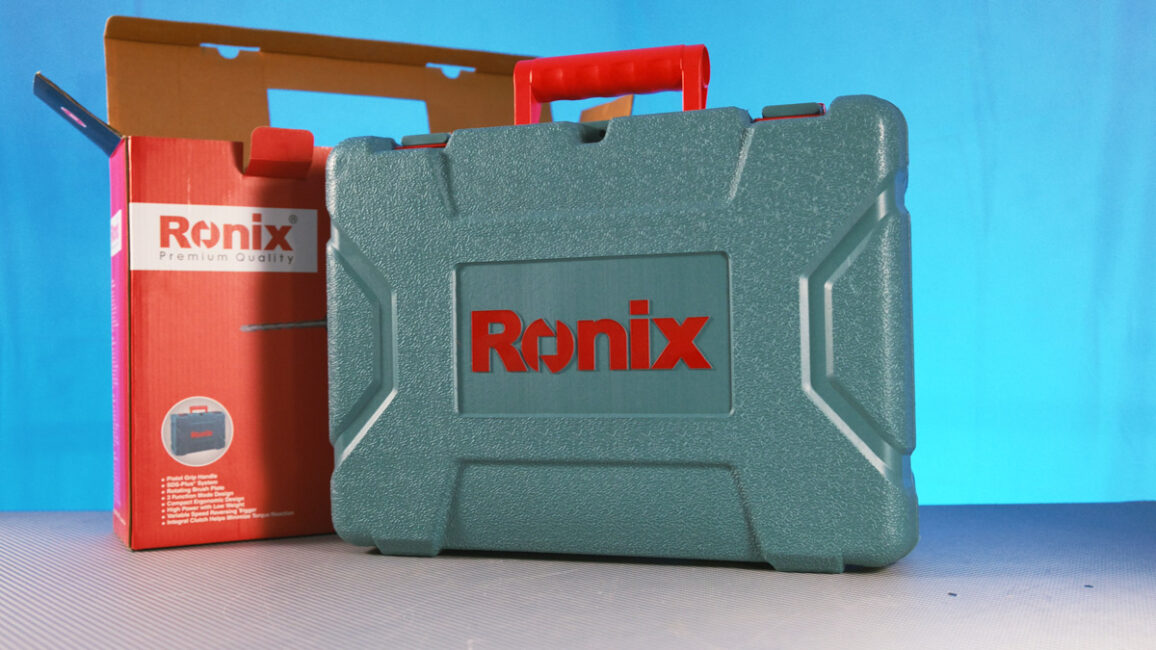
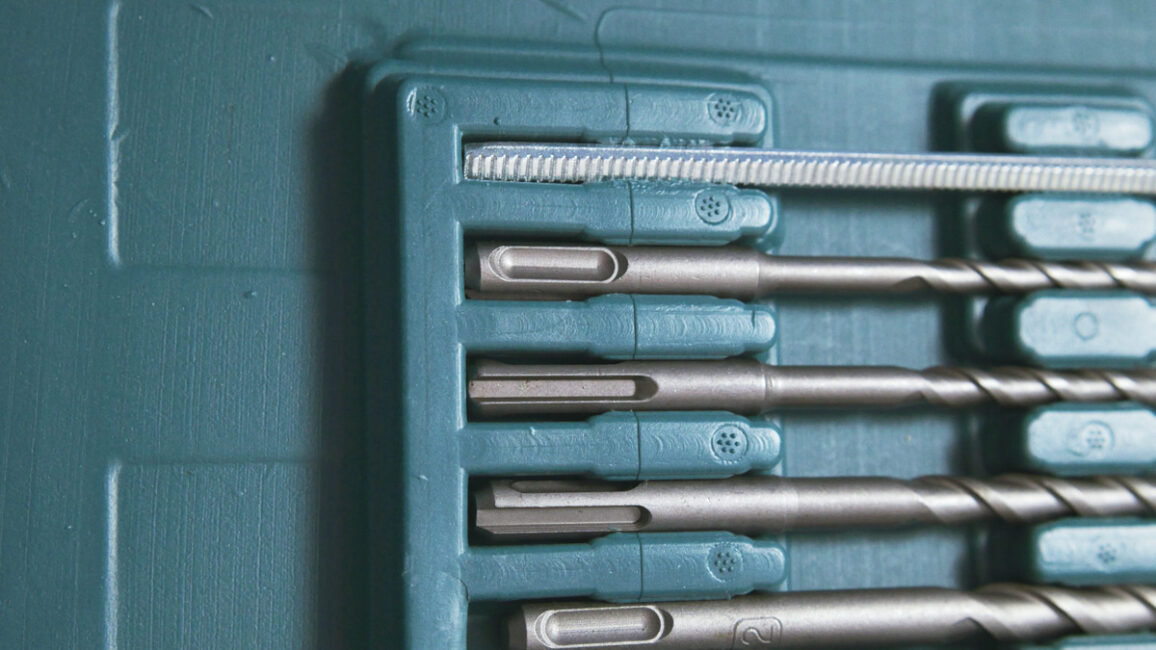
The Ronix 2726 is a classic, no-frills rotary hammer. It is priced at around $70 and comes with a sturdy carrying case, four SDS Plus bits for concrete, and a depth gauge. The hammer itself includes an additional handle, and the power cable is equipped with a cable tie.
The design of the 2726 is so iconic that no smartphone can claim the same recognition. The first rotary hammers of this format appeared as early as 1932, and since then, the core concept has remained largely unchanged – only the surrounding features have evolved. There’s no need to reinvent the wheel, unless, of course, it’s a cordless model.
Form Factor
It’s worth noting that cordless rotary hammers have become more common recently. Ronix offers such models as well, but they belong to the semi-professional segment and are therefore less powerful. For example, a cordless unit delivers 2.2 J of impact energy, whereas the corded version reaches 3.5 J.
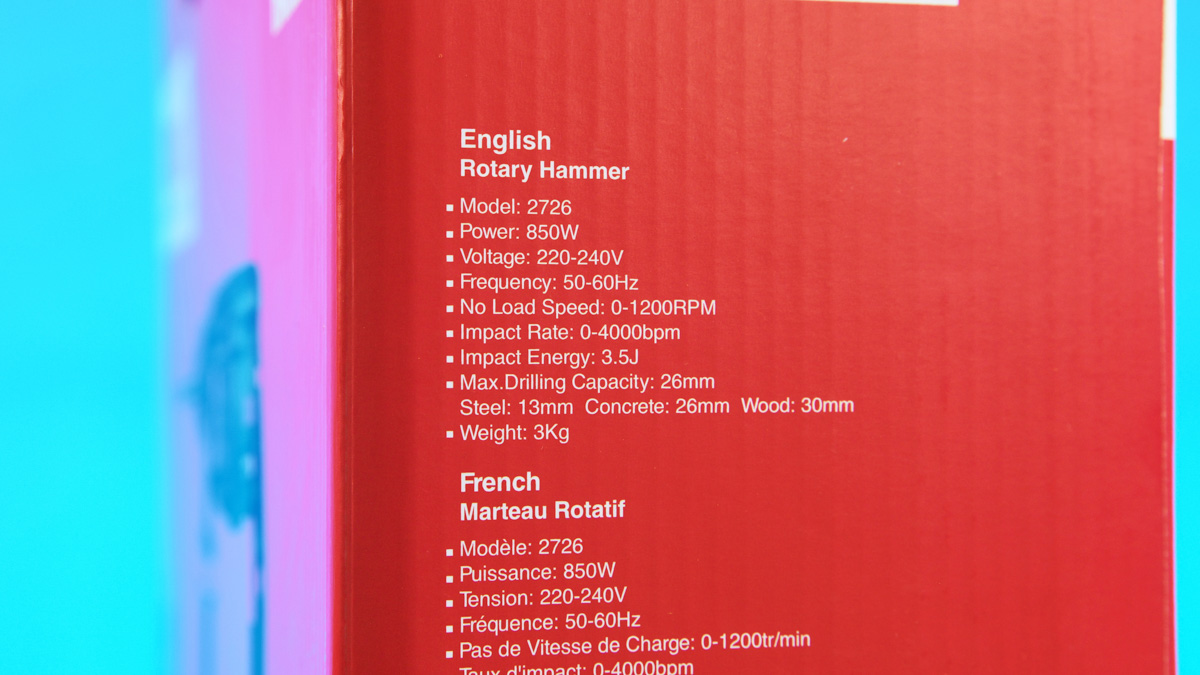
For a long time, this wasn’t a decisive factor for many users – and here’s a little secret: the power cable is often the first component to fail on a rotary hammer. That’s why a cordless model, which eliminates the cable entirely, has always seemed more appealing.
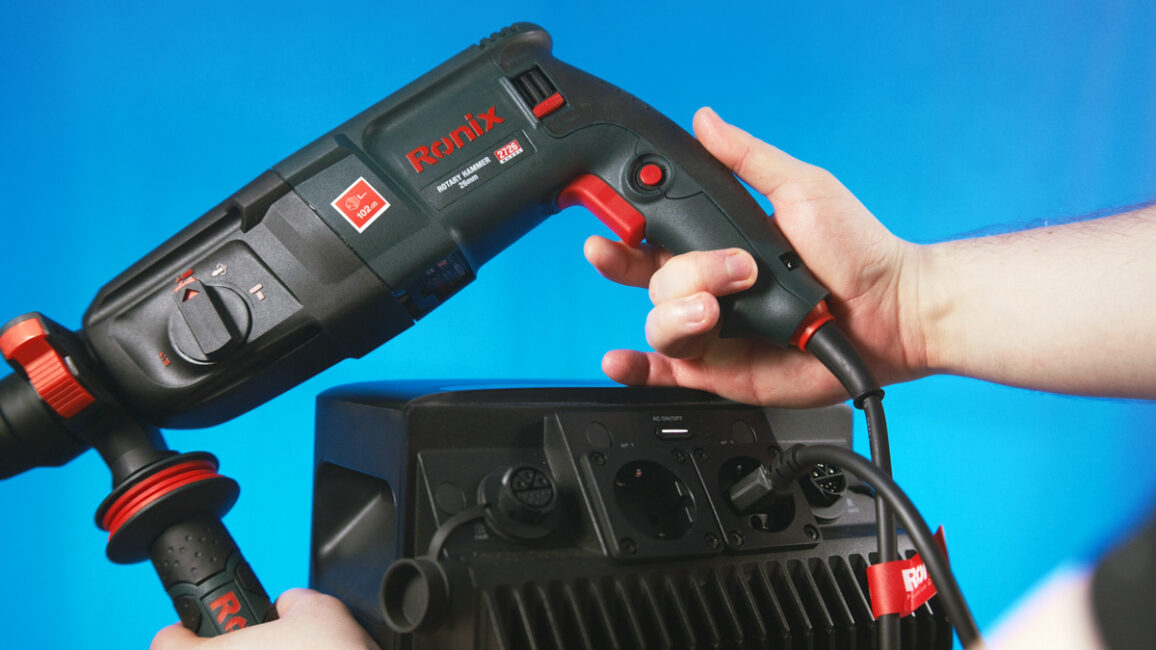
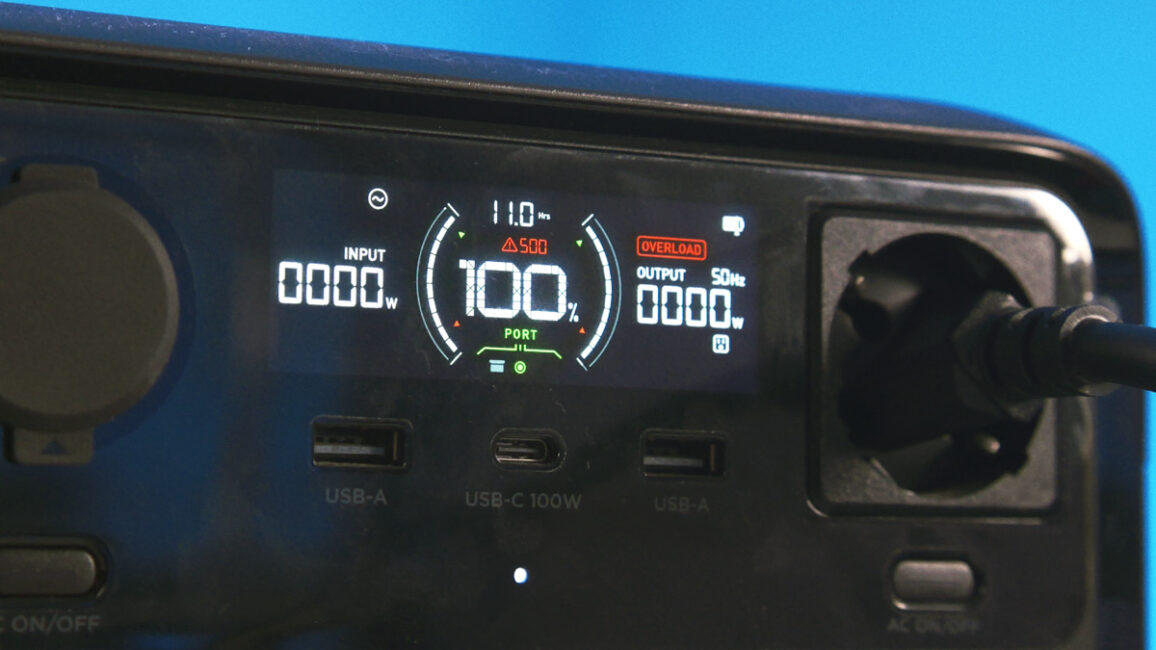
That changed with the arrival of EcoFlow units. Of course, an 850 W output can easily exceed the capabilities of cheaper models – even my River 3 Max can only handle up to 600 W. To be precise, it provides 1,200 W for heating elements, but a rotary hammer doesn’t count toward that. If you have something like the EcoFlow Stream Ultra, with a 1,200 W maximum, you don’t need to worry – though portability becomes more of an issue.
Features and Highlights of the Ronix 2726
Many of these might be unfamiliar even to seasoned rotary hammer users. Not because the 2726 is some exceptionally unique tool, but because professionals often purchase a rotary hammer once and continue using the same unit for a decade without upgrading.
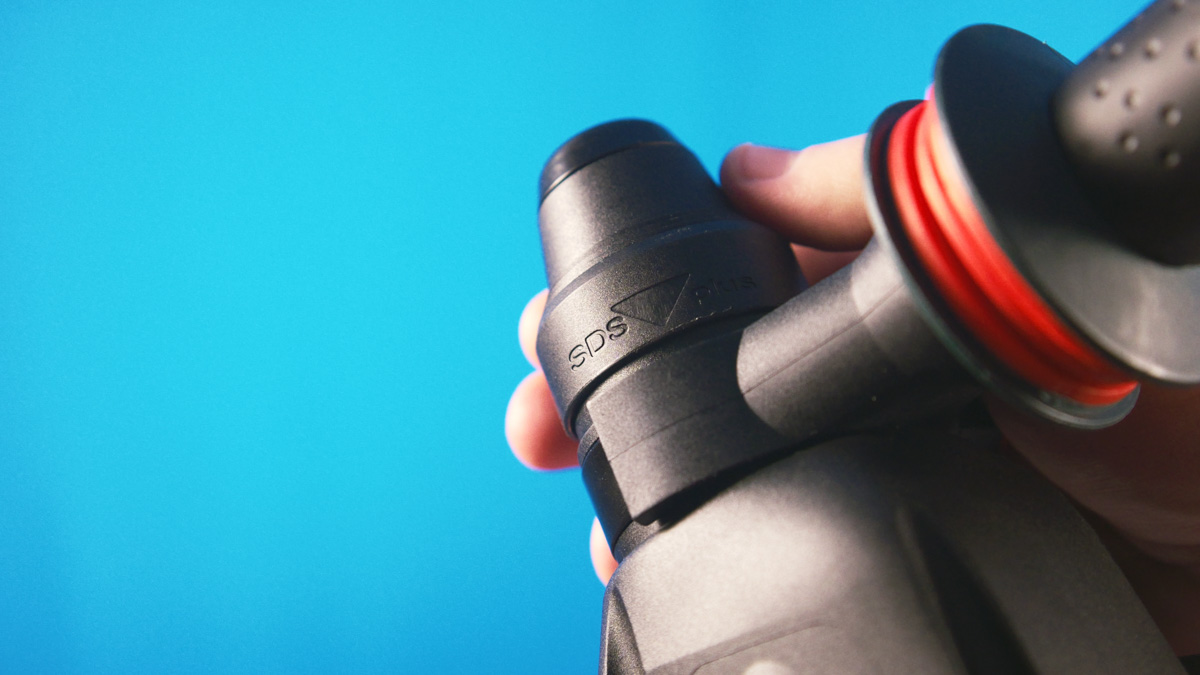
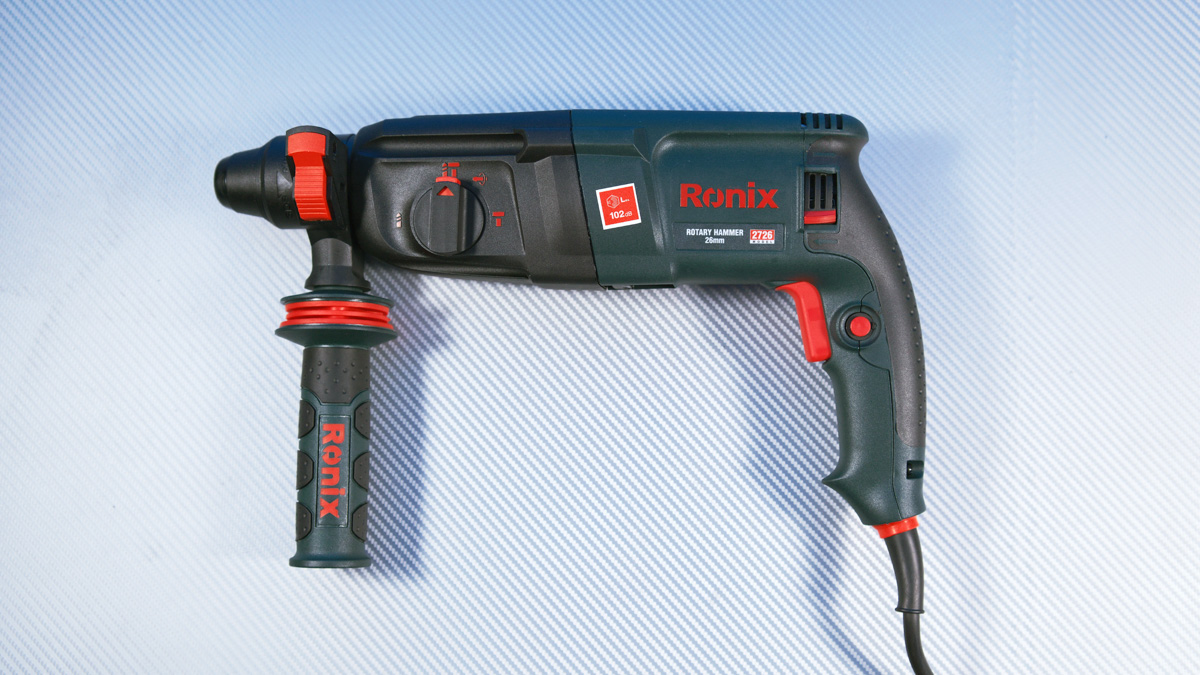
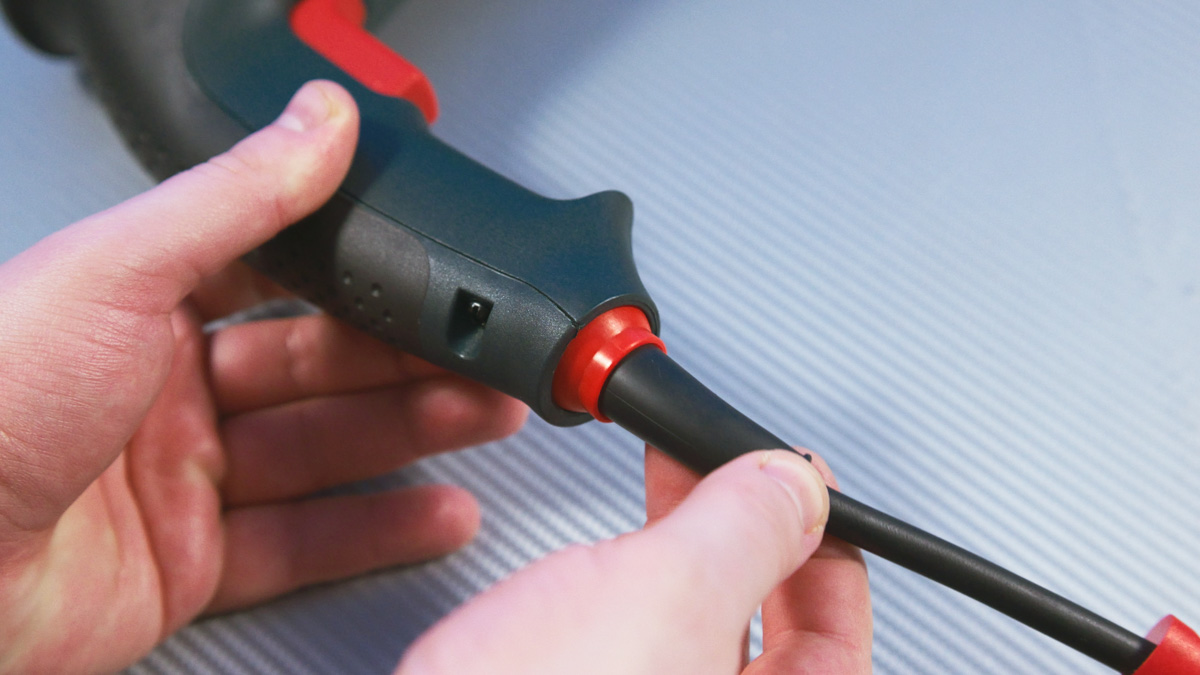
For example, how do you reinforce the power cable at the point where it bends? Very simply – add a hinge at the base. The handle features a depth-stop clamp, combining simplicity and elegance. Adjusting the handle’s position is straightforward: loosen, rotate, and tighten it back in place.
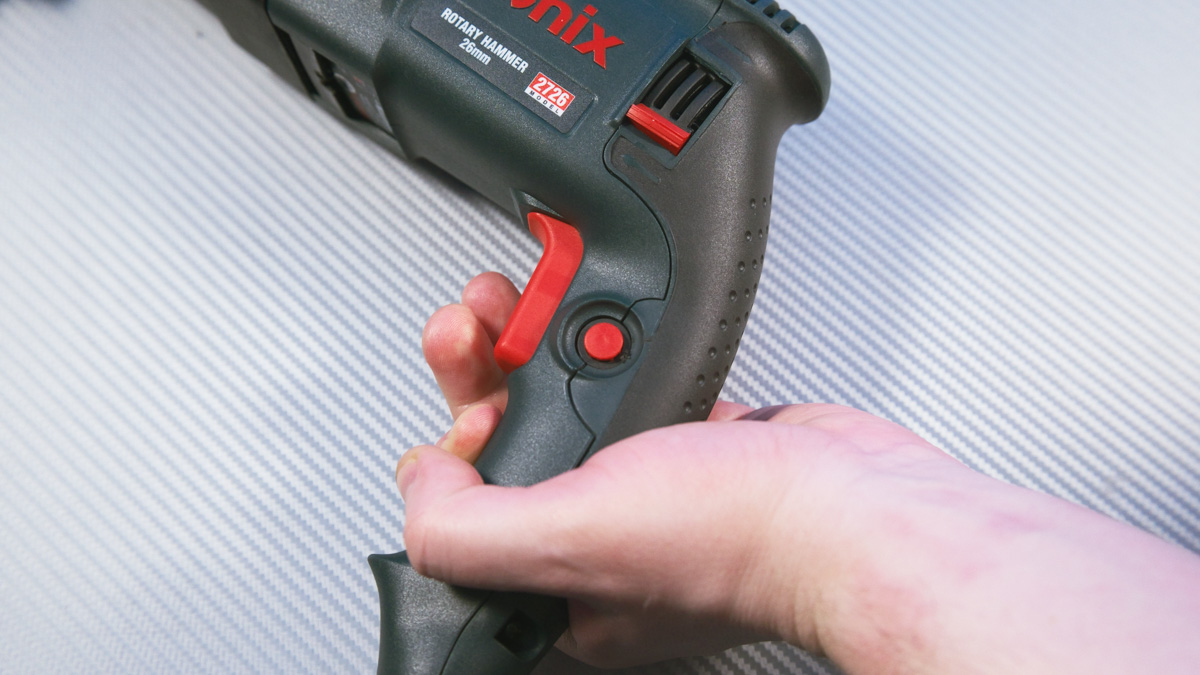
It’s also worth noting that the mode selector – switching between drilling, hammering, and the combined mode – is designed with a firm resistance and even includes a plastic tab to prevent movement from vibration during operation. Above the power trigger is the forward/reverse switch, and outside the trigger is the lock button. Pressing the lock keeps the trigger held in place.
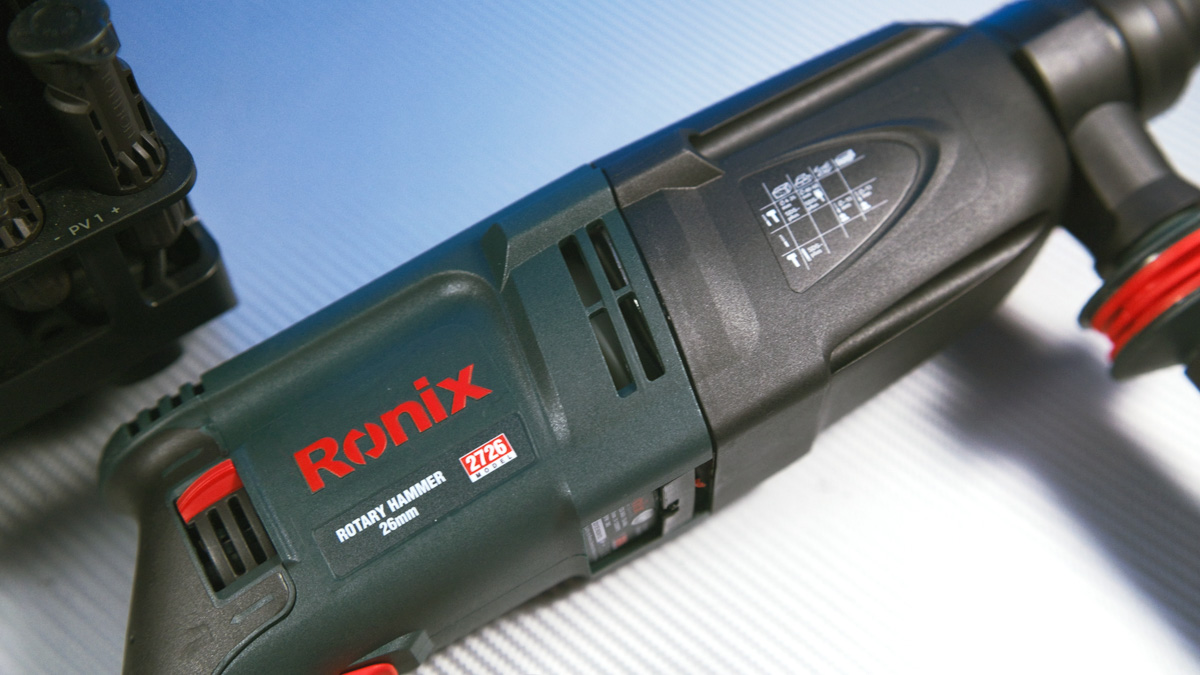
The label showing the noise level – 102 dB – is placed on one side, while a drilling guide for different materials is on the other. The Ronix 2726 features an SDS chuck compatible with bits up to 26 mm and can drill holes up to 13 mm in steel, 26 mm in concrete, and 30 mm in wood.
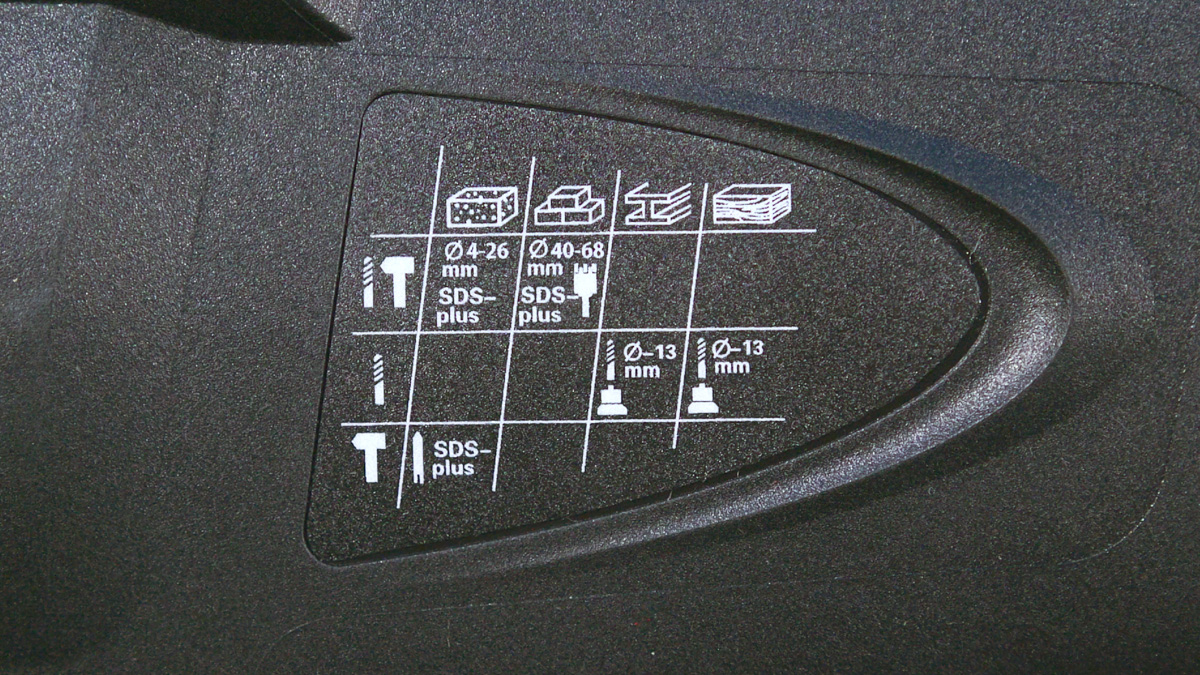
Accordingly, the hammer-drilling mode is intended for concrete, the simple drilling mode for wood, and the hybrid mode is suitable for metal and brick.
Why Keep a Rotary Hammer at Home?
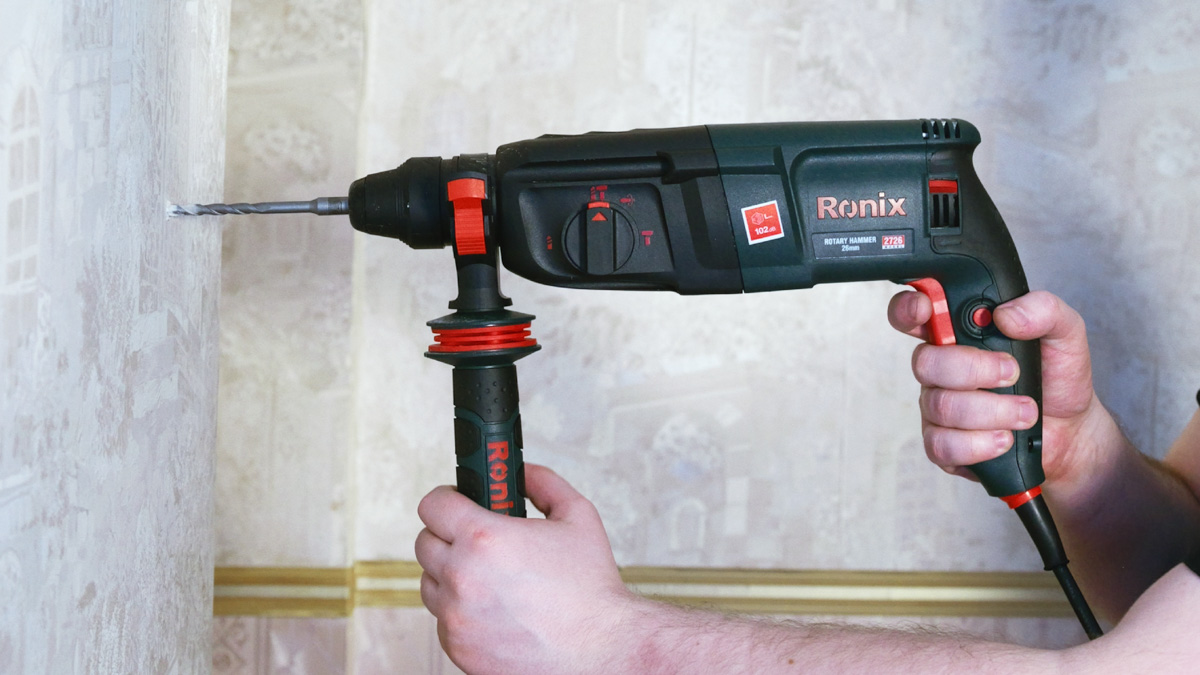
So, why might you need a rotary hammer around the house? Why wouldn’t a standard cordless screwdriver be enough, as I once thought? When I was trying to hang a backdrop in my new studio, I had to drill holes into concrete – something a typical screwdriver simply can’t handle.

As it turned out, a screwdriver works well when you can apply your full body weight, so to speak, but it barely makes a dent where you can’t press firmly against the concrete – you need enough pressure for the bit to cut in properly.

That’s where rotary hammers come in. They’re essentially a screwdriver with the ability to generate impact force at any angle or position – which is why the impact energy rating exists. That doesn’t mean you don’t need a regular screwdriver, though – a hammer drill isn’t suitable for assembling furniture.
The key point is that every household task requires the right tool. If you’re not a metalworker, don’t perform professional renovations, and don’t build custom furniture, you probably don’t need a grinder or a drill press at home. A rotary hammer, however, will come in handy.
Conclusions
Without a rotary hammer, you’d probably still be waiting for my new videos, as I’d be trying to drill concrete with a screwdriver until the end of time. The Ronix 2726 is modern, convenient, and properly equipped. While I’m a big fan of cordless models – which Ronix also offers – tackling renovation tasks during a blackout isn’t ideal. For these reasons, I recommend the Ronix 2726.
Read also:
- Review of DREAME R20 Ultra AquaCycle Vacuum: Wireless and Versatile Model
- WORX TRIVAC 12-Amp review: From Blowing to Mulching With a Switch
- EcoFlow EB300 and EB600 Batteries Review: Are They Finally the Best Option?