




© ROOT-NATION.com - Use of content is permitted with a backlink.
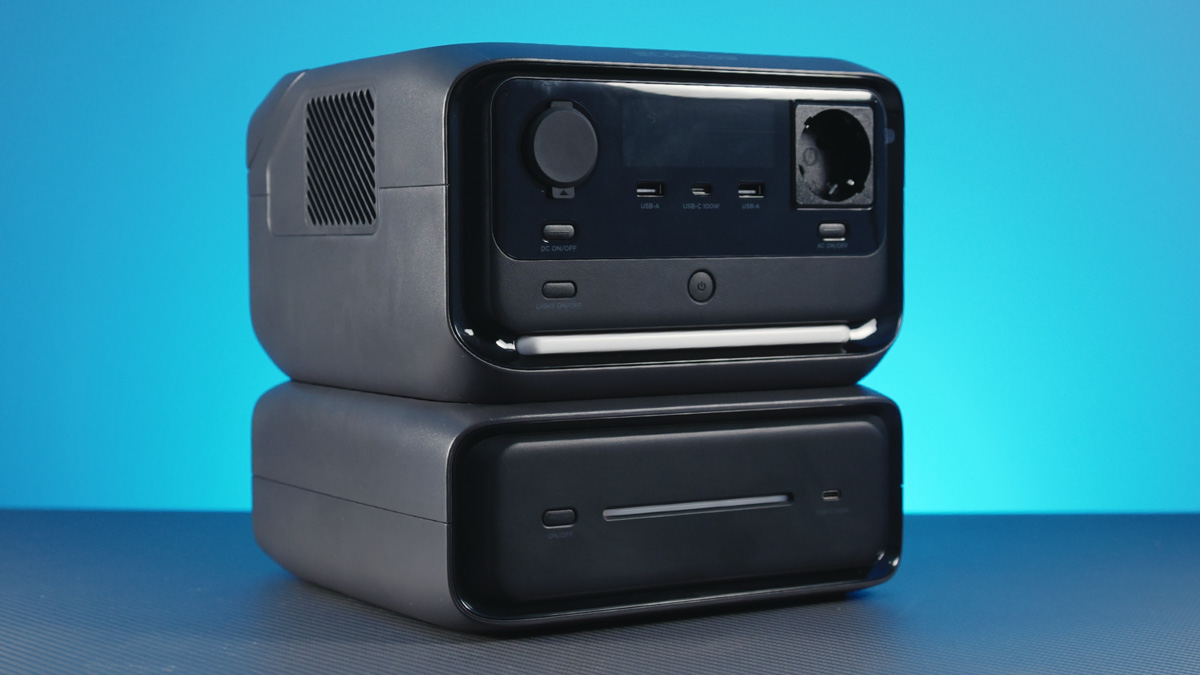
I want to start this review with a bit of a discussion. It began during a conversation I had with EcoFlow’s brand manager about what exactly makes the River 3 Max innovative. The entire River 3 series has, in many ways, disrupted the portable power station market – and even gone as far as making a whole category of electronics feel obsolete. Specifically, I’m referring to home uninterruptible power supplies (UPS), which this line arguably renders unnecessary.

TABLE OF CONTENTS:
Specifications
- Capacity: 572 Wh
- Rated power: 600 W
- Peak power: 1200 W
- Remote control: Wi-Fi, Bluetooth
- Flashlight: yes
- Power of the car socket: 100 W
- USB Type-A power: up to 12 W
- USB Type-C power: up to 140W
- Car socket (cigarette lighter): 1
- USB Type-A: 2
- USB Type-C: 2
- Number of Schuko sockets: 3
- Output waveform: pure sine wave
- Battery technology: LiFePO4
- Charging cycles: 3000
- Dimensions: 234×224×255 mm
- Weight: 8 kg
- Number of USB Type-A 2
- Number of USB Type-C 2
- Rated power of the station, W 500 – 650
- UPS speed: <10 ms
- Noise: <30 dB
- Optimum operating temperature: 20°C – 30°C
- Charging temperature: 0°C – 45°C
EcoFlow River 3 Max video review
Market position
So, here’s where the discussion gets interesting. My colleague believes the most advanced feature of the River 3 Max is its power output – and this applies not just to the River 3 Max, but also to the River 3 Plus. Why? Because the River 3 Max is essentially the River 3 Plus bundled with the additional EB300 battery. Bought separately, the two components would cost around $656 or €578. As a package, they’re priced at $607 or €535.

There’s also the EcoFlow River 3 Max Plus, which comes bundled with the larger EB600 battery. It costs $73 more than the standard Max version, but considering the added capacity, the price difference actually makes it a solid deal. Why that is – and more broadly, why EcoFlow’s approach to removable batteries is worth paying attention to – is something I’ll cover in a future piece.
Power
So, what kind of power are we talking about here? The River 3 Max delivers 600 watts of standard output – and up to another 600 watts using EcoFlow’s X-Boost mode. That brings the total to 1200 watts of continuous power, not just short bursts. There’s a catch, though: this extended output is designed for resistive loads – things like hair dryers, heaters, or compact air conditioners. It’s not meant for sensitive electronics like desktop PCs. Still, the key point is that it can sustain this level of output for as long as the battery holds up.

The only noticeable difference during high-power use is the increased fan noise. Under normal conditions, the cooling system runs at up to 30 dB, which is significantly quieter than its predecessor – the River 2, which had a noticeably louder operation.
Peripherals and dimensions of EcoFlow River 3 Max
However, the new model is not only quieter but also smaller and lighter than the River 2 Max, despite having the same 512-watt capacity. Its physical dimensions are reduced, yet it doesn’t have fewer ports. Instead, some of the connectors – specifically two Schuko outlets, XT60, C14, and USB-B – have been relocated to the back of the unit.
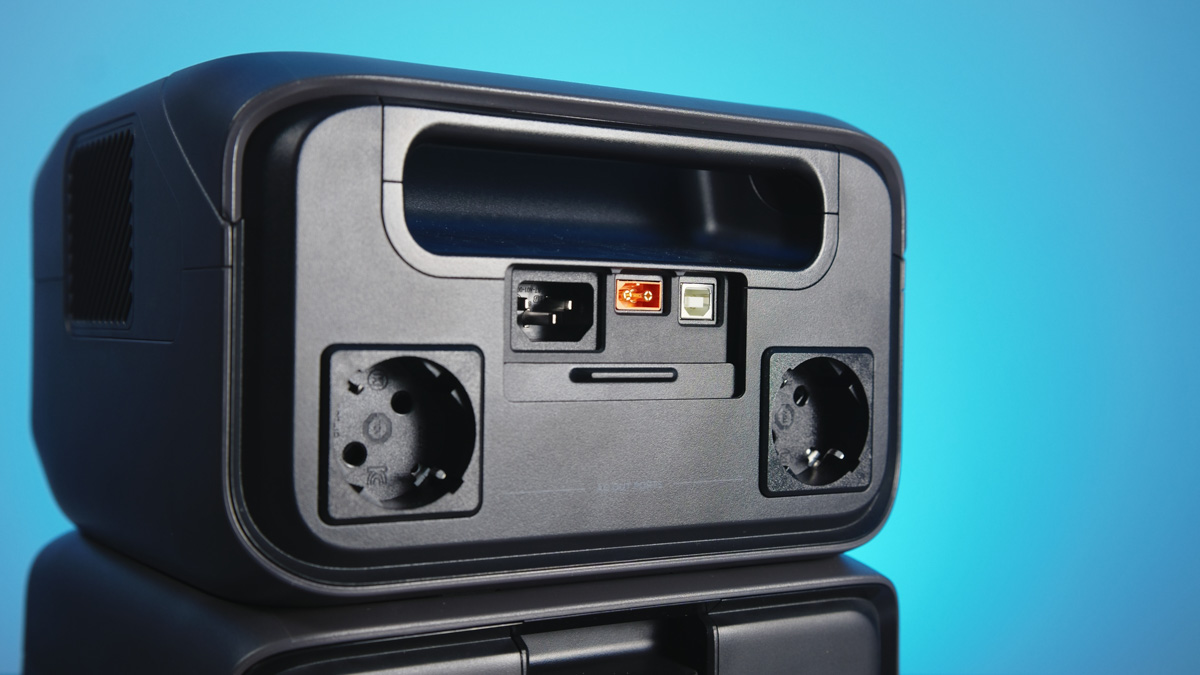
Yes, the River 3 Plus includes a USB port designed specifically for UPS functionality. Additionally, most of the ports on the back are covered with protective caps, giving the unit an IP54 rating for dust and water resistance.
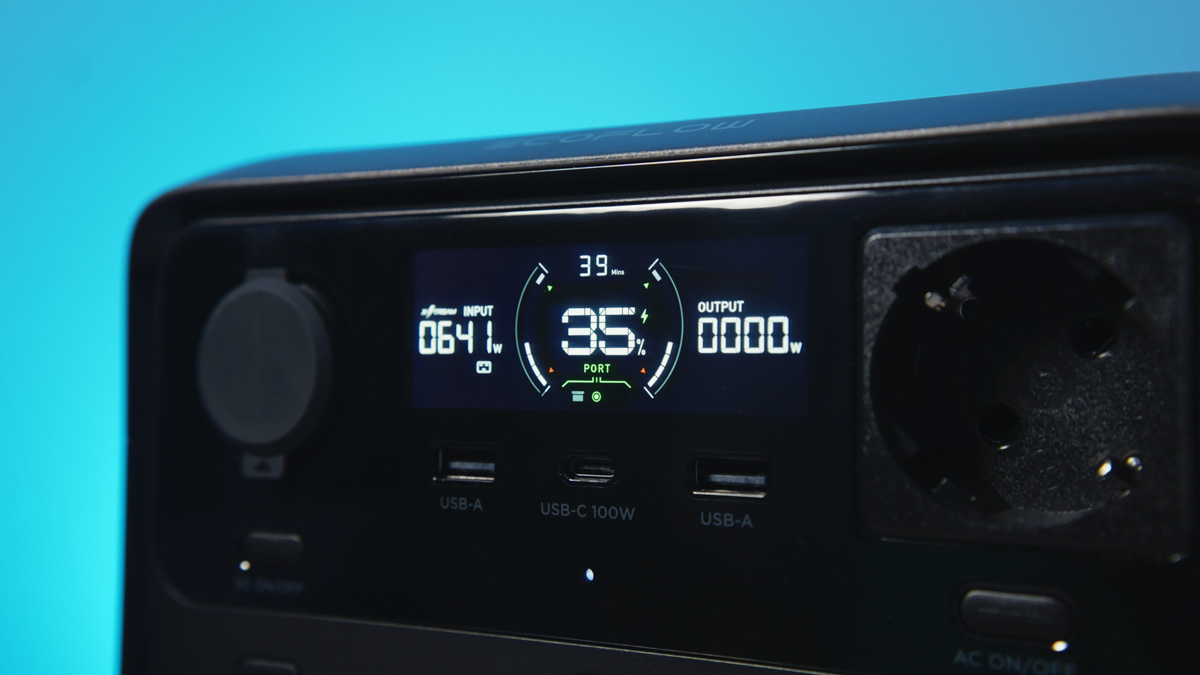
On the front, the River 3 Plus offers one Schuko outlet, a 12V car socket, a power button, two USB Type-A ports, one USB Type-C port, and a switch for the built-in flashlight – yes, the unit includes an integrated flashlight.
UPS
On one hand, the River 3 Max is a powerful portable power station capable of running high-wattage devices like hair dryers or heaters for extended periods. On the other hand, it also features built-in UPS functionality. In my view, this UPS capability is the key feature that sets the River 3 Max – and the River 3 Plus and even the base River 3 with the UPS designation – apart. There are two versions in the lineup, and the main difference between them is the presence or absence of this UPS function.
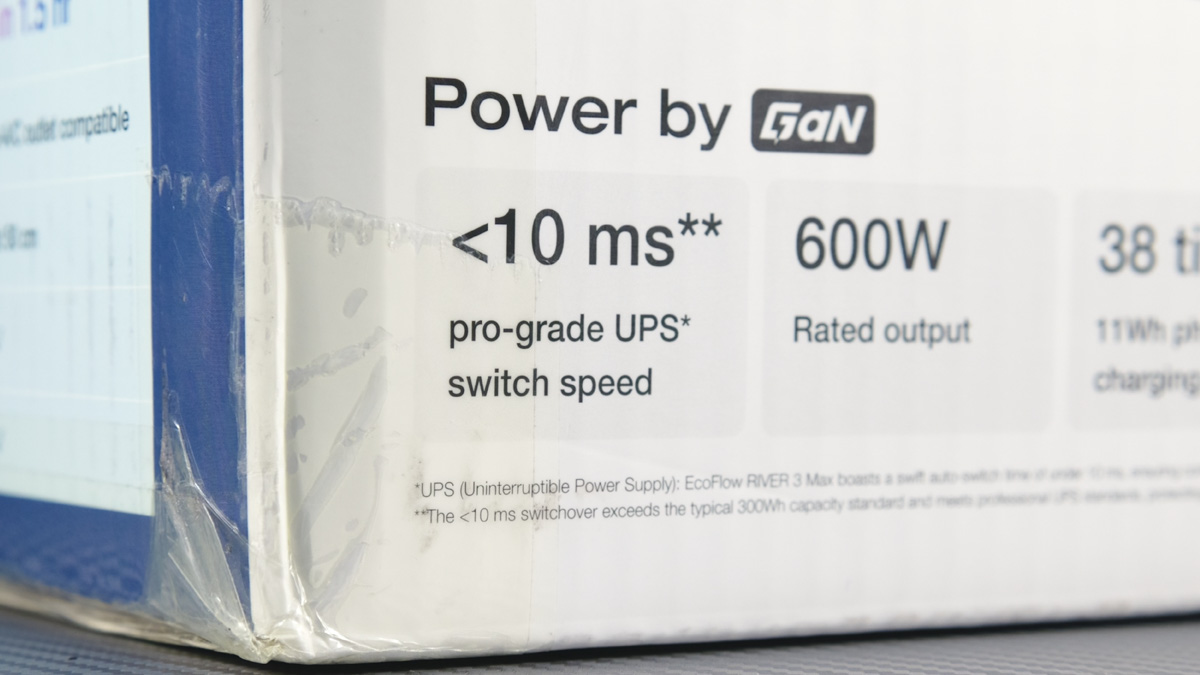
In my opinion, the inclusion of this UPS functionality has effectively rendered the entire home UPS market obsolete – including the units I’ve reviewed before. I have a whole collection of UPS devices with batteries that I can’t even sell for pennies because there’s simply no demand. EcoFlow offers the same feature for around 15,000 currency units, which makes it much more accessible. The device even includes a dedicated USB Type-B port for monitoring UPS status through EcoFlow’s proprietary Power Manager software. This monitoring isn’t limited to PCs – it can also work with devices like NAS (Network Attached Storage) systems.
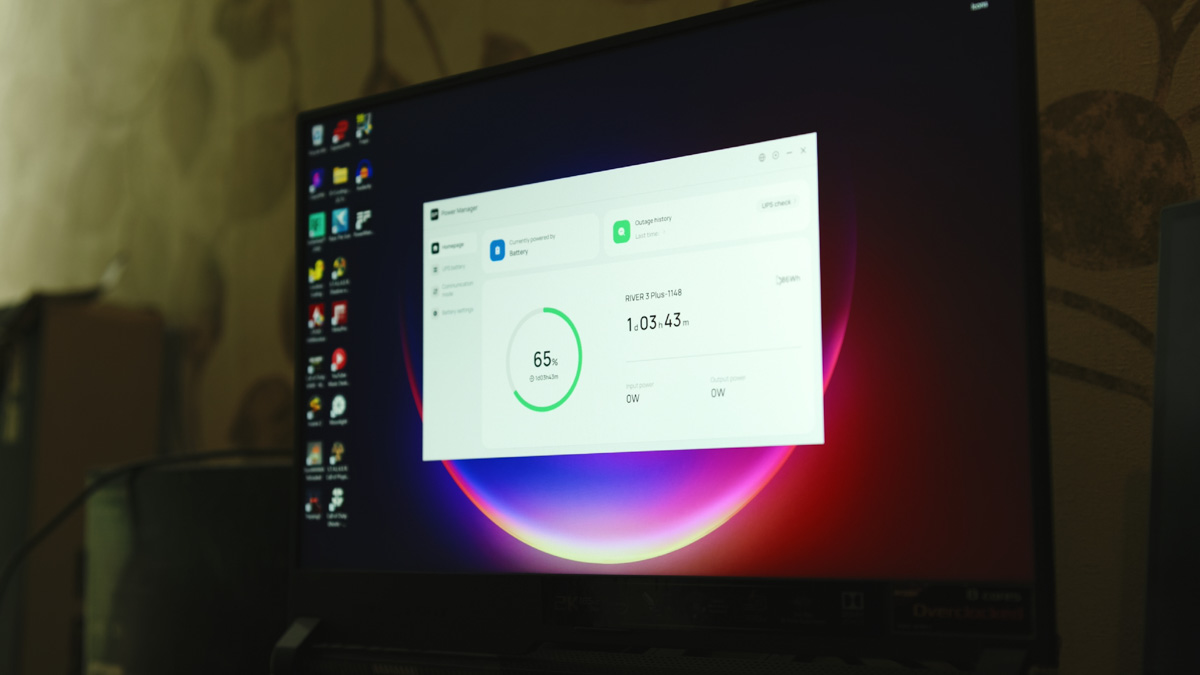
Yes, the power output here is limited to 600 watts, but the battery capacity varies depending on the model: 286, 572, or 858 watt-hours for the Plus, Max, and Max Plus versions, respectively. All use lithium iron phosphate (LiFePO4) batteries, rated for around 3,000 charge cycles. That translates to nearly 10 years of daily use while retaining up to 80% of the original capacity.
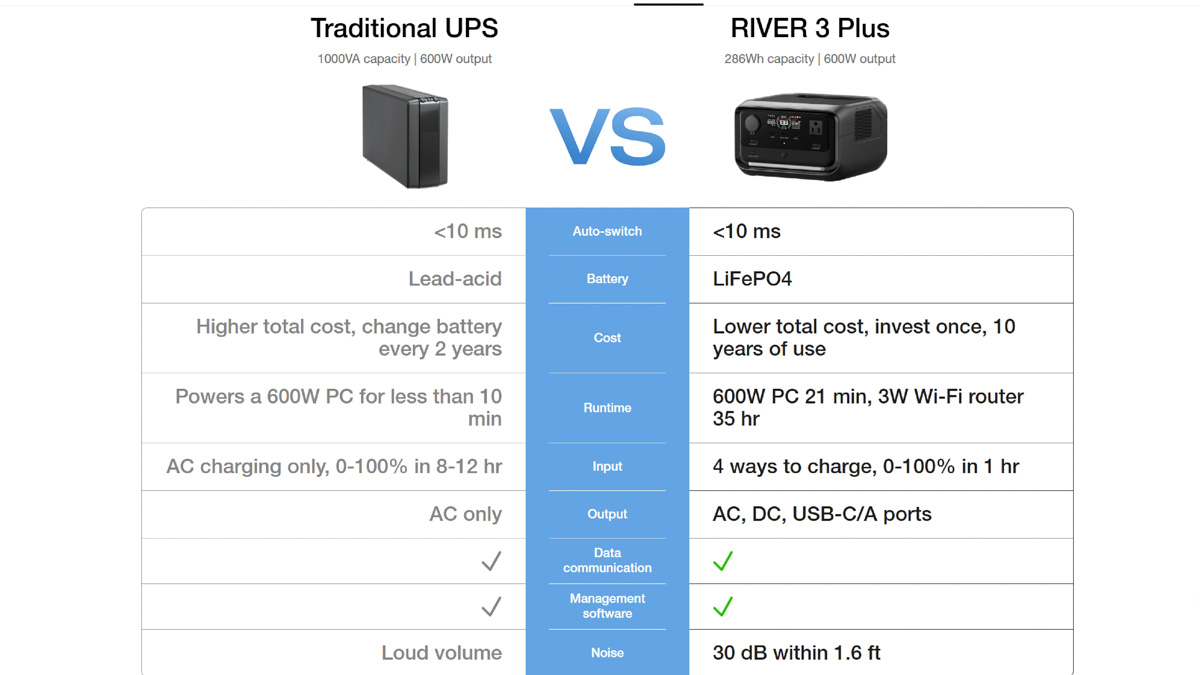
And it’s worth noting that EcoFlow includes extensive protection features under the umbrella term X-Guard. This suite of safeguards is one reason I trust EcoFlow power banks as well – I’ve reviewed them before, and you can find that review linked in the description.

Of course, traditional inverters with batteries are still cheaper and more powerful in some respects. But speaking from experience – as someone who recently had to relocate a studio in a hurry, hauling three inverters and three batteries along with a single EcoFlow unit – there’s a reason I unpacked the EcoFlow almost immediately while the inverters remain packed up. All of them.
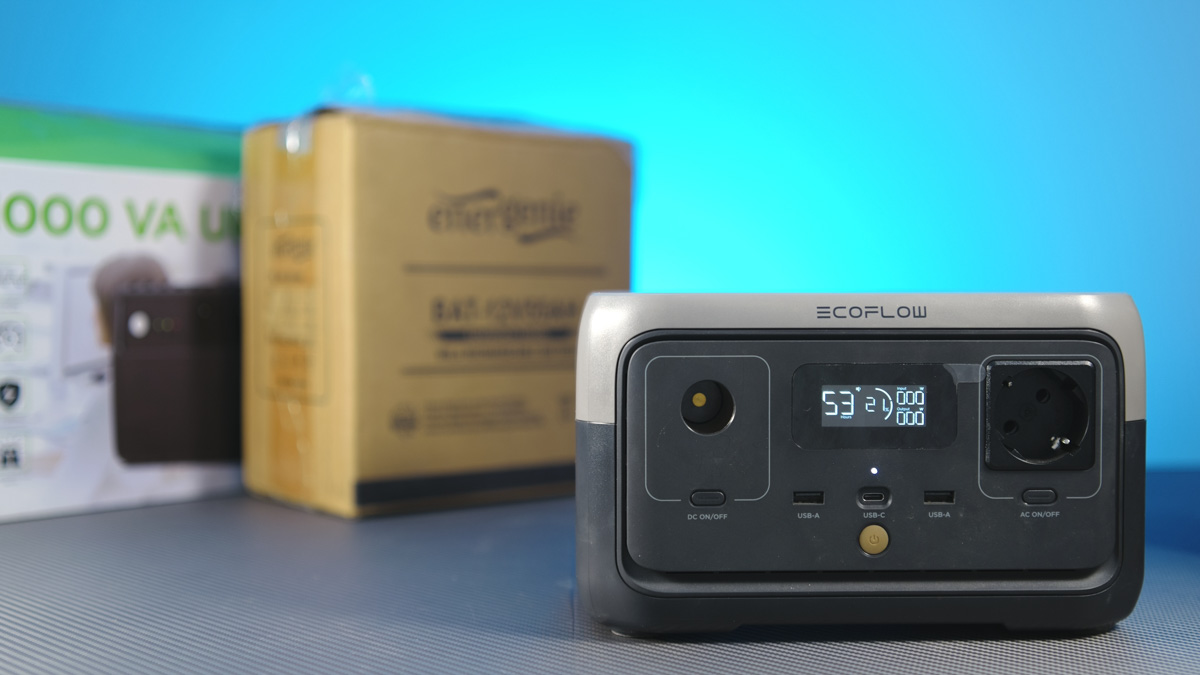
In other words, the market has made its choice – especially when you consider that the EcoFlow River 3 Max comes with an additional battery. This extra pack is attached almost permanently to the power station and can be transported together without issues. It can even be charged separately, thanks to a Type-C port on the unit itself.
Conclusions
To sum up, the EcoFlow River 3 Max, along with the River 3 Plus and River 3 Max Plus, represent a genuinely disruptive generation of portable power stations. Their innovation works on two fronts: they can reliably power heating appliances that previously required units nearly twice as expensive, and they effectively eliminate the need for traditional full-sized UPS systems.
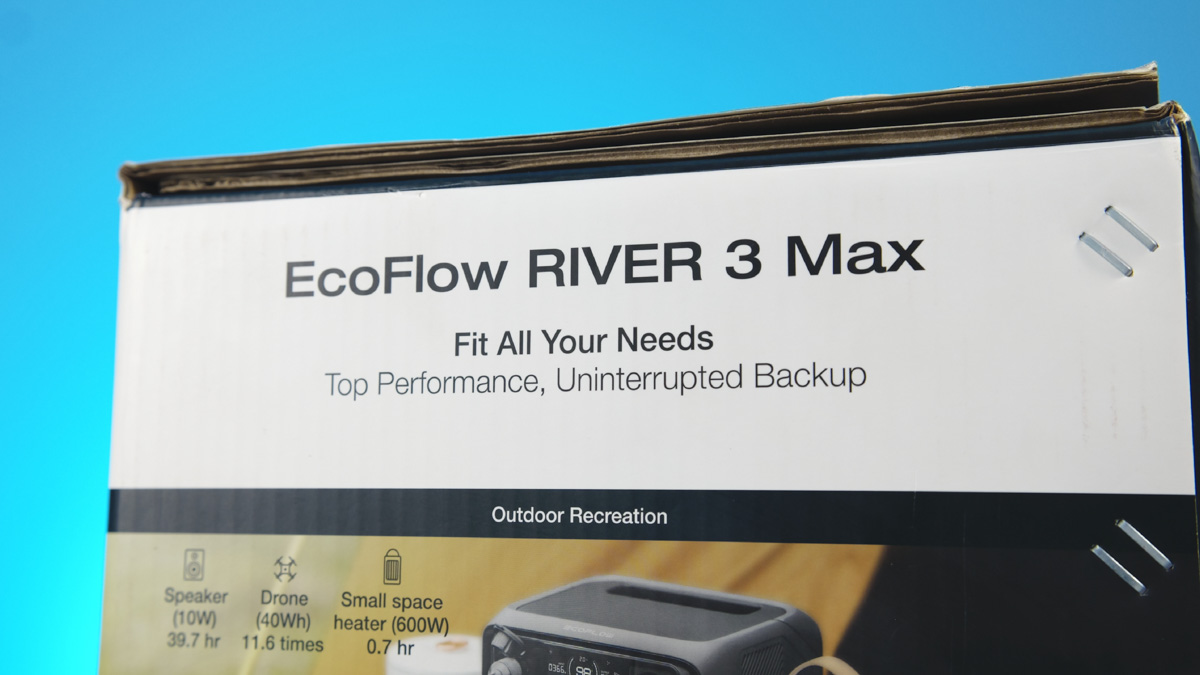
But the debate remains open: what matters more – the doubled power output, or the ability to function as a professional-grade UPS? What’s more important to you? Feel free to share your thoughts in the comments.
Read also:
- Acer APS321 1800W Review: Compact and Powerful Portable Power Station
- BLUETTI AC70 Portable Power Station Review: Compact Yet Powerful
- OUKITEL P2001 Plus Portable Power Station Review

