




© ROOT-NATION.com - Use of content is permitted with a backlink.
This scenario is common in many households: a video surveillance system works reliably until other network-intensive activities, such as streaming or online gaming, begin. As network demand increases, cameras may lose connection intermittently, video feeds become choppy, and recordings can be incomplete. The issue stems from the technical limitations of traditional solutions, which still dominate the Ukrainian security market. Dual-band Wi-Fi represents a new stage in the development of wireless video surveillance.
TABLE OF CONTENTS:
Limitations of single-band solutions
Most existing Wi-Fi cameras operate solely on the 2.4 GHz band. This setup is comparable to a single-lane road where buses, cars, and trucks all try to travel at the same time. The inevitable result is network congestion and reduced performance.
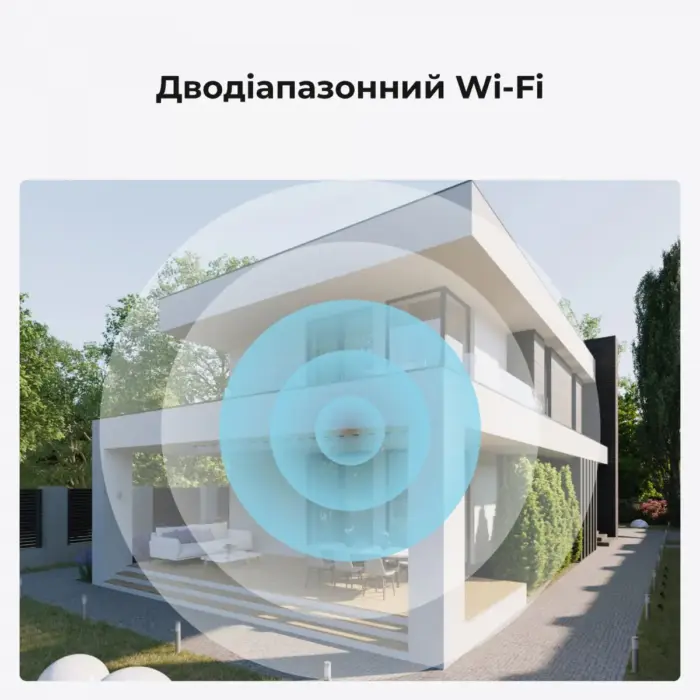
Most existing Wi-Fi cameras operate solely on the 2.4 GHz band. This setup is comparable to a single-lane road where buses, cars, and trucks all try to travel at the same time. The inevitable result is network congestion and reduced performance.
Read also:
- Using the Nintendo Switch 2: Few Games Available, but It’s Hard to Go Back
- Kiwi Ears Ardor Review: Versatile Over-Ear Headphones Focused on Sound Quality
Principles of dual-band technology
Dual-band Wi-Fi works by essentially doubling the available communication channels. A camera can access both the crowded 2.4 GHz band and the faster 5 GHz band. Reolink systems automatically monitor network load and select the optimal connection channel. If the primary frequency becomes congested with signals from neighboring networks or household devices, the system instantly switches to the alternative band with higher bandwidth.

The 5 GHz band offers higher data transfer speeds and typically experiences less network congestion, as older devices do not support it. However, this frequency has lower penetration through walls and other building structures, resulting in a more limited range.
Technological advantages in practical use
Guaranteed transmission stability
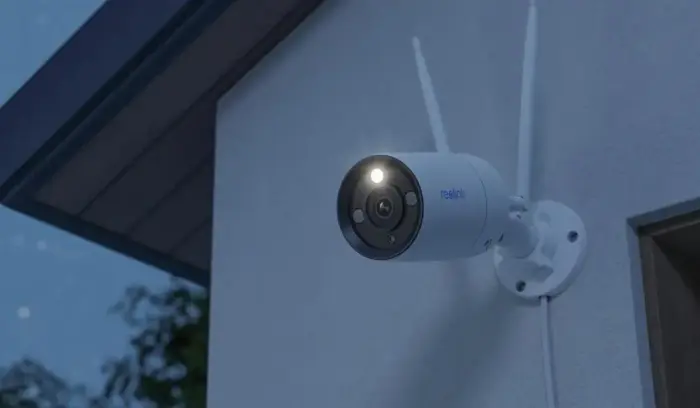
The Reolink camera, located in a remote part of the property, automatically adapts to the architectural features of the site. In conditions of significant distance and the presence of solid walls, the system selects the 2.4 GHz range with its better penetration capability. At short distances and high levels of radio frequency interference, the 5 GHz network is preferred.
Lossless transmission of high-quality video
Reolink cameras with 4K resolution require high network bandwidth. Dual-band technology provides the necessary data transfer speeds to maintain maximum image detail, allowing users to enjoy high-quality video alongside a stable network connection.
Read also:
- Why It’s Unlikely That the iPhone 17 Will Bring Any Significant Innovations
- Secret Behind Microsoft’s Profits: What the Company Hid for 15 Years
Intelligent distribution of network resources
A typical modern household scenario might involve a teenager live-streaming, parents watching 4K content on streaming platforms, and older children attending online classes via video calls. Previously, this level of network demand could disrupt a surveillance system. Reolink cameras with dual-band support intelligently distribute traffic across available frequencies, ensuring smooth operation for all connected devices.
Real-life usage scenarios using Reolink cameras as an example
Large private house
A three-story house with a large surrounding property requires a comprehensive approach to video surveillance. Cameras are placed at key locations: the main entrance (Reolink W320), the gate intercom (D340W), the garage (W720), the children’s play area (B310), and the second-floor terrace (W760). Indoor monitoring is handled by E320 or E340 series cameras. Each device independently selects the optimal frequency band based on its distance from the router and current network load. The result is synchronized operation across all system components, regardless of the number of active internet users.
City apartment
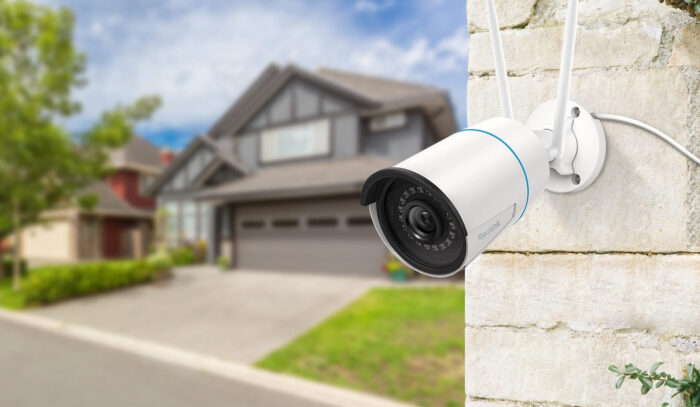
Modern residential complexes often have a very high density of Wi-Fi routers, turning the 2.4 GHz band into a zone of heavy interference. Reolink W330 and B320 cameras, installed on balconies and indoors, use the less congested 5 GHz band, ensuring reliable recording even during peak network activity.
Corporate environment and small business
Office buildings host a large number of wireless devices from multiple organizations. A surveillance system using Reolink E430 and W437 cameras maintains stable performance thanks to dynamic adaptation to changing radio frequency conditions. Each camera continuously monitors signal quality and automatically adjusts transmission settings.
NVS12W Network Video Recorder: Centralised Ecosystem Management
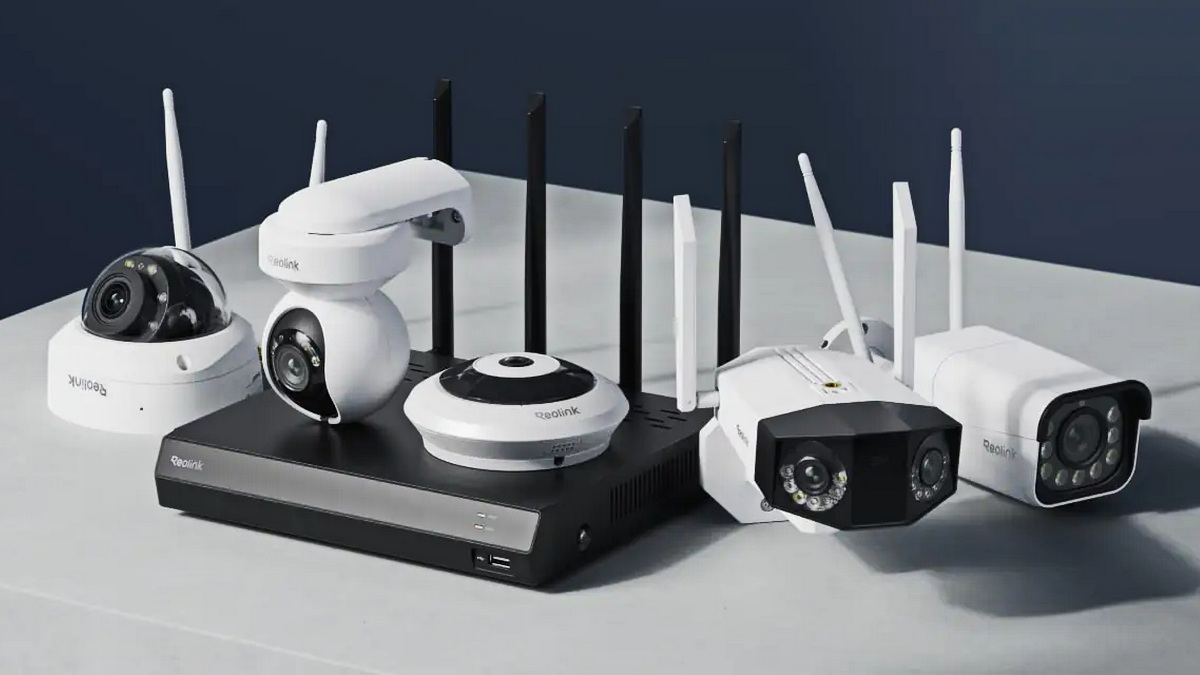
Large-scale security systems require coordinated management of multiple cameras, along with centralized processing and storage. The Reolink NVS12W network Wi-Fi recorder acts as the central coordinator for a dual-band ecosystem.
The device goes beyond simple video recording – it actively manages connected cameras and optimizes frequency channel allocation for each system component.
Today’s technologies as the foundation for tomorrow’s security
Dual-band Wi-Fi in video surveillance has evolved from a technological innovation to a practical necessity. The growing number of connected devices and increasing demands for video quality make Reolink’s dual-band cameras a key component of modern security systems.

Implementing Reolink dual-band cameras provides more than just surveillance equipment – it creates an intelligent system that adapts automatically to operating conditions and user needs. This technology brings a level of “smart” functionality, offering peace of mind and confidence in the security of a home or workspace.
Read also:
- How Chinese Companies Circumvent the US Ban on AI Chips
- Moto Watch Fit Review: A Practical Companion for an Active Lifestyle
- Motorola Moto Buds Loop Review: More Than Just a Stylish Accessory
- Inside Motorola Solutions: How Trust and Security Are Built

