





© ROOT-NATION.com - Use of content is permitted with a backlink.
Global sales of electric vehicles exceeded 2 million units in June. However, these overall figures mask the gap between the world’s largest automotive markets, a gap that is actually becoming increasingly apparent.
Read also: AERONAUT – everything that flies above the ground: aviation, UAVs and drones, rockets, and space
Europe is experiencing rapid growth thanks to government incentives, high fuel prices, and an ever-wider selection of affordable electric vehicles. At the same time, North America continues to lose ground after the Donald Trump administration eliminated the federal tax credit for electric vehicle purchases in the U.S. last September. Meanwhile, Chinese manufacturers are increasingly focusing on overseas markets as domestic demand weakens.

According to Benchmark Mineral Intelligence, 2 million electric vehicles were sold worldwide in June 2026, and cumulative sales since the beginning of the year reached 9.6 million units. This is 7% more than during the same period last year and 11% more than in May. “Europe remains the main driver of growth after another record month for electric vehicle sales,” says George Whitcomb, senior analyst for electric vehicles.
Read also: From Netherlands to Spain: Demanding Real-World Test of BMW iX2 eDrive20
He also noted that demand among European buyers is growing for new compact electric vehicles, which is significant because affordable models have long been one of the main gaps in Europe’s transition to electric transportation. Automakers have finally begun bringing profitable compact electric vehicles to market, which means buyers now have a wider selection at lower prices.
As for the rest of the world, EV sales there have risen by 98% year-over-year, reaching 1.4 million units since the beginning of the year.

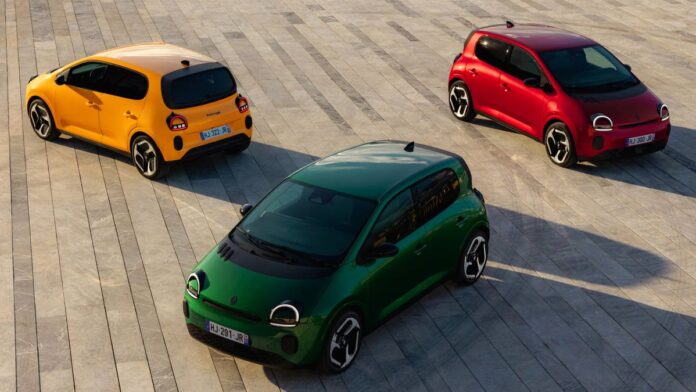
In June, Europe set a new monthly record for electric vehicle sales: they rose 28% compared to May and 31% year-over-year. France, Denmark, Spain, and Portugal all set new monthly sales records. French buyers continue to favor local brands. Renault held 20% of the French electric vehicle market in June, and four of the country’s five most popular electric vehicles bore the Renault emblem. The new Twingo, which began shipping just this spring, has already become the third most popular electric vehicle in France.
Read also: Car reviews
In June, the Volkswagen Group also began delivering a new lineup of affordable electric vehicles in Europe. Production of the Volkswagen ID.Polo, Cupra Raval, and Škoda Epiq is already underway, which will further expand the selection of more affordable models for European buyers.

Meanwhile, the situation in North America looks quite different. According to Benchmark, EV sales in the region have declined again since the start of the year, this time by 20%. Analysts attribute this primarily to a decline in government support following the elimination of the federal tax credit for electric vehicles in the U.S., a trend that has been observed for several months now. Sales of electric vehicles in the U.S. have not collapsed, but they have noticeably lost momentum since Congress repealed the tax credit for buyers.
Benchmark also notes that sales of GM and Ford electric vehicles are declining faster than the U.S. electric vehicle market as a whole, as both companies continue to revise their strategies for this segment.
Read also: SUNRA K6 electric scooter review: Quieter than water, faster than the wind
Meanwhile, an important development took place in Canada: in early July, Lotus shipped the first Chinese-made Eletre crossovers to the country under the Canadian tariff quota, which allows for the import of up to 49,000 Chinese electric vehicles at a reduced tariff rate of 6.1% instead of the previous 100% additional tariff.

China’s domestic electric vehicle market remains weaker than last year. In June, sales fell by 11% year-over-year, and by 14% year-to-date. At the same time, Chinese automakers are increasingly ramping up exports. In June, they shipped nearly 500,000 NEVs, setting a new monthly record. Europe remains one of the most important markets, and since the European Union imposed tariffs on Chinese battery-electric vehicles in 2024, many companies have shifted their focus to plug-in hybrids. This strategy has proven successful – sales of Chinese-made plug-in hybrids in Europe continue to grow.
The latest data from Benchmark confirms a trend that has been evident throughout 2026: Europe is only strengthening its market position, China is increasingly relying on exports, while the U.S. is paying the price for phasing out government incentive programs for electric vehicle purchases.
Read also:
- Bentley is preparing to unveil its first-ever electric car, the Torcal
- Acer Nitro ES Series 4 Select Electric Scooter Review: Comfortable, Versatile, and Long-Lasting