





© ROOT-NATION.com - Use of content is permitted with a backlink.
The Qualcomm Snapdragon 8s Gen 3 is a somewhat deceptive chip. At a glance, it closely resembles its more powerful sibling, the Snapdragon 8 Gen 3. It’s easy to confuse the two – especially for a casual buyer or someone who’s been out of the loop on mobile SoCs, perhaps due to something as disruptive as a war. I fell into that category myself when reviewing the Motorola Edge 50 Ultra.
That said, the situation isn’t as bleak as it might seem. If you were aiming for a flagship phone and ended up with a device powered by the “s” variant, there’s a good chance you won’t even notice the trade-offs – especially if you’re not expecting top-tier gaming performance or cutting-edge mobile photography. In fact, this kind of comparison is genuinely useful. The trend of slightly scaled-down flagship chips tends to be consistent, with a fairly predictable pattern. So it’s reasonable to expect similar compromises in the upcoming Snapdragon 8s Gen 4 as well.
TABLE OF CONTENTS:
Qualcomm Snapdragon 8s Gen 3 video review
Specifications
So, the Qualcomm Snapdragon 8s Gen 3 – identified by the model number SM8635 – is essentially a toned-down version of the flagship Snapdragon 8 Gen 3.
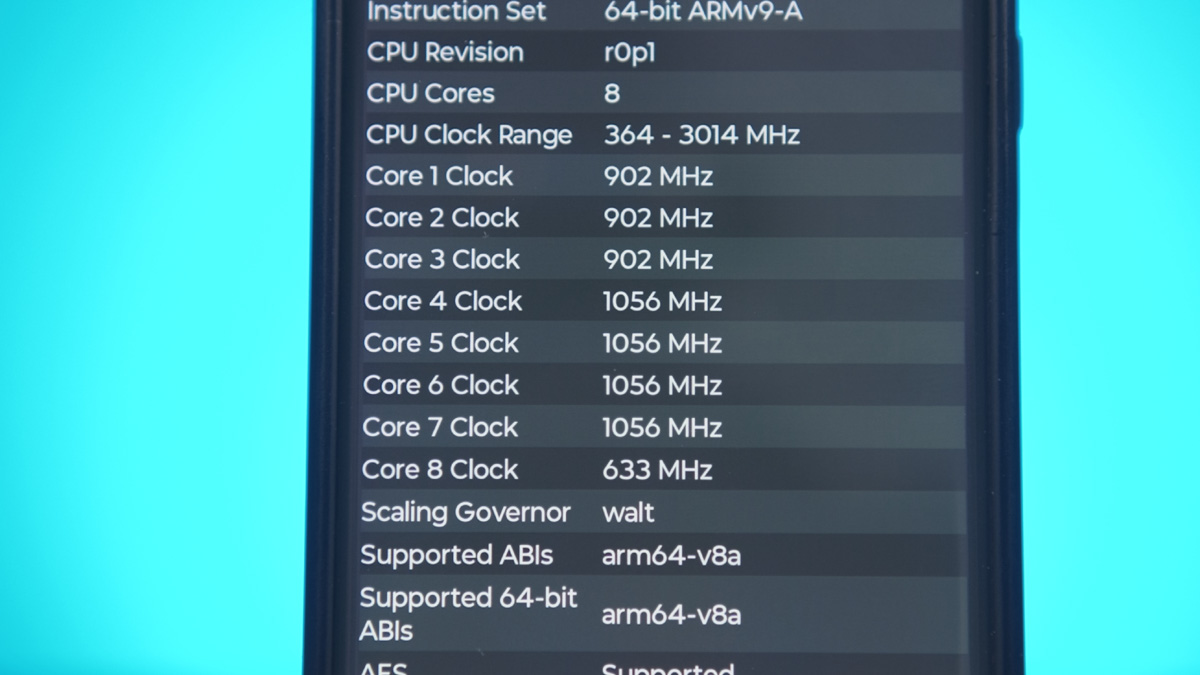
The system-on-chip, released in 2024, features a CPU configuration with one Cortex-X4 core running at 3 GHz, four Cortex-A720 cores at 2.8 GHz, and three Cortex-A520 cores at 2 GHz. It includes 1 MB of L2 cache and 8 MB of L3 cache. The chip is manufactured using a 4nm process. RAM is LPDDR5X, operating at 4200 MT/s.
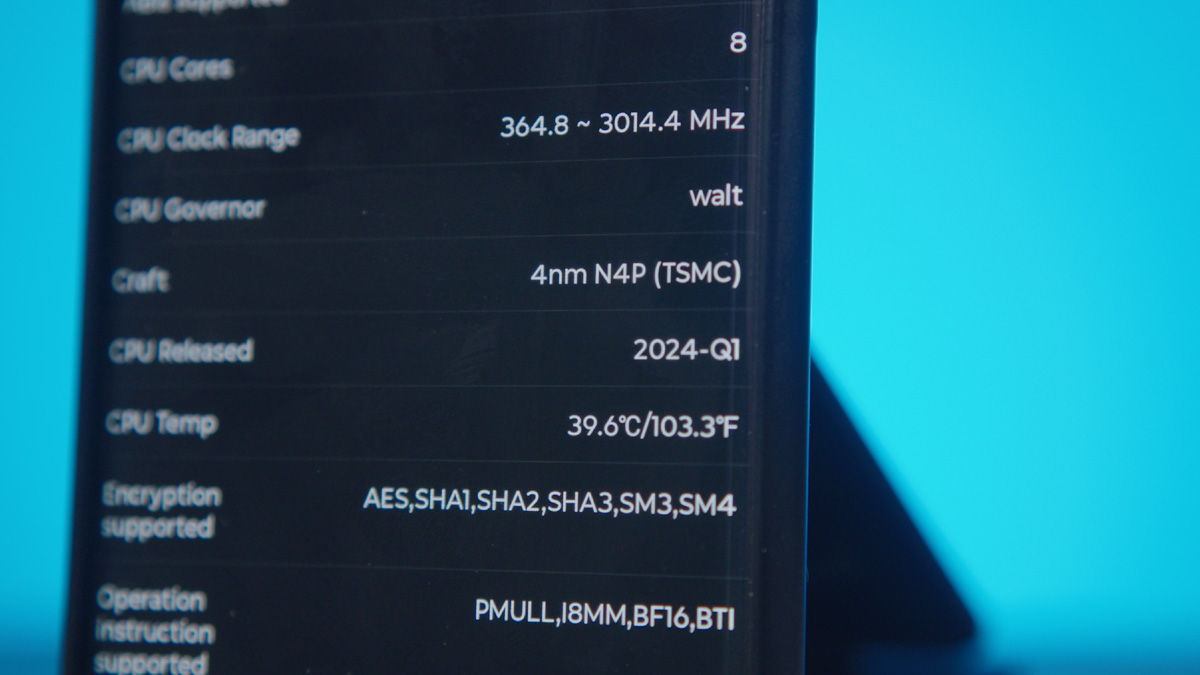
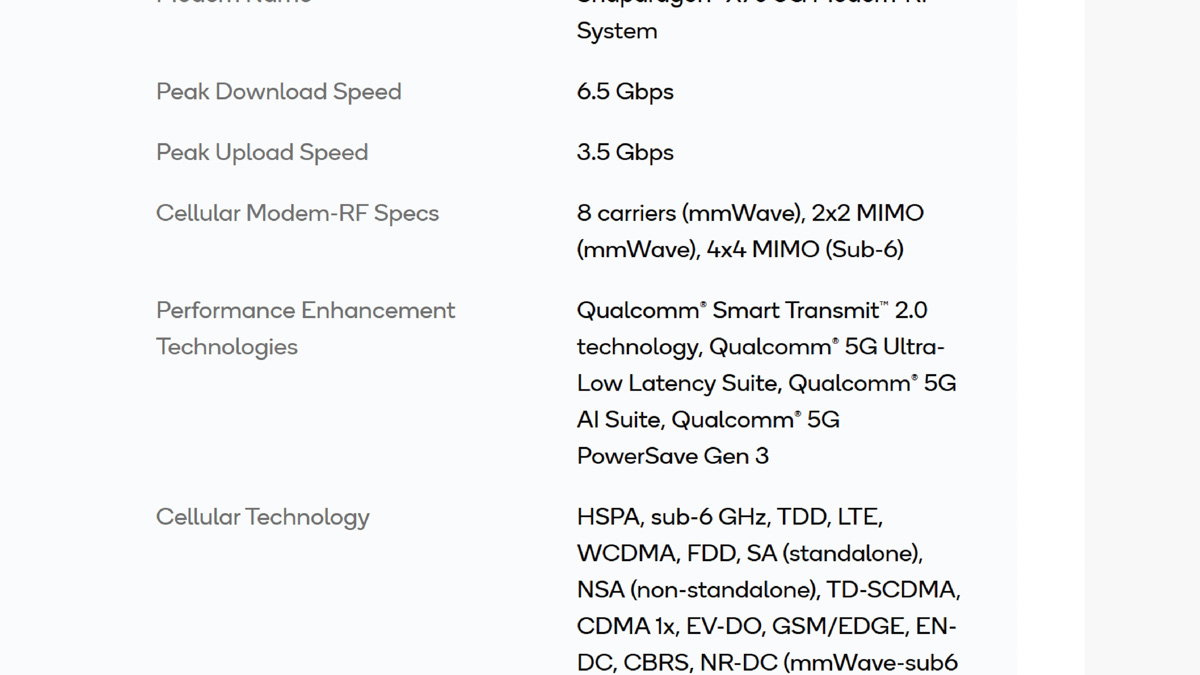
Storage is supported up to UFS 4.0. Video codec support includes AV1 and VP9. The modem used here is the Snapdragon X70 5G, with a peak data transfer speed of up to 6.5 Gbps.
Cameras
Now, when comparing it to the flagship Snapdragon 8 Gen 3 – and even the previous Gen 2 – the first difference I noticed came up during camera testing. That’s because the ISP, or Image Signal Processor, in this simplified version is, as expected, also simplified.
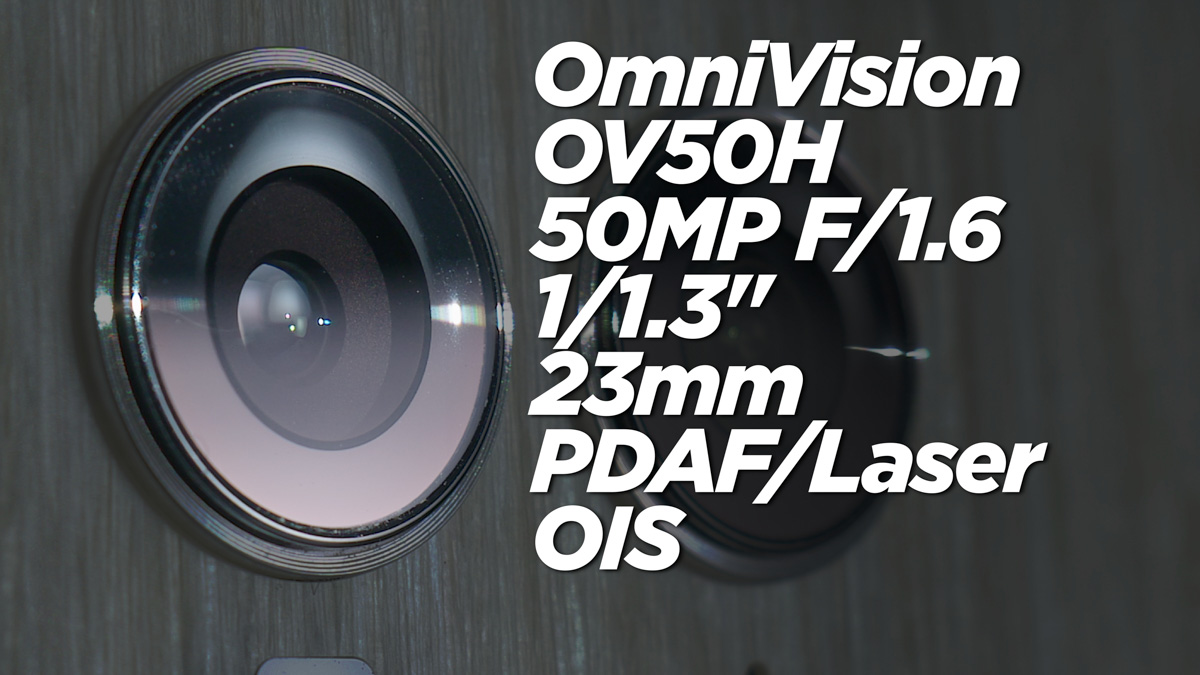
It still uses an 18-bit ISP, but its video recording capabilities are limited. The maximum supported resolution is 4K at 60fps, whereas flagship models now offer 8K recording with relatively solid performance.
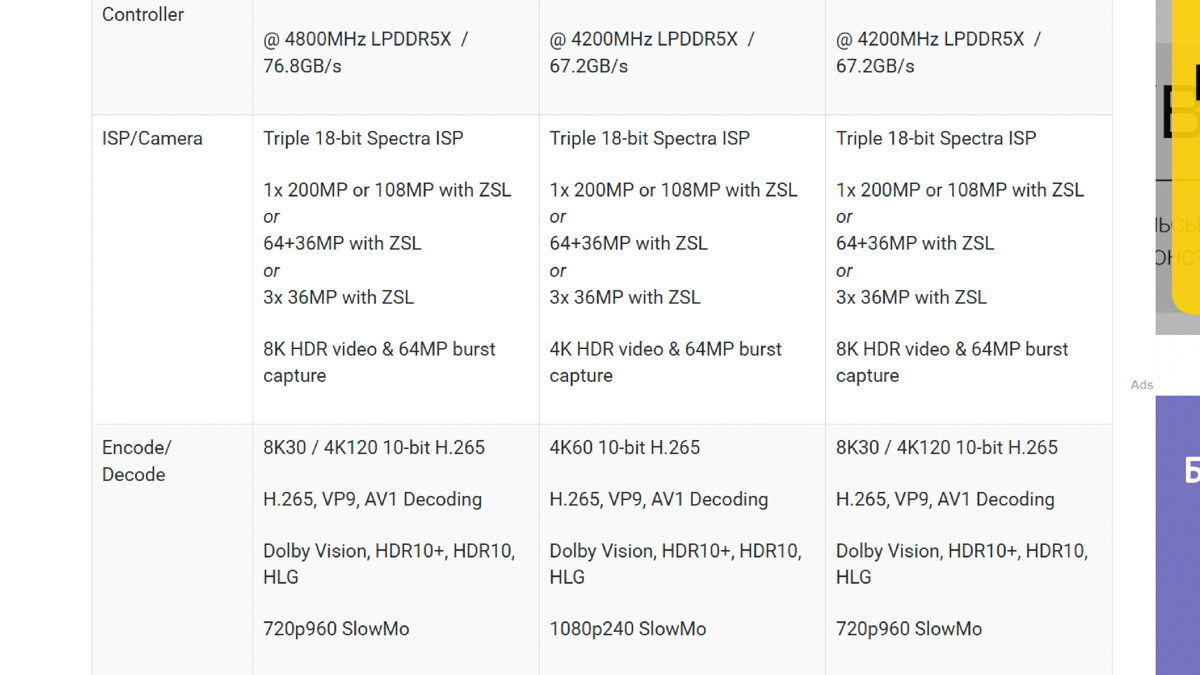
This matters if you plan to shoot reports, music videos, or slow-motion clips with manual control over shutter speed or ISO. I’ve mentioned before that Motorola’s native camera app is only suitable for basic video recording. More advanced apps, like Blackmagic Camera or HedgeCAM 2, tend to reduce quality by about one level, roughly speaking.
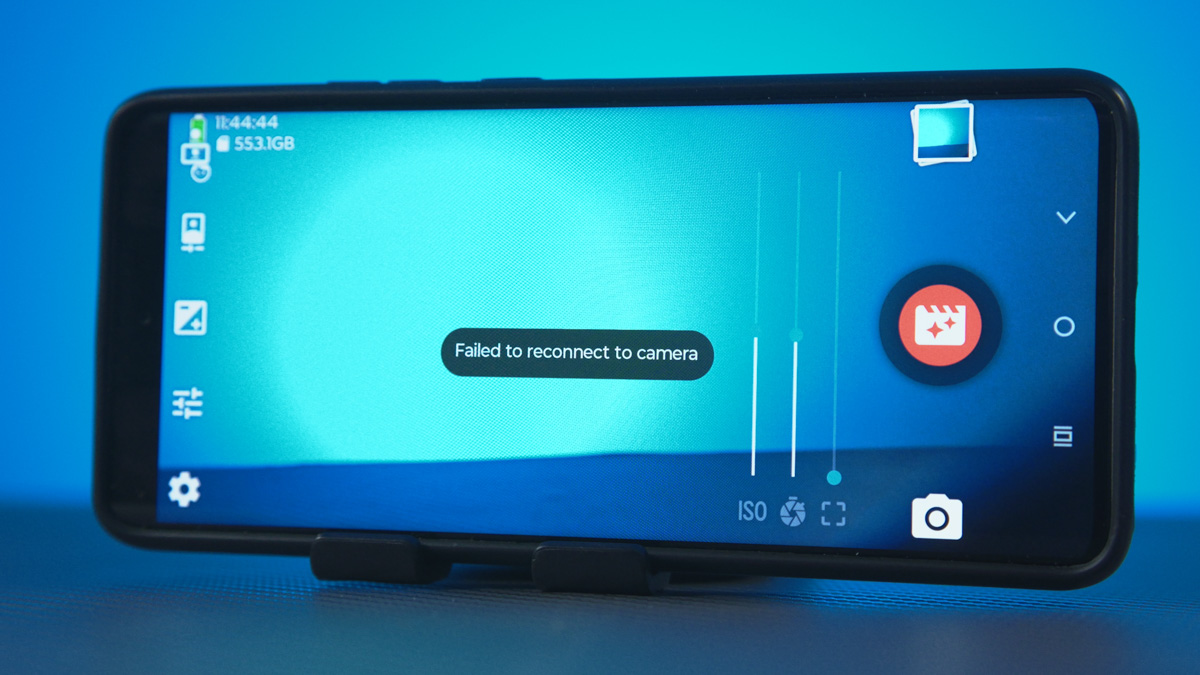
In other words, if the native camera app supports 8K at 30fps, custom apps are limited to 4K at 60fps. If the native app maxes out at 4K60, custom apps can’t do better than 4K30. The same applies to Snapdragon 8 series chips. However, if you’re not a professional videographer like me, this probably won’t affect you at all. You’re unlikely to use anything more advanced than the native camera app, and that’s perfectly fine.
Performance
Next is the drop in performance, particularly in gaming. The flagship has noticeably faster cores, more cache, and a slightly higher maximum heat threshold. Its Adreno 750 GPU is about twice as powerful as the Adreno 735 found here. This translates to nearly a 40% performance gap in AnTuTu benchmarks, especially in graphics performance.

But there are two caveats here. Scoring around 1.4 million in AnTuTu is still quite high. No, it’s not anywhere near the level needed for Cyberpunk 2077, of course. However, you can run DOOM 3 at ultra settings with a stable 60 FPS. In my opinion, that’s sufficient for most users.
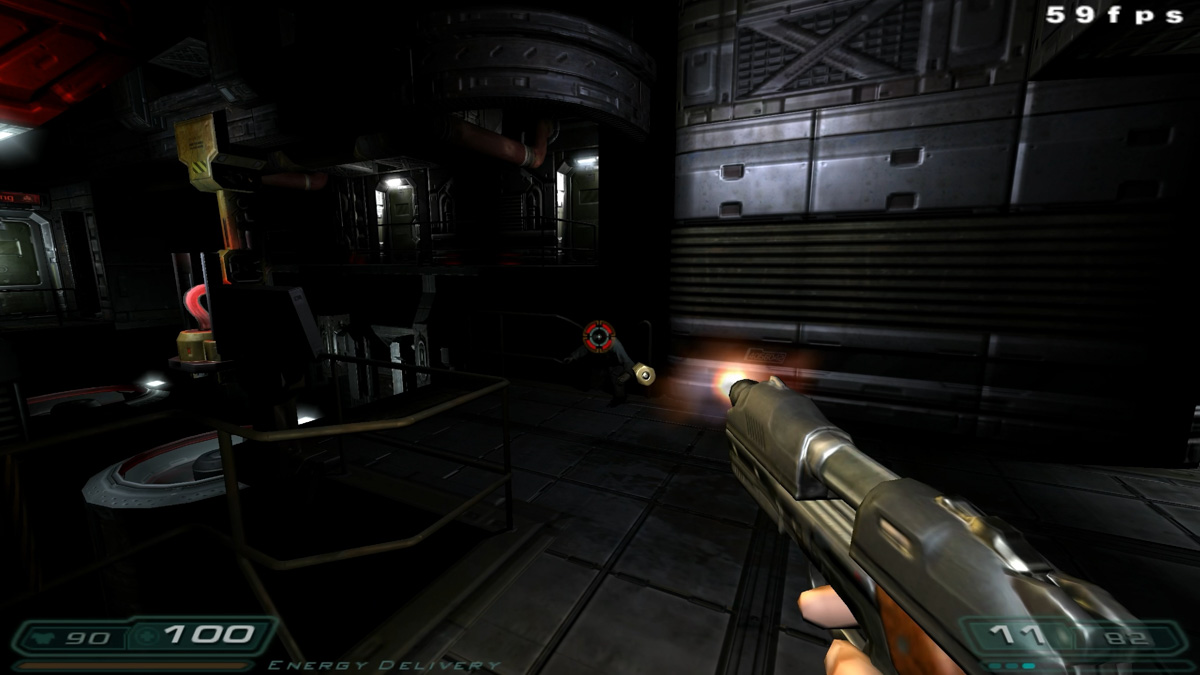
Additionally, the memory subsystem remains equally efficient, and UFS 4.0 speeds are still faster than many PCIe 3.0 drives found in PCs. While improvements are possible, this is a very respectable performance level.
Where is everything okay?
Where are the performance drops compared to the flagship? Mostly minor or non-existent. Charging speed still maxes out at 120W. Power efficiency is slightly better too, with 7.5W compared to the flagship’s 8W. For connectivity, it includes 5G, Bluetooth 5.4, Wi-Fi 7 with 2×2 MIMO, NFC – basically all the current standards.
Conclusions
Yes, the Snapdragon 8s Gen 3 is weaker than the flagship. However, it isn’t arbitrarily or haphazardly limited. The restrictions target features that aren’t essential for the lifestyle and business smartphone audience, like that of the Motorola Edge 50 Ultra. If you’re a camera enthusiast or running demanding games like Cyberpunk 2077 through emulation, this SoC won’t be suitable.
But if you’re simply looking for a fast, current device with top-tier data speeds, moderate heat output, and still solid battery life – without any compromises that matter to you – then this chip should work well.
Read also:
- Motorola Edge 50 Ultra Review: Again the Top? Yes, Again!
- Motorola Edge 60 Fusion Review: Moto AI, MIL-STD 810H and Elegant Design
- Everything You Need to Know About MIL-STD-810H in Smartphones: A Look at the Motorola Edge 50 Neo

