




© ROOT-NATION.com - Use of content is permitted with a backlink.
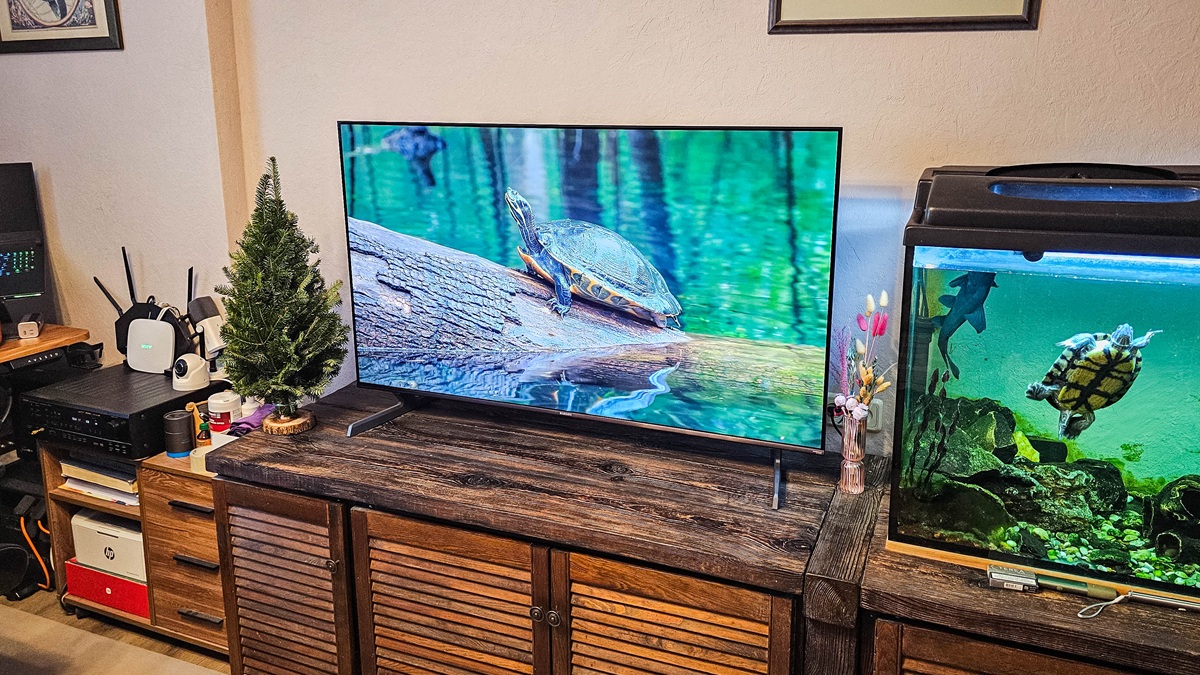
Today I’m testing the Xiaomi TV S Pro Mini LED 55 (L55MB-SME), a television from the new 2026 lineup featuring a 55-inch 4K QLED panel. This is a recent addition to the Ukrainian market, making it relevant to examine its capabilities in detail. We’ll start by looking at the display technology and core specifications, then move on to how these characteristics translate into real-world use.

Read also: Xiaomi 15T Pro Review: Leica Optics, 144 Hz Display, and MediaTek 9400+
TABLE OF CONTENTS:
Why QLED?
If you’re currently choosing a television and find OLED pricing too high, it’s worth considering QLED models regardless of brand or specific lineup. There are practical reasons for this.
At present, QLED televisions offer a balanced compromise between image quality and cost for most common use cases. In terms of price, they sit between entry-level LCD TVs (IPS and VA panels) and higher-end OLED models, while delivering noticeably better brightness and color performance than basic LCD solutions.

In essence, QLED is an enhanced form of LCD technology. A quantum dot layer (acting as a color filter) placed between the backlight and the image-forming pixels increases brightness and color saturation, while enabling wider color gamut coverage and improved dynamic range. Mini LED backlighting – using a large number of small LEDs distributed across the panel – provides more uniform illumination and allows for localized control of backlight zones.

Because of these characteristics, QLED panels outperform IPS and VA solutions across most key parameters, while remaining available at relatively reasonable prices. Compared to OLED, QLED displays cannot achieve the same level of true black reproduction or maximum contrast. However, they offer higher peak brightness, making them better suited for brightly lit environments and more consistent image quality in such conditions. In addition, QLED panels are not susceptible to burn-in, which makes them more durable over time than OLED displays.
Read also: What to Gift a Xiaomi Fan for Christmas and New Year
Xiaomi TV S Pro Mini LED 55 Specifications
- Screen: 55″, anti-glare coating, QLED matrix type, Mini LED backlight type (408 backlight zones), 4K resolution (3840×2160), 144 Hz screen refresh rate (can operate at 288 Hz in FHD mode), viewing angle 178°/178°, peak brightness 1700 nits
- Special technologies: Dolby Vision, Dolby Atmos, HDR10+, HLG, Filmmaker
- Operating system: Google TV
- Communications: Wi-Fi 6 dual-band 2.4GHz/5GHz, Bluetooth 5.2, Miracast, Google Chromecast, Apple AirPlay
- Controls: Multimedia remote control, voice control
- Connectors: USB 2.0 x 1, USB 3.0 x 1, HDMI x 3, Ethernet-lan x 1, S/PDIF (digital) x 1, AUX OUT x 1
- Tuners: DVB-T2, DVB-C, DVB-S2, CI +
- Sound: 30 W, Dolby Atmos, Harman AudioEFX tuning
- Weight: without stand 12.9 kg, with stand 13 kg, with box 16.5 kg
- Dimensions: without stand 1225 x 71 x 709 mm, with stand 1225 x 330 x 780 mm, with box 1400 x 134 x 830 mm
- Additional: VESA 300 x 300 wall mount standard
- Processor: Quad cortex A73
- Video card: Mali-G52 (2EE) MC1
- RAM: 3 GB
- Storage: 32 GB
- Operating temperature: 0°C to 40°C, storage temperature: -15°C to +45°C
- Warranty: 1 year

Positioning and price
The Xiaomi TV S Pro Mini LED 55 (L55MB-SME) is a modern 55-inch TV, and this screen size is currently the most popular among consumers because it is best suited for medium-sized living spaces of 20-30 m². The comfortable viewing distance for this TV is approximately 3-4 m, which is typical for a city apartment or a small house in a typical Ukrainian neighbourhood.

However, largely due to their popularity, the 55-inch TV segment is highly saturated and therefore very competitive. Within the QLED category specifically, the Xiaomi TV S Pro Mini LED 55 is not the most affordable option on the market. At the time of writing, its price is around $785. That said, it offers several characteristics that help justify this positioning.
The primary differentiators are the display specifications: a peak brightness of up to 1700 nits, a native refresh rate of 144 Hz (or up to 288 Hz in Full HD mode), and support for Dolby Vision, which enhances HDR content playback. Beyond this, the TV also has a number of advantages over lower-priced competitors, which will be discussed in more detail in the relevant sections below.
Packaging, included accessories, and setup
The packaging is solid and practical. The TV comes in a thick cardboard box, with foam inserts securing the unit inside. Additional protection is provided by rigid fiberboard corner supports, while the screen is covered with a thick protective film and the edges are also wrapped. Overall, the packaging is sufficient and leaves little room for concern during transport.


The package includes the TV itself, two power cables with European and UK plugs, two plastic stand legs, a set of screws for attaching the stands, an additional cable holder, a remote control without batteries, a user manual, and a warranty card.
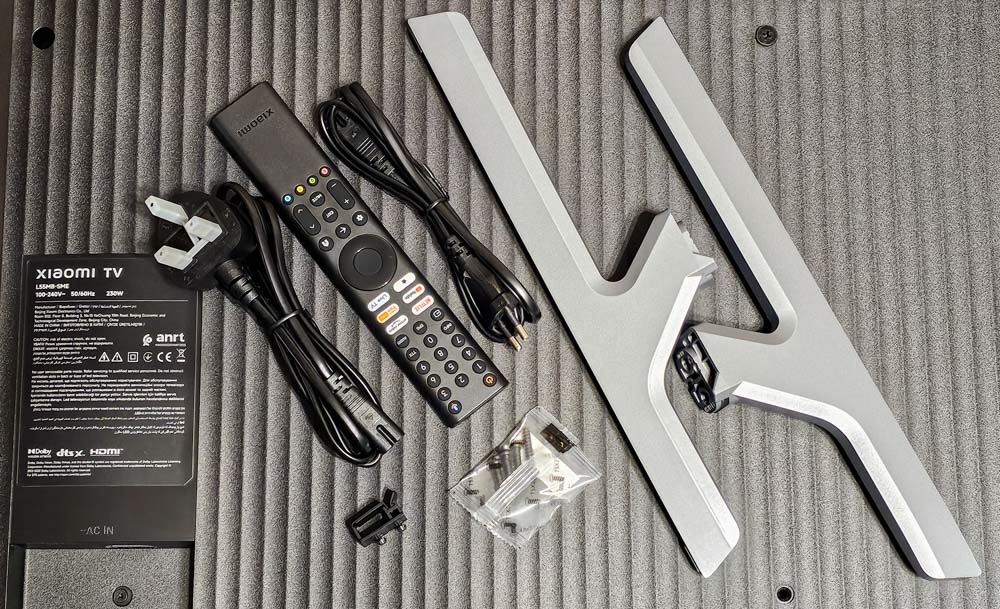
If you plan to place the TV on a stand, the first step is to attach the legs using a Phillips screwdriver. For wall mounting, the rear panel includes threaded mounting points compatible with the VESA 300×300 standard. Next, you’ll need to insert two AAA batteries or rechargeable cells into the remote control. Finally, connect the power cable to the TV and plug it into an outlet; the indicator light at the center of the lower edge shows that the TV is ready to be powered on.

Design, materials, and build quality
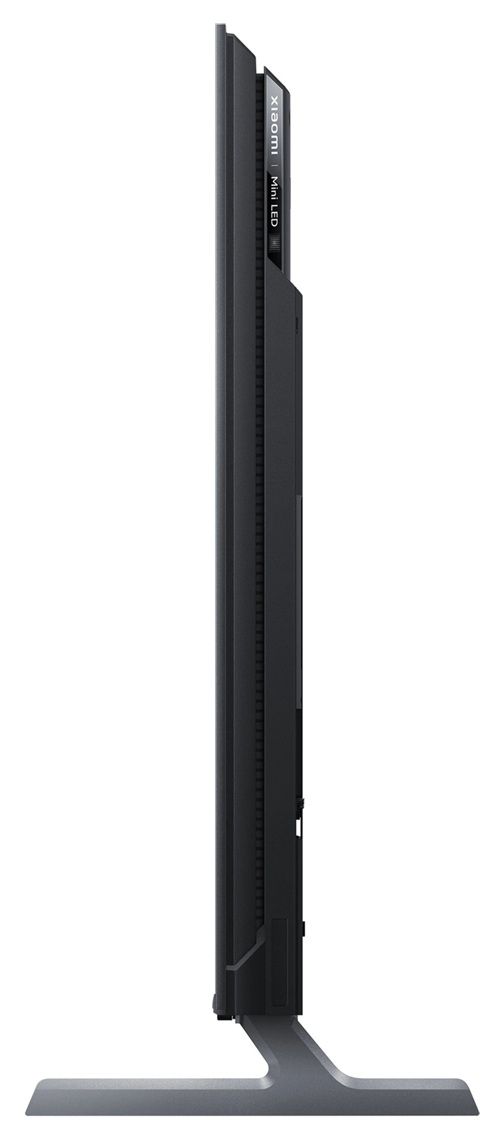
Overall, the Xiaomi TV S Pro Mini LED 55 (L55MB-SME) has the typical appearance of a modern television and does not stand out significantly from competing models. One notable detail is the near “frameless” design, with minimal plastic surrounding the front of the display, though this approach is now fairly common. Below the screen, there is a thin dark titanium–colored strip with the brand logo centered and a HARMAN AudioEFX marking in the right corner.


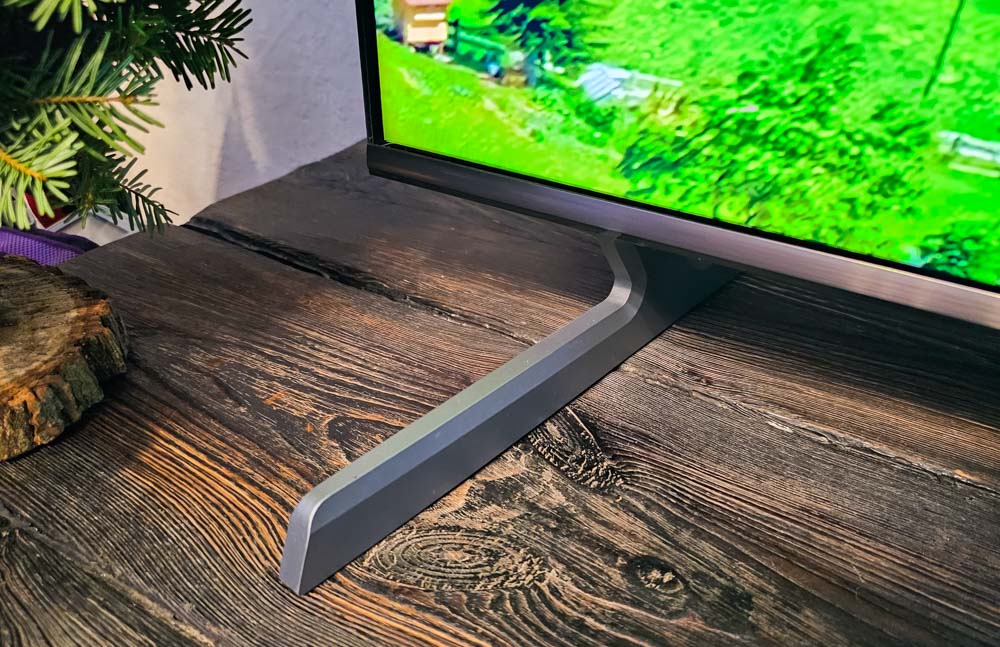

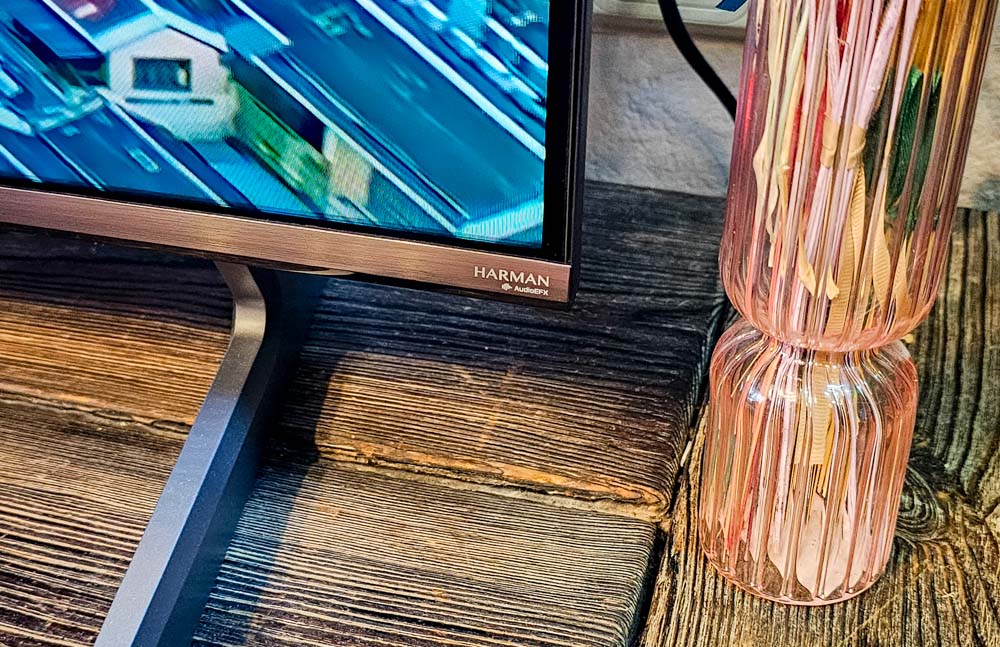


The TV’s stand legs are made of sturdy molded plastic in a gray metallic finish, slightly lighter than the front lower panel. They feel solid and reliable, and are attached to the chassis using the included screws.
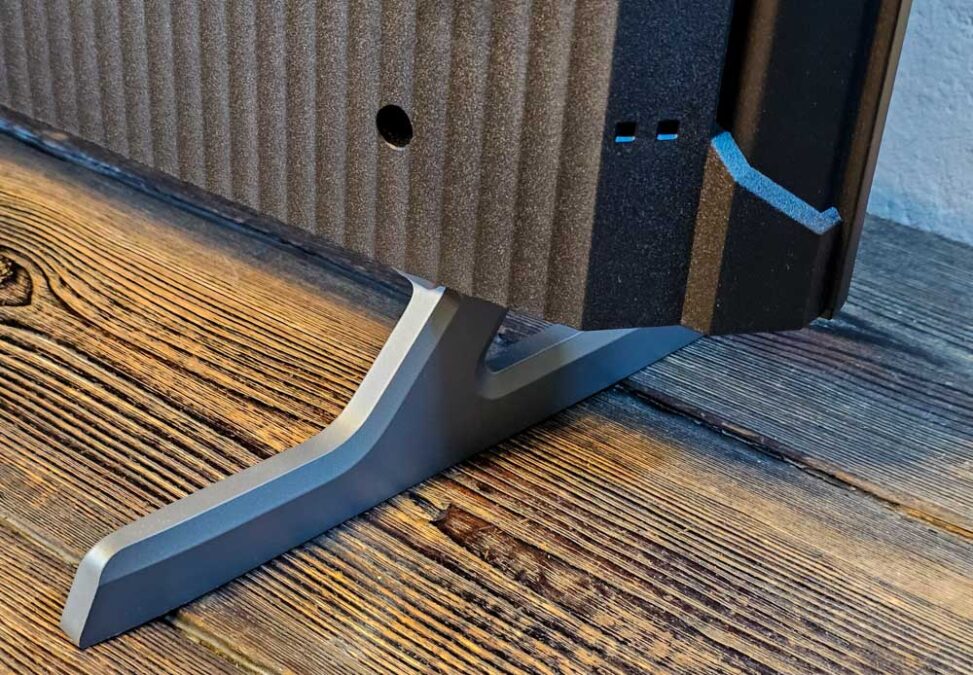

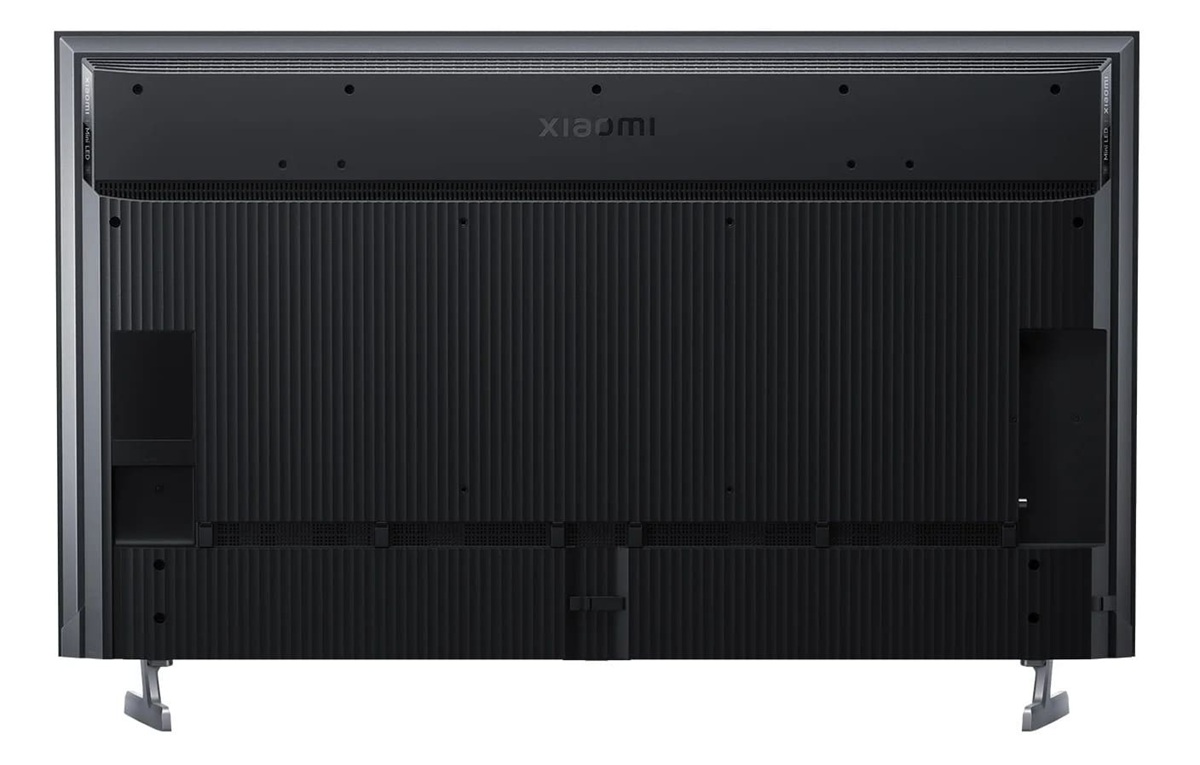
The rear panel of the TV is made of matte plastic that also appears sturdy and of good quality. It features several recessed sections for ports and connectors, along with numerous ventilation openings around the perimeter.

It’s also worth noting the recessed areas with cable management clips. This design allows cables to be neatly routed and exited from a single point behind the TV, which helps keep the setup organized.
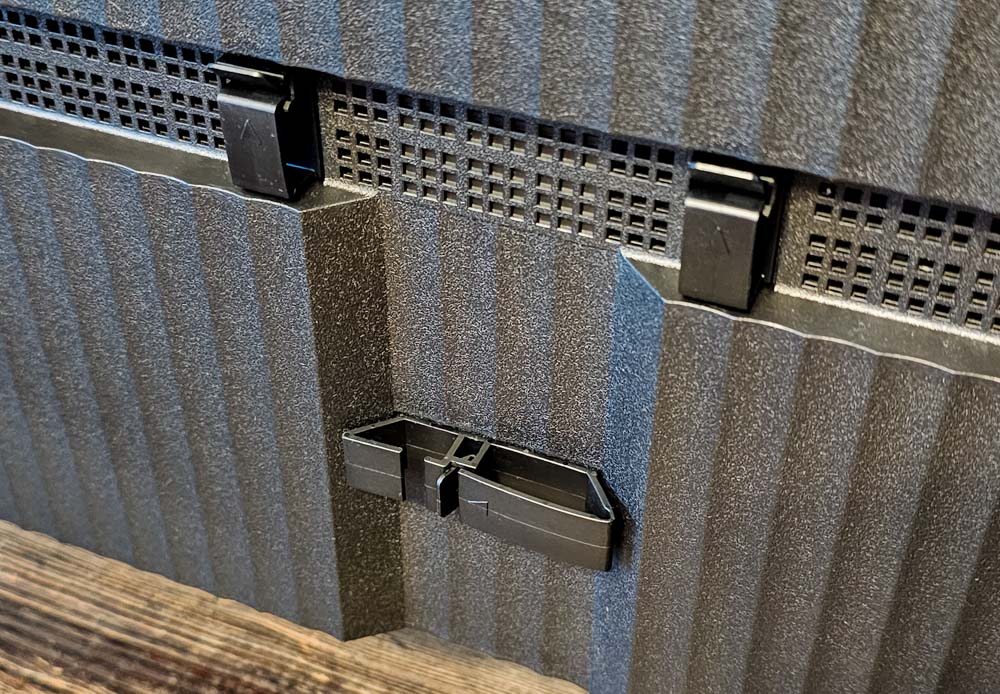

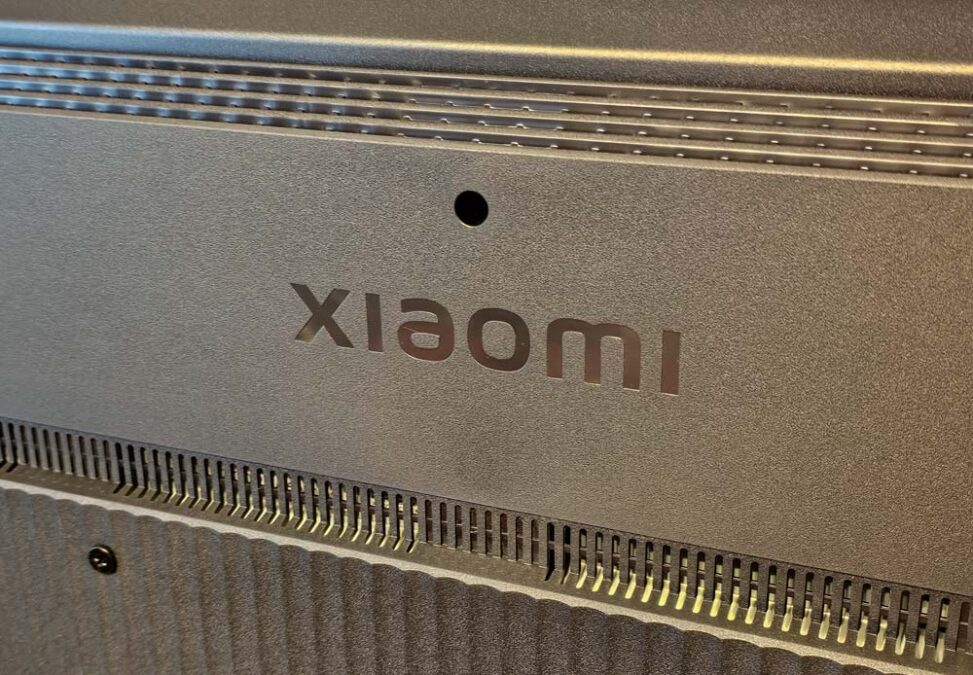
Overall, I have no complaints regarding the build quality or materials used in the Xiaomi TV S Pro Mini LED 55 (L55MB-SME). The product is well-constructed and feels premium.
Read also: Christmas Gift Ideas for Film Enthusiasts
Ports and connectors
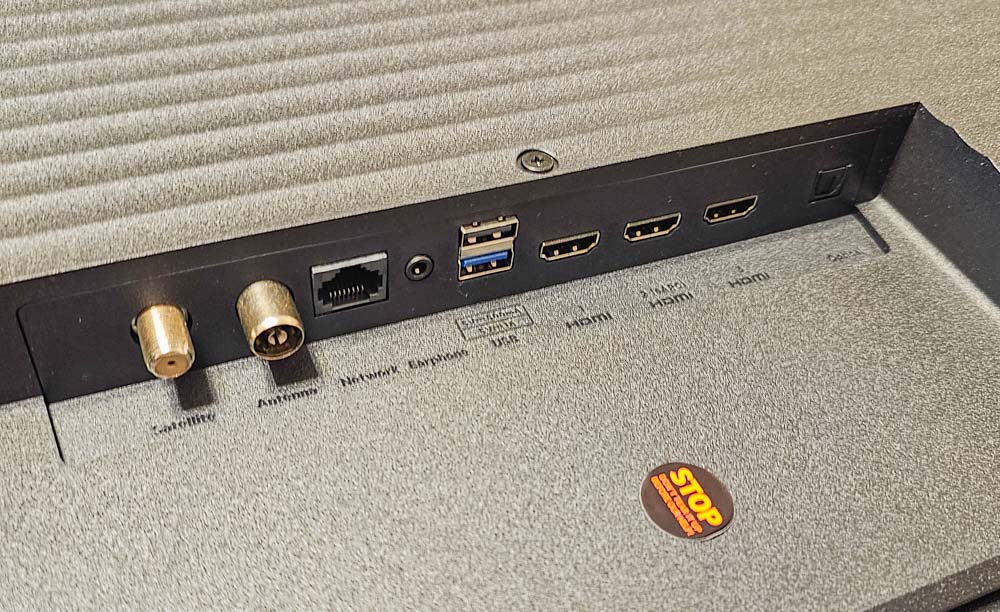
The main port block is located on the left side when facing the screen. It includes satellite and antenna inputs, a LAN RJ-45 port, a 3.5 mm audio output, two USB-A ports, three HDMI ports, and a digital optical S/PDIF output covered by a protective flap. On the lower right, there is a recessed area for the AC power cable connection.
Remote control
The remote is a simple, elongated rectangular design made of matte plastic. It operates via Bluetooth and is powered by two AAA batteries.

The remote features a microphone for voice control located on the front edge. The button layout is standard and comprehensive: power, voice input, numeric keypad, video input selection, EPG, audio settings, six dedicated buttons for streaming services and apps (Netflix, Amazon Prime Video, YouTube, Xiaomi TV+, Live TV, and a customizable button for a favorite app), a circular joystick with a central selection button, settings, back, home, exit, mute, volume control, channel switching, and four color adjustment buttons.
Using the remote felt intuitive and comfortable. The button placement is logical, the layout is easy to remember, and the TV can even be operated by touch in complete darkness.
Read also: POCO M7 Review: Stability and Comfort in an Affordable Smartphone
Display and image quality of the Xiaomi TV S Pro Mini LED 55
My previous TV, the KIVI 55U710KB, also featured a 55″ 4K IPS panel – one of the better IPS screens available – and I was fully satisfied with its performance. However, in a direct comparison, it falls short of the new QLED panel in every aspect.

First, I want to highlight the very high brightness of the Xiaomi TV S Pro Mini LED 55. Having a peak brightness of 1700 nits is impressive. Combined with the anti-glare screen coating, this ensures comfortable viewing even in well-lit rooms. Since it’s winter and natural daylight is limited, the screen felt overly bright in current conditions, requiring a significant reduction in backlight level. Alternatively, you can enable the ambient light detection feature, which adjusts the screen brightness automatically, similar to how smartphones handle adaptive brightness.

At first, the colors in the default “VIVID” profile seemed overly saturated – perhaps a reaction after using an IPS panel, which now feels comparatively dull. However, this is easily adjusted by switching profiles, manually tweaking settings, or selecting a different color space. Personally, I find the “Movie” profile combined with the “Native” color space produces very natural colors. Of course, you can experiment with other settings, and the wide range of adjustments makes it easy to fine-tune the colors to your preference.
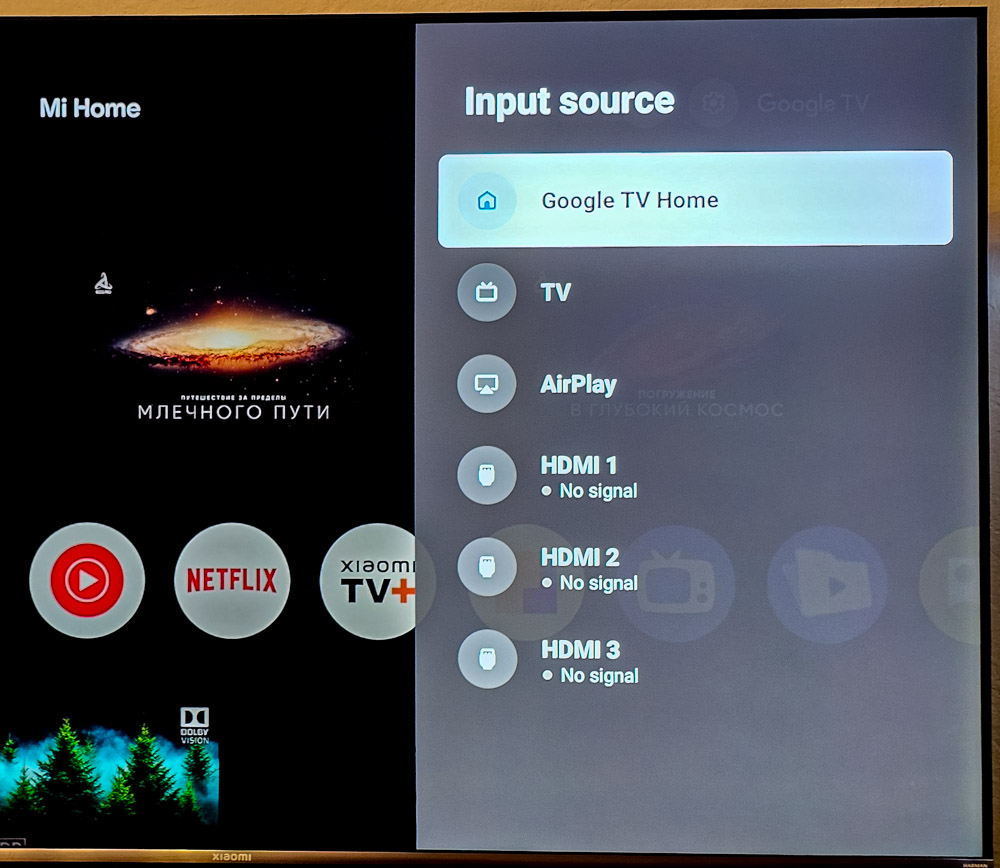
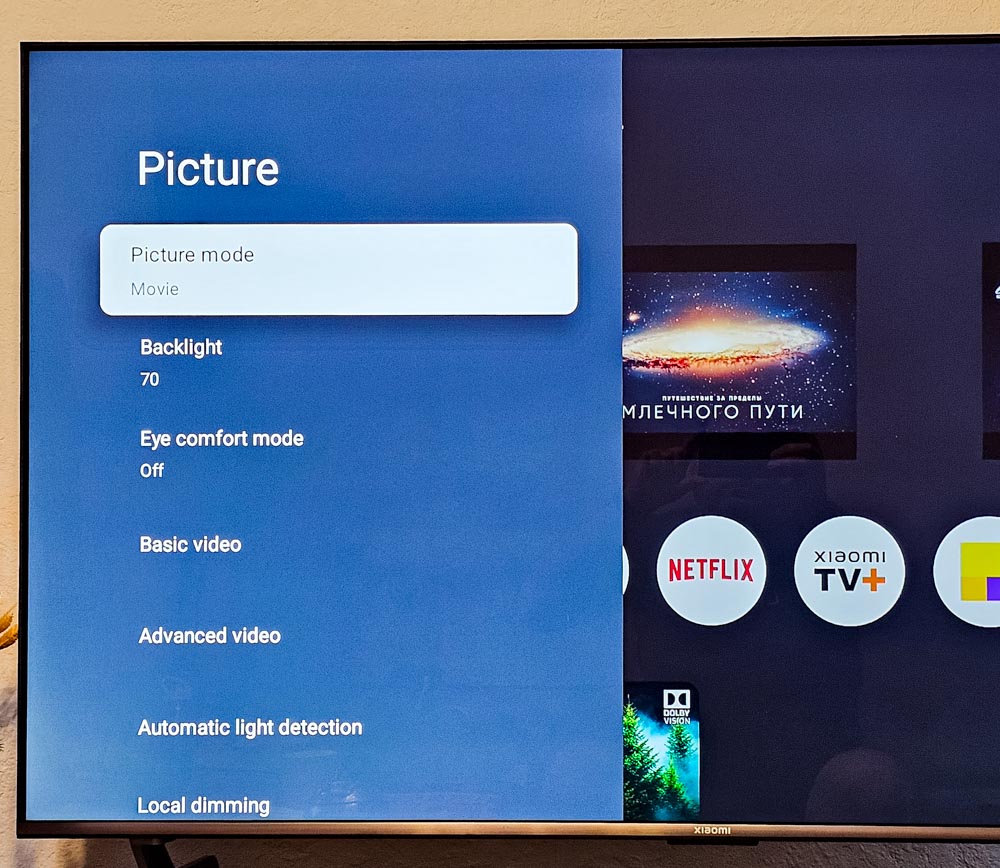
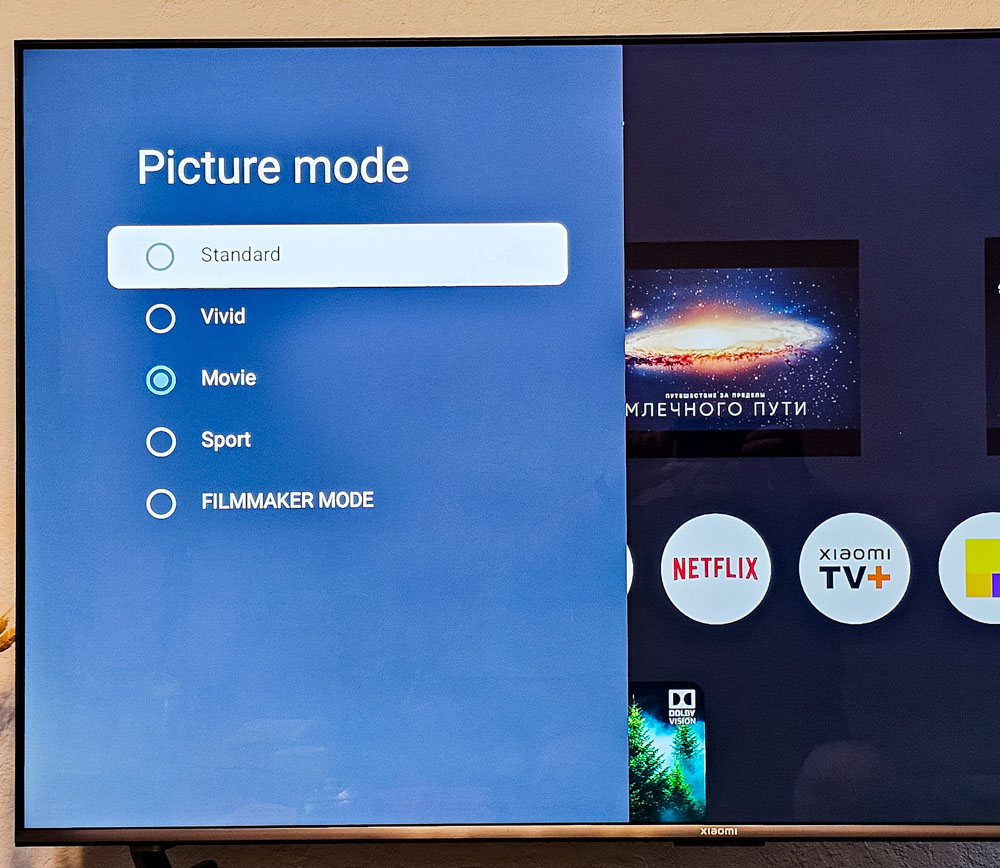
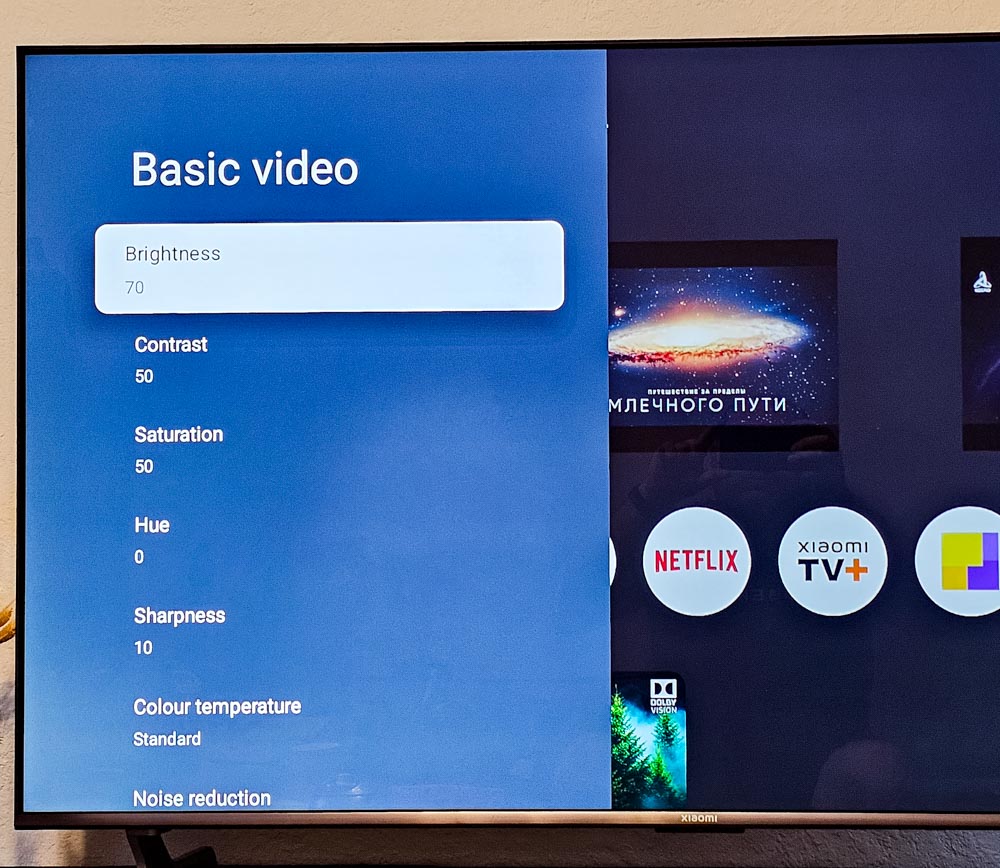
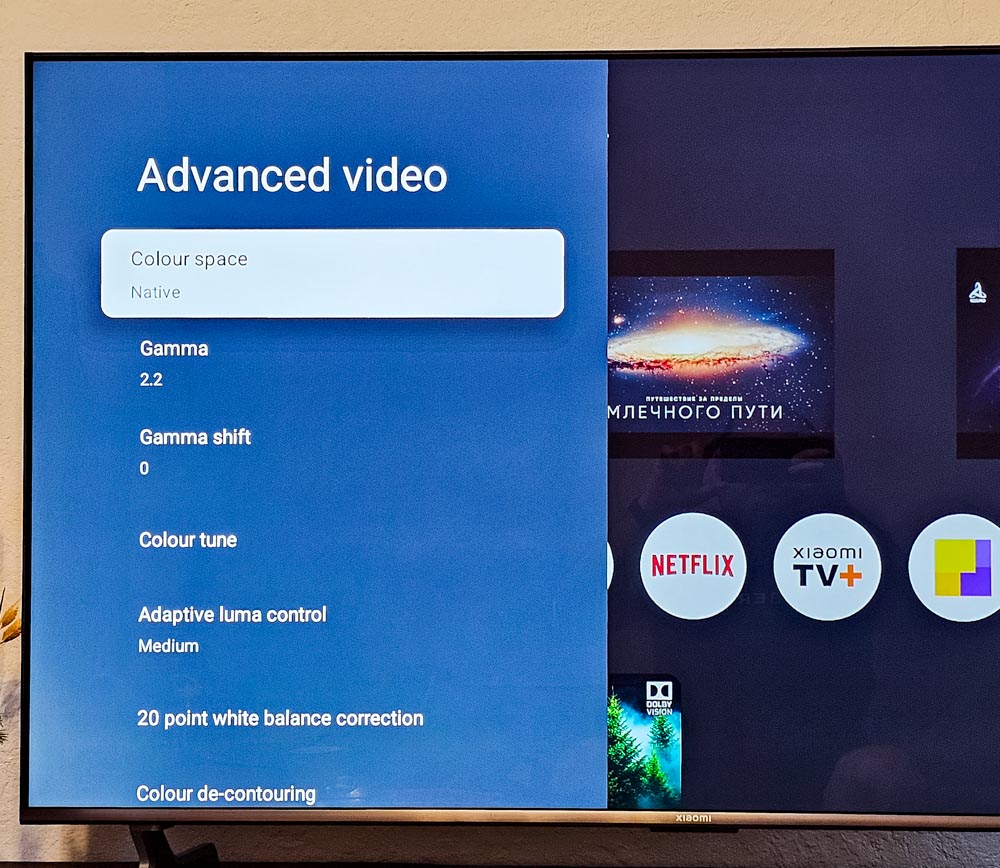
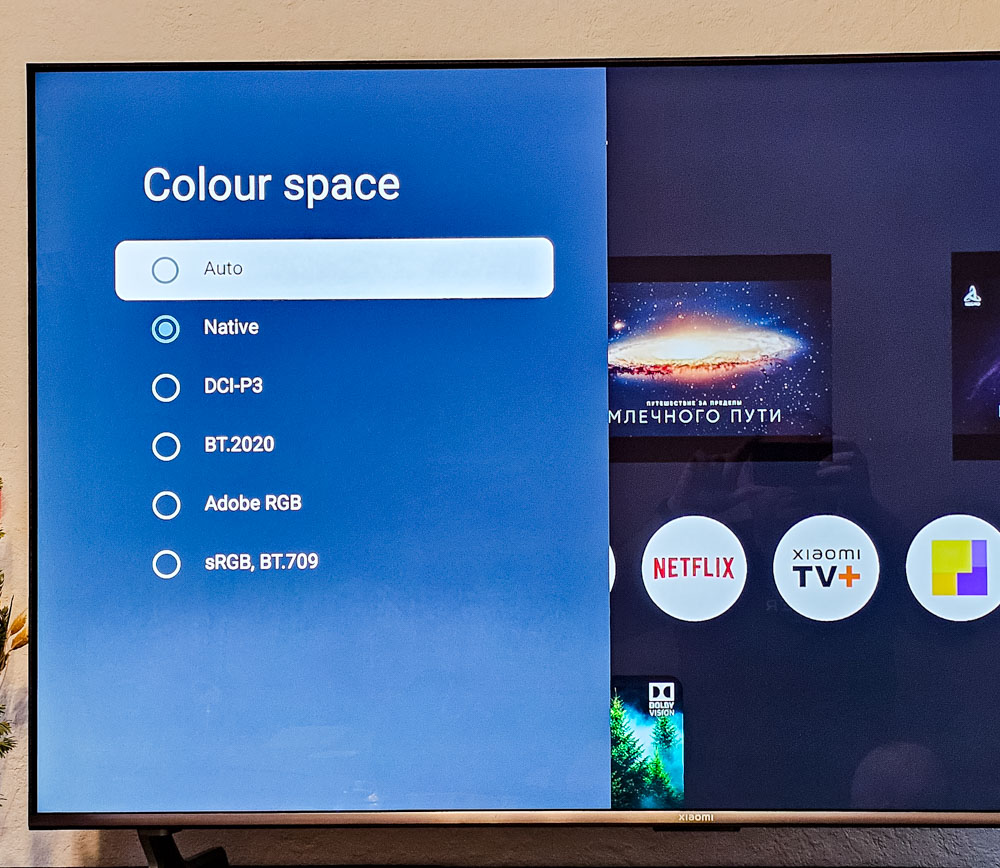
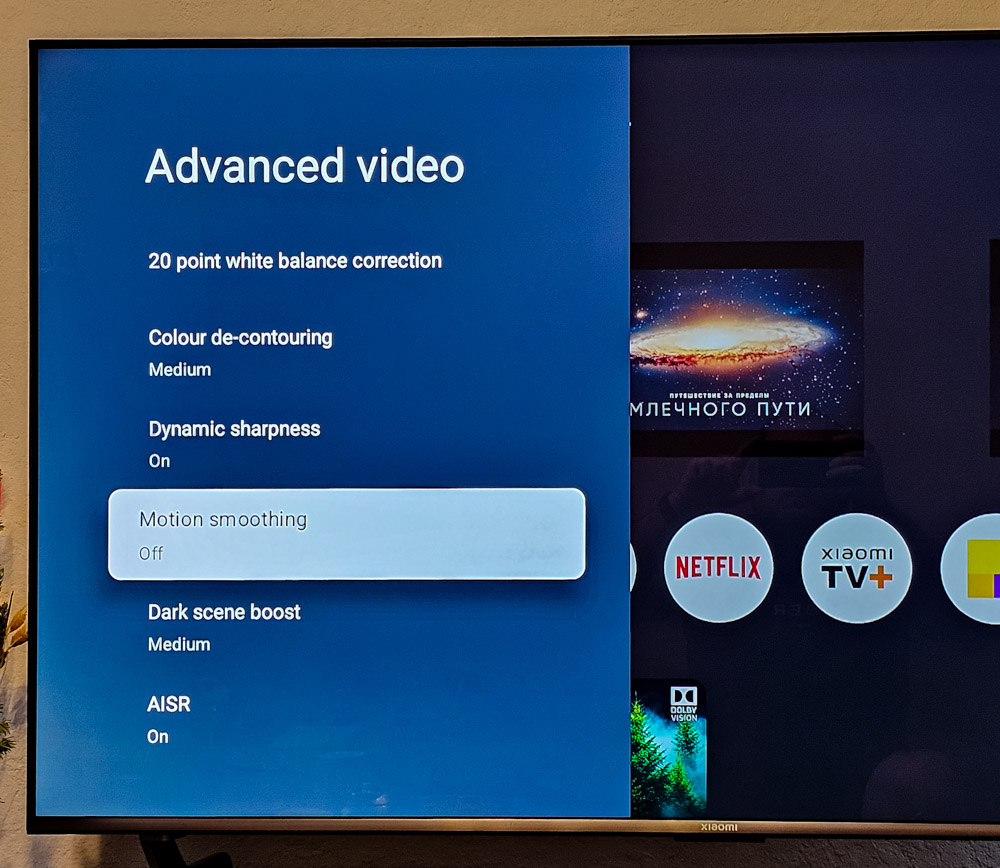
Another truly impressive aspect is the screen’s extremely wide dynamic range without sacrificing the basic contrast ratio, which, by the way, is 17,000,000:1. Dark scenes are rich in detail. And mixed scenes look very impressive thanks to the Mini LED backlighting, which dynamically dims specific areas of the screen where needed, while leaving bright areas bright. The Xiaomi TV S Pro Mini LED 55’s display panel features 408 backlight zones. All dynamic lighting and dimming parameters can be adjusted in the settings menu.

Regarding the 144 Hz refresh rate, this is especially important for gamers connecting a console or PC to the TV. Moreover, the panel can increase the refresh rate up to 288 Hz when displaying Full HD content. It’s also worth noting that the TV supports AMD FreeSync Premium, which synchronizes in-game frame rates with the screen’s refresh rate.
A high refresh rate also improves the smoothness of dynamic scenes when watching standard video, reducing motion blur and image smearing. Even for UI transitions and animations, the effect is noticeable – similar to what we see on modern smartphones with high-refresh-rate screens.
In addition, it is worth noting the practical absence of the PWM flicker effect in this TV, even at low screen backlight brightness – due to the high base frequency for Mini LED (usually 2-20 kHz for such panels), much higher than the panel refresh rate of 144-288 Hz, so it is simply invisible to the eye.

Additionally, the Xiaomi TV S Pro Mini LED 55 supports the following image enhancement technologies:
Dolby Vision support improves the appearance of HDR content. The TV also supports the HDR10+ standard and covers 94% of the DCI-P3 color gamut, with additional options in the settings menu for applying other color standards.
4K Upscaling: This technology enhances video with resolutions below 4K by recalculating each frame in real time and increasing the pixel count, resulting in sharper images on the 4K panel.
Read also: Arctic Senza 5700G Review: Silent, Capable Mini-PC Designed to Mount Under Your Desk
Audio of the Xiaomi TV S Pro Mini LED 55
The TV offers solid audio features and support for modern technologies: built-in 30 W speakers, Dolby Atmos sound, and Harman AudioEFX tuning. In the settings, you can switch between different sound enhancement algorithms. There are also preset audio profiles such as “Sports,” “Cinema,” or “News,” and you can create a custom profile with personalized effects and equalizer settings.
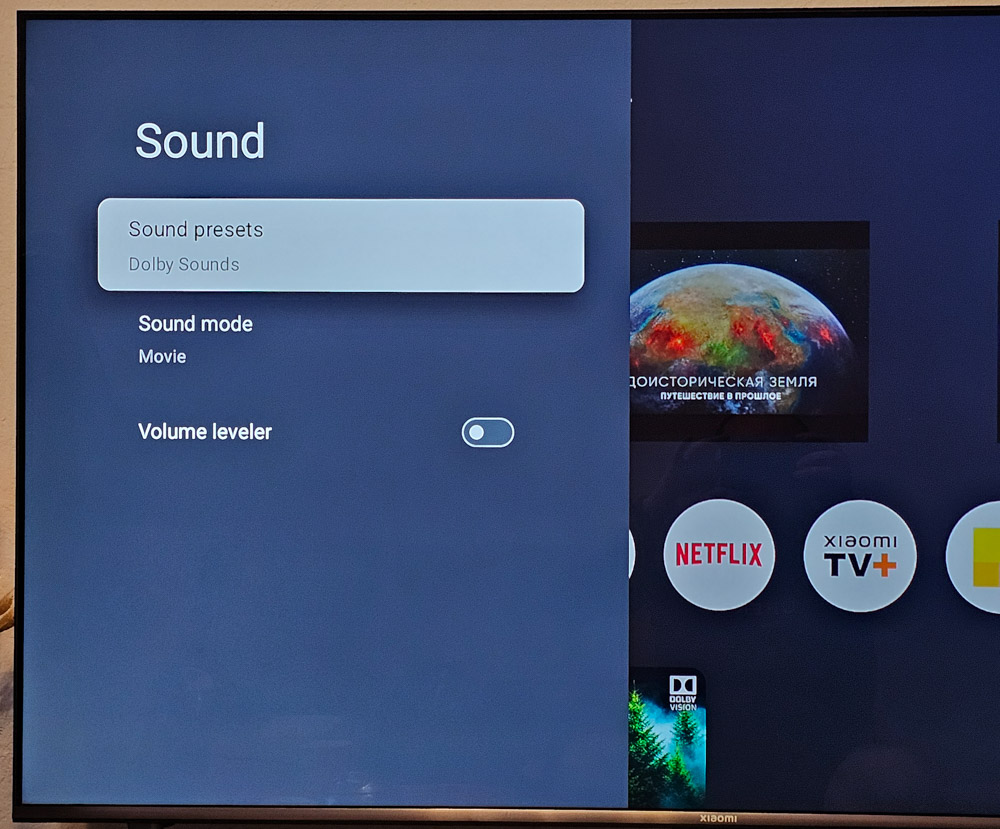
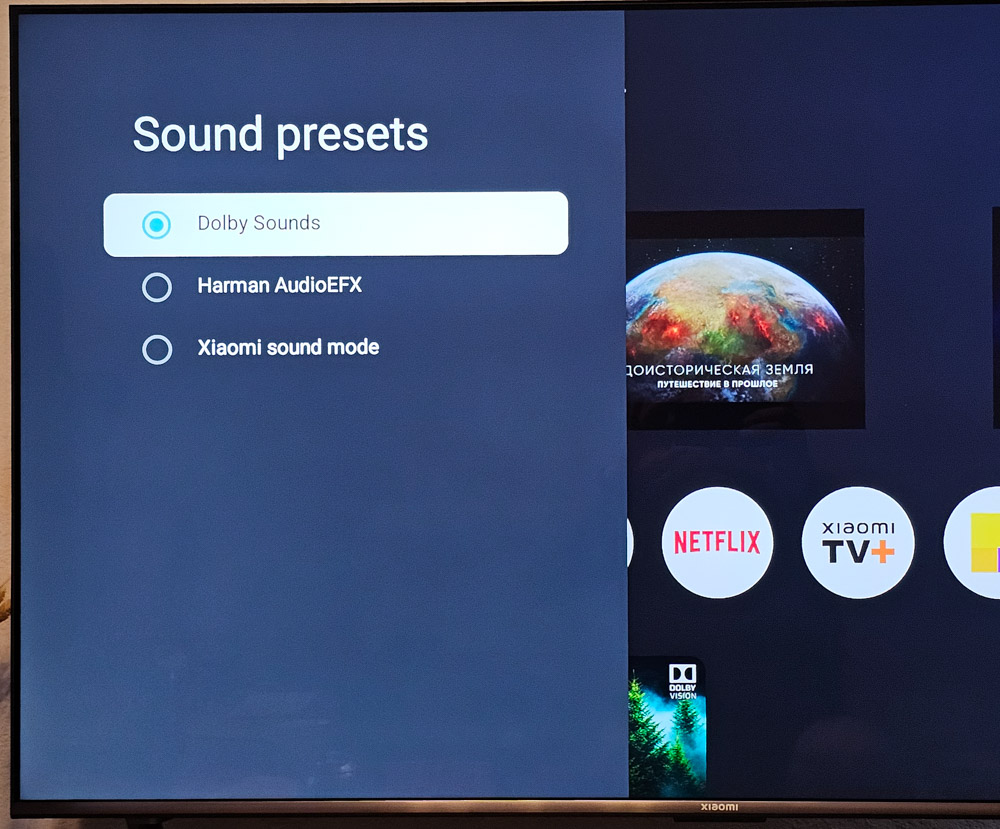
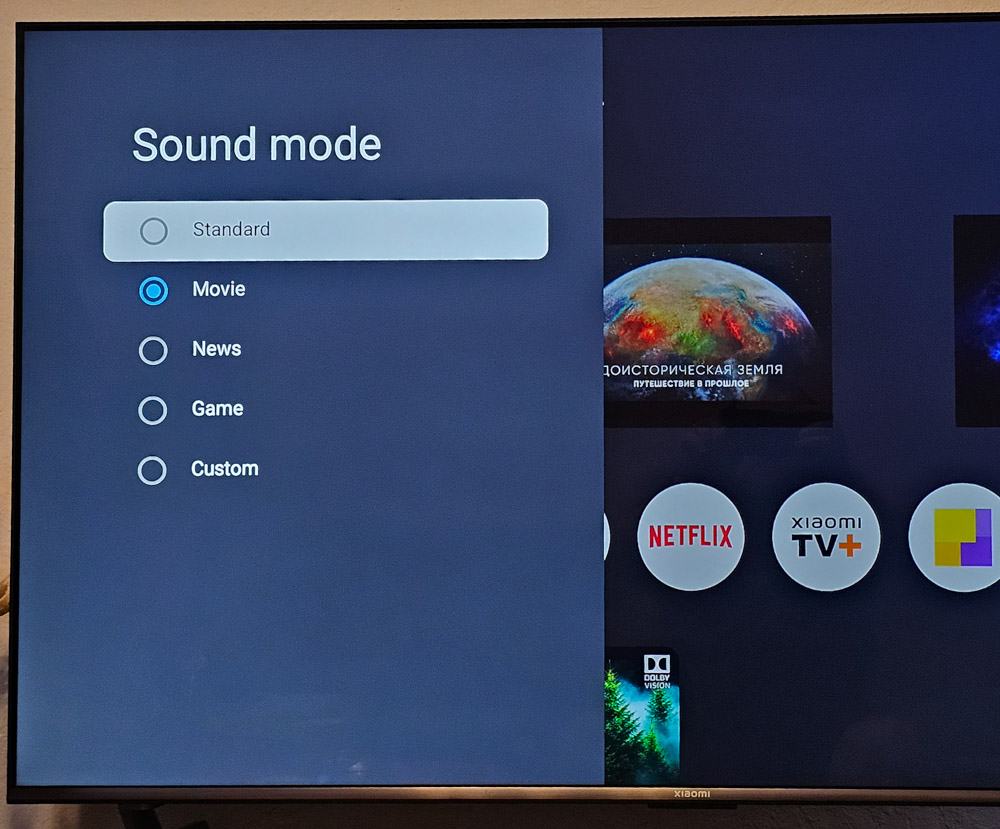
Overall, the audio system of the Xiaomi TV S Pro Mini LED 55 is solid: loud, rich, and immersive, with an option to enhance dialogue clarity. However, it doesn’t offer a significant advantage over competing models. It delivers the typical high-quality sound expected from a TV in this class and price range. For a more powerful audio experience, an external solution such as a soundbar – or ideally a set of speakers with a subwoofer – would be necessary.
Performance
Having used several Smart TVs, I understand that hardware performance, while not always critical, still plays an important role. If the interface lags, apps take a long time to open, or menu navigation experiences noticeable delays, using the TV becomes frustrating – even if the on-screen image quality is excellent.
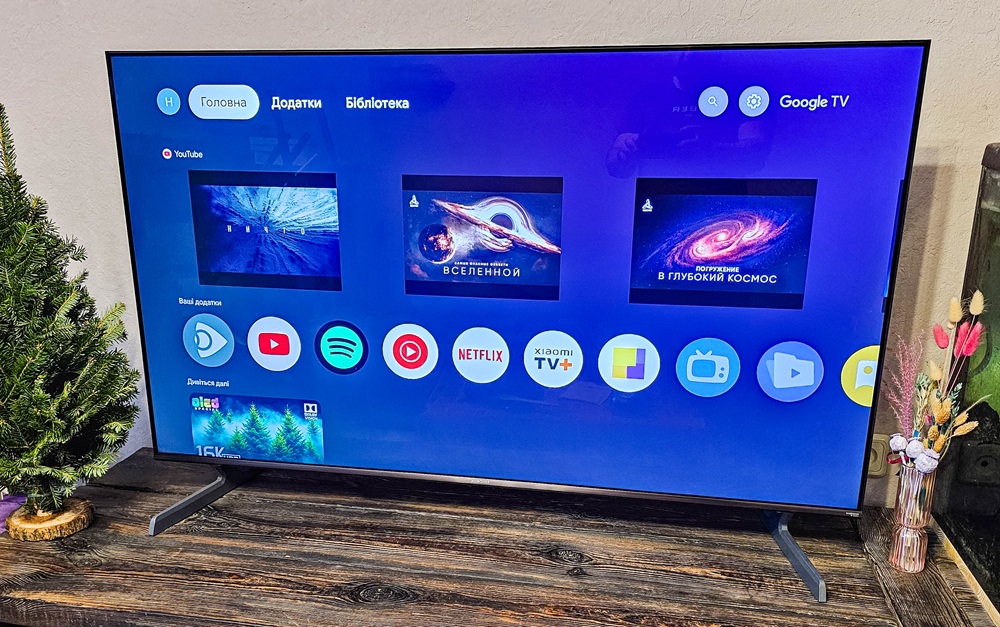
On my previous TV, 1.5 GB of RAM and 8 GB of internal storage caused noticeable performance issues. While limited storage mainly affects how many apps you can install, insufficient RAM has a direct impact on user experience: the interface lagged, apps opened slowly, and I had to fully restart the TV about once a week when performance became unbearable.
In contrast, the Xiaomi TV S Pro Mini LED 55 offers significantly improved performance, with 3 GB of RAM – double that of my previous TV, which is substantial by TV standards – and 32 GB of internal storage. The difference is immediately noticeable: the TV responds quickly to remote inputs, and the interface and menus operate smoothly without perceptible delays.
I can also note one more point, especially important for users from Ukraine who use backup power systems or portable power stations during stationary power outages – the power consumption of the TV in operating mode is on average 120-130 W with peaks up to 150 W.
Read also: Huawei Watch GT 6 Pro Review: Balance of Style, Practicality, and Comfort
Google TV: Interface and software
I consider the Google TV platform (formerly Android TV) another advantage of the Xiaomi TV S Pro Mini LED 55. The key benefit is a well-developed ecosystem with a wide range of apps for virtually any purpose. You won’t have trouble finding apps for your needs, as everything is available through the Google Play Store. Popular streaming services and online cinemas are fully supported and regularly updated. For example, I can easily install my IPTV provider’s app from Google Play and watch 180 channels over the internet, often in better quality than standard terrestrial or cable TV.


Another feature I particularly appreciate is the deep integration of the TV into the Android ecosystem and Google Home platform. Thanks to built-in Chromecast support, I can easily cast my mobile device’s screen to the TV, as well as play video or music directly on the TV from a smartphone, tablet, or a laptop using Chrome. During casting, both I and family members with access to Google Home can control playback from our own devices, as long as we’re connected to the same Wi-Fi network. Of course, the TV can also be controlled not only with the remote but via voice commands using Google Assistant.
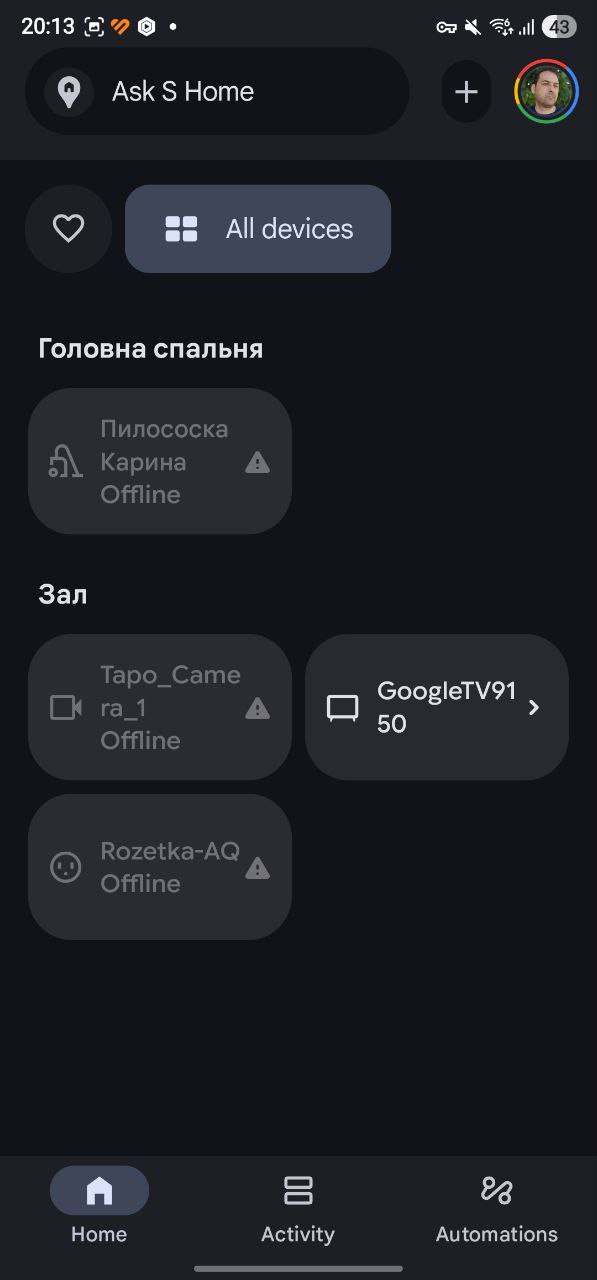
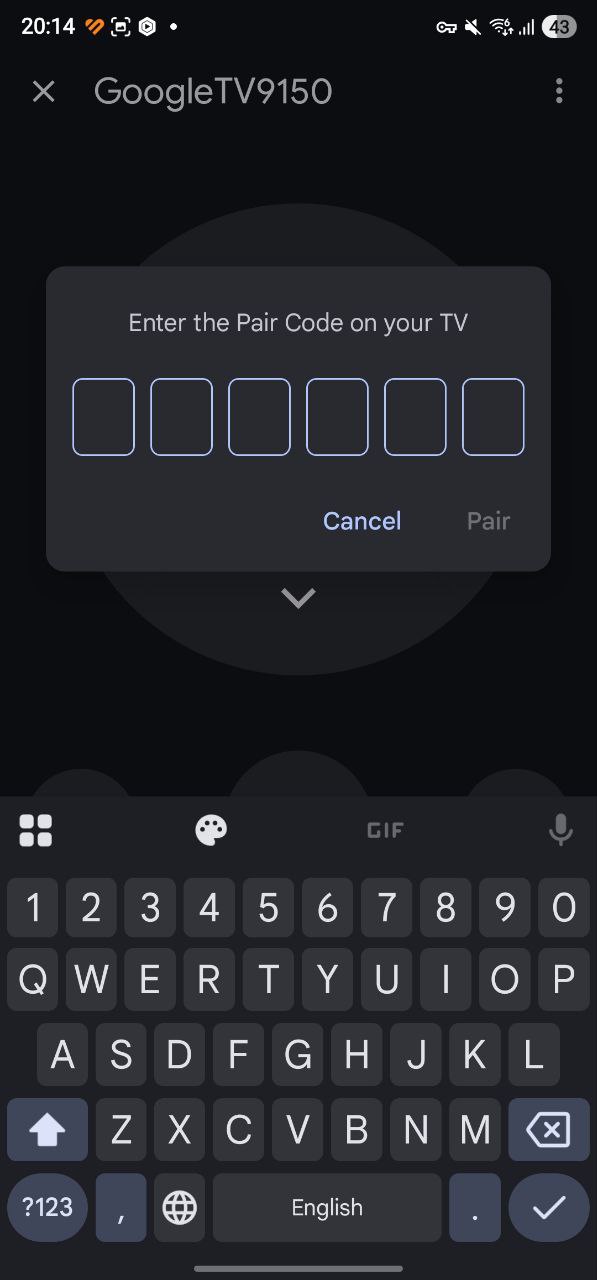
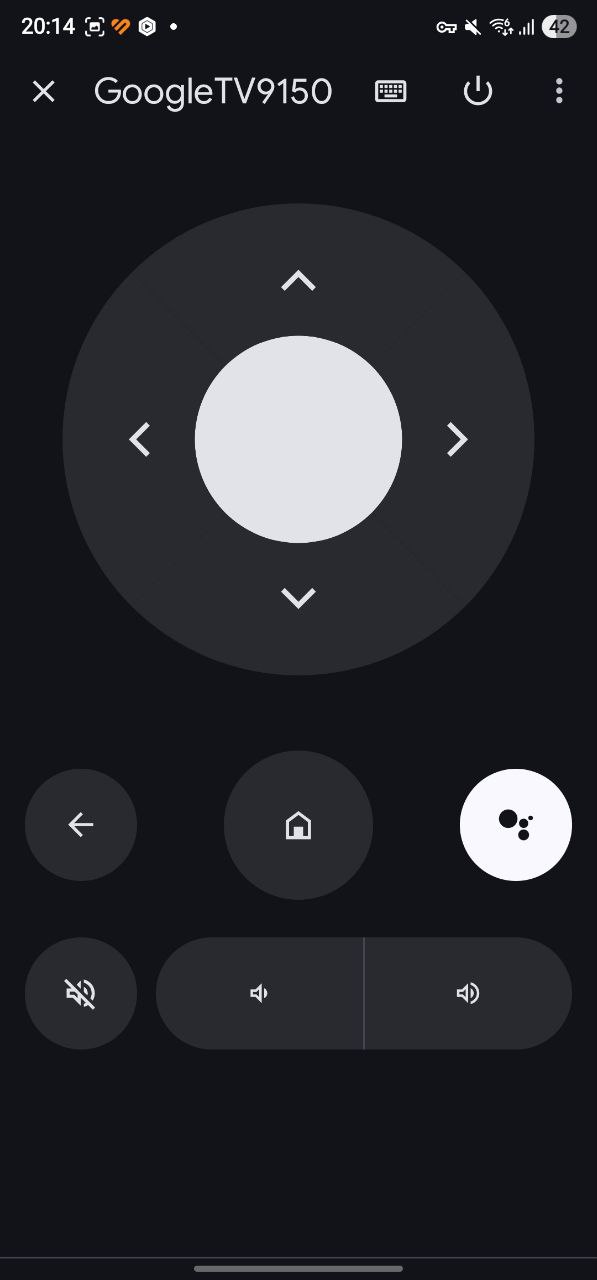
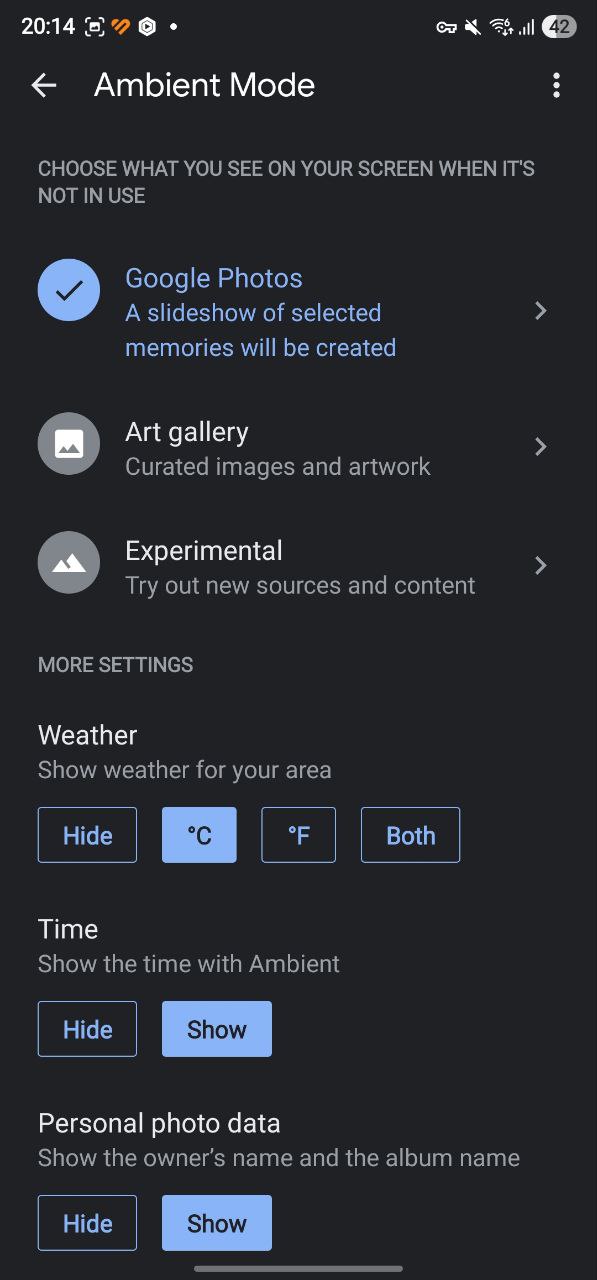
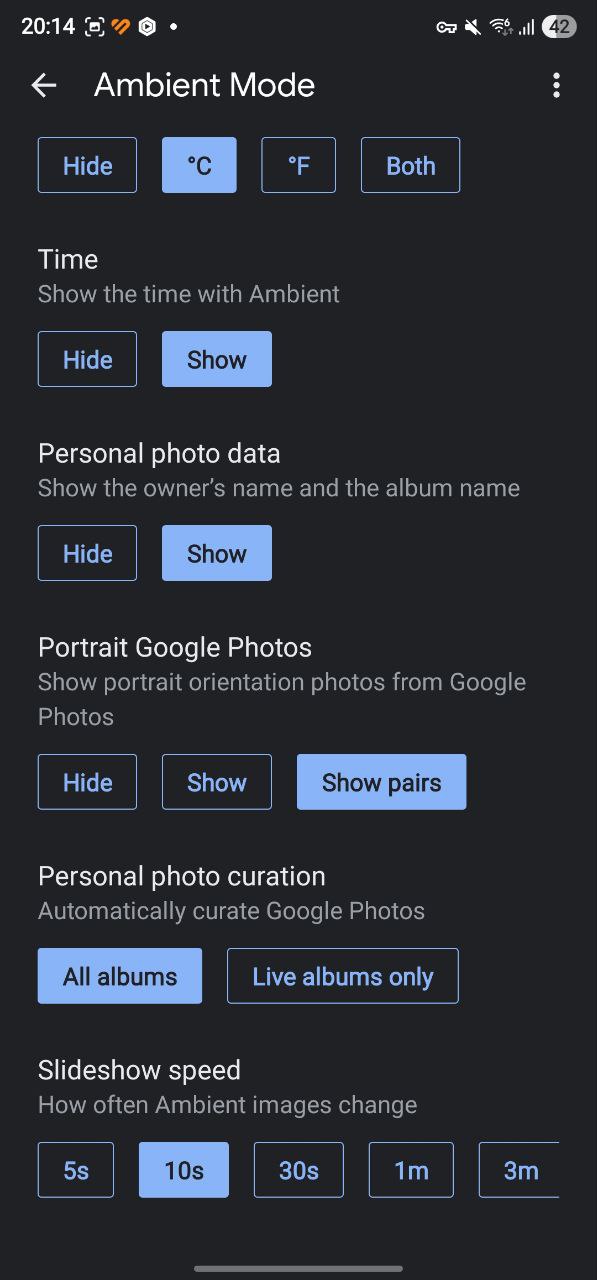
Another feature I really like is linking the TV running Google TV to a personal Google Photos library, allowing family photos to be displayed as a screensaver when the TV is idle. Essentially, the TV becomes a giant digital photo frame, continuously showcasing your favorite moments.
The TV also comes with a few preinstalled apps from the manufacturer – PatchWall and Xiaomi TV+. PatchWall simply displays a message that it’s not supported in our region. Xiaomi TV+, on the other hand, provides free global internet TV with a wide selection of channels across various genres.

If you use Apple devices, you’ll also appreciate support for AirPlay and Apple Home, making it easy to connect your iPhone, iPad, or Mac to the TV. Additionally, the Xiaomi TV S Pro supports the universal wireless display protocol, Miracast.
Summary
The Xiaomi TV S Pro Mini LED 55 (L55MB-SME) is a modern television that brings together advanced video technologies within the mainstream 55-inch segment. Key highlights include its contemporary frameless design, bright anti-glare screen with up to 1700 nits, excellent 4K QLED image quality with a wide range of color and contrast adjustments, a high 144 Hz refresh rate, and a solid basic audio system. Additionally, the TV offers strong hardware performance, a responsive Google TV interface, and all the necessary wired and wireless connectivity options.

I didn’t notice any major drawbacks with the TV. The only minor issue occurred during the initial setup, where the process occasionally reset at the country selection step – this may have been due to internet interruptions caused by unstable power supply in wartime conditions. Another small surprise is that the remote control does not come with batteries. Keep this in mind and make sure to have AAA batteries ready if you want to start using the TV immediately after purchase.

Overall, I can recommend the Xiaomi TV S Pro as a solid purchase option. If you currently have a TV with a standard IPS or VA panel, upgrading to a QLED display will make a noticeable difference.

 4K QLED TV: Unboxing, testing, impressions of picture and sound quality, user experience.)
Strasno, covek koji profesionalno radi recenzije televizora ladno napise QLED paneli nadmasuju IPS и VA resenja po vecini kljucnih parametara? I sad neko ko ne zna nista o temi ili zna jako malo o televizorima i pratecim tehnologijama, bi citajuci ovako nesto pomislio da zaista postoji QLED panel!
Super, QLED možete smatrati samo nekom vrstom IPS-a ili VA. Niko se neće protiviti. Kao da ikoga uopšte zanimaju tehnološke nijanse. U svijetu postoji mnogo hibridnih tehnologija. Ovo je uobičajena marketinška klasifikacija i zato ovaj panel postoji. Jednostavno zato što ga proizvođači tako nazivaju.
Изчерпателен и полезен отзив, добри снимки!
廣告文,騙人虛假,之前有人測試色彩偏差,故障問題多質量差,2026年比我買的2025年的差
究竟是誰做的測試?能提供連結或一些證據嗎?現在看來,2025款似乎更好,因為你買了它 :)