





© ROOT-NATION.com - Use of content is permitted with a backlink.
Dolby Laboratories has introduced Dolby Vision 2, which the company describes as an innovative advancement in its leading image enhancement technology. This article takes a closer look at what it offers.
TABLE OF CONTENTS:
Another marketing ploy?
When Dolby announced Dolby Vision 2, many experts responded with skepticism rather than excitement. And there’s reason for that. Despite the company’s bold claims, the new standard appears to be more of an evolutionary step than a radical breakthrough.
In practice, Dolby Vision 2 integrates advanced image-processing algorithms that leverage artificial intelligence and a concept called Content Intelligence. The idea is for the system to automatically adjust the picture based on viewing conditions and the content itself. But isn’t this familiar? Similar functionality already existed in Dolby Vision IQ, which analyzed the environment and adapted the image accordingly.
The main differences lie in the details: improved tonal rendering, more precise handling of dynamic range, and more sophisticated AI models.
This raises the question: is this progress significant enough to justify calling it a “new era” of video, or is it more about maintaining market attention and reinforcing the company’s image as a technology leader? In the end, Dolby Vision 2 can be seen not as a revolution, but as the next step in the company’s strategy – gradual refinement of its algorithms under a high-profile branded label.
Precision Black and Light Sense – light sensors in televisions are still the stuff of fantasy
One of the most talked-about features of Dolby Vision 2 is Precision Black, which the company claims finally addresses the long-standing issue of overly dark scenes in HDR. Its goal is to make black areas more detailed without compromising the director’s intent. The second feature, Light Sense, sounds even more ambitious: it is said to account for ambient lighting with fine precision and even extract additional data directly from the content to adjust the image as accurately as possible.
It sounds impressive, but beneath the marketing, it’s the same concept we’ve already seen with Dolby Vision IQ. The so-called “smart” approach to adapting the picture to viewing conditions is nothing new. In practice, IQ often delivered the opposite of intelligent behavior: raising blacks to gray patches, strange distortions in dark scenes, and inaccurate color reproduction.
Here’s the key point: the issue isn’t primarily with the software, but with the hardware. Most TVs are equipped with fairly basic ambient light sensors that cannot accurately read room conditions. As a result, the algorithms receive “garbage” input – and produce corresponding “garbage” on the screen.
This raises a logical question: will new labels like Precision Black and Light Sense actually improve the situation if the underlying hardware problem remains unresolved, or are they just another flashy label for features that failed in the previous iteration?
Read also: All About the New Windows 11 25H2: Not a Revolution, but Stability?
The real goal: more royalties
Let’s look at Dolby Vision 2 from a business perspective rather than a technological one. In 2023, Dolby Laboratories reported $1.39 billion in revenue, with the bulk coming from royalties on its audio and video technologies. The industry has been paying Dolby for years – roughly $3 per TV with Dolby Vision support. In comparison, the competing HDR10+ standard is distributed for free.
It’s clear, then, that the launch of Dolby Vision 2 is less about an “improved user experience” and more about an updated mechanism for collecting royalties. Manufacturers can’t simply stick with Dolby Vision IQ – they’re presented with a new “standard,” which translates into new licenses and additional costs.
The segmentation strategy is particularly interesting: there’s now not only Dolby Vision 2 for the mass market, but also Dolby Vision 2 Max for premium models. This is a classic upselling scenario – create the sense that the basic version isn’t enough, and immediately offer a more expensive “full” package.
This raises a rhetorical question: will users actually get a fundamentally better picture, or are they simply paying Dolby for the right to use the flashy “Vision 2” label? Given the company’s history, the answer seems fairly obvious.
Read also: Can a Modern Human Live to 150 Years?
Where Dolby Vision really makes sense
Ironically, Dolby Vision shows the most practical value in the segment where the company earns the least – budget TVs. Here, the dynamic metadata technology actually makes a difference: it compensates for the limitations of displays with low peak brightness and modest color reproduction. For example, on a TV with a maximum of 400 nits, Dolby Vision can noticeably improve the picture compared to basic HDR10, which lacks adaptive scene correction.
In practice, however, this effect is often diminished. Budget TV manufacturers, aiming to cut costs, implement Dolby Vision in a formal sense – saving on quality panels and proper algorithm calibration. As a result, the viewer receives an image that only partially lives up to the marketing promises and, in some cases, can even appear worse than standard HDR10.
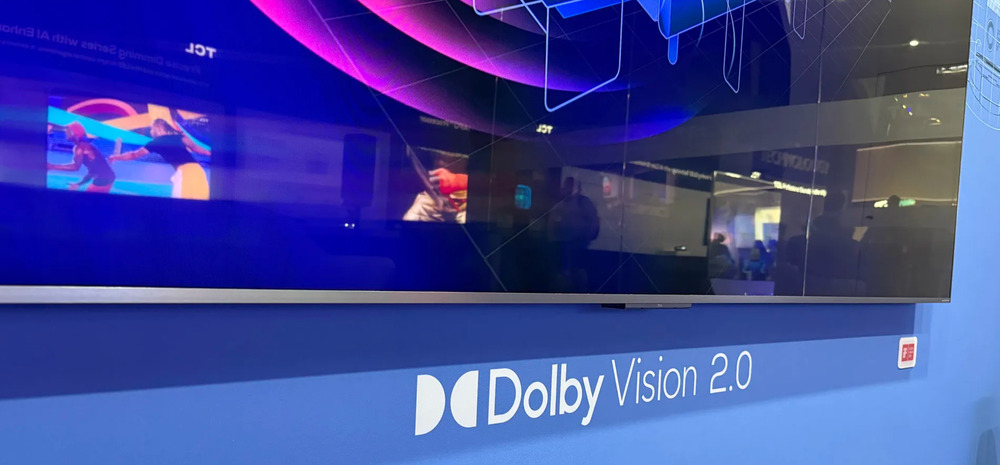
The paradox is that high-end TVs, which could theoretically take full advantage of Dolby Vision 2 Max, often don’t actually need it. These models already feature advanced tone-mapping algorithms and hardware capabilities that minimize differences between HDR standards. In this segment, Dolby Vision functions more as a box-label logo than a genuine competitive advantage.
As a result, Dolby finds itself in a tricky position: the technology delivers the most noticeable benefits where profitability is lowest, while in the premium segment, Dolby Vision 2’s impact appears largely cosmetic.
Read also: What is HDR in monitors and how to properly adjust it
Authentic Motion – because, apparently, the soap opera effect will suddenly become a feature
Another prominently announced feature of Dolby Vision 2 is Authentic Motion – touted as the “world’s first creative motion control system,” promising to eliminate unwanted strobing and deliver the smoothest possible motion reproduction. On paper, it sounds like a breakthrough, but in practice, it’s more of a marketing spin on an old problem: TV motion processing.
Any home theater enthusiast will tell you that the first thing to do after buying a new TV is to turn off all “motion enhancers.” The reason is simple: in 90% of cases, they create a “soap opera effect,” making cinematic scenes unnaturally smooth. Some viewers might like it, but for most, this processing only distorts the director’s original artistic intent.
Dolby claims that, with AI, their algorithm now works fundamentally differently – better distinguishing natural motion from artifacts and intervening only when necessary. However, market history tells a different story: TV manufacturers have spent years promising the “most natural” motion algorithms, yet the results have always been a compromise.
The key question isn’t how loudly Dolby markets Authentic Motion, but whether the system can genuinely change the status quo. If it can’t, we’re looking at yet another rebranding of an old feature – more of a marketing checkbox than a real technological advancement.
Read also: How to Spot Fake Photos: New Challenges of the Digital Age
MediaTek Pentonic 800 – the first, but not the only one
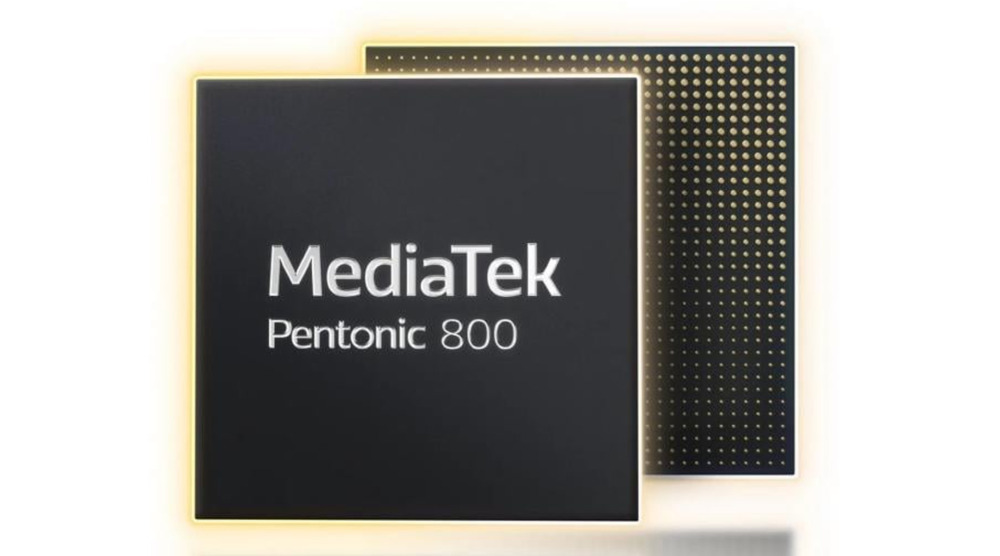
The first manufacturer to officially implement Dolby Vision 2 in its TVs was Hisense, using the MediaTek Pentonic 800 chip with MiraVision Pro PQ Engine for image processing. MediaTek, in turn, claimed that its processor was the world’s first to support the new standard. However, it’s clear that other chipset suppliers – from Qualcomm to Samsung LSI – will soon offer similar solutions.
What’s more interesting here isn’t the technical “first,” but Dolby’s strategic choice. Hisense, known for aggressive pricing and rapid market share growth, was selected as the launch partner. This appears to be Dolby’s way of quickly expanding the user base for the new standard by targeting the mass-market segment.
The reason is clear: competing formats, particularly HDR10+ Adaptive, are gaining traction. If Dolby fails to quickly establish Vision 2 as the “de facto” standard for mid-range TVs, its dominance in the HDR space could be at risk.
Launching with Hisense, then, isn’t just a technical demonstration – it’s a marketing and strategic move. Dolby aims to get ahead by creating the appearance of widespread support for the new standard before competitors can occupy the same niche.
Read also: AI in Medicine: Is the Future Already Here?
What about competitors?
It’s important to note that Samsung and Amazon are actively promoting HDR10+, a standard offering the same key benefits as Dolby Vision, including dynamic metadata, but entirely free for manufacturers. A recent warning sign for Dolby came with Disney+ officially supporting HDR10+. This isn’t just a formality – it signals that the industry is growing weary of Dolby’s recurring licensing fees and increasingly considering an open alternative.
In this context, the launch of Dolby Vision 2 can be seen as a counterattack. Dolby aims to demonstrate that its paid standard offers “advanced” features that supposedly justify the extra costs for manufacturers. The issue, however, is clear: many of these “enhanced” functions appear less as genuine innovations and more as attempts to fix shortcomings created by the original Dolby Vision itself.
In other words, Dolby is selling another iteration of the same technology, wrapped in a new marketing narrative. Meanwhile, HDR10+ continues to develop openly and is gradually gaining support from major players. Dolby risks losing ground by trying to monetize areas where the market increasingly expects free access.
Read also: Online Safety: How to Protect Your Data – Even When You Let Your Guard Down
Dolby Vision 2: solving problems that shouldn’t exist
Неможливо заперечувати, що Dolby Vision 2 дійсно приносить певні вдосконалення. Концепція AI Content Intelligence виглядає перспективно, а функція Precision Black частково вирішує проблему занадто темних сцен. Проте тут виникає парадокс: більшість цих проблем узагалі не виникли б, якби початкова реалізація Dolby Vision була спроєктована більш ретельно.
For users, the new standard introduces another format to consider when choosing a TV, along with higher hardware requirements and likely increased costs. For manufacturers, the impact is even clearer – a new cycle of Dolby licensing fees. For the industry as a whole, it represents another step toward HDR fragmentation, where instead of optimizing core standards and ensuring consistent quality for consumers, companies create multiple “versions” of the same technologies.
It would be reasonable to assume that the right approach would be to address the shortcomings of the original Dolby Vision, improving stability and compatibility. However, that approach doesn’t generate a new wave of licensing fees – and that, it seems, is precisely what is driving the introduction of Dolby Vision 2.
Read also:
- Microsoft Ends Windows 10 Support: Is There Life After the End?
- JSAUX accessories for portable consoles review, part 2: Backpack, docking station with M.2 SSD and adapters
- Nine of the Strangest and Most Mysterious Weapons

