




© ROOT-NATION.com - Use of content is permitted with a backlink.
The series Alien: Earth has sparked a wave of mixed reactions – from high praise to sharp criticism. So, I decided to share my own perspective.
Alien: Earth tries to stage a wedding between a xenomorph and Peter Pan against the backdrop of a corporate dystopia. The result isn’t an explosion of fresh ideas, but rather a blend of Marvel, Disney, and a few promising concepts that end up bogged down in a swamp of mediocrity.
I don’t like cats. To me, they’re little more than machines that produce sand, urine, and fur, all while pretending to be mysterious. Jumping on the table during breakfast? Of course. A stray hair in the butter? Guaranteed. Their so-called independence, which fans like to label as “charm,” feels more like a cold refusal to engage. And the cat owners who proudly show off the scratches on their arms – claiming they’re a “sign of affection” – might just want to book a session with a therapist.

I’m definitely more of a dog person when it comes to movies. Or rather, a “dog-human” – which admittedly sounds like a new Marvel character, but still. Dogs are the real screen heroes: from Frank the pug in Men in Black to any random mutt that ends up rescuing the plot better than the scriptwriters could. Cats, on the other hand, usually serve one purpose on screen: to shed fur into the frame. And whenever some film student shouts, “But what about the cat in The Godfather?”, I have to point out that Vito Corleone’s fluffy companion was little more than set dressing. Or to put it politely, “stage props.” Just about as alive, in narrative terms, as that severed horse’s head in the bed.
The Coen brothers didn’t do much for the image of cats either. In Inside Llewyn Davis, the cat feels more like a metaphor for the protagonist’s failing career than a meaningful character. And to be honest, the metaphor is so thin it’s practically transparent.
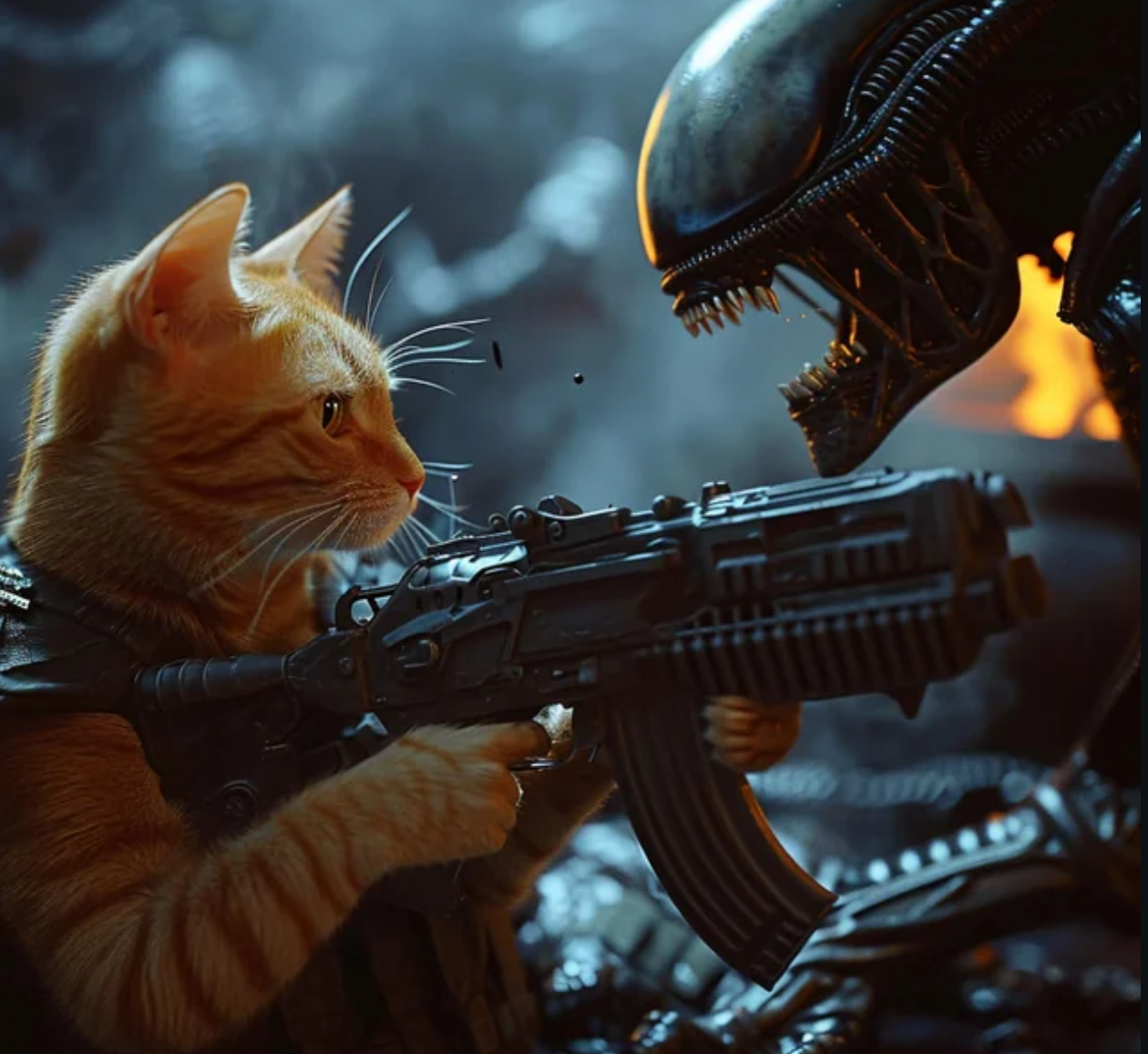
But the most famous feline in cinema has to be Jonesy – the orange tabby from Alien. Somehow, it survived the xenomorph and even made it into Cameron’s sequel. Although, in that one, its big moment was staying behind at home. You can almost picture the writers sighing in relief: “No, we’re not dragging this furball through another round.” Still, fans insist on treating Jonesy as the franchise’s mascot. Really? A cat’s spirit haunting a sci-fi horror series? It sounds more like a piece of fanfiction: Alien and the Thirteen Lives of Jonesy.
Now picture this: instead of escaping an alien killer, Ripley spends precious minutes saving a cat that, by the way, isn’t even hers. It just roamed around the Nostromo acting like it owned the galaxy and chased mice. Mice. In space. How does that even work? At least Katy Perry had a ticket to the “cosmic show.”
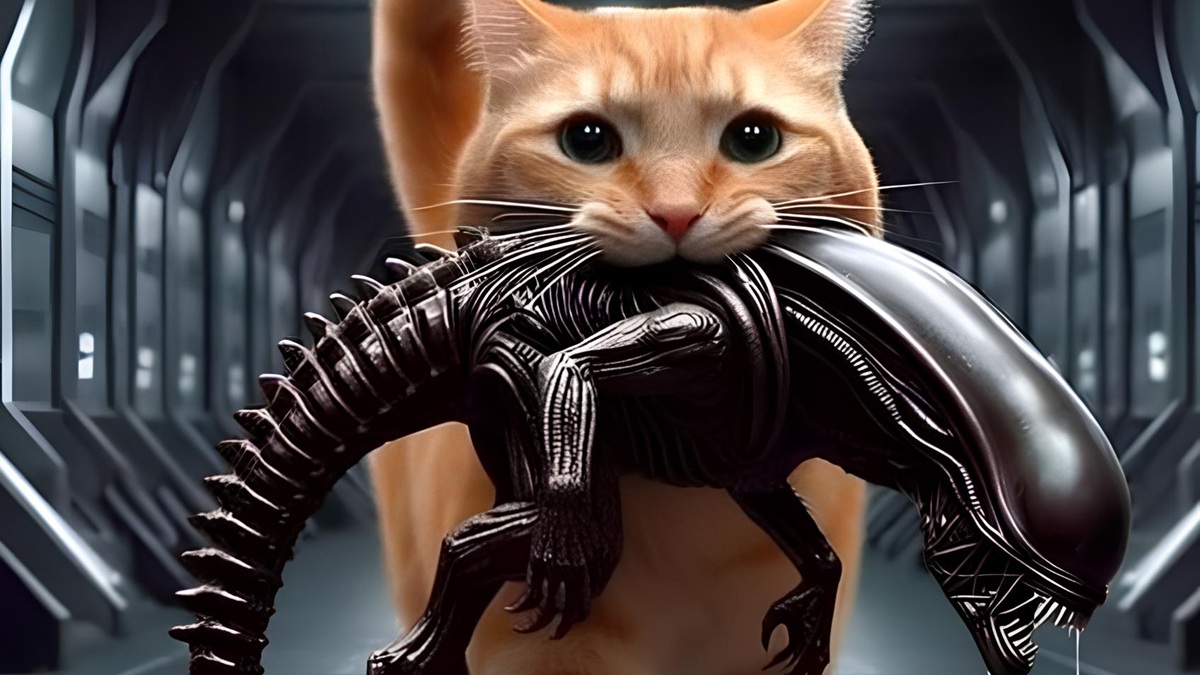
The new series Alien: Earth (the one that unexpectedly landed on Disney+, as if someone just said, “why not toss another show into the streaming pot”) couldn’t resist slipping in cat references either. The good news: the feline isn’t the main character this time. The bad: it’s still there. Thankfully, it serves the role it probably should have all along – a dark, slightly unsettling prop. Think of the Groke from Moominvalley, only with fur and a meow.
And then comes the climax: a zombie cat dragging its bloodied body across the floor, making a bizarre mix of hissing, meowing, and purring, as if to say, “I don’t want to rip people apart, I just want a warm lap.” At that point, the show turns into something resembling a surreal meme, where the xenomorphs fade into the background and the real suspense is: “Will the cat manage its final cosmic mischief?”
Read also: Wi-Fi 8: What We Know About the New Wireless Standard
Cat nature in one picture
In Alien: Earth, even the cat gets some screen time aboard the Maginot – a Weyland-Yutani ship, because apparently no vessel in this universe is complete without one. The series plays like a prequel to the Nostromo with Ripley and Jonesy, except instead of tension we get corporate drama sprinkled with something closer to a children’s fairytale.
Sixty-five years later, the Maginot returns carrying what can only be described as a space zoo – essentially a breeding ground for death. Officially, it’s “for further research,” but in practice it’s all about refining ways to eliminate competitors more quickly in the race for planetary dominance. In this future, governments no longer exist; only corporations remain. A neat preview of tomorrow: bureaucracy replaced not by freedom, but by branded despotism.
The Alien franchise has always been a critique of corporate parasitism. On Scott’s Nostromo, the crew isn’t so much exploring as muttering, “I hate this job” and “give me a raise.” It’s not a space adventure; it’s a night shift at a factory in orbit. Cameron added the shadow of Vietnam, while Fincher brought in AIDS, isolation, and social stigma. Each director layered the story with the illnesses of their era.
And then comes Alien: Earth. Instead of shadowy, mysterious corporations, we get full-time corporations operating in plain sight. Where the earlier films frustrated us through middlemen, now we meet the oligarchs themselves – figures like Prodigy. Their faces could double as an Instagram compilation titled “Worst People in the World.”
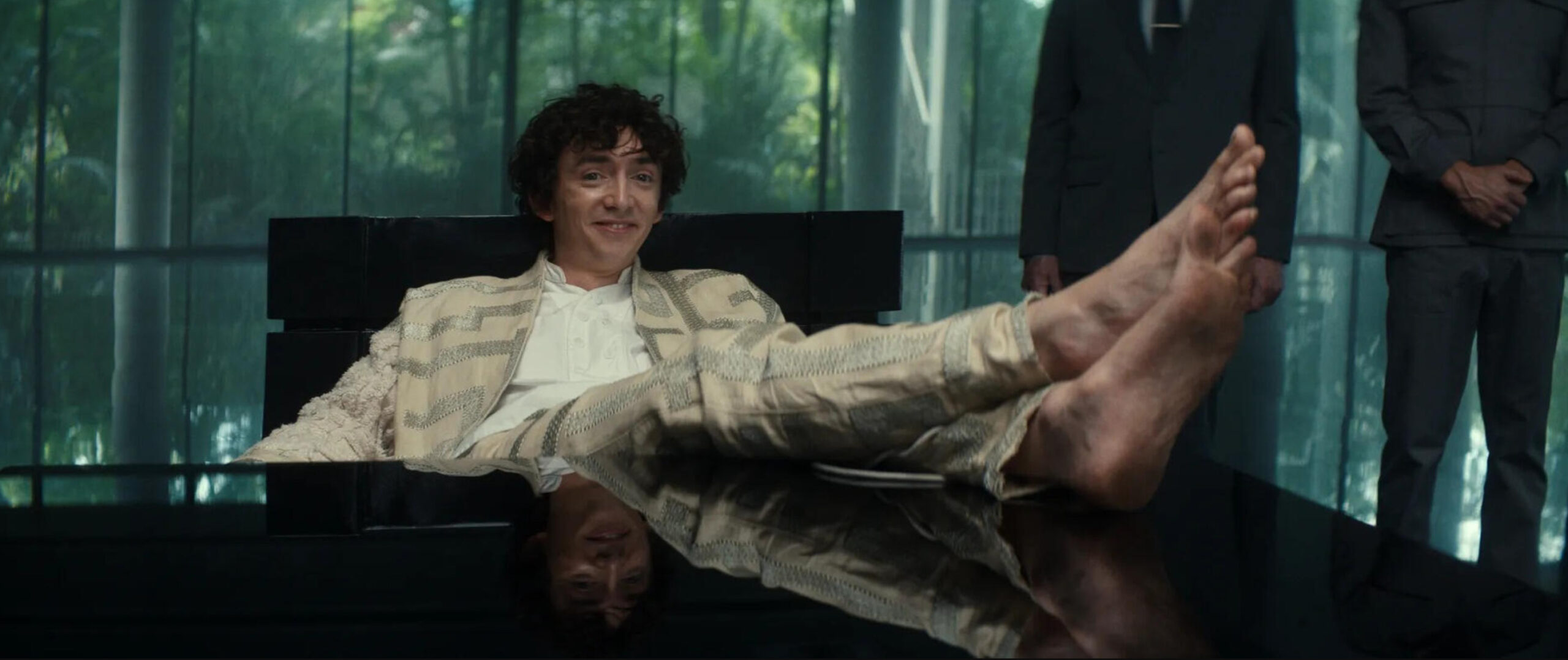
Peter Pan (yes, seriously!) is played by the youngest trillionaire, Boy Kavalier, living on the island of Neverland. Disney is essentially advertising itself through its own series – the level of meta-cynicism is so high even the xenomorphs would blush. Kavalier comes across as a mix of Elon Musk, Mark Zuckerberg, and a touch of Roman Roy from Succession. Barefoot, he demonstrates to the world that he’s so rich, his feet can literally stink up a negotiation table.
The children in this series have their own particular “charm.” Their parents abandon them, after which they’re turned into cyber-hybrids with childlike brains and memories of their previous lives. It’s somewhere between Big (with Tom Hanks) and a Marvel movie. The result is teen superheroes who can physically overpower anyone, yet still throw tantrums like they’re at a high school graduation.
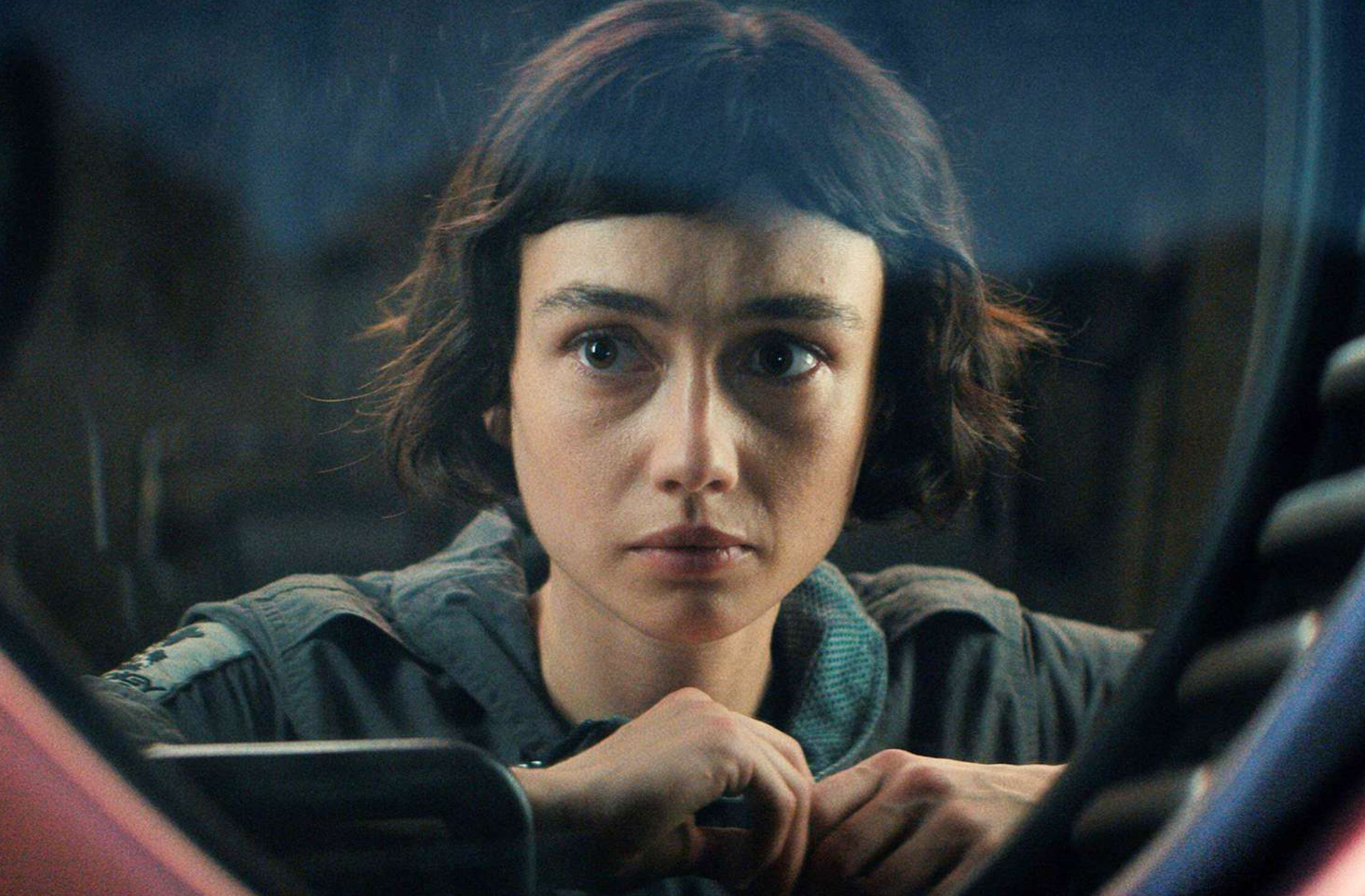
The Maginot eventually crashes into a skyscraper – clearly a reference to 9/11, because subtlety is apparently for the weak. Kavalier then sends his “Lost Boys” to the crash site. There, we meet Morrow, a Weyland-Yutani cyborg who somehow becomes the most interesting character in the entire series, and the Hermit, a doctor who can only be described as forgettable.
The whole thing is shot in a “Marvel-lite” style: superpowers, speed, alternate realities, with the constant feeling that Doctor Strange could pop out of a portal at any moment. The biggest question: if this circus-like ensemble existed before the Nostromo, how could Ripley have known nothing about them? The answer is simple: logic is for nerds, and this is a blockbuster.

The synthetics in the series are so bland that even an elephant with dyed hair would outshine them. Comparing them to David from Prometheus is like comparing an IKEA lamp to a cathedral stained glass window.
Visually, Alien: Earth transforms the dark, slimy, claustrophobic world of the Nostromo into a sterile IKEA showroom. Where there was once tension and cold sweat, now there’s laminate, glossy white surfaces, and splashes of blood that look more like abstract Pollock paintings.
And then comes the climax: episode three. Here, the series finally tries to be the Alien we know – bringing ordinary people back into the story. Mechanics, biologists, pilots working for peanuts, transporting deadly monsters not out of curiosity or love of science, but because the corporation forced them to. For the first time, the show starts to breathe, presenting the xenomorph in all its terrifying glory. That said, once it reaches Earth, its impact gets lost in pristine white laboratories, looking more like a display model in an exhibition hall than a real threat.
So, what we end up with is a mix of Peter Pan, Marvel, Disney, and a sprinkling of xenomorphs for good measure. The Alien franchise here feels less like a horror story and more like a corporate party with bad jokes.
Read also: Could Thorium Be a Breakthrough in Energy Technology?
This is not the kind of series you want to watch
Episode three is a nod to Ridley Scott, a sort of “See? We can do tense horror too, not just play Marvel with xenomorphs in the background.” And it seems that was the intention from the start. After all, Noah Hawley was brought on – Hollywood’s first copywriter of sorts, someone who knows how to extract the atmosphere from a classic and claim it as their own. In 2014, he transformed the Coen brothers’ Fargo into a series that retained the spirit of the original while completely changing the story. Even Marge Gunderson was repackaged: from Frances McDormand in the film to Allison Tolman in the series. Now he’s doing the same with Alien: not copying, but squeezing out the atmosphere while leaving the story’s skeleton for later.
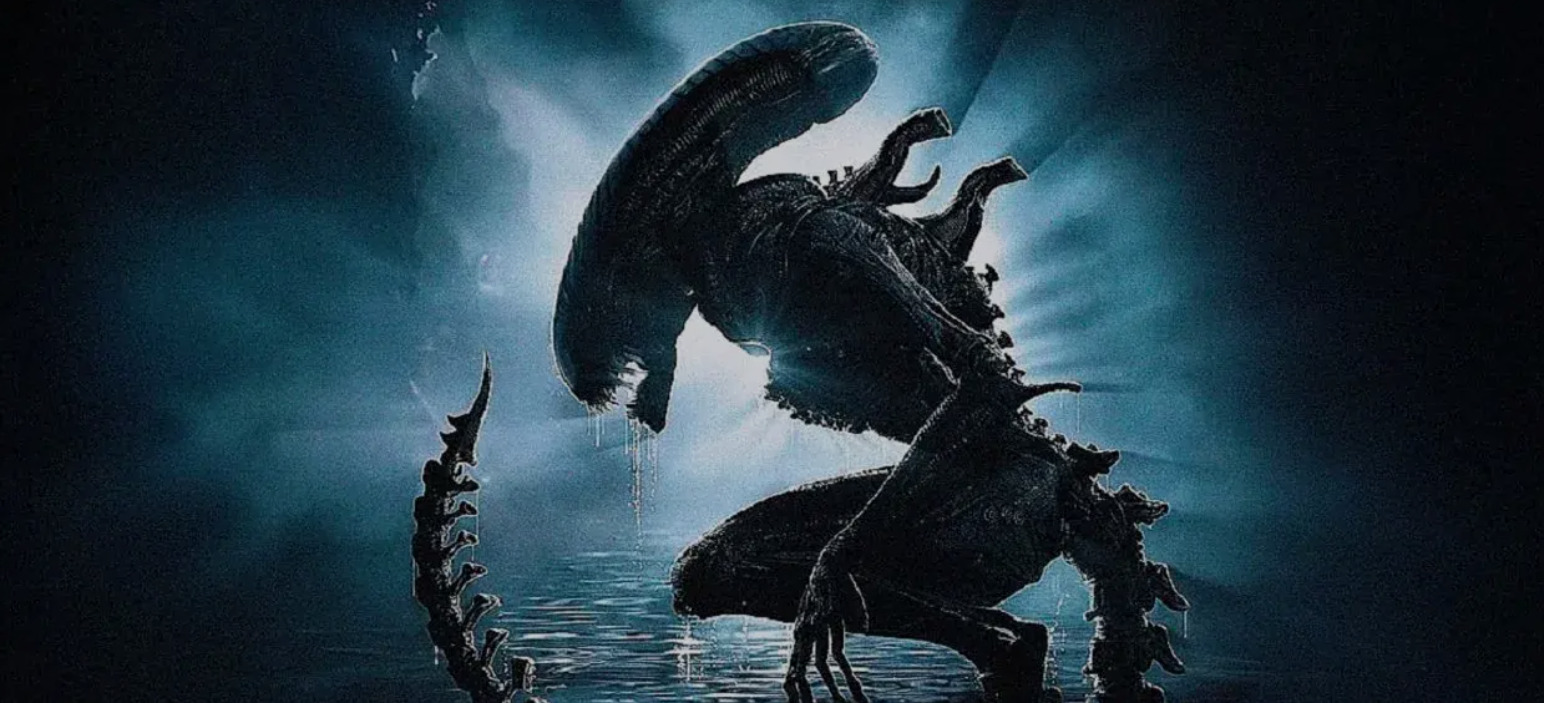
But the key question remains: is the xenomorph just the most beautifully designed killing machine in film history, or is it a philosophical symbol of humanity’s desperate struggle to survive? Thanks, Noah – we never would have guessed. It seems the creator is saving this “revelation” for the final two episodes, which I haven’t seen yet, or maybe even for a second season, to keep us from walking away early.
FX, of course, hopes to replicate the success of last year’s Shogun with its $250 million budget. Alien: Earth, we’re told, cost even more – though the exact figure is a closely guarded secret. Presumably, that’s to prevent us from calculating how many millions went into filming sterile laboratories that look more like IKEA showrooms than anything terrifying.

I do enjoy critiquing shows, but I’m not one of those shouting, “Cancel it after the first season!” Otherwise, we’d have missed out on many hits. Still, I sincerely hope Noah Hawley eventually stops turning Alien into a corporate fairy tale with Peter Pan and taps into some of the dark energy that made the original film a classic. Darkness exists – in humans, in cyborgs, and even in xenomorphs.
And the cat… well, he’s already dead. Let’s just hope it’s only the beginning of the sacrifices made on the altar of creativity.
Read also:
- Why It’s Unlikely That the iPhone 17 Will Bring Any Significant Innovations
- Sex Robot Industry: New Rules in the Age of Technology
- ChatGPT-5 from OpenAI: What the New AI Model Can Do
- How to Spot Fake Photos: New Challenges of the Digital Age


Wow! A review that slams a TV series that’s about eight hours long, and the biggest criticism is having seen a cat controlled by an alien for 10 seconds. In fact, the criticism is directed primarily at felines in general. It’s like saying: I didn’t like Breaking Bad because the mirror in the bathroom at its house is too small. What I just read isn’t a review, but a derailment, the kind trolls use on forums.
Beh? Eliminate i commenti riguardo le pessime critiche?
Non viene eliminato nulla, solo i commenti vengono visualizzati pubblicamente con un certo ritardo, a causa della cache. Il tuo commento è perfetto :)
Ho letto tutto e… una critica molto più pesante della serie stessa. Più noiosa di Alien Heart! Hai scritto anche troppo facendo perdere il filo del discorso con lungaggini sui gatti, finendo praticamente fuori tema. Fermati prima, ti prego!