




© ROOT-NATION.com - Use of content is permitted with a backlink.
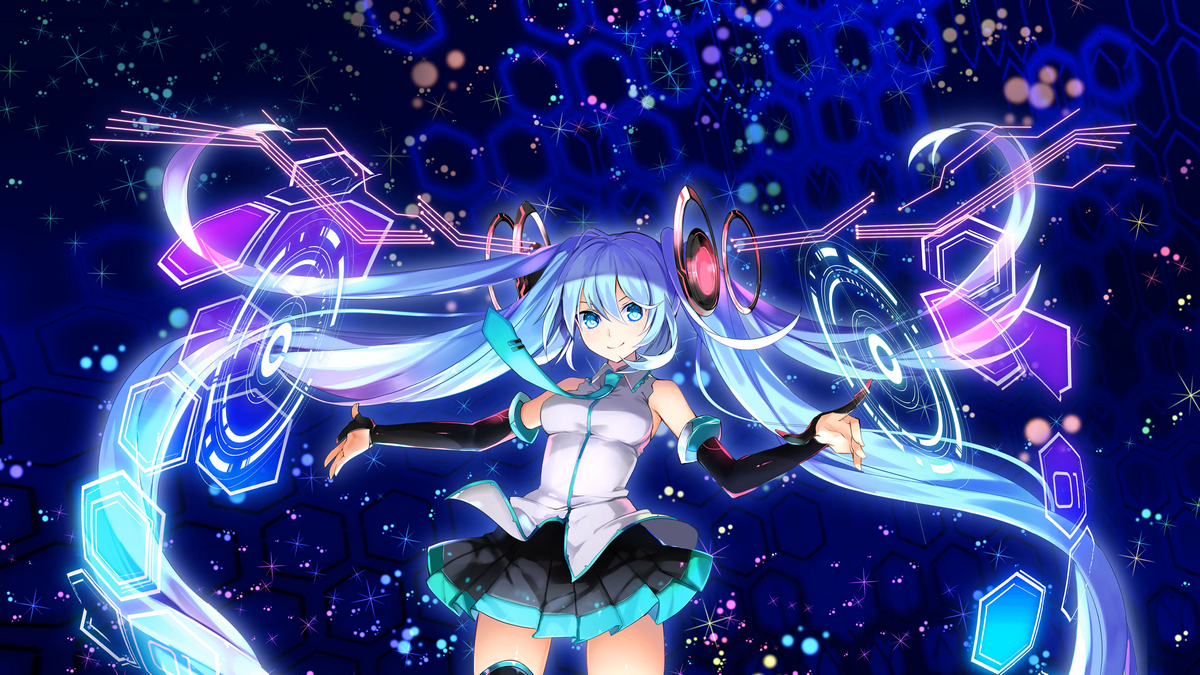
When Crypton Future Media released the Hatsune Miku voice bank on August 31, 2007, it appeared to be a purely technical, even niche, experiment. Few could have predicted at the time that the combination of innovative technology, open creativity, and a passionate fan community would turn her into a symbol of a new era in digital art. In effect, Hatsune Miku sparked an entire cultural phenomenon: the age of synthetic performers, born at the intersection of technology, design, and musical experimentation.
TABLE OF CONTENTS:
Miku: The First AI Performer Long Before It Became Mainstream
Long before the term “AI-generated art” became a media buzzword, Hatsune Miku was already proof that a machine could act as a creative collaborator. The core principle of Vocaloid was elegantly simple: a human composes the music, and the software instantly transforms it into vocals – synthesized, yet emotionally expressive. This concept didn’t just anticipate the future; it created a bridge between human imagination and algorithms.

Today, this concept has evolved dramatically through neural network models capable of generating not only illustrations or text but complete musical compositions, including vocals that mimic real performers. Yet the central truth remains unchanged: AI is not a replacement for the artist, but a powerful, new tool. Hatsune Miku was the first “virtual instrument” to mobilize a user community into a global network of producers, effectively giving everyone a voice.
Read also: End of Specs Race: How Many Megapixels Can Human Eye Actually Perceive?
Anatomy of a phenomenon: how the icon was born
The technological core of the project was Yamaha’s Vocaloid 2 platform, which allowed vocals to be synthesized from voice samples. For Hatsune Miku, the timbre of Japanese voice actress Saki Fujita was used, and her name, Hatsune Miku (初音ミク), poetically translates to “the first sound of the future.”

The key to her success was not the technology itself, but Crypton’s strategy. They positioned Miku not as a closed commercial franchise, but as an open platform for creativity. Fans were given full freedom to produce songs, music videos, 3D animations, and share them openly. In the early years, YouTube and Nico Nico Douga became digital stages where millions of fans exchanged over 100,000 songs created with Miku.
Read also: 19 Minutes to Apocalypse: Review of ‘A House of Dynamite’ (No Spoilers!)
Vocaloids: A Revolution in the Music Studio
Hatsune Miku was only the first step. Today, there are hundreds of Vocaloids – synthetic singers with voice banks in multiple languages. They have fundamentally changed the philosophy of music production: the voice is no longer a fixed attribute, but a flexible instrument that can be edited, adjusted in pitch, modulated for emotional tone, or even used to create an entirely new persona.
Many producers who began their careers with Miku later became professional composers. Some tracks, such as Senbonzakura and World Is Mine, have transcended niche culture to become part of the Japanese pop-cultural canon, inspiring orchestral arrangements and remixes.
Read also:Best AI Music Generators That Are Already Available
From Vocaloid to Jukebox: AI in Contemporary Music
Today, systems like OpenAI Jukebox and Suno AI can generate melodies, harmonies, and vocal tracks virtually “from scratch” by analyzing thousands of musical samples. Their role, much like Miku’s early on, is not to replace humans but to create a new level of interaction with sound.
The musician increasingly takes on the role of a director: they set the direction, while AI handles arrangements, generates adaptive music for games or film, and explores new sonic possibilities. Debates over copyright and ethics continue, but the fact remains: AI, much like the early Vocaloids, has opened the door to a new, more accessible era of creative expression.
Read also: Breakthrough Development: Scientists Create Artificial Muscles Activated by Ultrasound
A Symbol of Digital Culture and a Global Phenomenon
Since 2014, Crypton has organized Miku Expo – a series of concerts where holographic performances of Miku draw thousands of attendees worldwide. Online streams regularly attract over 100,000 simultaneous viewers. Today, Hatsune Miku has 3.3 million listeners on Spotify, more than 4 million subscribers on YouTube, and hundreds of collaborations with global brands. She has appeared on popular TV shows, in VR projects, video games (such as Project DIVA and Project SEKAI), and art installations.

Amid the rise of AI as a driving force in innovation, Hatsune Miku stands out as a vivid symbol of the first wave of digital music experimentation. Her story serves as a powerful reminder: technology does not diminish art, it expands its boundaries. Miku is the voice of a generation that grew up in a digital world and sees artificial intelligence not as a competitor, but as a creative partner.
Read also:
- Diia AI LLM: National Breakthrough or Overinflated Expectations?
- Atomic Horizon: How Humanity Pushes Chips to Edge of Possibility

