





© ROOT-NATION.com - Use of content is permitted with a backlink.
The development of the Diia AI LLM has become one of Ukraine’s most discussed technological initiatives in recent days. Let’s take a closer look at what is known so far.
Ukraine’s Ministry of Digital Transformation has officially confirmed that it is working on a national large language model – Diia AI LLM – intended to serve as a foundational component of the country’s digital sovereignty. According to Mykhailo Fedorov, the project is not just a technological experiment but a long-term investment in future state infrastructure, where a significant share of digital processes may eventually be handled by AI systems.
Read also: All articles about artificial intelligence
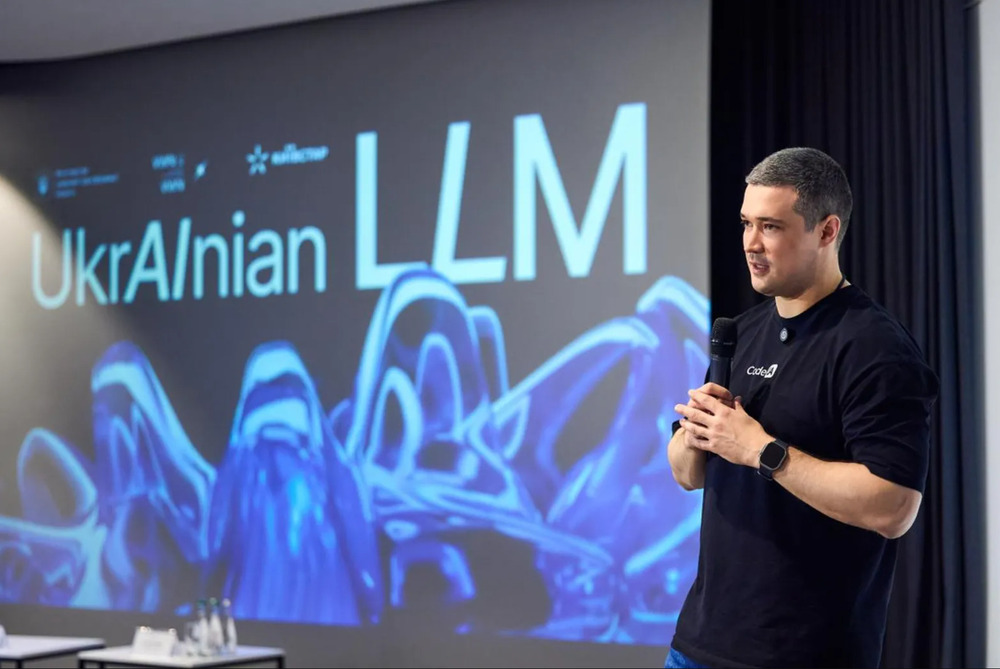
But is everything as rosy in this project as Mr. Fedorov tells us? Let’s take a closer look.
Read also: XChat – Elon Musk’s Alternative to WhatsApp?
TABLE OF CONTENTS:
What is Diia AI LLM?
If the statements from Minister of Digital Transformation Mykhailo Fedorov and the official communications are accurate, the national LLM is being developed as a large-scale language model. The Ministry is creating it in partnership with Ukrainian technology companies. Its intended role is to serve as a universal “intelligent core” for government services, support AI-driven agents, and handle extensive volumes of Ukrainian-language data.
The model is being developed with several priorities in mind:
- a strong focus on the Ukrainian language, including regional dialects and specialized professional vocabulary
- awareness of Ukrainian cultural, legal, and institutional context
- reliance on locally stored datasets that are not transferred outside the country
- a role as a foundational infrastructure layer for government services, defense-related systems, education, research, and commercial applications.
The Ministry emphasizes that having a domestic LLM would allow Ukraine to maintain control over how sensitive data from state registries is processed and reduce reliance on global technology companies.
Read also: Breakthrough Development: Scientists Create Artificial Muscles Activated by Ultrasound
Launch Plans
The Ministry has announced that the first pilot version – described as a “medium-scale model” – is expected by December 2025. At this early stage, the team is focused on:
- collecting large corpora of Ukrainian-language texts
- assembling training datasets
- configuring guardrails, or safety mechanisms that limit inappropriate outputs
- preparing interfaces for integrating the LLM into government services.
After the pilot version is released, the project is expected to undergo a lengthy phase of additional training, alignment, and security audits.
Collaboration with NVIDIA may play an important role in this process. The announcement was made recently: Ukraine is beginning a strategic partnership with NVIDIA, one of the key providers of computing infrastructure for artificial intelligence. According to the Ministry of Digital Transformation, the joint initiative focuses on developing sovereign AI – building domestic infrastructure, training specialists, and introducing secure AI solutions in both government and defense sectors.
Read also: What’s Wrong with AI Browsers?
What does Fedorov say?

Mykhailo Fedorov has repeatedly emphasized several key points:
- The LLM is a strategic infrastructure product developed specifically for the state’s needs, rather than relying on external models.
- This approach should enable the creation of AI-based government tools for public services, defense, research, and business using locally stored data.
- Ukraine aims to become one of the three global leaders in applying artificial intelligence within the public sector by 2030.
- A domestic LLM is also framed as a matter of national security: sensitive data must be processed in Ukraine and remain under Ukrainian control.
Fedorov notes that the LLM is intended to become the central component of an AI ecosystem that will support the concept of a future “agent-based state.”
Read also: How Chinese Companies Circumvent the US Ban on AI Chips
Applications of Diia AI LLM
Diia AI LLM is intended to serve as a central intelligence component within Ukraine’s digital government infrastructure, with its initial deployment focused on Diia services. The national model is expected to function as the core of Diia.AI – a government AI assistant designed to simplify administrative processes into conversational interactions. Citizens would be able to access services through chat-like exchanges, without manually filling out forms or navigating multiple web pages. The assistant would automatically interact with registries, generate documents, and submit requests to relevant agencies. It would collect data from various registers, reconcile information across departments, and guide users through each step of service delivery. Essentially, Diia AI LLM is envisioned as a universal operator capable of understanding user queries, translating them into legally compliant actions, and executing them within the appropriate government systems.
In the defense sector, the model could act as a precision analytical tool. It would be capable of processing large volumes of information – from open-source intelligence and classified reports to technical documentation. The LLM could assist in identifying patterns, analyzing risks, and producing analytical summaries. This would provide command structures with a tool for scenario forecasting, logistics assessment, and decision-making based on comprehensive information. Additionally, the model could streamline the creation of technical documentation, generate instructions, and organize data for research and engineering purposes, all within a closed environment that prevents sensitive information from leaving secure networks.

In the education sector, Diia AI LLM could transform learning approaches. The model is capable of generating educational materials at varying levels of difficulty, adapting explanations to a student’s level, creating interactive exercises, and presenting complex topics in accessible language. It can support performance analysis, identify strengths and weaknesses, develop personalized learning paths, and act as a real-time tutor guiding students throughout their studies. This functionality could make education more individualized and flexible.
Within the legislative domain, the national LLM could significantly streamline work with legal texts. It can analyze large volumes of legislation, identify inconsistencies, summarize content, and provide explanations in clear language. The model can compare Ukrainian laws with European legislation, highlight differences, and suggest ways to harmonize regulations. It is also suitable for precise translation of international documents, adaptation of legal texts, and modeling the potential impact of legislative changes on the economy, citizens, and businesses. Such capabilities could simplify the preparation of bills and expert reports.
In business and research, Diia AI LLM could serve as a platform for developing numerous products. Startups may use it to create applications, analytical tools, corporate assistants, and text-processing solutions without relying on costly foreign models. Companies could automate document analysis, generate reports, summarize information, and integrate the model into internal systems. Universities and research centers could leverage it for work in the humanities, social sciences, and technical fields, processing large Ukrainian-language datasets and developing their own research tools.
Collectively, these use cases suggest that Diia AI LLM is not a single-purpose product but a foundation for an ecosystem that spans government services, defense, education, law, business, and scientific research. The model has the potential to act as a universal engine for Ukraine’s digital transformation, offering flexibility, speed, and deep personalization across both public and private sectors.
Read also: Windows as an Agentic Operating System: Current State and Future Prospects
Challenges and Risks
Overly High Expectations for the Initial Version
The Ministry plans to release the first medium-scale version of Diia AI LLM by December 2025. In practice, however, the situation is more complex. Developing a competitive LLM from scratch typically takes several years, requires hundreds of millions of dollars, and involves large multidisciplinary teams – from engineers to linguists. Ukraine is only beginning this process. As a result, the first version of Diia AI LLM is almost certainly going to be weaker than models developed by major technology companies: it may struggle with context, produce more errors, and be unable to handle complex multi-step tasks. This is expected, but it is important to recognize that the pilot model will not yet be ready for large-scale deployment in critical government services.

Limited Availability of High-Quality Ukrainian-Language Data
Another significant challenge is the scarcity of Ukrainian-language data that can be legally used for model training. Academic texts are scattered and not fully structured, legal documents are difficult to standardize, and publicly available content varies widely in quality. Slang, dialects, and regional language variations are also underrepresented. Even large international companies face AI “hallucinations,” and under Ukrainian conditions, the risk of inaccurate outputs is even higher. For a government system, this is particularly critical, as errors in the model could directly affect real-world decisions made by citizens.
Security and Privacy Concerns
One of the main advantages cited for Diia AI LLM is that data will remain within Ukraine. However, local storage alone does not guarantee full security. AI integrated into government systems could become a new attack vector. If the data is not properly sanitized, the model might inadvertently “learn” from confidential information. It is also unclear who would be held accountable if the AI makes errors in a government service. Additionally, Ukrainian registries have repeatedly faced hacker attacks, meaning that deploying a large-scale model without a new security architecture could further increase risks.
Read also: Samsung Galaxy XR: Analytical Look at Attempt to Reboot the XR Market
Excessive Centralization of Risks
Diia AI LLM is intended to serve multiple domains: Diia services, defense, education, business, and legislative processes. While ambitious, this raises several questions. Can a single model perform at a high level across such diverse tasks? Does this create a single large “vulnerability hub,” where an attack could affect dozens of government services? Will military and public systems be properly segregated? Globally, large models are usually specialized rather than attempting to be “one-size-fits-all,” so the Ukrainian approach will likely face a challenging path.
Funding and Long-Term Development Challenges
An LLM is not a product that can simply be created and left unattended. It requires continuous updates, retraining, audits, testing, and infrastructure maintenance. GPUs are expensive, and the team must consist of highly skilled specialists. Without a stable, long-term budget, the model could quickly become outdated and lose its competitiveness. This represents a tangible risk for a government project intended to operate over many years.
Risks of Political Influence
Deploying a national LLM within government operations carries an additional political risk. There could be a temptation to use the model to shape “preferred” narratives, influence public opinion, or produce convenient interpretations of legislation. Preventing this requires clear rules, independent oversight, and maximum transparency in how the model operates. Without such safeguards, trust in government AI could be undermined.
Read also: How to Spot Fake Photos: New Challenges of the Digital Age
Current Project Status
At this stage, Diia AI LLM is in an active preparation phase. The Ministry of Digital Transformation has already defined core areas of work and begun laying the foundation for a future government AI ecosystem. A key process involves large-scale data collection and preparation, including cleaning, anonymization, structuring, and the creation of specialized language corpora in both Ukrainian and English. This is critical, as the quality of the data will directly determine the performance of the model’s first version.
A technical team is being assembled in parallel, comprising machine learning engineers, researchers, linguists, cybersecurity specialists, and experts on government registries. The team’s responsibilities include designing the model architecture, determining infrastructure requirements (GPUs, data centers, network resources), ensuring process security, and developing protocols for interactions between government systems and the model.
The Ministry is also working on protective mechanisms to prevent the leakage of confidential information and minimize AI errors. These measures include access control systems, query audits, sensitive data filters, internal “behavior rules” for the model, and the development of a legal framework that will define accountability, quality standards, and the permissible scope of the national LLM’s use.
Additionally, the Ministry plans to establish a national center for developing government AI solutions. This center will serve as both a physical and institutional platform for all state AI projects – from Diia.AI to defense-related information analysis systems, and from educational tools to business services. It will provide coordination, standardization, auditing, testing, and certification of AI-based products. Its primary role will be to unify government AI initiatives under a single architecture, ensuring their security and interoperability.
Within this large-scale project, Diia AI LLM is intended to be the central component, effectively the “intelligent core” of the entire digital ecosystem. It will handle the AI functions of most future government services – from citizen interactions to advanced analytics. In practice, the model will determine the quality and modernity of Ukraine’s digital state in the coming decade.
If implemented according to plan, Diia AI LLM would provide the country with its own AI engine, forming the foundation of a future agent-based state that is flexible, efficient, and technologically independent.
Read also:
- How Chinese Companies Circumvent the US Ban on AI Chips
- Windows 11 Open Source: Myth or Reality?
- Cryptography: What It Is and How It Works
- OpenAI’s New Superpower: What Is a ChatGPT Agent?

