




© ROOT-NATION.com - Use of content is permitted with a backlink.
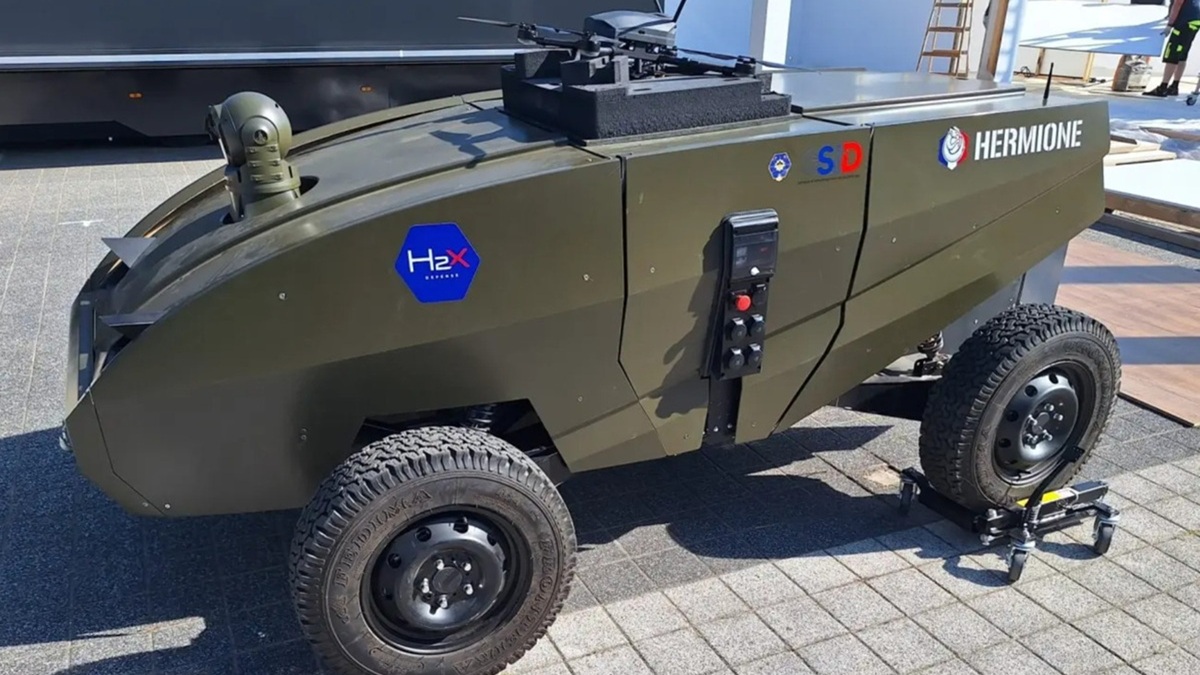
In France, as in many other countries, work is underway on modern ground robots capable of transporting various equipment and cargo. In early September, the company H2X-Defense unveiled its new development – the Hermione robotic complex.
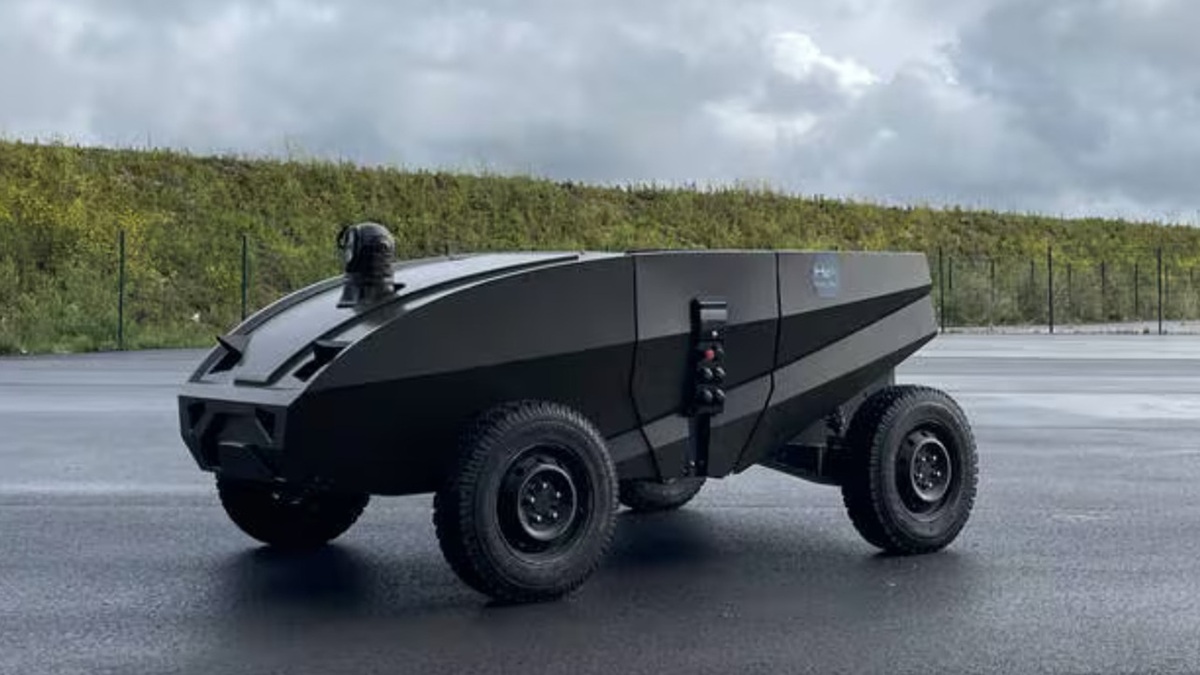
It’s a four-wheeled robot that incorporates modern technologies to make it both powerful and easy to operate.
Read also: Weapons of Ukraine’s Victory: SDB Guided Bomb
TABLE OF CONTENTS:
Demonstration of military ambitions H2X-Defense
H2X-Defense is a subsidiary of H2X-Ecosystems, a company primarily focused on hydrogen energy. The parent firm has been developing solutions for storing, transporting, and applying hydrogen in civilian industries, but in recent years it has also moved into the defense sector by establishing a dedicated division for military technologies.
The first major outcome of this shift is the Hermione multi-purpose robotic platform, unveiled in early September 2025 at the MSPO international defense exhibition in Poland. H2X-Defense showcased a prototype of the system in an outdoor demonstration area, alongside other projects highlighting its work in hydrogen-based technologies.
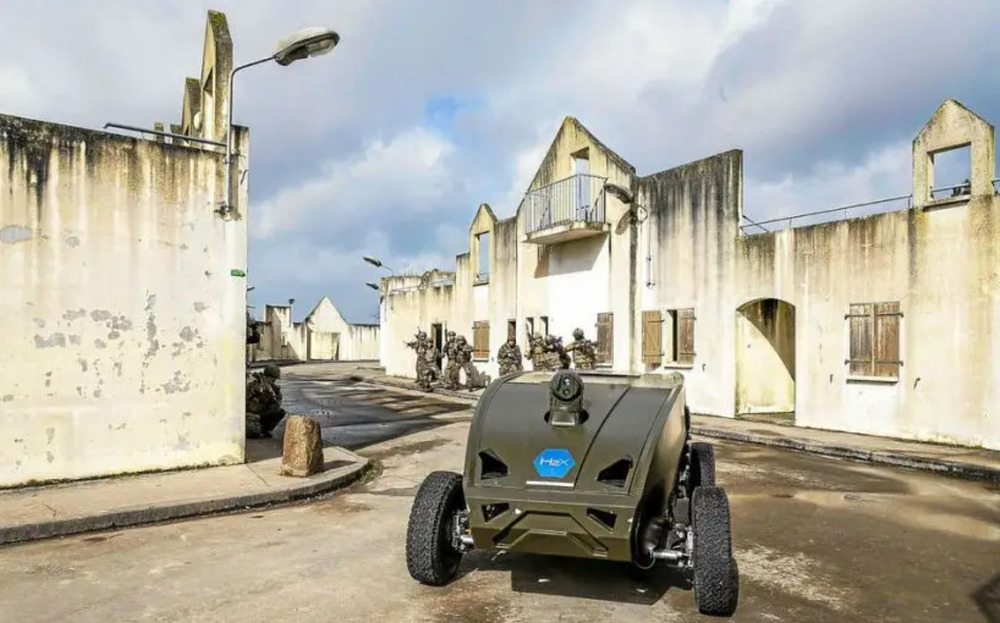
The Hermione project is designed as a versatile platform powered by an electric drivetrain that uses in-house hydrogen fuel cells. This setup reduces noise, lowers thermal visibility, and minimizes reliance on conventional fuel. The concept treats the chassis as a base for multiple roles – ranging from cargo transport and unit support to serving as a carrier for unmanned aerial systems, a function already demonstrated at the exhibition.
At this stage, Hermione is undergoing field trials. The first prototype is being tested to evaluate core technical specifications and assess its potential performance in realistic conditions. Once testing is complete, the company intends to move toward preparing the system for mass production.

In parallel, the company is building partnerships and seeking potential clients. During MSPO 2025, it announced a collaboration with the Polish firm P.H.U. Lechmar, which may act as a key intermediary for introducing the new system to Poland’s defense market. This approach suggests that H2X-Defense aims to position its technologies not only within the French military but also in the armed forces of neighboring countries.
It is worth noting that the company showcased more than just the Hermione platform. Alongside it, H2X-Defense presented related technologies, including hydrogen storage systems and a mobile fuel-cell-based power generator. These additions point to an effort to develop a broader energy supply ecosystem for military applications, with robotic platforms serving as one component within a larger integrated concept.
Read also: Weapons of Ukraine’s Victory: Modern Long-Range ERAM Missiles
Technical accounting and potential of Hermione RTK
In its current form, the Hermione robotic platform is a wheeled system built around an unconventional powertrain for military use. Its defining feature is the reliance on hydrogen fuel cells, which opens new possibilities in terms of autonomy and energy supply. The platform offers relatively strong technical specifications and can be configured to carry different payloads. Depending on the setup, it has the potential to support both combat and auxiliary roles.
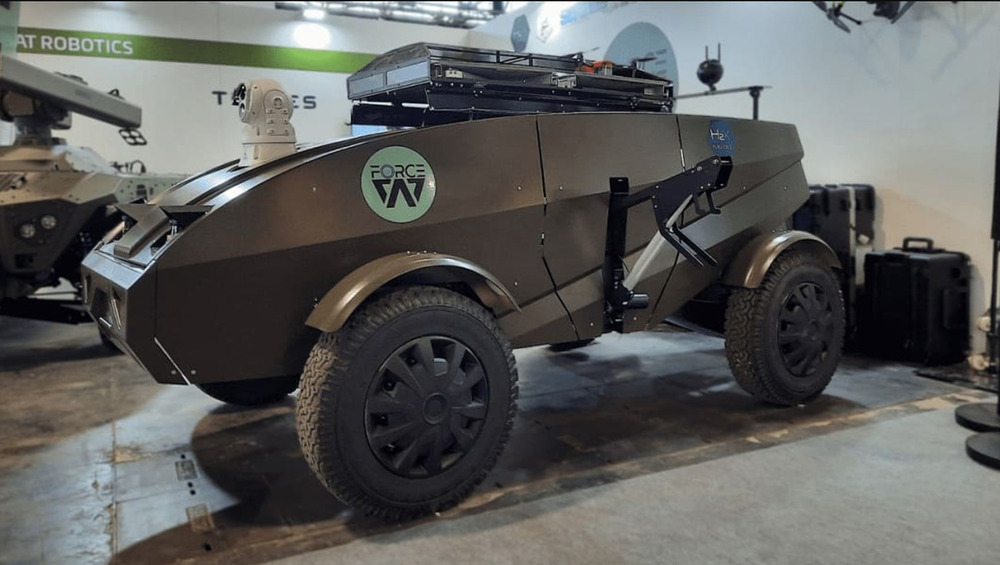
The prototype is built as a two-axle vehicle with a body featuring an unconventional shape. The platform measures 3.3 meters in length, 1.85 meters in width, and 1.4 meters in height, with a ground clearance of 300 mm. Its weight is around 700 kg, though this figure can vary depending on payload and equipment configuration.
The hydrogen power system is located in the central and rear sections of the platform. It includes a 700-gram gas cylinder pressurized to 300 bar (690 atm) and refueling equipment, allowing hydrogen replenishment in just 2–3 minutes. Quick-swap cylinders are also supported. The hydrogen feeds fuel cells that generate 5 kW of electricity, which is distributed to the traction motors, onboard systems, and other equipment. An additional 25 kWh battery is installed, and in combination with the hydrogen system, it provides up to 20 hours of continuous operation.
A notable feature of the system is its ability to function as a mobile power station. A dedicated connector allows electricity from the fuel cells or battery to be supplied to external devices.
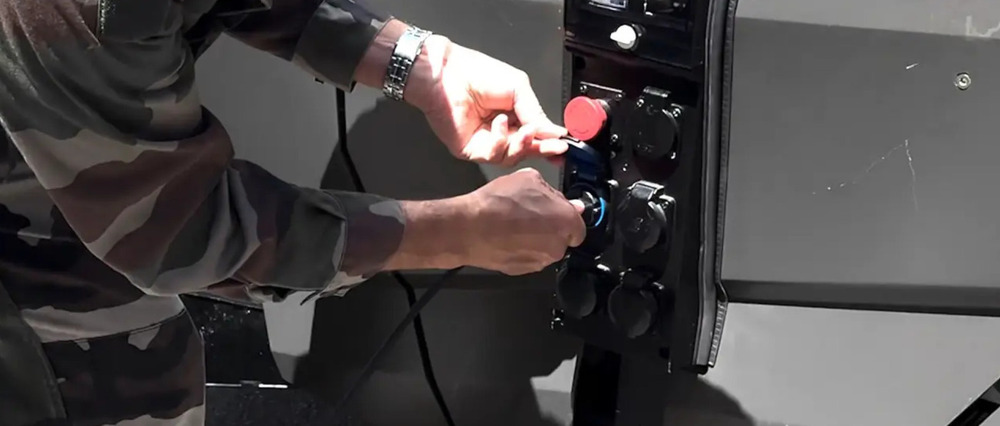
The platform is powered by four independent electric motors, each driving a single wheel. It features independent suspension with transverse arms and vertical springs. The maximum on-road speed is 24 km/h, while off-road mobility remains high. The front axle is steerable, and the platform can perform on-the-spot turns thanks to counter-rotating wheels. There is also provision for fitting an electric winch.
In its standard configuration, Hermione comes with a remote-control system. Navigation and road monitoring are handled by an electro-optical unit mounted at the front. The developers note that future versions may include more advanced electronics with an expanded range of features.
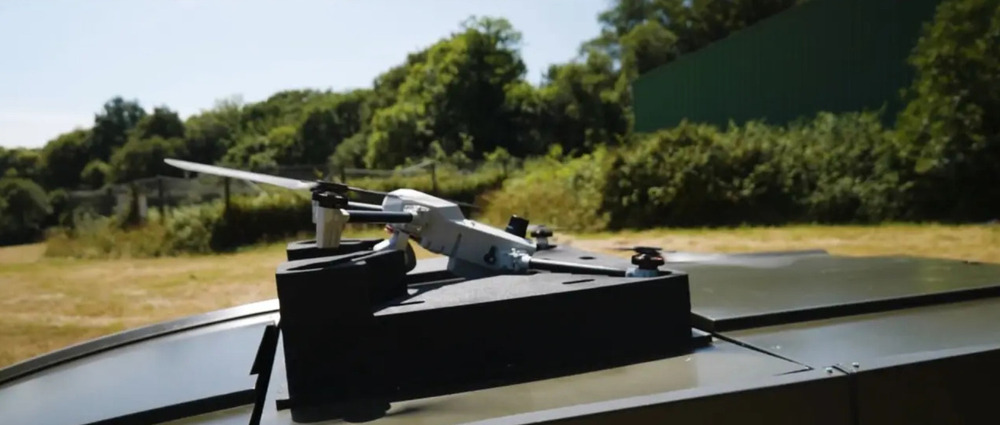
At MSPO 2025, Hermione was showcased in a role as a carrier for unmanned aerial vehicles. A mounting system on the roof allows for transport, launch, and recovery of a drone. This module likely also includes a charging system for the UAV and a signal relay to extend its operational range.
Looking ahead, Hermione could serve as a platform for other types of equipment or weapon systems. In its current configuration, it can carry up to 300 kg, enough to accommodate full-size electro-optical units, weapon modules with guns, or other specialized gear. Final configuration decisions are expected to be made by the end user.
According to the developers, the project has significant potential for scaling. Plans include larger platforms weighing up to 2 tons with a payload capacity of up to 600 kg. This expansion would enable the company to offer solutions for a wider range of applications, from logistical support to direct involvement in combat operations.
Read also: What China Showcased at the Parade: Armor, Missiles, Air Defense, and More
Hermione: innovation and contradictions of the French RTK
In recent years, a wide variety of ground robotic platforms have been developed worldwide, spanning multiple classes and purposes. Some stand out for bold technical approaches aimed at providing an edge on the battlefield. Hermione, from the French company H2X-Defense, falls into this category.
In terms of overall architecture and stated capabilities, Hermione is broadly comparable to most modern robotic platforms. Its distinguishing feature, however, is the use of a hydrogen fuel cell–based power system. The developer believes this approach offers several critical advantages over vehicles powered by conventional internal combustion engines or standard batteries.
The parent company, H2X-Ecosystems, emphasizes “green” technologies and actively highlights environmental considerations in its communications. Hermione represents an attempt to bring these solutions into the military domain, a move that is both unconventional and somewhat controversial. While H2X-Defense is developing other defense-related products, this robotic platform has emerged as the flagship of the company’s new concept.
Combining fuel cells with electric motors offers several practical advantages: near-silent operation, low heat output, and extended autonomy. The developers have also accounted for military operational needs – refueling a hydrogen cylinder takes only a few minutes, and it can be quickly swapped for a full one if necessary.
The drivetrain also offers clear benefits. Four independent electric motors provide adequate on-road speed and strong off-road capability. The platform’s maneuverability is notable as well: thanks to individually controlled wheels, it can turn almost on the spot.
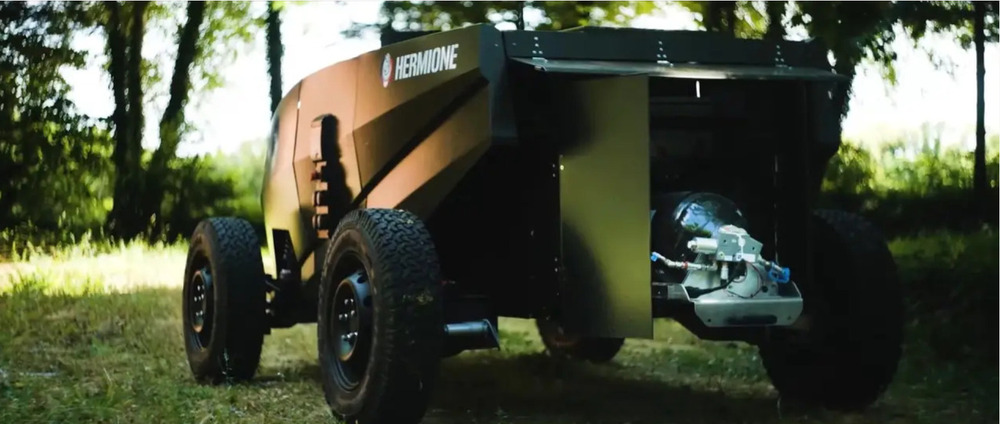
The concept of using Hermione as a mobile power station is equally noteworthy. The platform can reach a designated location, switch to a stationary mode, and supply electricity to external devices from its fuel cells or battery. This capability could make it useful not only for combat operations but also for logistics or rear-area support.
However, the project has significant drawbacks. Chief among them is the lack of protection. Operating on the front line – or even in forward support areas – requires armor, but in its current configuration, Hermione remains largely vulnerable to enemy fire.
Another vulnerability stems from the energy source itself. Using hydrogen fuel and carrying a high-capacity battery reduces the platform’s survivability. Any hit could result in fire or explosion, significantly lowering the chances of the system surviving in combat conditions.
Finally, the choice of a hydrogen power system raises questions. While it offers certain advantages, its overall performance does not provide a decisive edge over conventional internal combustion engines or battery-powered electric drivetrains. This calls into question the practical effectiveness of such a solution on a modern battlefield.
Read also: Weapons of Ukrainian Victory: The Robotic KRAMPUS System
Experimental platform for hydrogen technologies
At its current stage, the French Hermione platform should be seen primarily as a technology demonstrator, aimed at testing the viability of hydrogen fuel cells in military robotics. Its main purpose is less about providing a ready-made solution for armed forces and more about proving the fundamental feasibility of developing an effective combat or support system based on this new powertrain. Field trials are expected to answer the key question of whether the claimed performance aligns with real-world operational conditions.
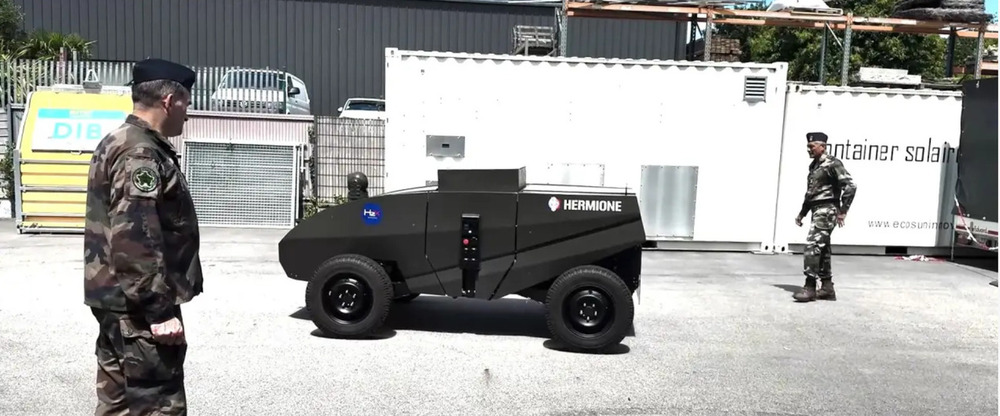
If testing proves successful, Hermione could serve as a starting point for a new generation of robotic platforms. The project opens the possibility of developing a broader range of systems that combine extended autonomy, low detectability, and mobile power supply capabilities. In this scenario, the platform could move from an experimental prototype to a commercially viable option for both domestic and foreign armed forces.
At the same time, an alternative outcome is possible. If the hydrogen power system fails to deliver the expected performance or proves too vulnerable in combat conditions, Hermione may remain a purely experimental platform. In that case, its significance would be limited to contributing technological insights, which could still find applications in civilian sectors or serve as a foundation for future military projects using different powertrains.
Read also:
- Nine of the Strangest and Most Mysterious Weapons
- 15 Creepiest Space Objects and Concepts That Defy Explanation
- Could Thorium Be a Breakthrough in Energy Technology?

