© ROOT-NATION.com - Use of content is permitted with a backlink.
There is a certain irony in the fact that this is already the third device from a company I previously viewed with some skepticism. At first, the Xiaomi 15T Pro challenged my assumption that “Xiaomi is not for me.” Then the Xiaomi 17 further reinforced the impression that the brand is taking its product line more seriously. Now I have the Xiaomi Pad 8 Pro on my desk – a thin, metal tablet with a flagship-class chipset and clearly defined positioning. We have spent enough time with it to form a clear assessment: who it is suitable for, who it may disappoint, and why IPS in 2026 is not necessarily a drawback.
Read also: All Tablet reviews
TABLE OF CONTENTS:
Positioning and price
The Xiaomi Pad 8 Pro is positioned as the flagship model in the lineup. At the time of this review, the 8/256 GB configuration is priced at $557/€481, while the 12/512 GB version costs $668/€577. These prices reflect a discounted offer. The standard pricing is $682/€590 for the base model and $794/€687 for the higher-tier configuration. On Aliexpress, the device is listed at approximately $585 and $665 respectively.

In addition to the Pro version, the lineup also includes the base Xiaomi Pad 8. It is equipped with the Snapdragon 8s Gen 4 (4 nm), compared to the flagship Snapdragon 8 Elite (3 nm) in the Pro model. It also features a more modest 13 MP camera versus 50 MP, slower 45 W charging compared to 67 W, and it does not include a fingerprint sensor.
Compared to the previous generation (Xiaomi Pad 7 Pro), the main changes include a different processor, an increased battery capacity from 8850 to 9200 mAh with a thinner chassis, and a transition to the faster UFS 4.1 storage standard.
Xiaomi Pad 8 Pro Specifications
- Display: 11.2″ IPS LCD, 3200×2136 pixels, 345 ppi, 3:2 aspect ratio, AdaptiveSync 144 Hz, Dolby Vision, brightness up to 800 nits, DCI-P3, TÜV Rheinland
- Processor: Qualcomm Snapdragon 8 Elite (3 nm), 8-core (2+6) Oryon CPU: 2×4.32 GHz + 6×3.53 GHz
- Graphics: Adreno 830 @1100 MHz
- RAM: 8 GB LPDDR5X; 12 GB LPDDR5T
- Storage: 256/512 GB UFS 4.1
- Operating system: Android 16
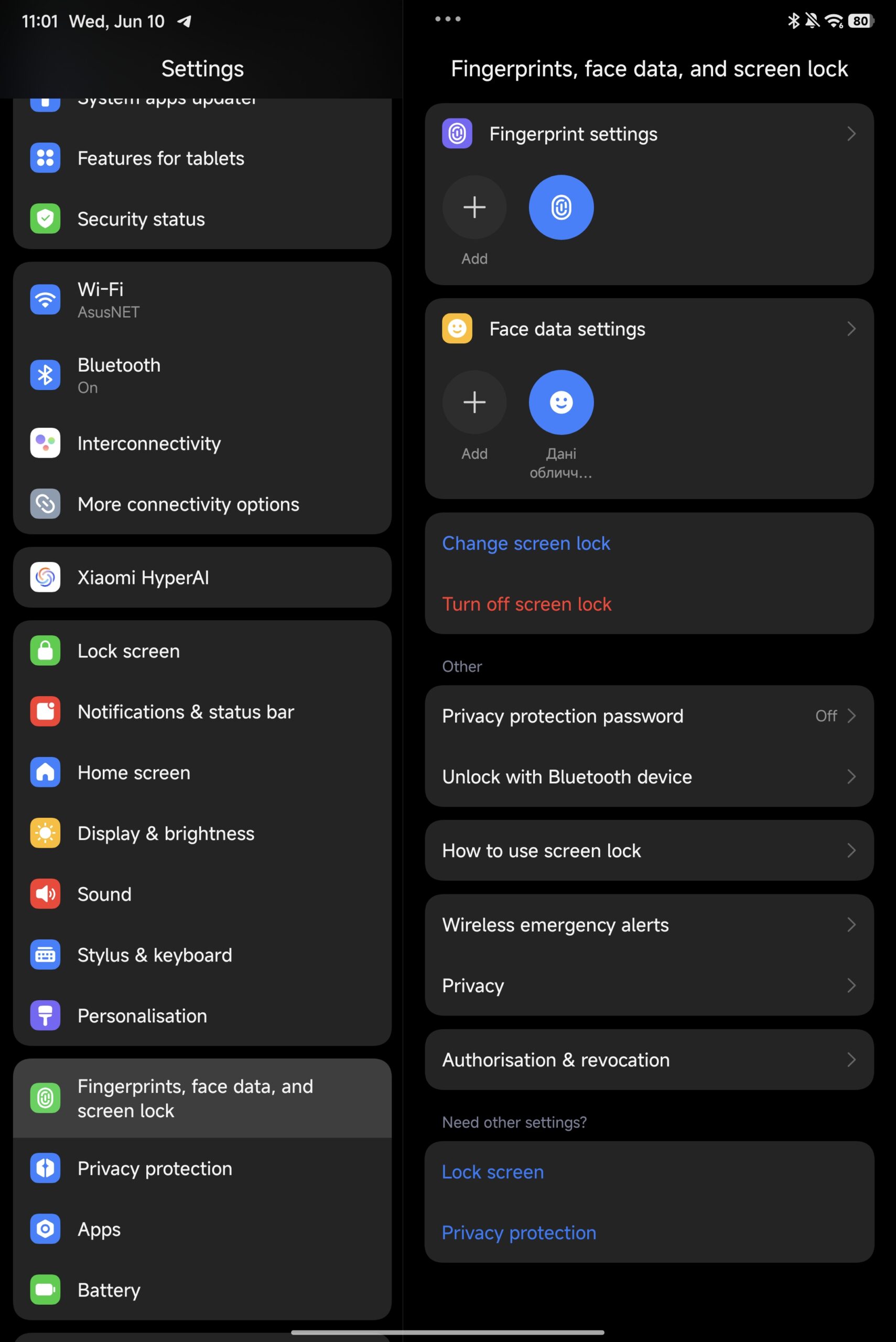
- Security: side-mounted fingerprint scanner, AI Face Unlock
- Main camera: 50 MP, 1/2.76”, 11.28 µm, ƒ/1.8, PDAF, video recording: 4K 30/60 fps, 1080p 30/60 fps, 720p 30 fps, autofocus, flash
- Front camera: 32 MP, 1/3.6”, 1.22 µm, f/2.2, video: 1080p 30 fps, 720p 30 fps
- Audio: 4 speakers, Dolby Atmos, Hi-Res and Hi-Res Wireless Audio
- Connectivity: Wi-Fi 7 (802.11be), Bluetooth
- Port: USB Type-C
- Battery: 9200 mAh, 67W fast charging
- Additional features: metal body, AI features, accelerometer, gyroscope, ambient light sensor, support for the Xiaomi Focus Pen
- Dimensions and weight: 251.22×173.42×5.75 mm, 485 g
Read also: Xiaomi Watch 5 Review: Wear OS and 6 Days of Battery Life
Package contents
The retail package is minimal: it includes the tablet, a USB Type-C cable, and documentation. There is no power adapter in the box, so the manufacturer-recommended 67 W charger must be purchased separately. That is essentially everything included.

Design and ergonomics
The Xiaomi Pad 8 Pro has a premium appearance. It uses a unibody aluminum chassis with flat edges and symmetrical display bezels. The screen-to-body ratio is 85.4%, with a thickness of 5.75 mm and a weight of 485 g. The device is available in three color options: gray, green, and blue. The review unit comes in the blue finish.

The only element that slightly disrupts the overall aesthetic is the camera module. The bump is relatively large, despite the presence of a single camera sensor. This is not noticeable when using a case, but without one the tablet does not sit completely flat on a surface and tends to rock slightly. It is a minor detail, but still noticeable.

Layout and port placement.When held in landscape orientation, the tablet is arranged as follows. On the top edge there is a microphone, a volume rocker, and a magnetic attachment area for the stylus. The left side houses the power button integrated with a fingerprint scanner, a pair of speakers, and an additional microphone. The right edge includes another pair of speakers and a USB Type-C port. The bottom edge is left empty.


The device feels comfortable in hand and is well balanced. The edges are not sharp, so they do not dig into the palm. During prolonged use, the hand does not experience noticeable fatigue.
Display
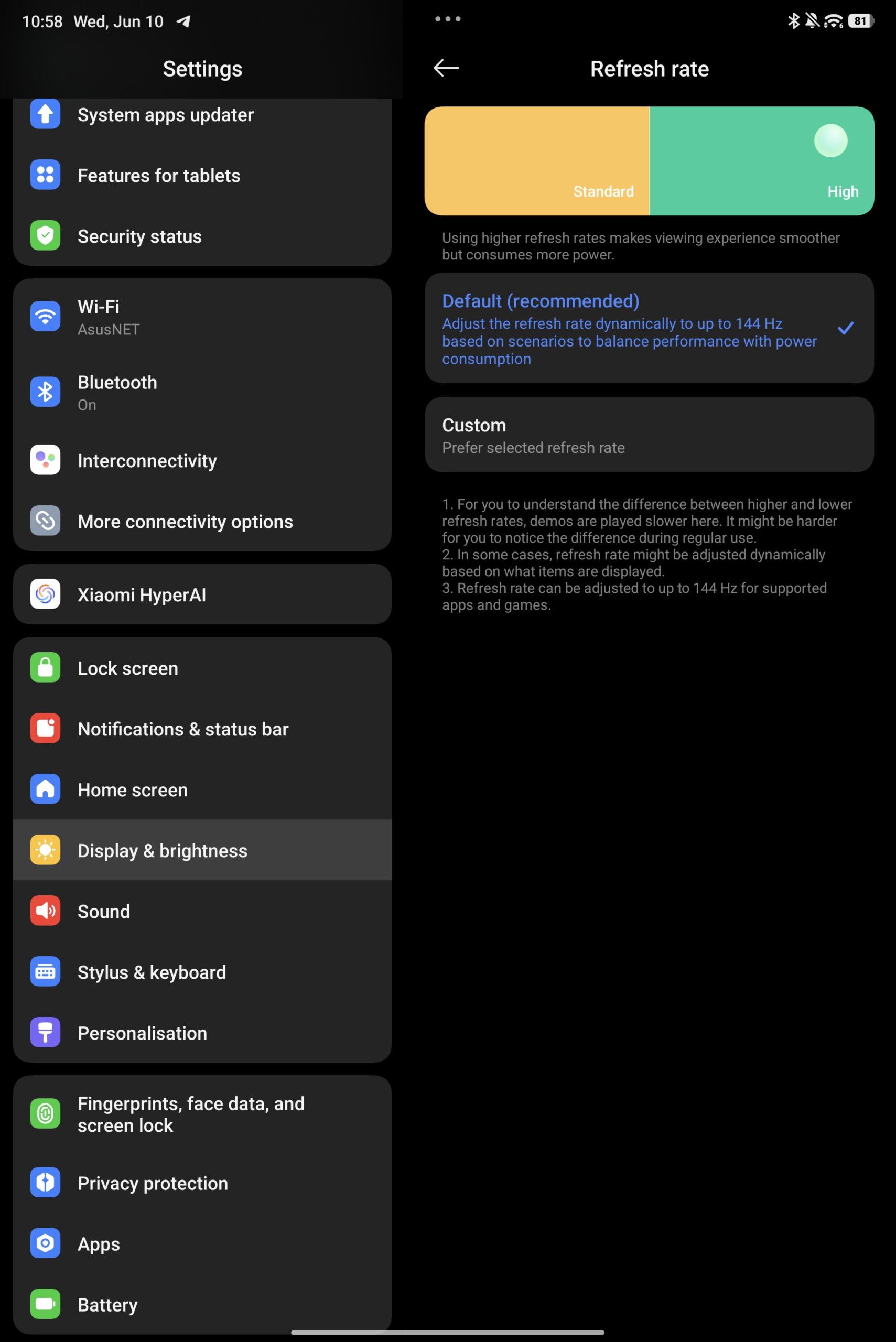
The Xiaomi Pad 8 Pro features an 11.2-inch IPS LCD with a resolution of 3200×2136 pixels (345 ppi) and an adaptive refresh rate of up to 144 Hz. It uses a 3:2 aspect ratio. In practice, this is one of the most balanced formats for a tablet: it is convenient for working with documents, while also providing a comfortable video experience without excessively wide black bars.

Peak brightness reaches 800 nits, which is sufficient for comfortable readability in outdoor conditions. Colors appear saturated and vivid without excessive oversaturation. The panel supports the DCI-P3 color gamut, 68 billion colors, Dolby Vision, and HDR10. It also includes Xiaomi’s Original Colour PRO technology and a reading mode. Viewing angles are wide, and the image does not significantly fade when the tablet is tilted, unlike many budget IPS panels.
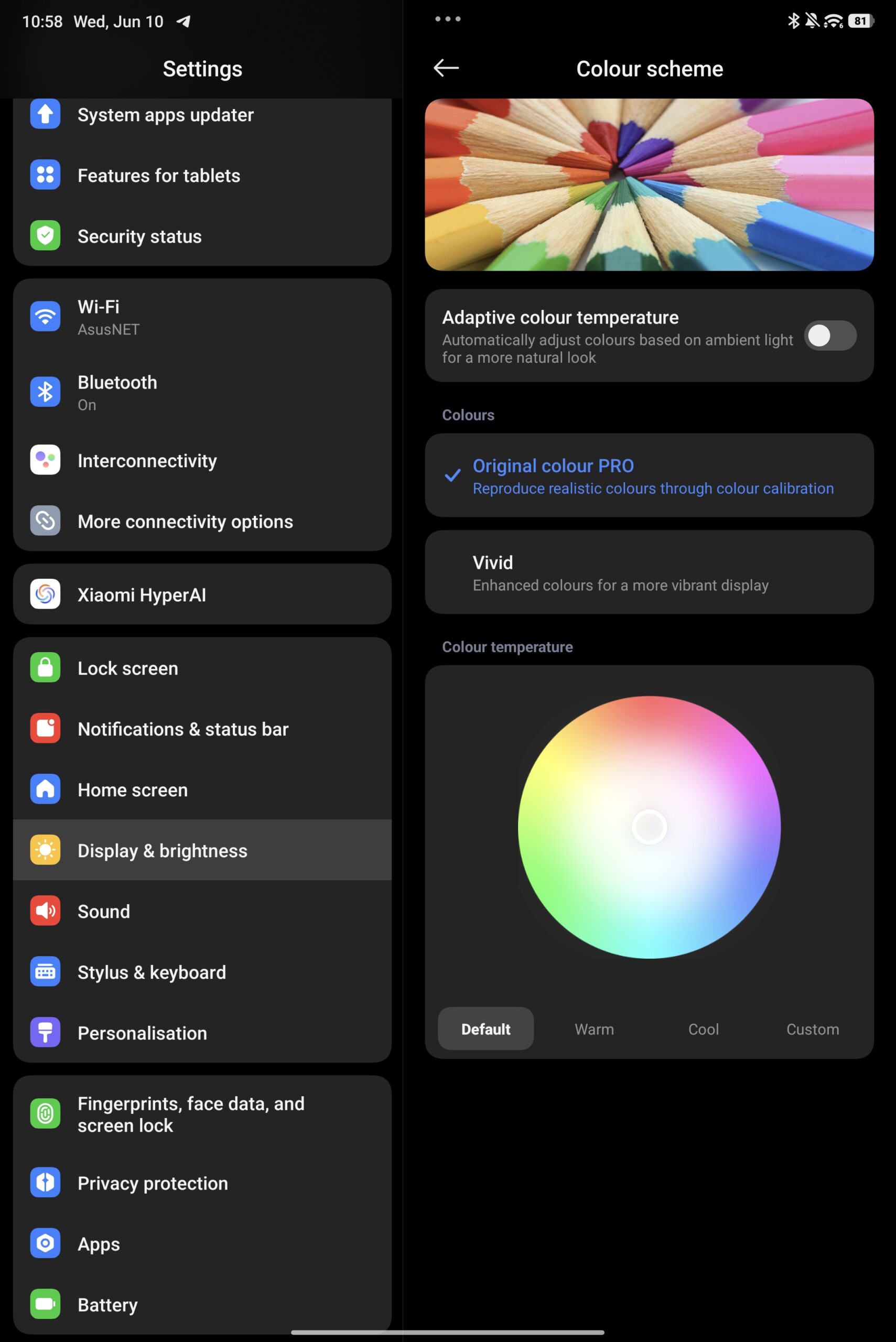
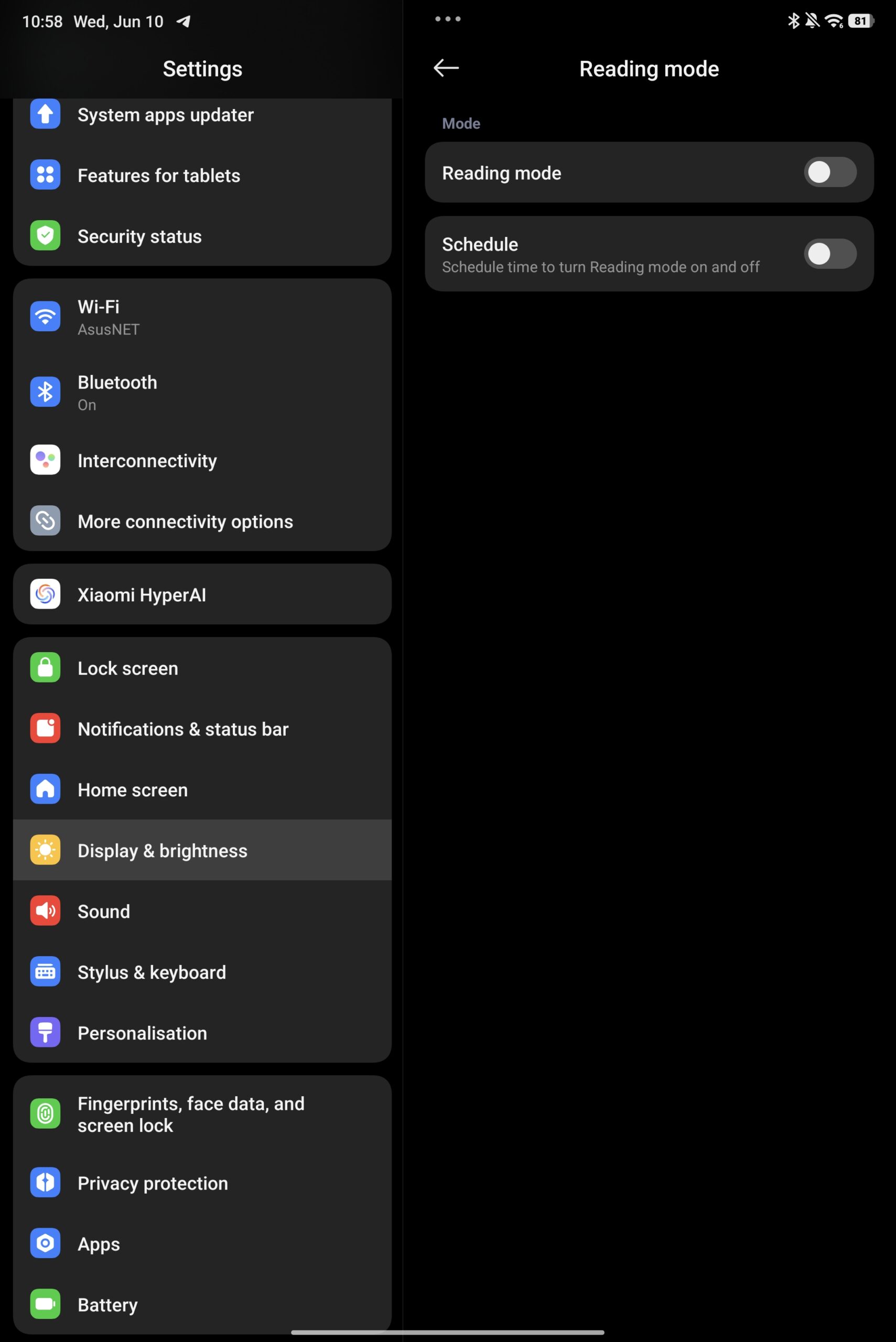
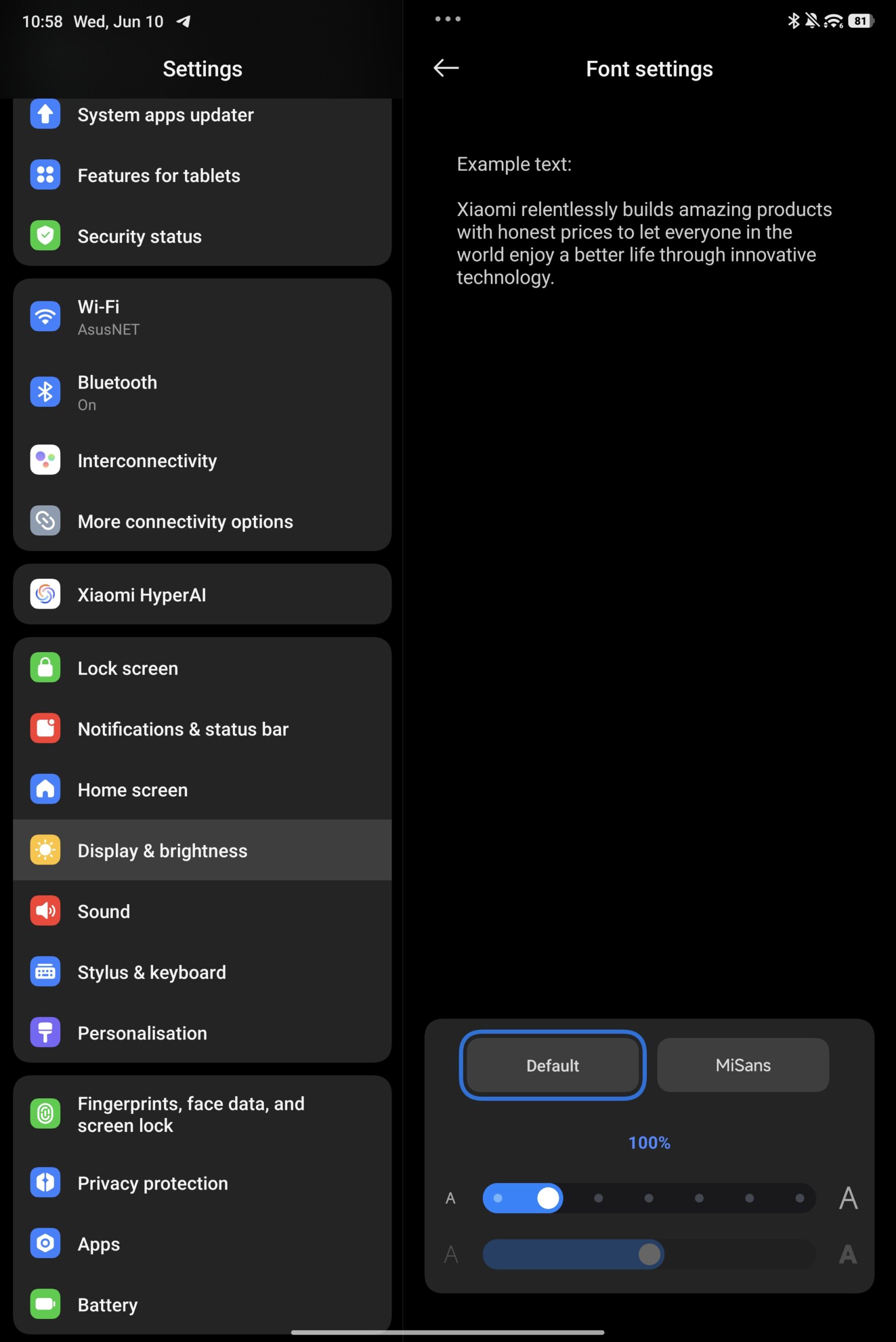
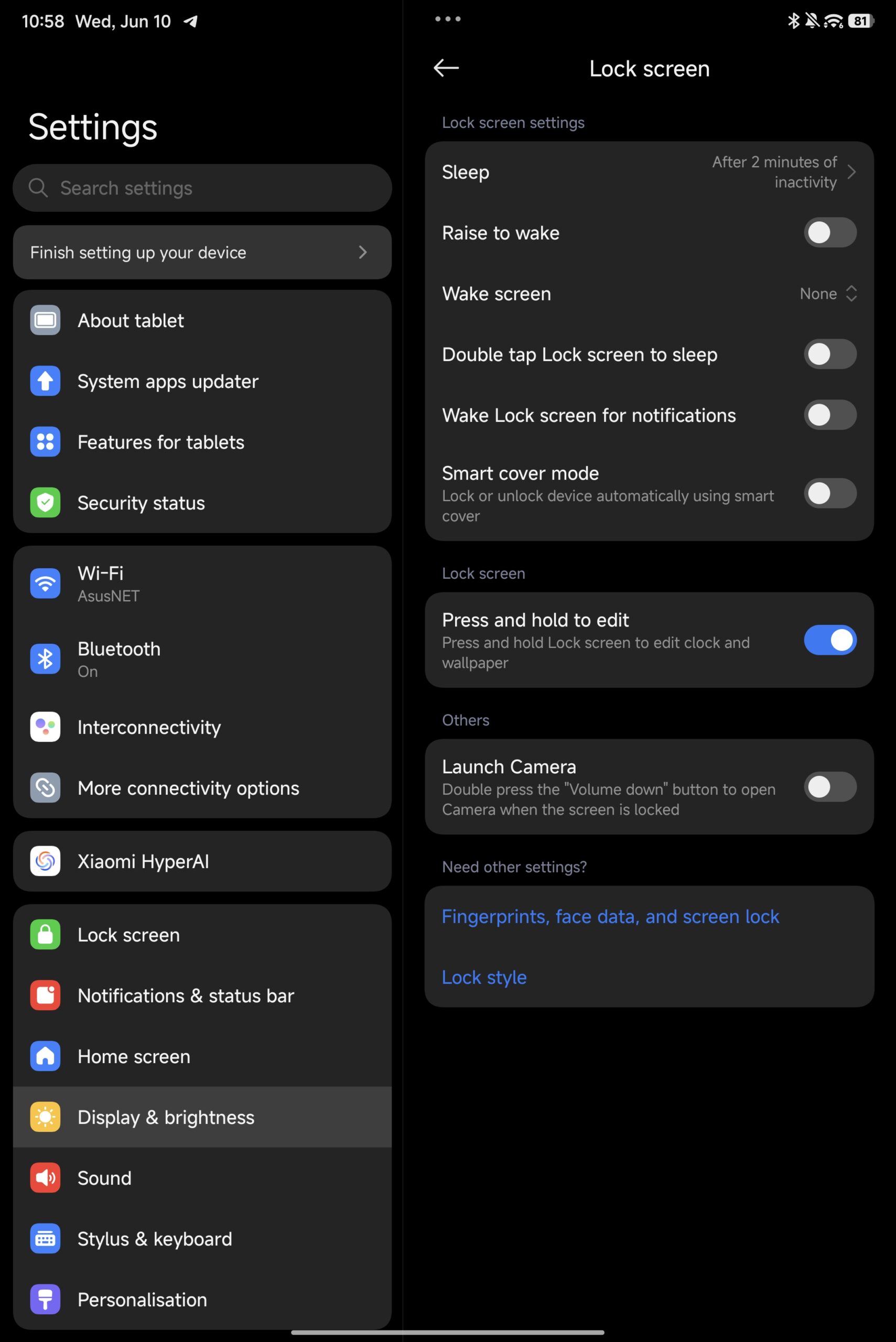
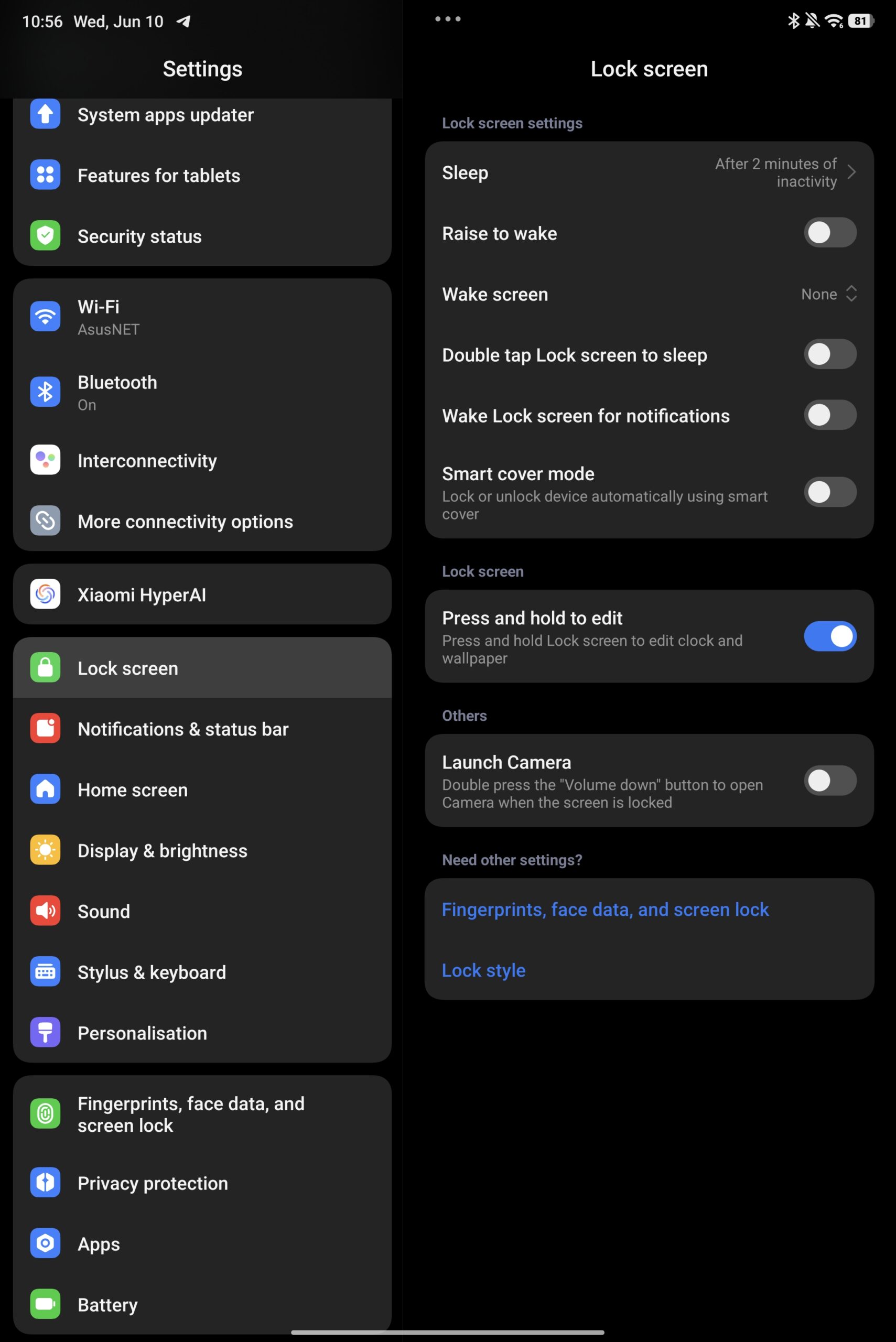
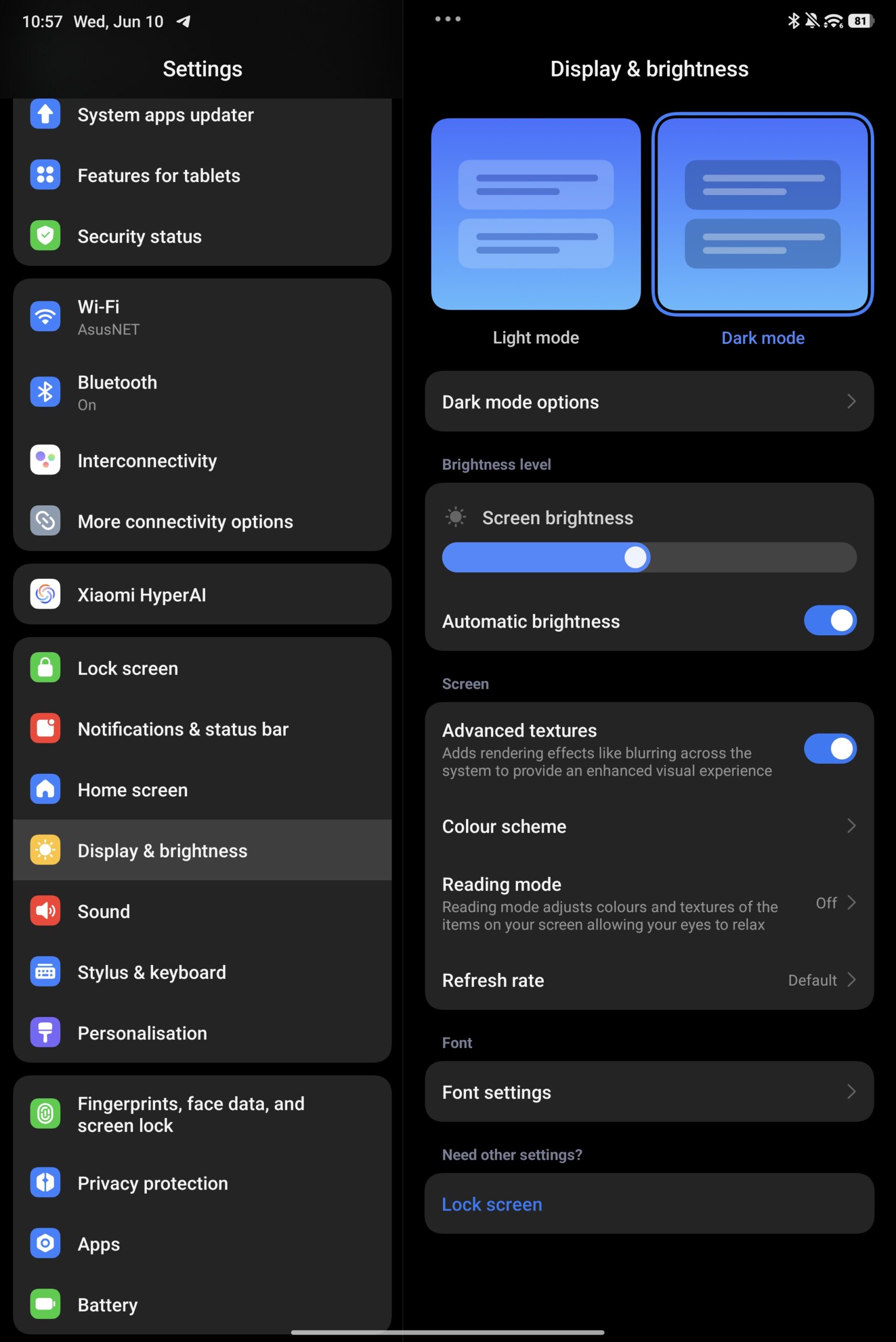
This is where devices like this often become controversial: it is not an OLED panel. The question “why not OLED at this price?” is a reasonable one. However, IPS technology has a key advantage that is often overlooked in the tablet segment. It does not use PWM (pulse-width modulation), meaning there is no brightness flickering at lower brightness levels. This is a factor that can cause eye fatigue during extended use on many OLED displays. The trade-off, of course, is that blacks are not as deep as on OLED panels. Still, in everyday use, the difference is less significant than it is often made out to be.
The manufacturer also supports this approach with three TÜV Rheinland certifications: Low Blue Light, Flicker Free, and Circadian Friendly. In addition, the tablet supports Wet Touch technology, allowing the display to be operated with wet hands. The touch sampling rate reaches up to 360 Hz in standard mode and up to 240 Hz when using the stylus.

The display also performs well in gaming scenarios. The 144 Hz refresh rate combined with a 360 Hz touch sampling rate results in smooth visuals and responsive input handling. In summary, if the tablet is primarily used for text work, reading, drawing, or long video calls, the IPS panel is fully comfortable and does not feel like a compromise in everyday use.
Read also: Xiaomi 17 Review: Compact Flagship with Leica Optics
Performance
The Snapdragon 8 Elite is a flagship chipset that, at the time of the Xiaomi Pad 8 Pro’s release, remains one of the most powerful solutions in its class. While smartphones have already moved on to the Snapdragon 8 Elite Gen 5 (as seen in the Xiaomi 17), in the tablet segment this level of performance is still relatively rare.


This is a 3 nm Qualcomm chip built on the Oryon architecture. The CPU uses an 8-core 2+6 configuration: two performance cores operate at up to 4.32 GHz, while six efficiency cores reach up to 3.53 GHz. Graphics processing is handled by the Adreno 830 GPU, clocked at up to 1100 MHz.

The review unit comes with 8 GB of LPDDR5X RAM and a fast 256 GB UFS 4.1 storage. If needed, the amount of RAM can be expanded by an additional 8 GB using internal storage as virtual memory.

In everyday use, the tablet has ample performance headroom. A web browser with many open tabs, a document editor running in parallel, and streaming video all operate without noticeable lag. App switching is nearly instantaneous, and animations remain smooth. Users upgrading from a mid-range device will notice the difference immediately.
It is also worth mentioning the desktop emulation mode. Thanks to the powerful chipset and USB-C video output support, the tablet can be connected to an external monitor and paired with a mouse and keyboard, effectively functioning as a mobile workstation.
For those who like their numbers, here are the results of the synthetic benchmarks:
- AnTuTu v11: 3,108,853 (CPU: 935,442, GPU: 1,137,642, MEM: 377,891, UX: 657,878)
- GeekBench 6, single-core: 2,964
- GeekBench 6, multi-core: 9118
- 3DMark Wild Life Extreme: 6226, average FPS – 37.28
- CPU Throttling Test: overall throttling 37%, temperature rise 37.1 °C over 5 minutes
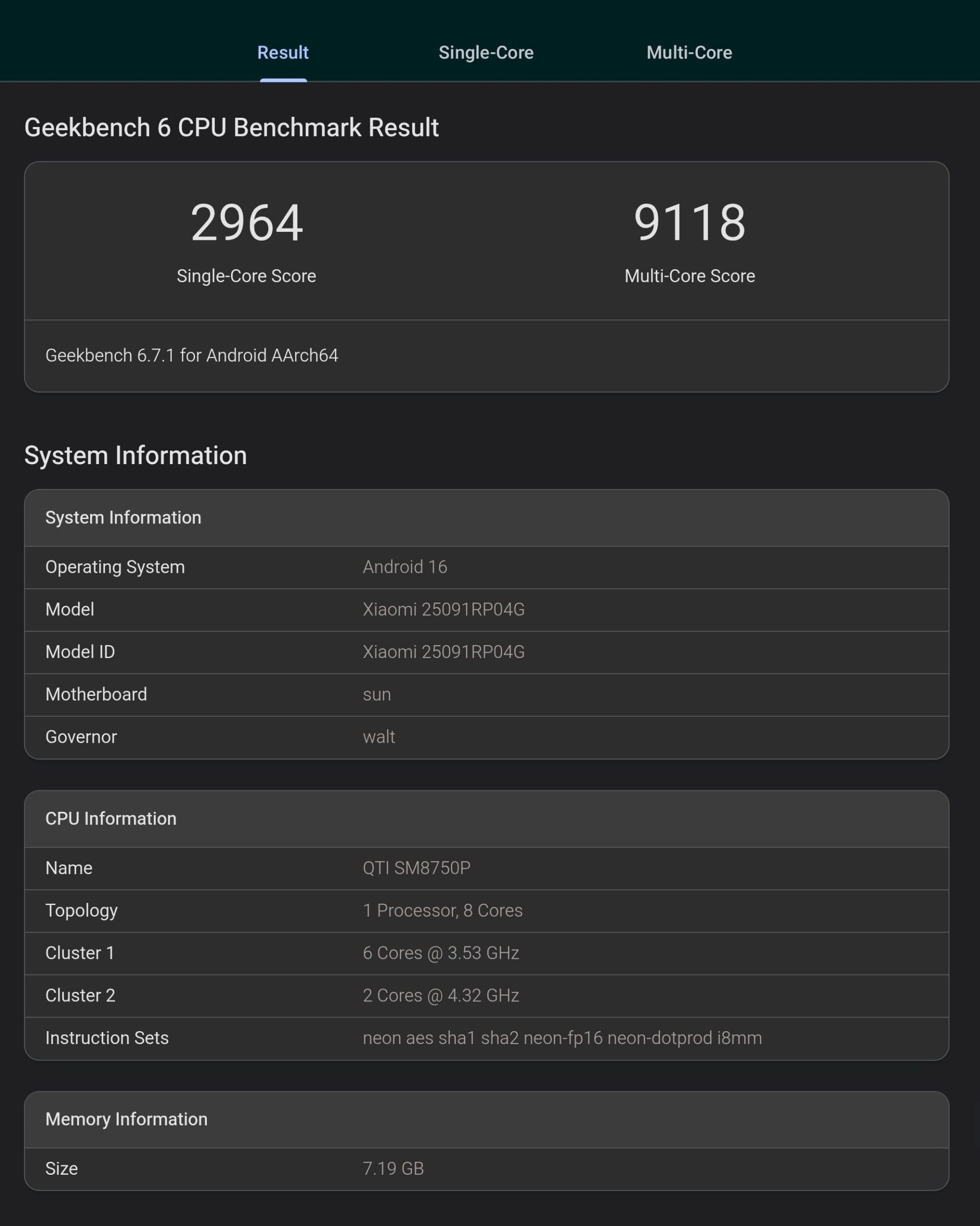
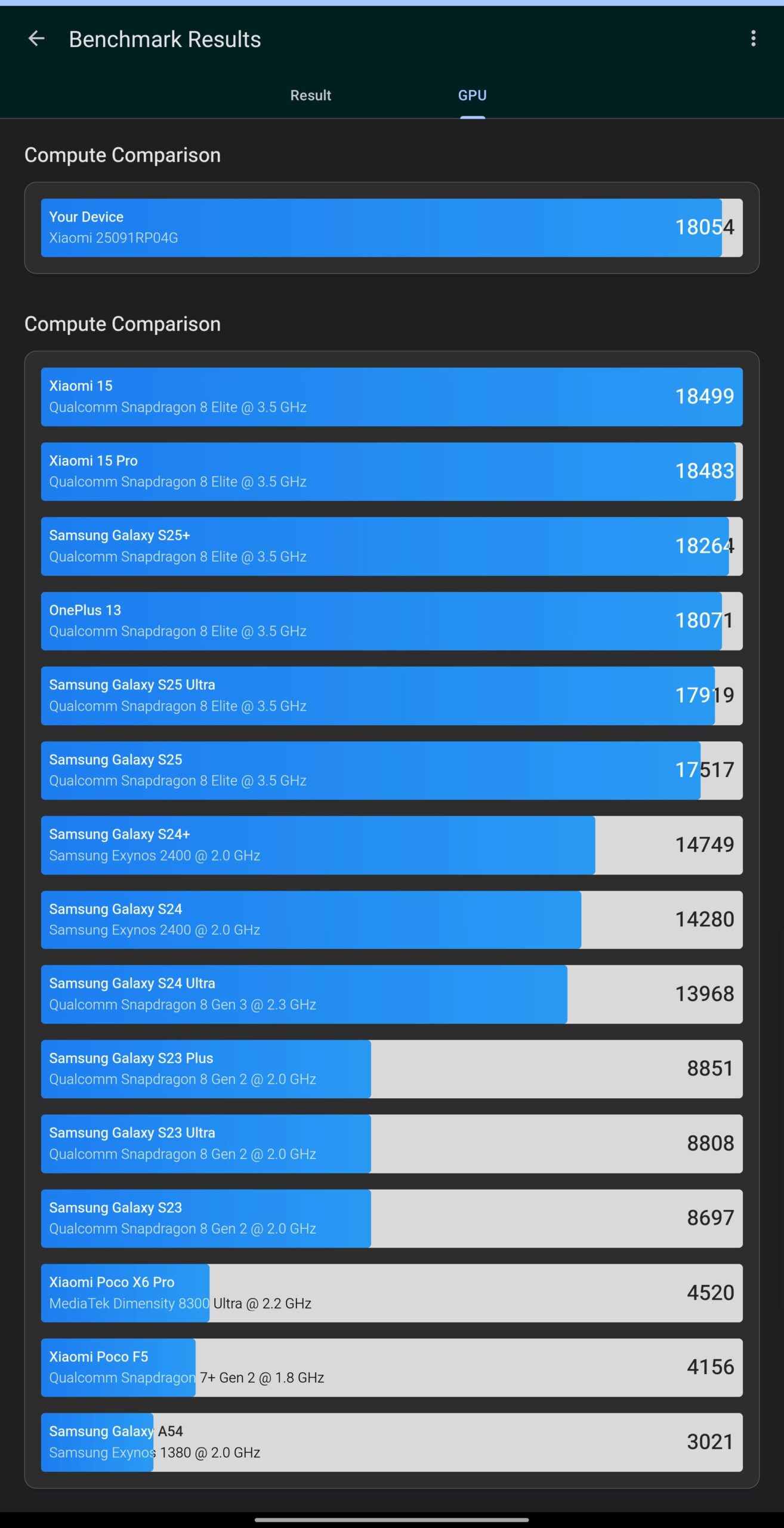
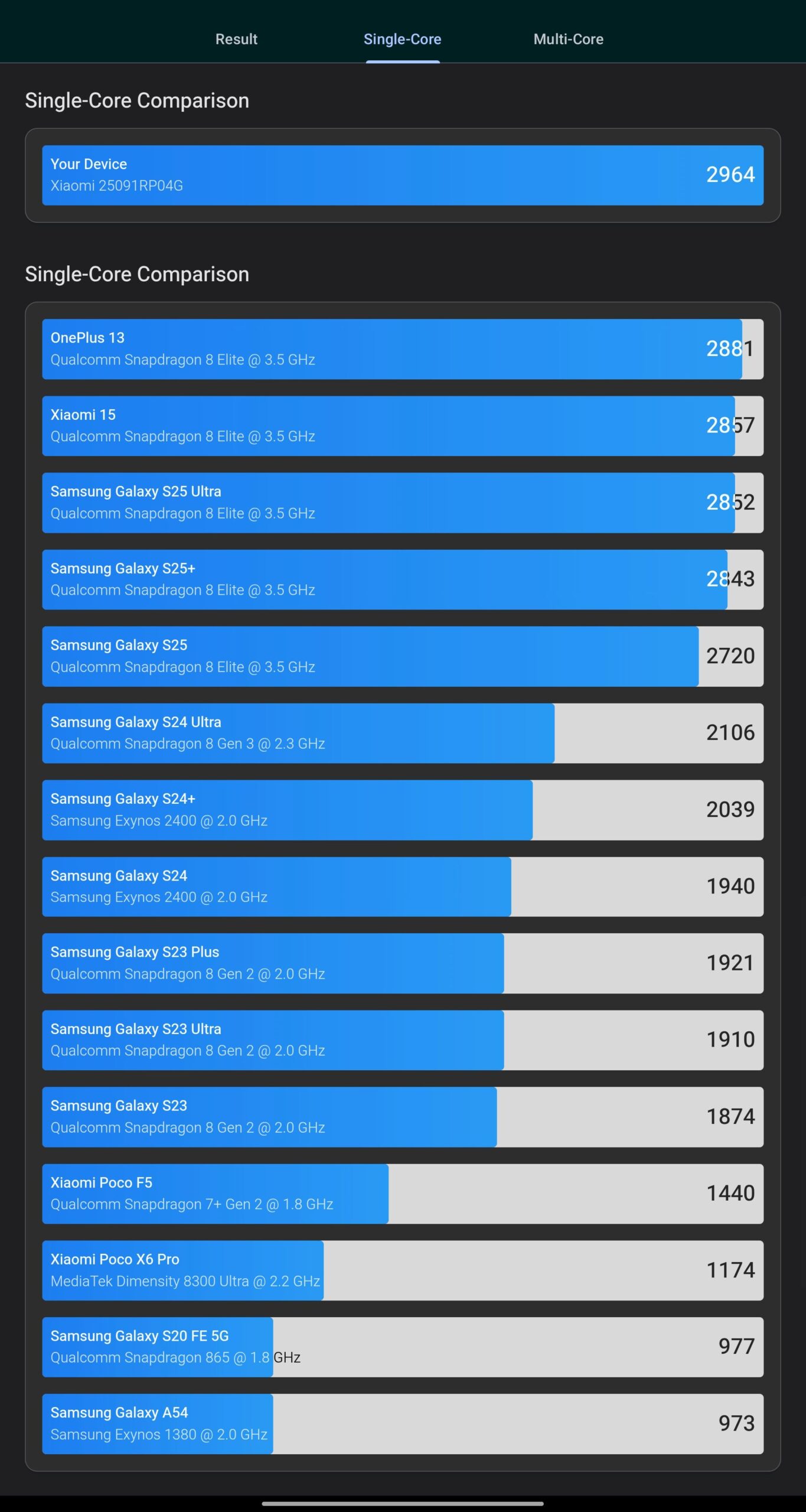
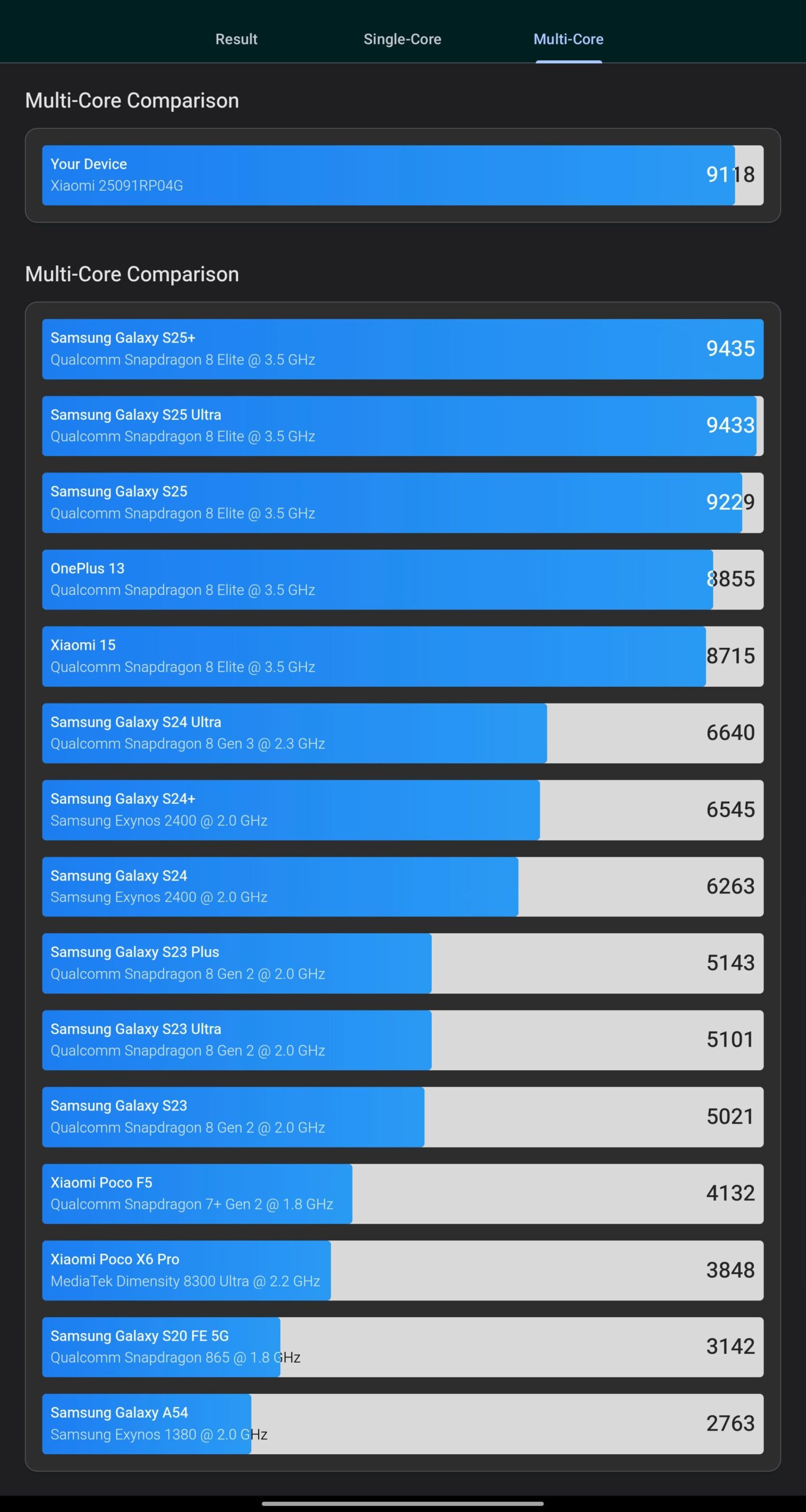
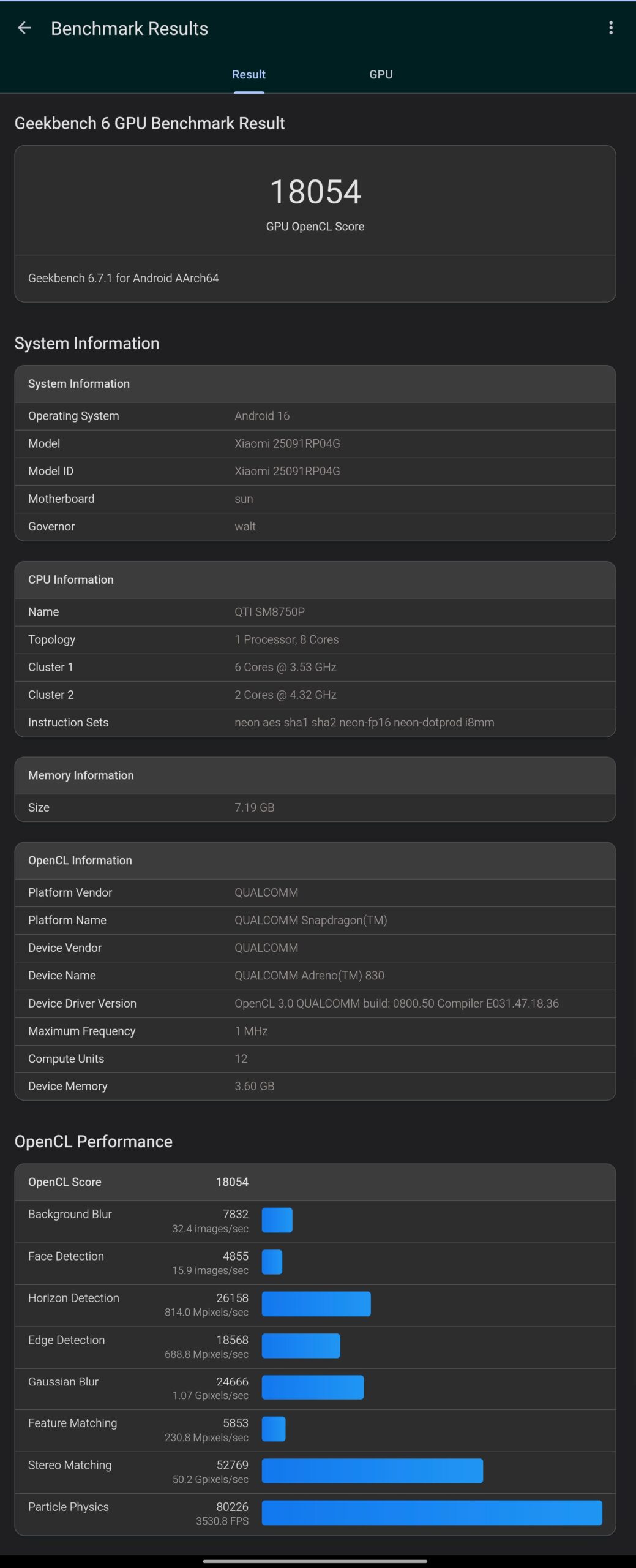
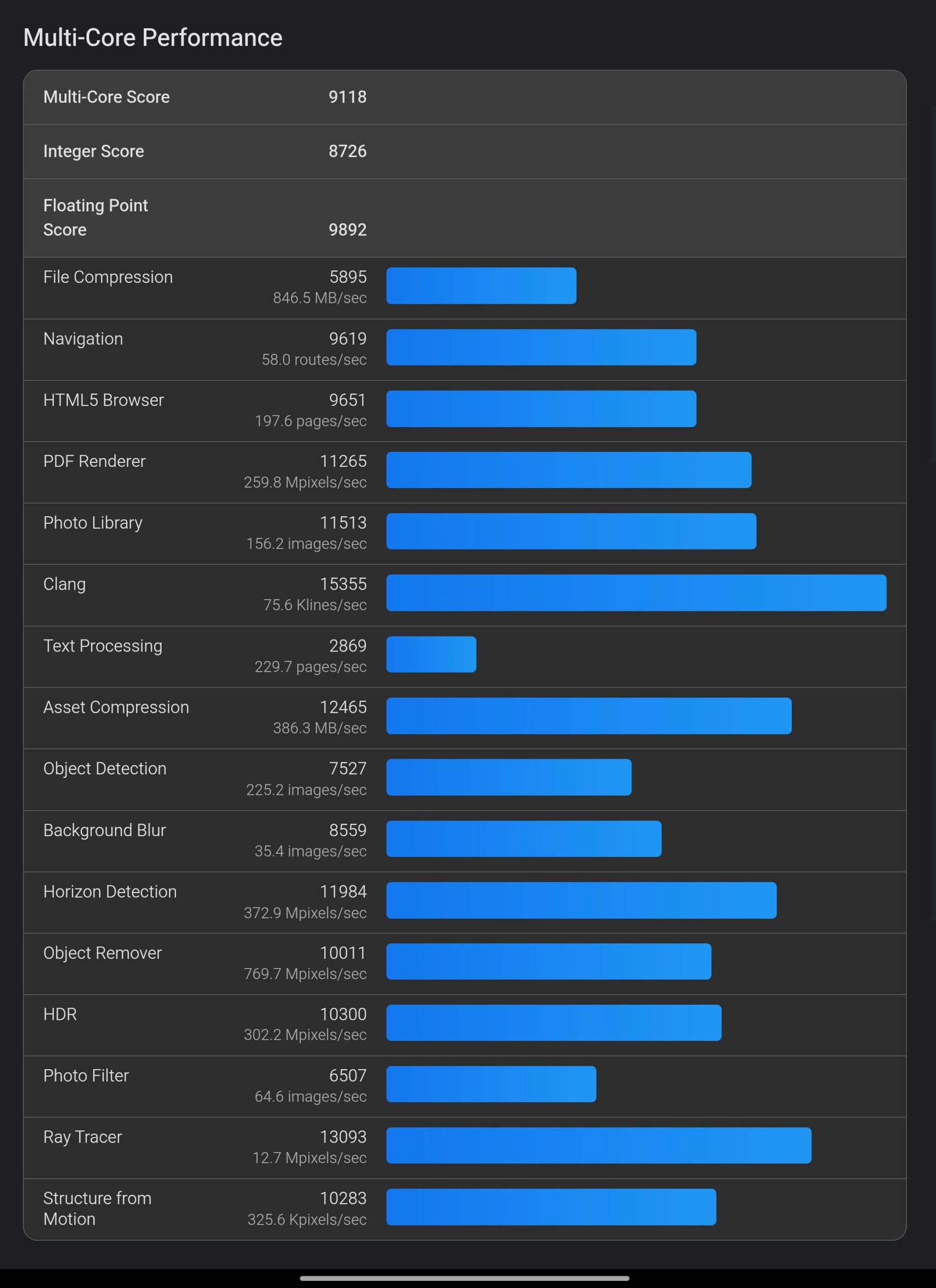
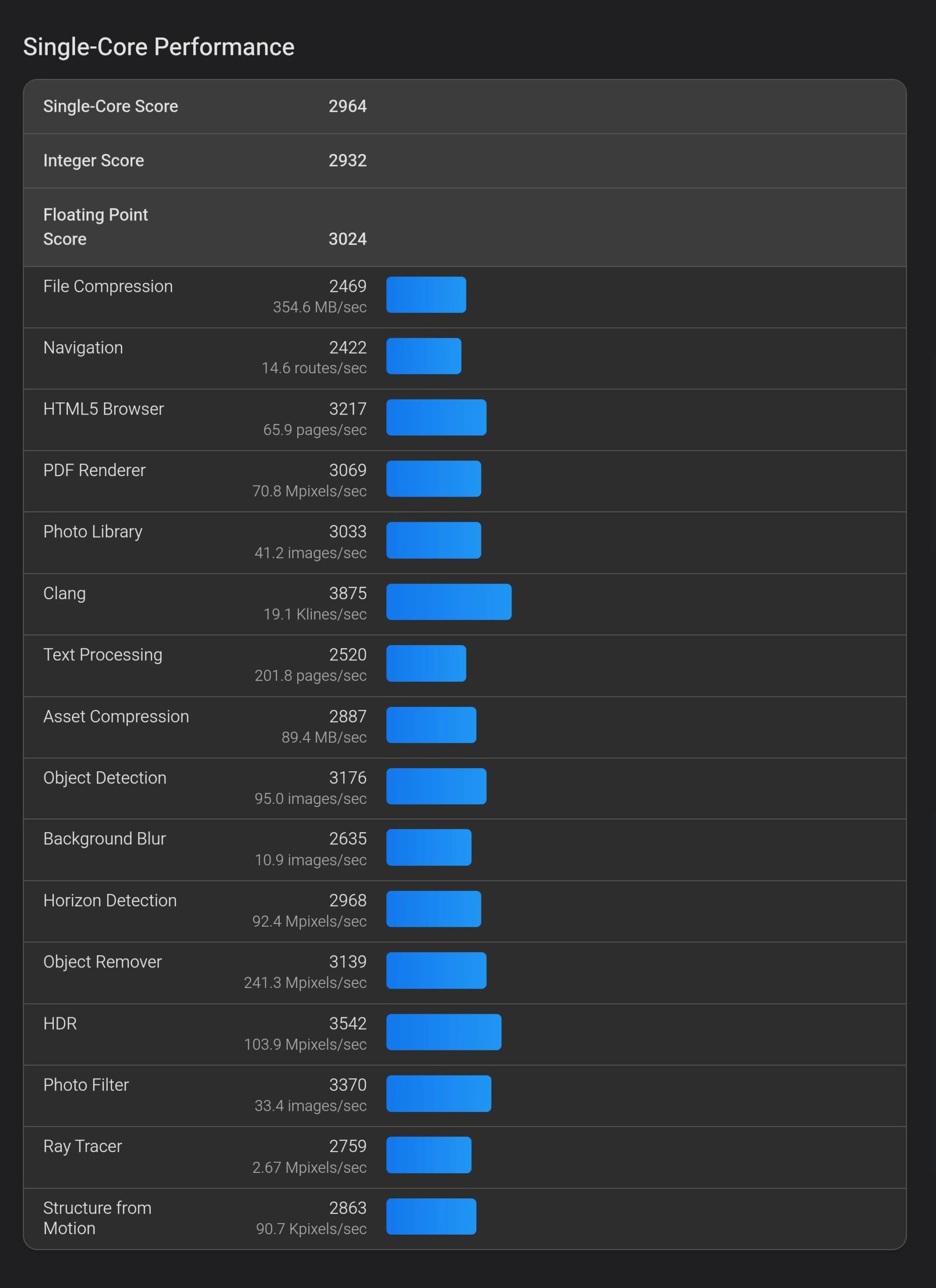
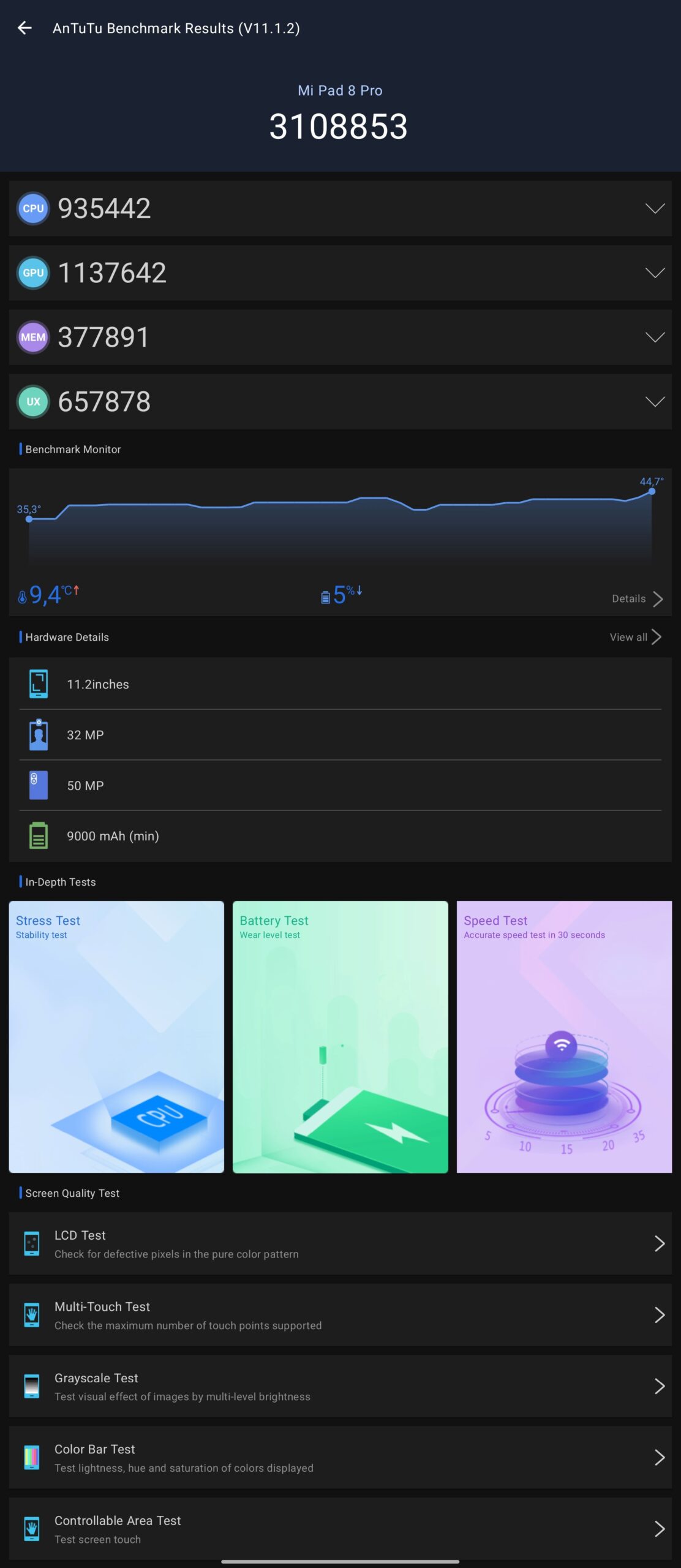
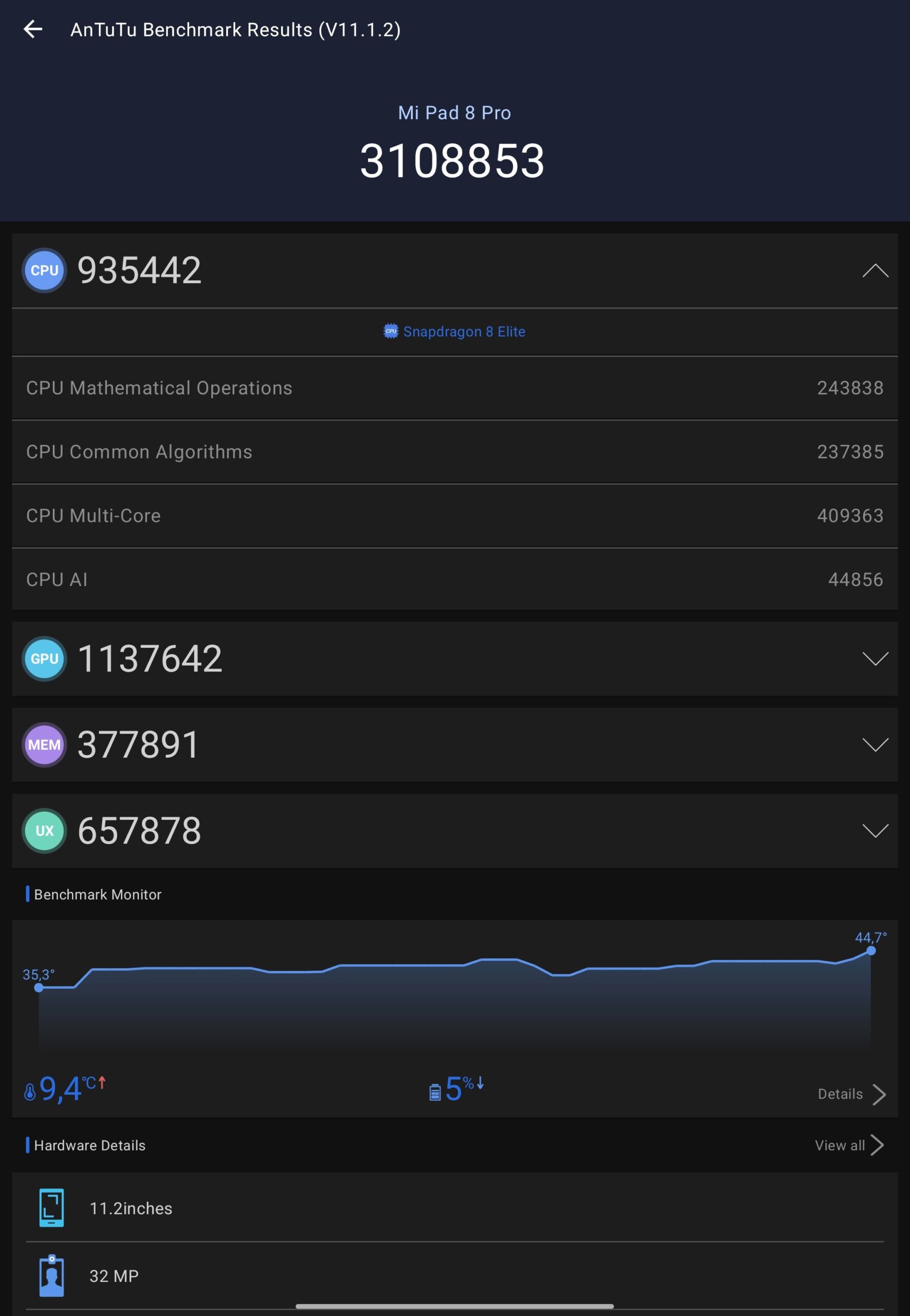
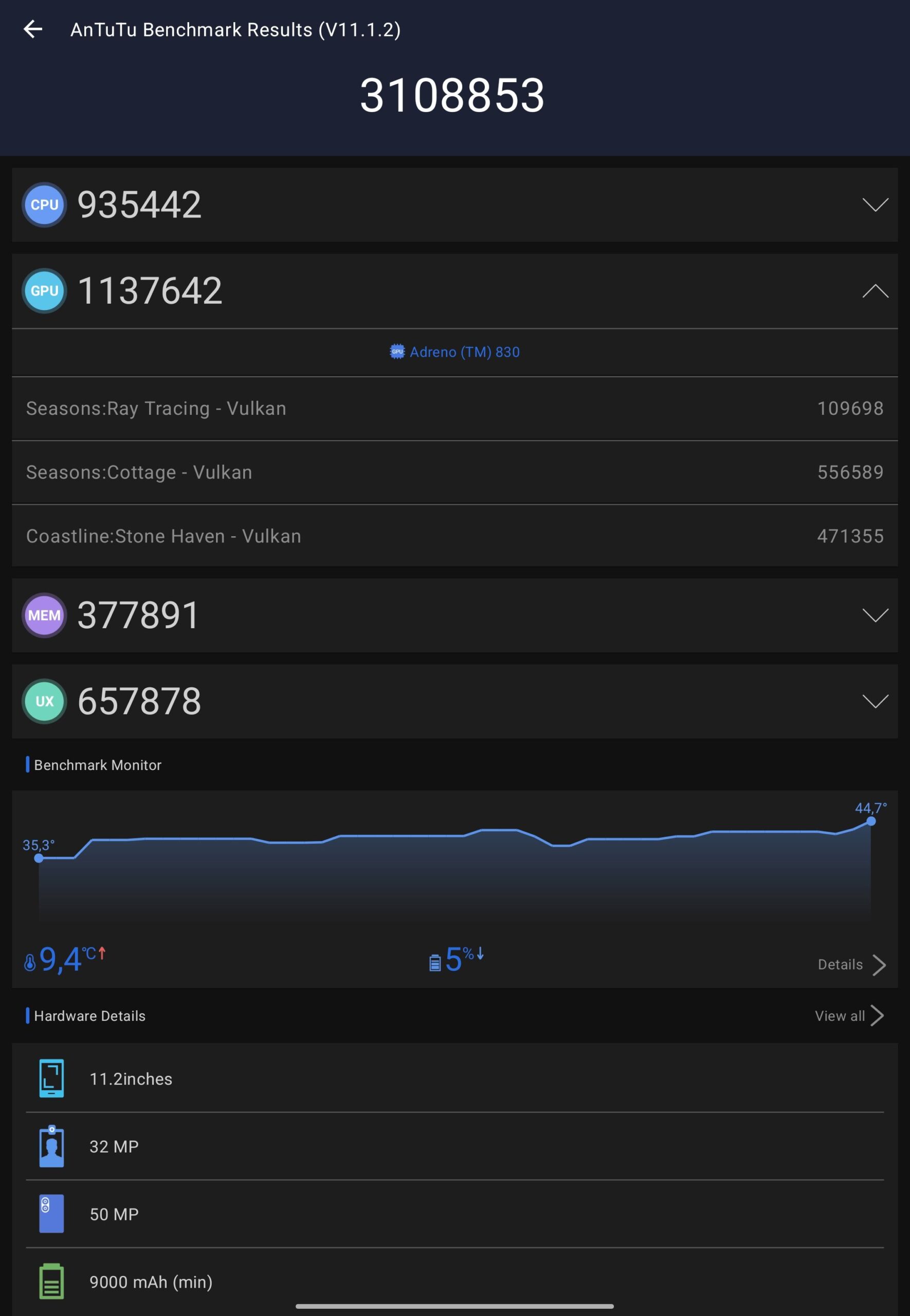
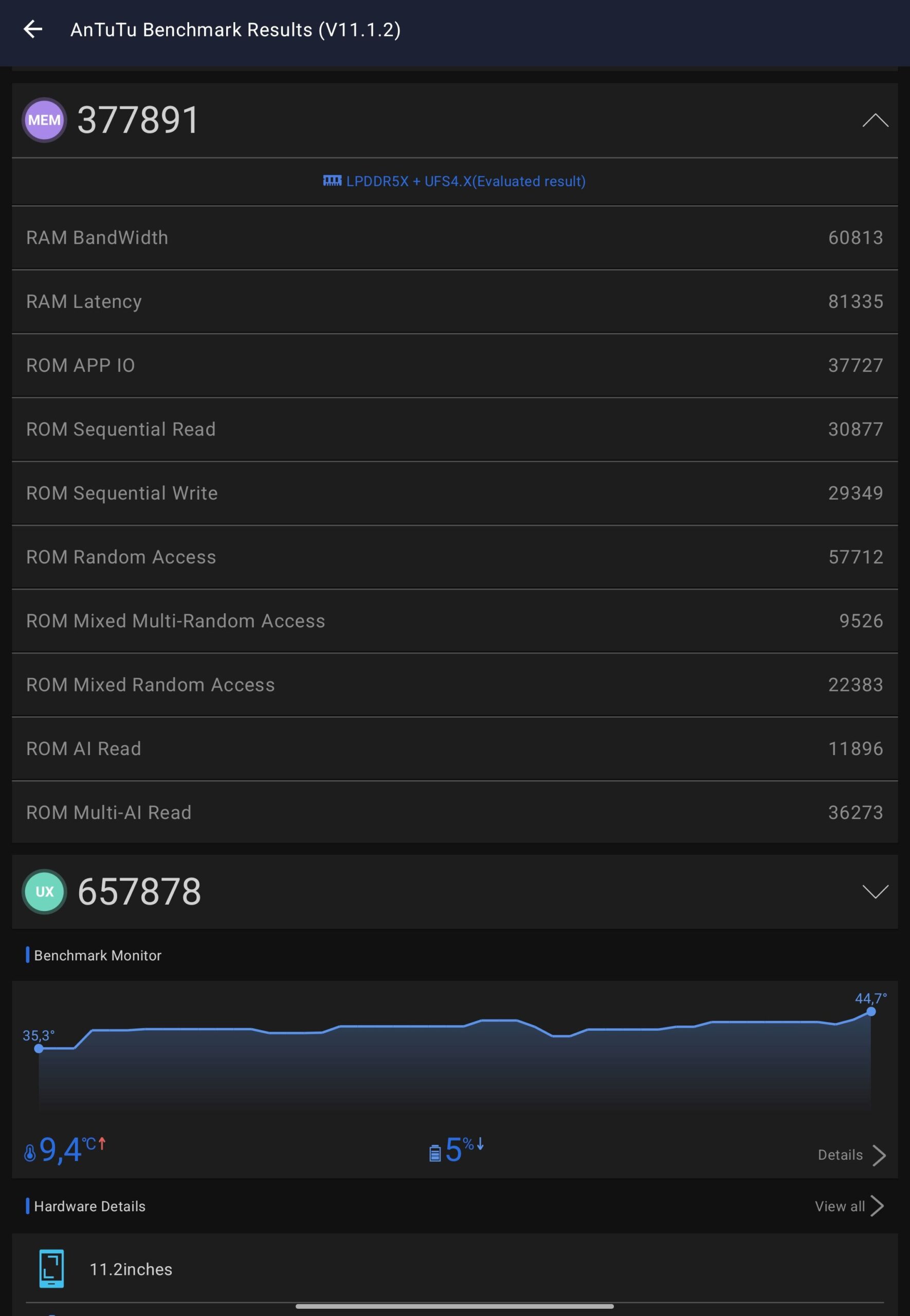
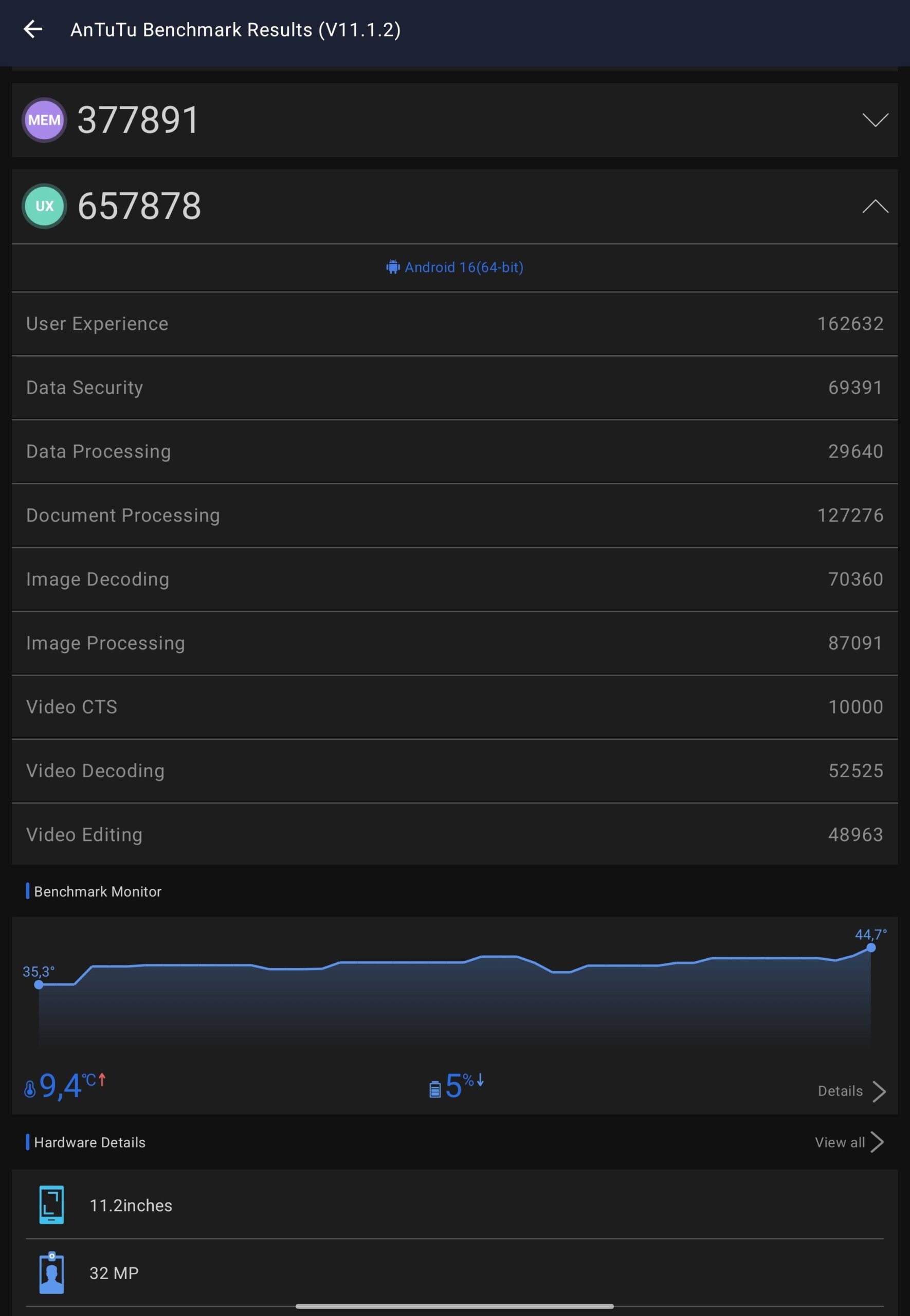
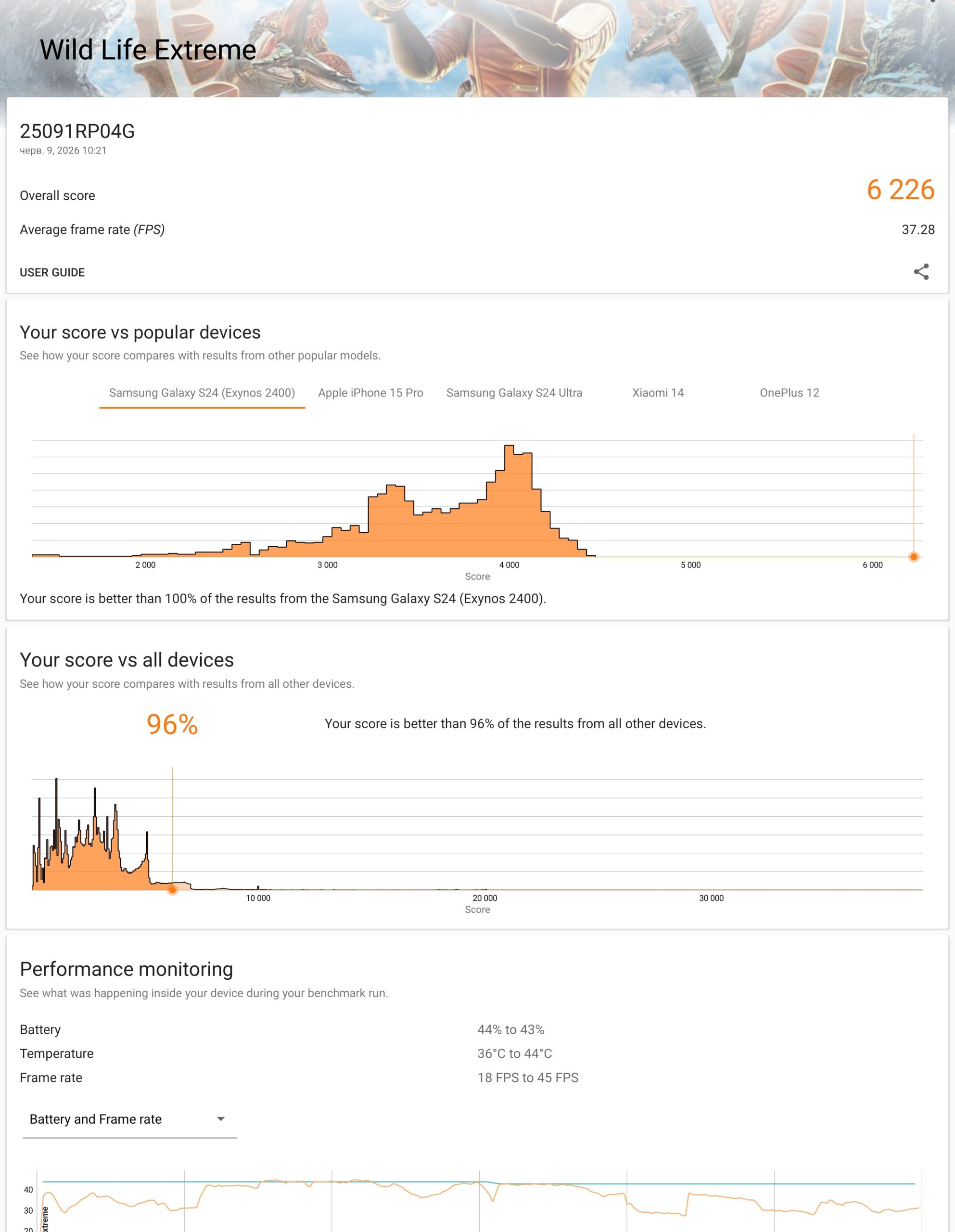
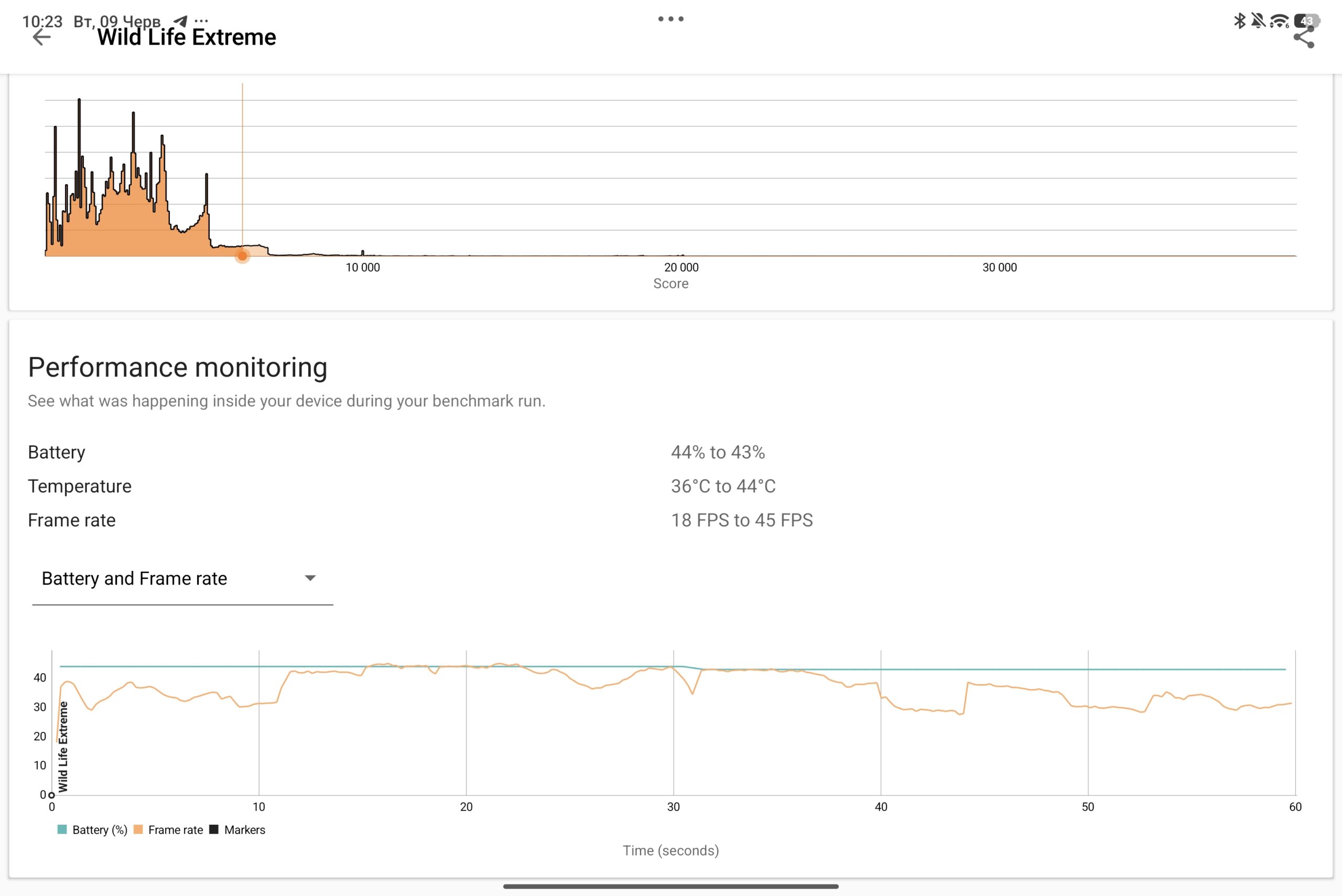
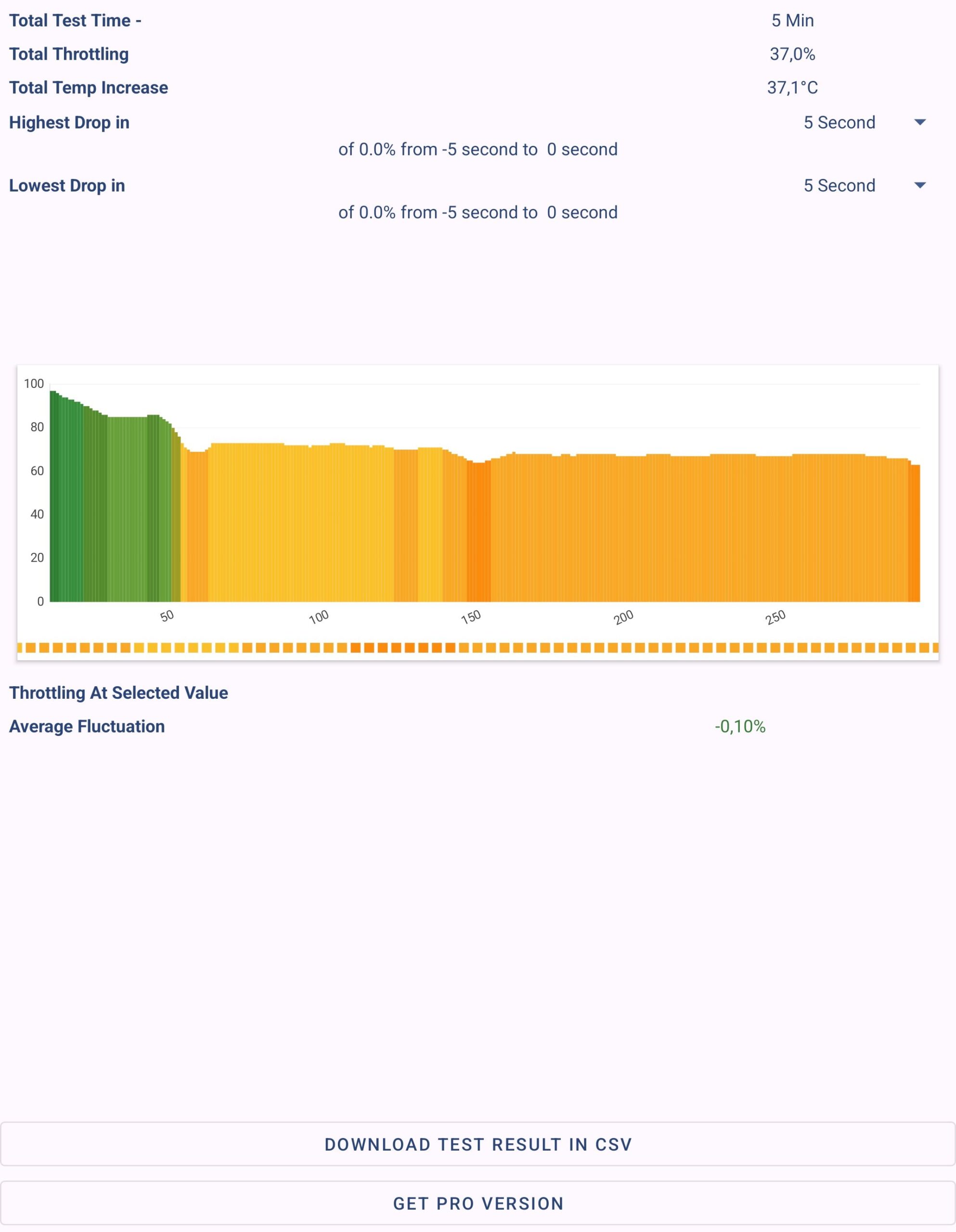
What do these numbers actually mean? In short, the tablet is genuinely fast and powerful. A score of over 3 million in AnTuTu and nearly 3000 in GeekBench 6 single-core indicate that the device should remain free of noticeable lag for the next few years. In GPU terms, the 3DMark Wild Life Extreme result places it ahead of roughly 96% of devices on the market.
However, the laws of physics still apply: maintaining this level of performance in such a thin chassis comes with trade-offs. Under sustained maximum load, the chip heats up (with a temperature increase of 37.1 °C), and after about five minutes of stress testing, the system begins to throttle, resulting in a 37% drop in peak performance.

In real-world usage, this is not a critical issue. No game places a sustained load on the processor comparable to a synthetic stress test. In addition, the Snapdragon 8 Elite has a substantial performance margin, so even after throttling, the remaining 63% of peak performance is sufficient to maintain smooth operation. The tablet simply becomes noticeably warm in hand, which was also observed during testing.
The main consideration here is the memory configuration. 8 GB of RAM is a solid baseline, but if you plan to extensively use desktop emulation on an external monitor, rely heavily on AI features, or keep multiple demanding applications running in the background, memory will likely become a limitation before the processor does.
Wireless connectivity
Wi-Fi 7 with 2×2 MIMO support and 8×8 long-range transmission for MU-MIMO provides solid future-proofing. Wi-Fi Direct and Miracast are also supported. Bluetooth includes AAC, LDAC, LHDC 5.0, LC3, and Auracast, covering essentially all common wireless audio use cases. On the downside, NFC and GPS are not present.
Software
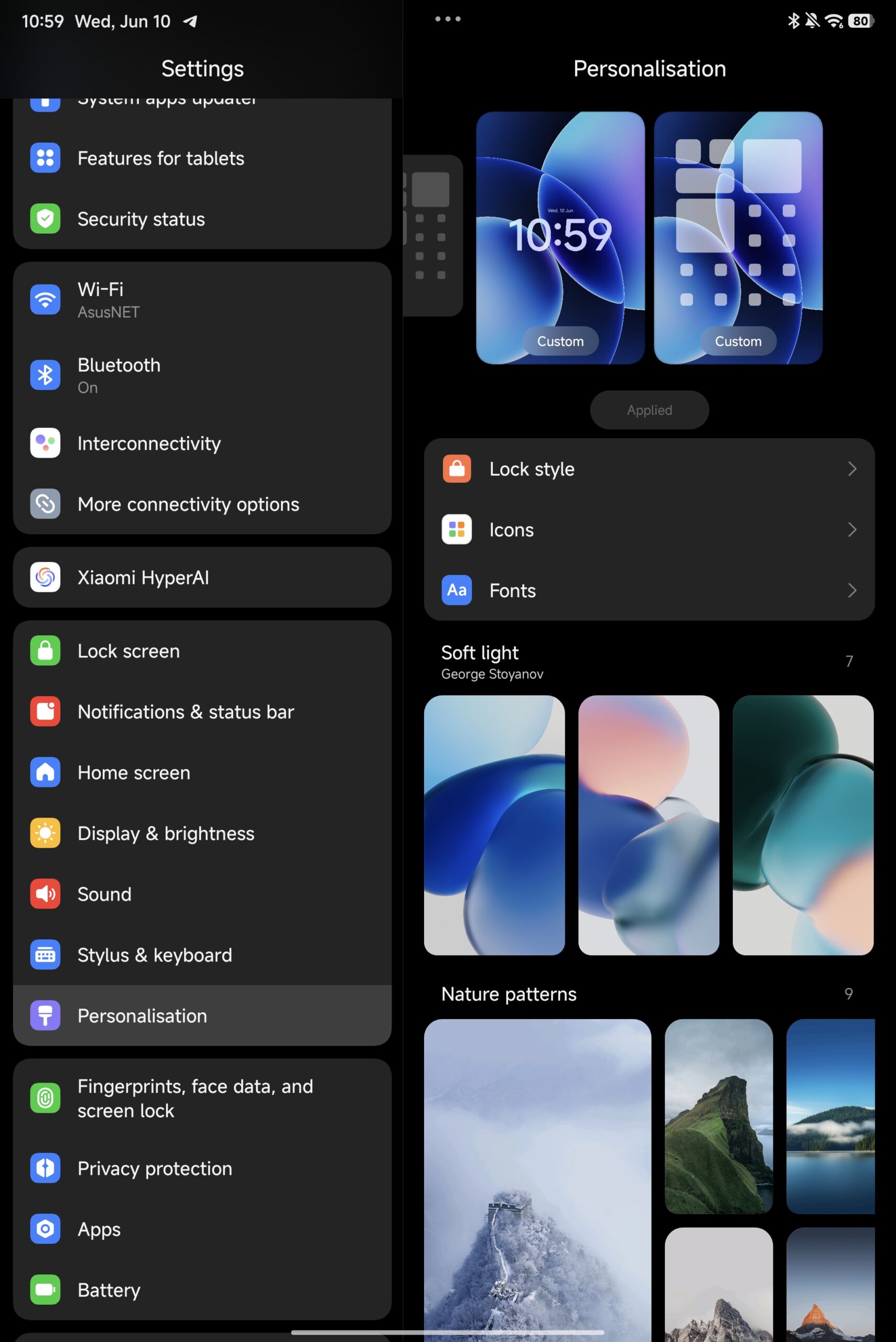
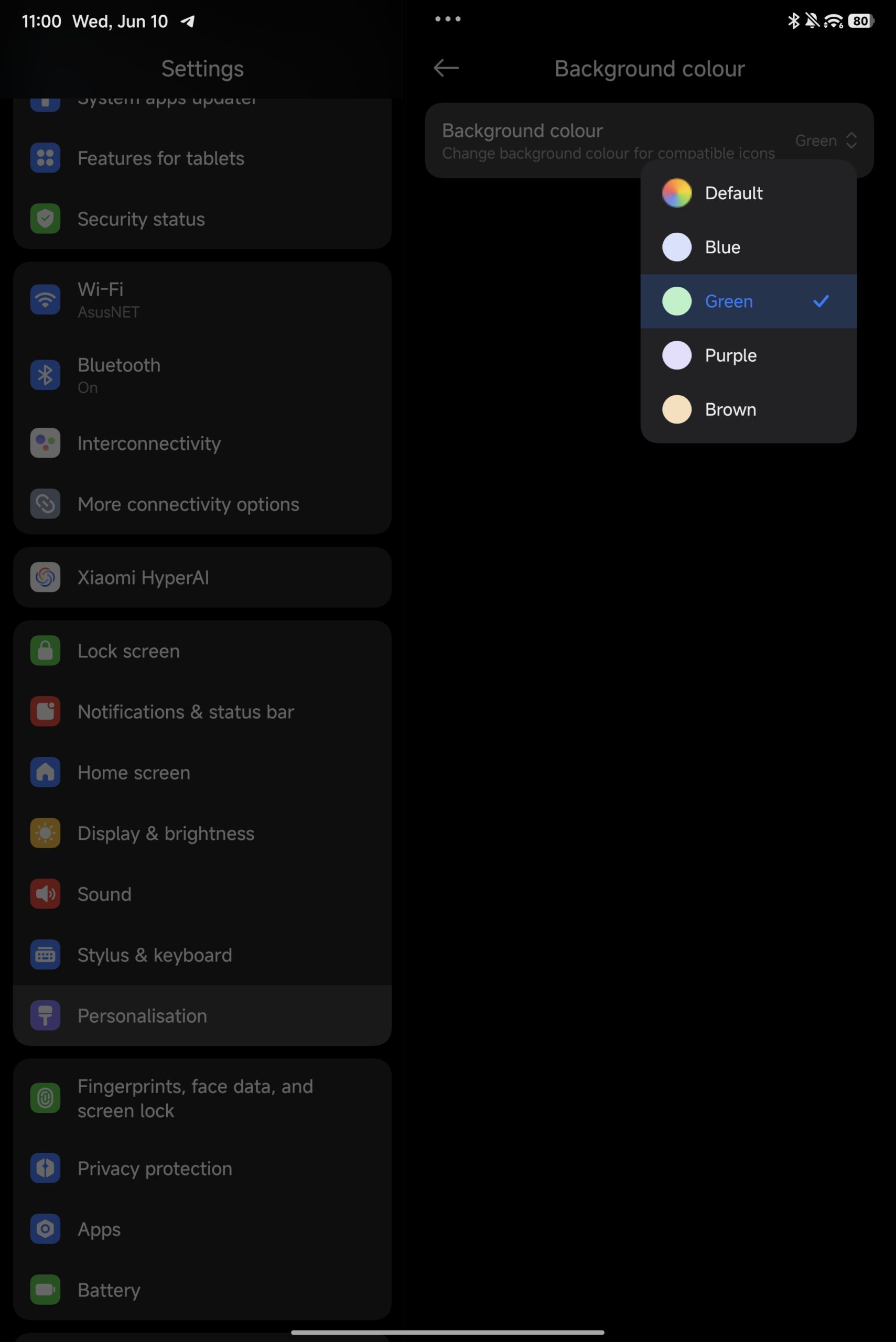
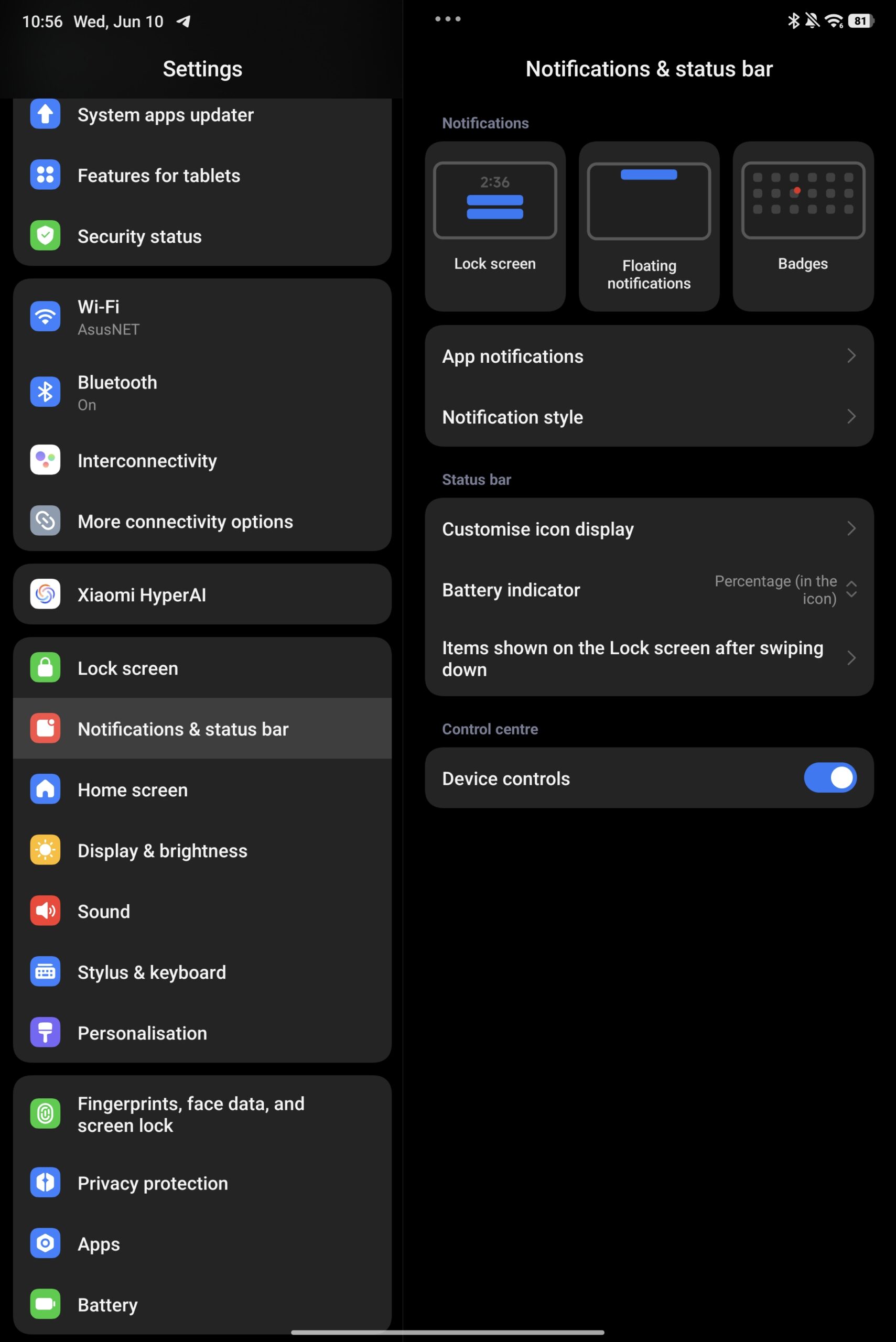
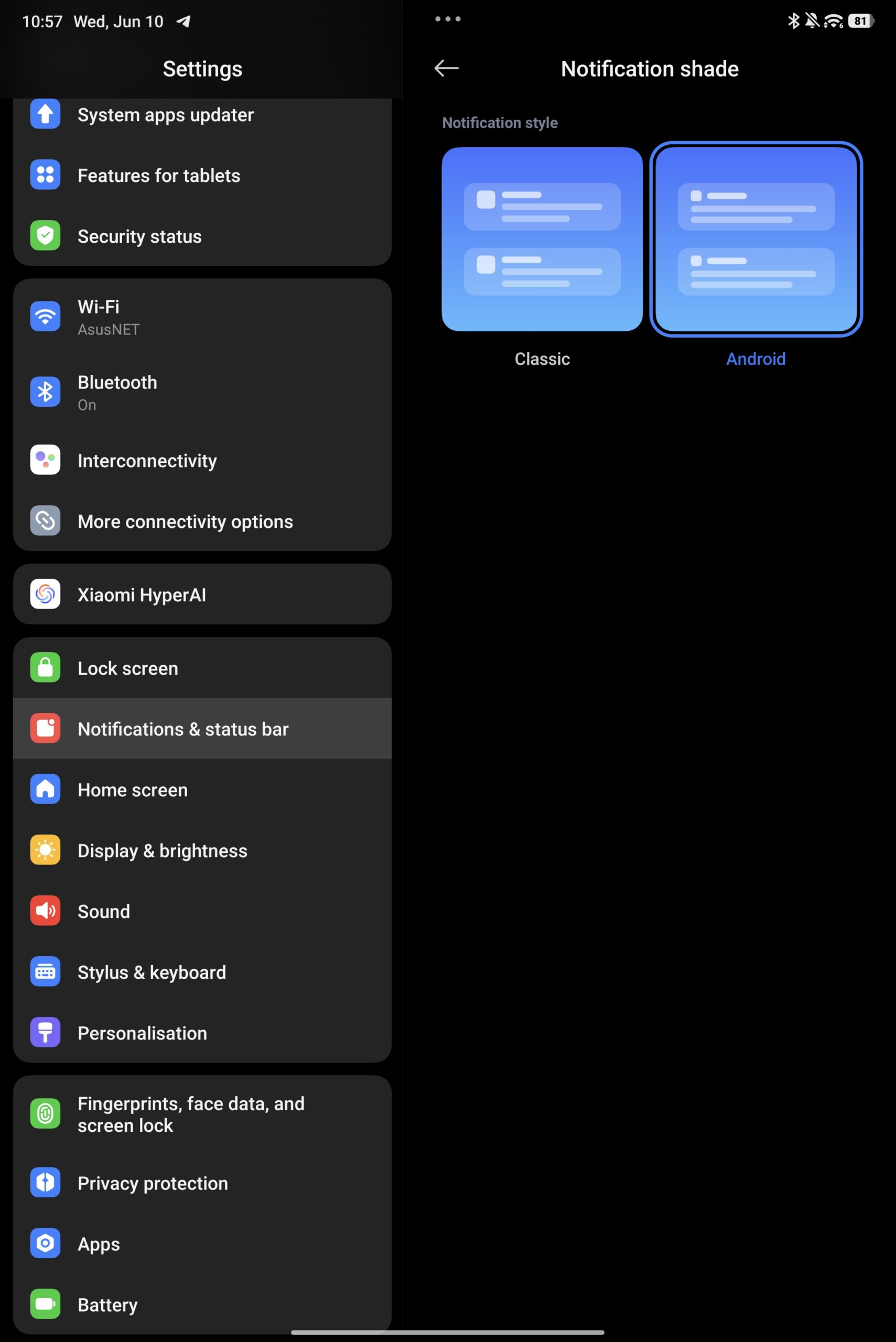
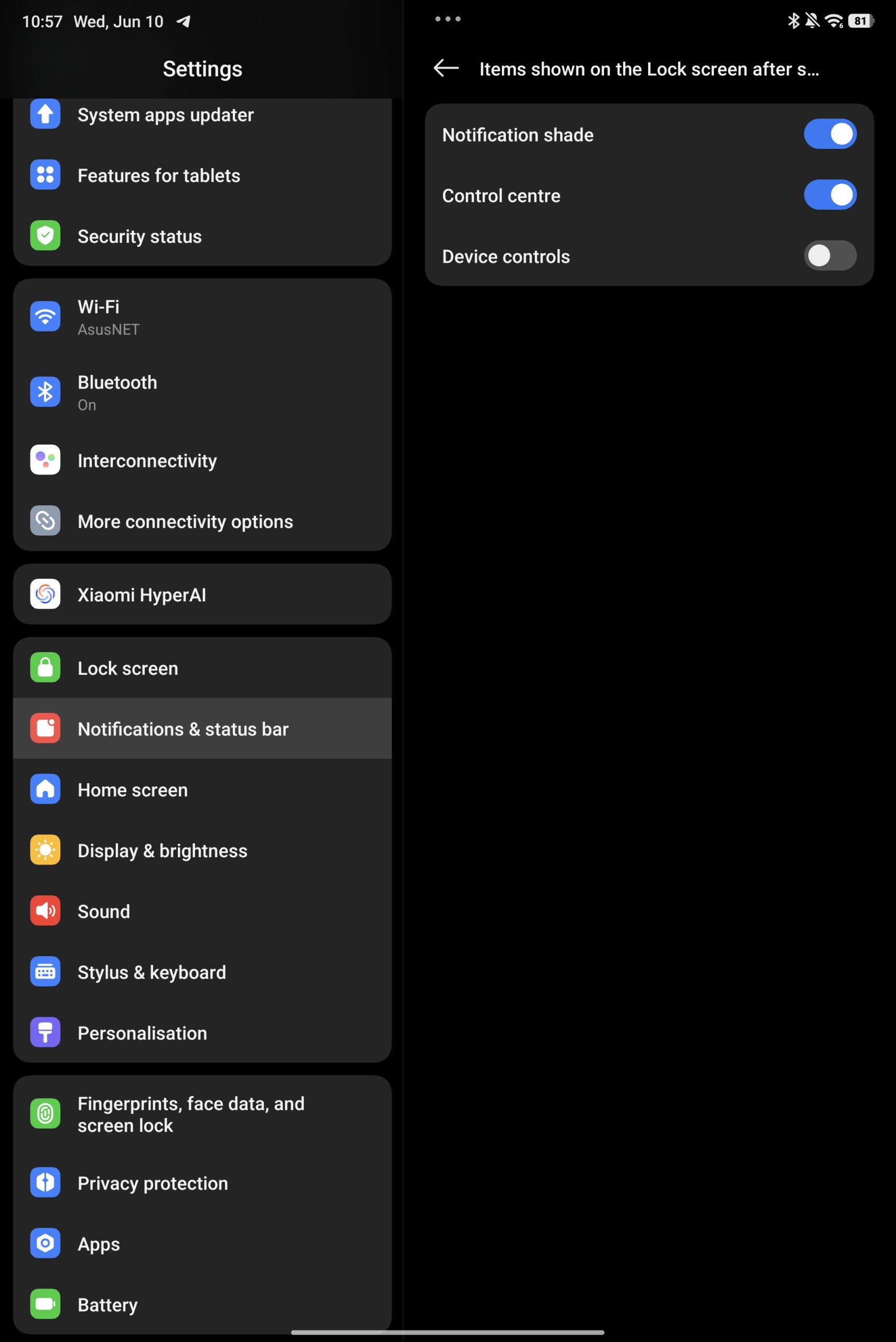
The Xiaomi Pad 8 Pro runs HyperOS 3 based on Android 16. The interface is responsive, with smooth animations and a sufficient level of customization, including themes, icon packs, Always-On Display, and gesture navigation.
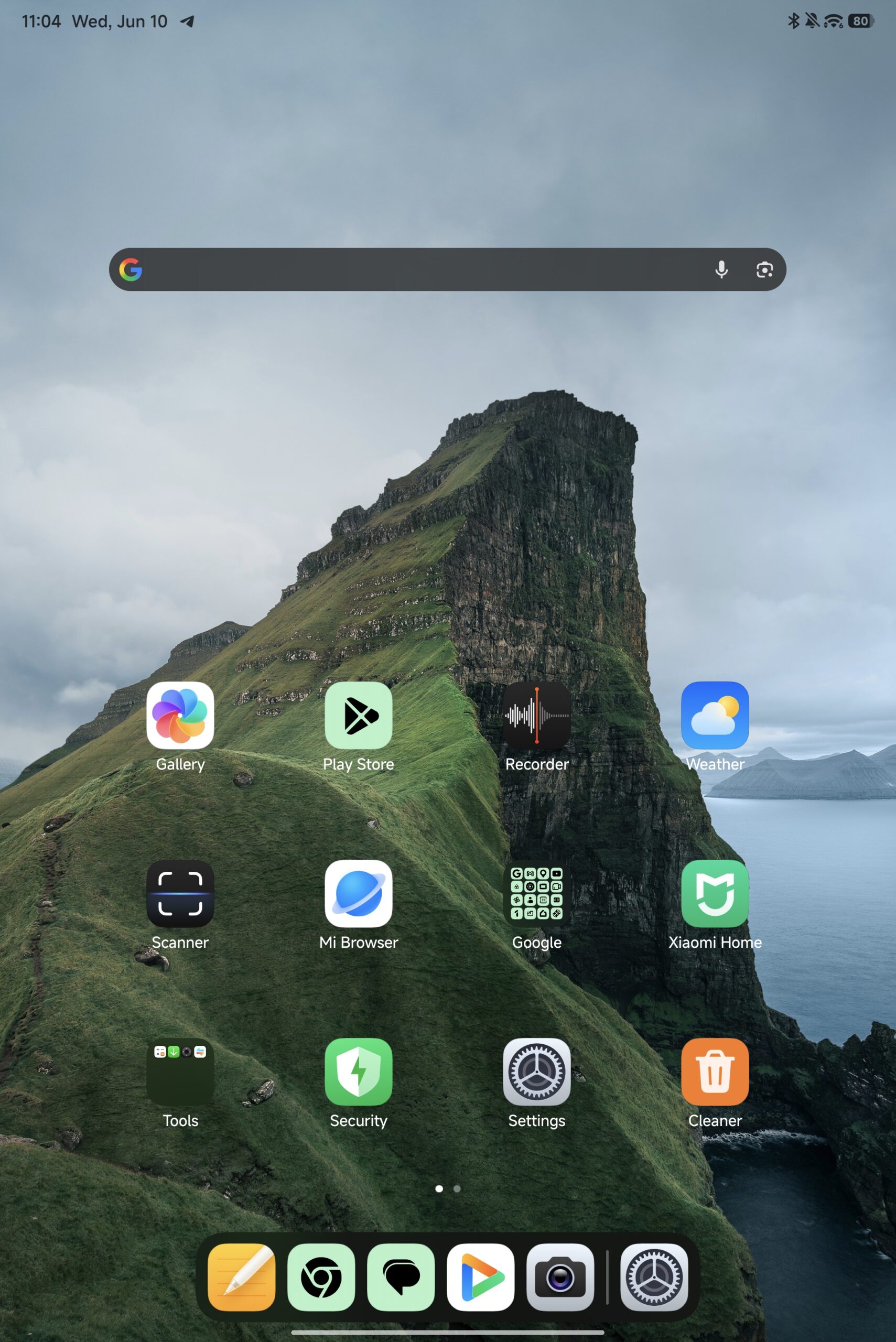
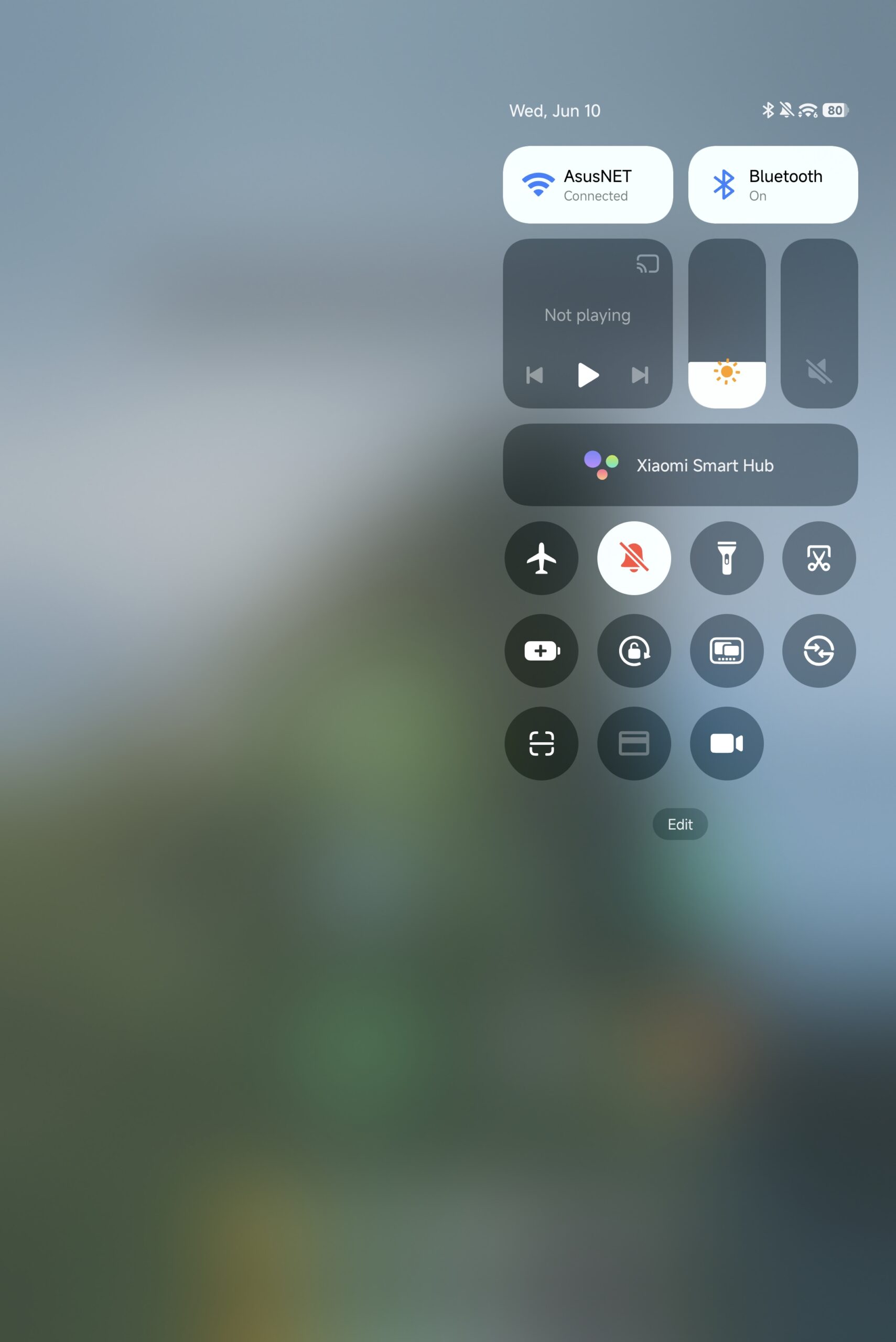
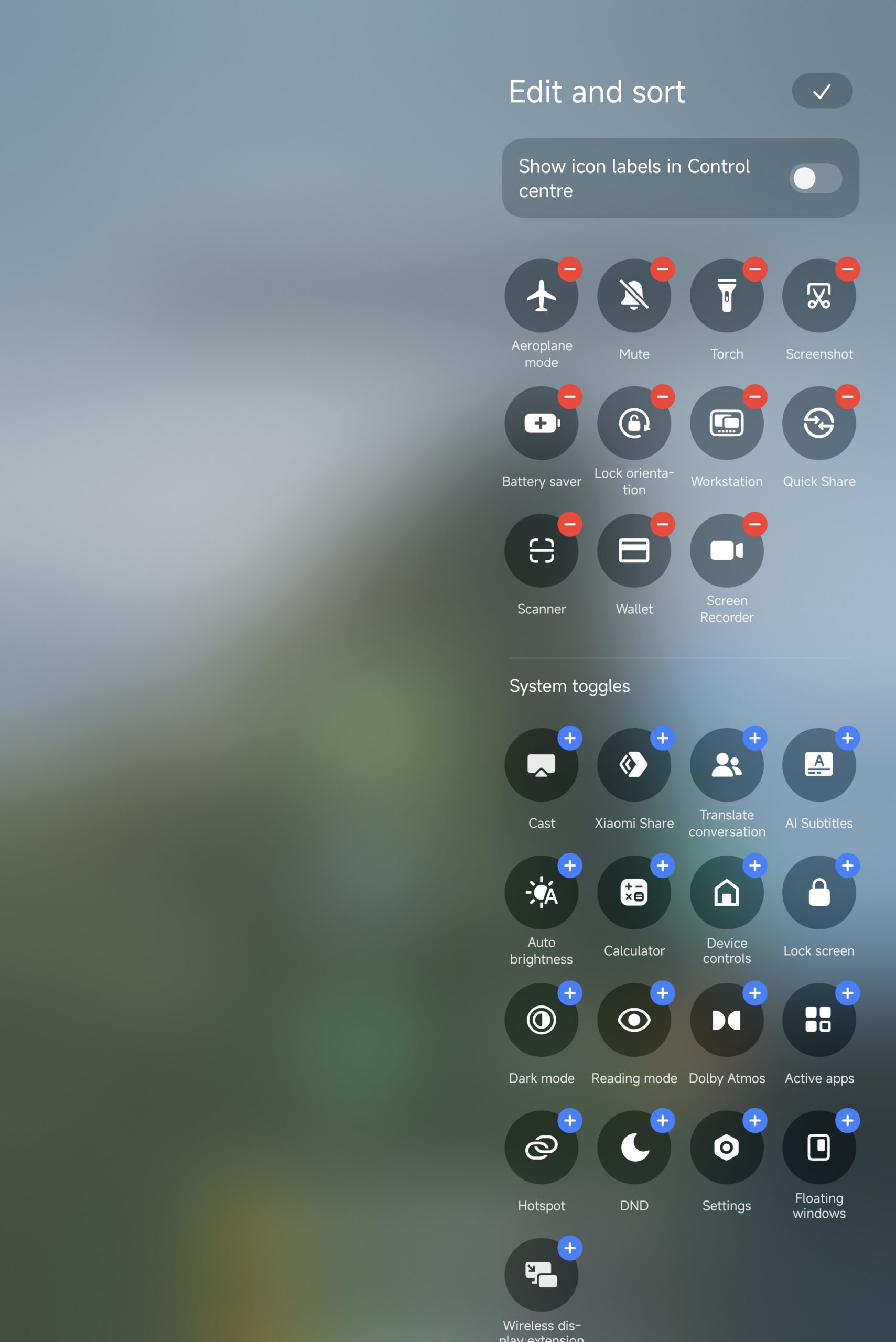
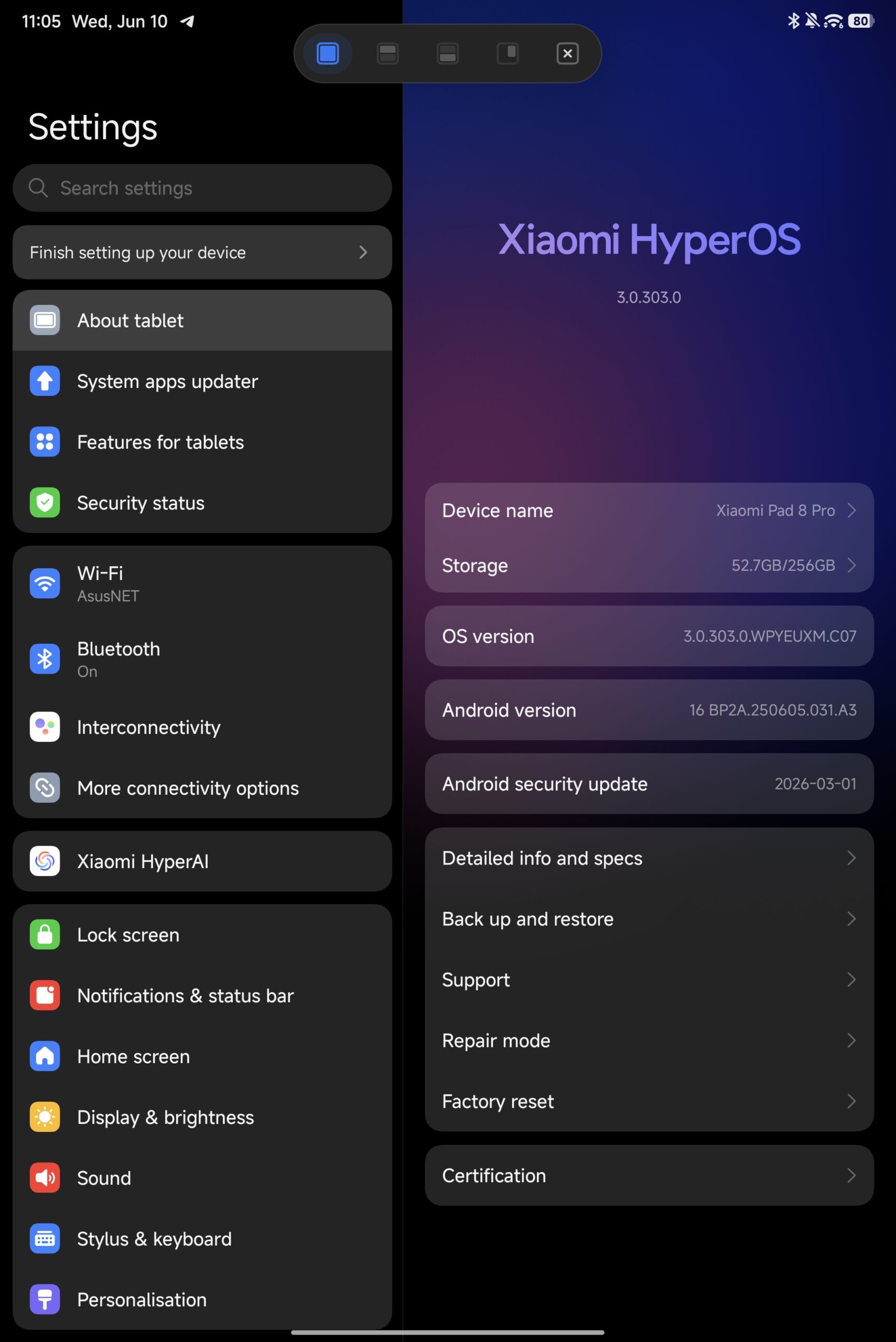
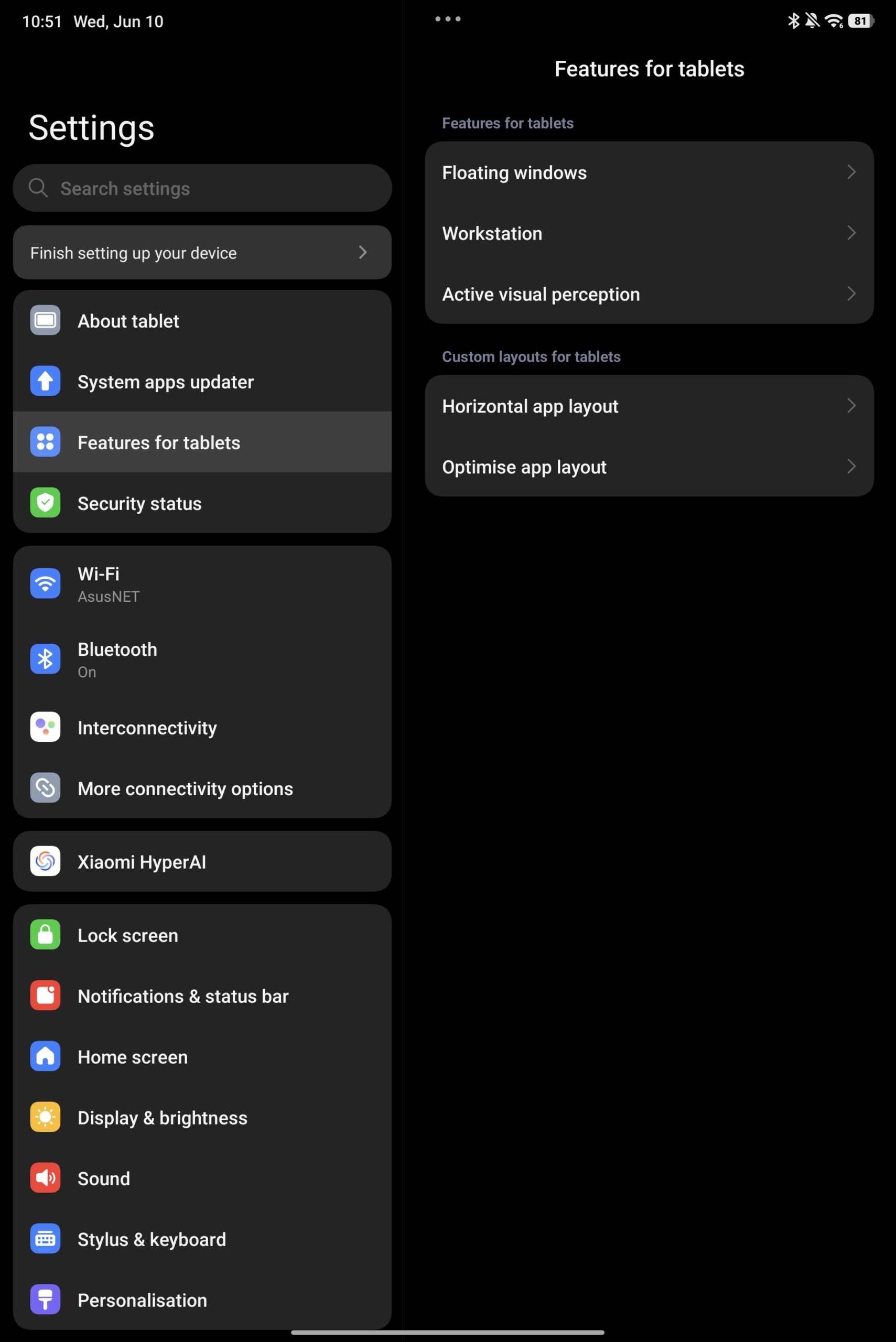
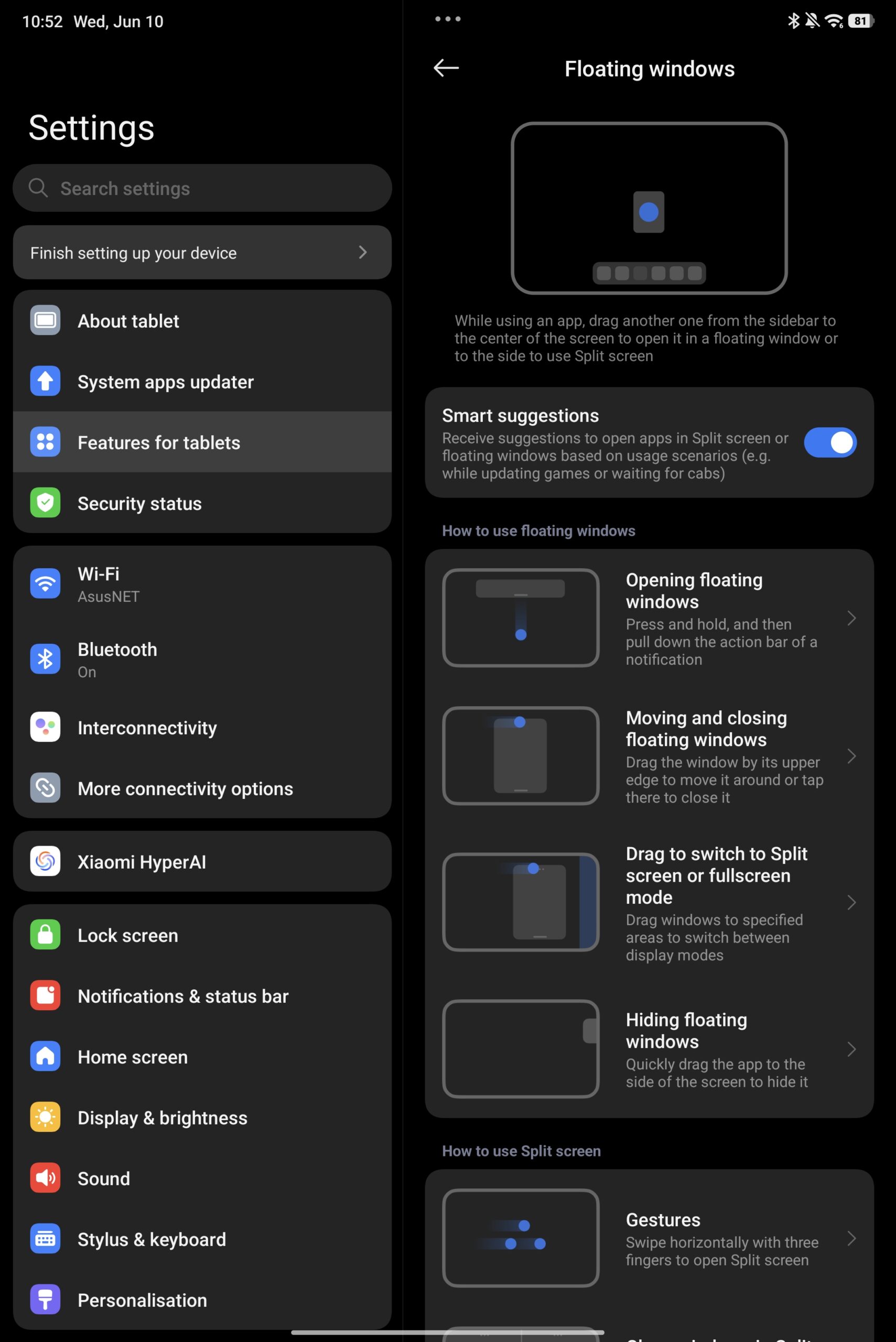
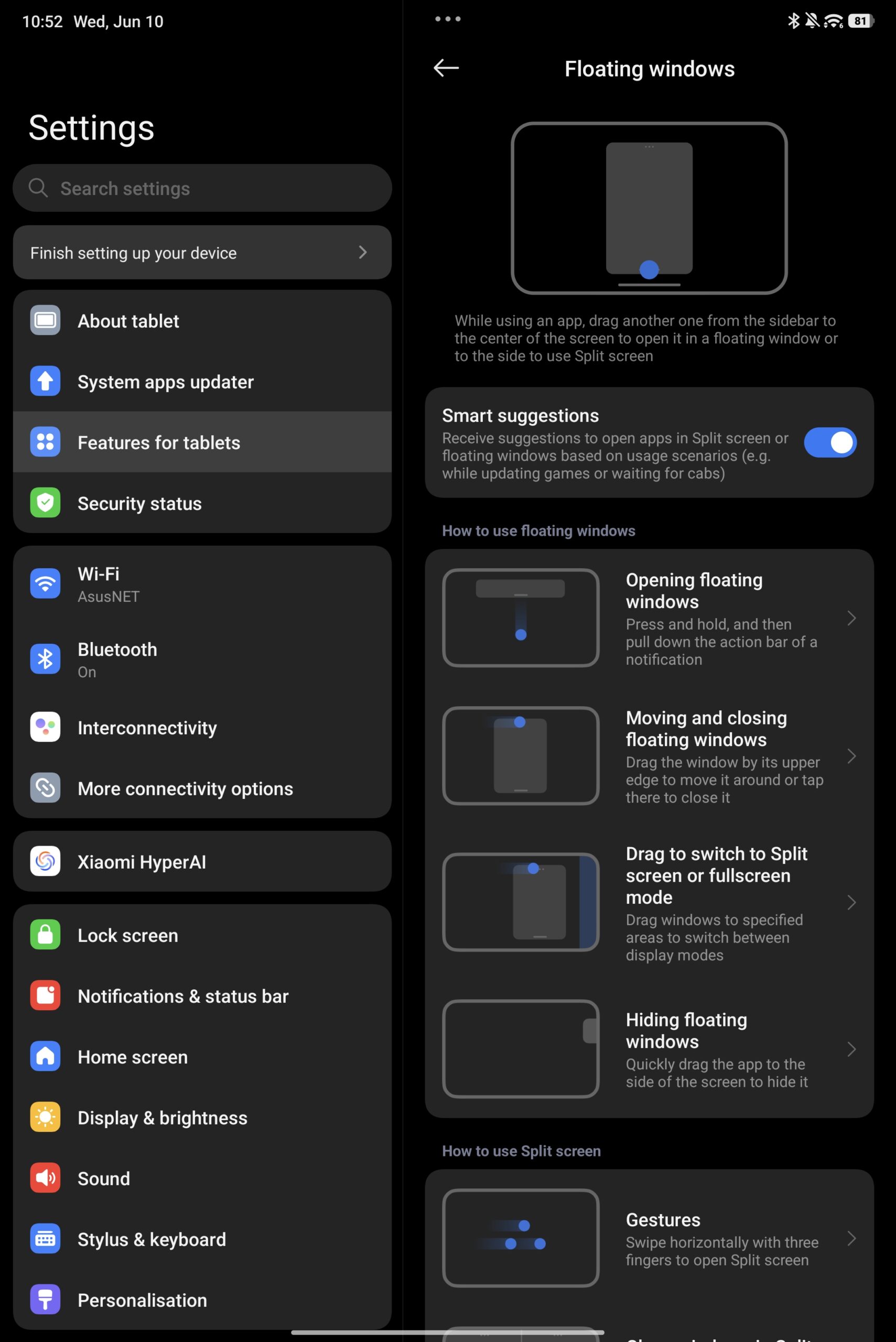
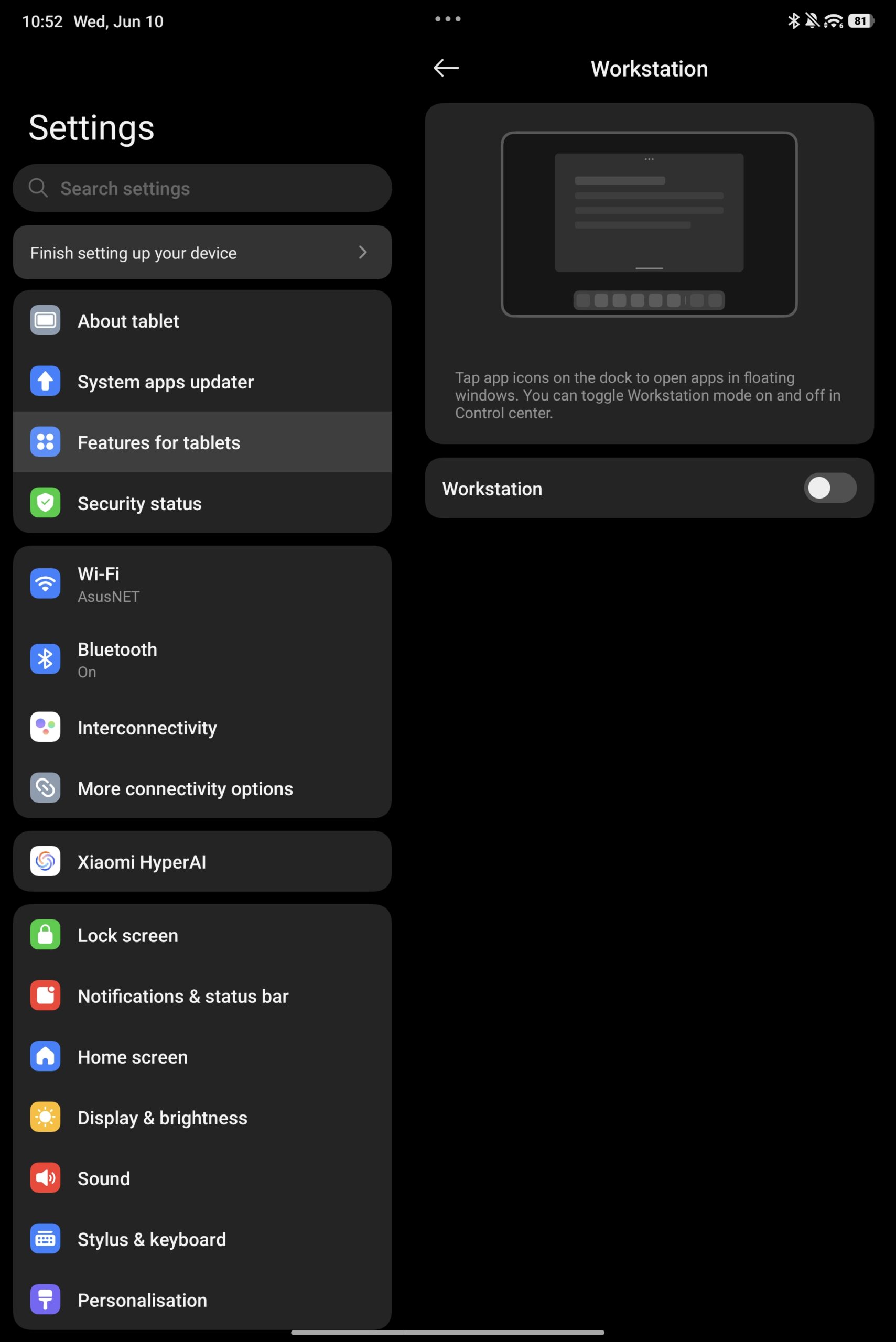
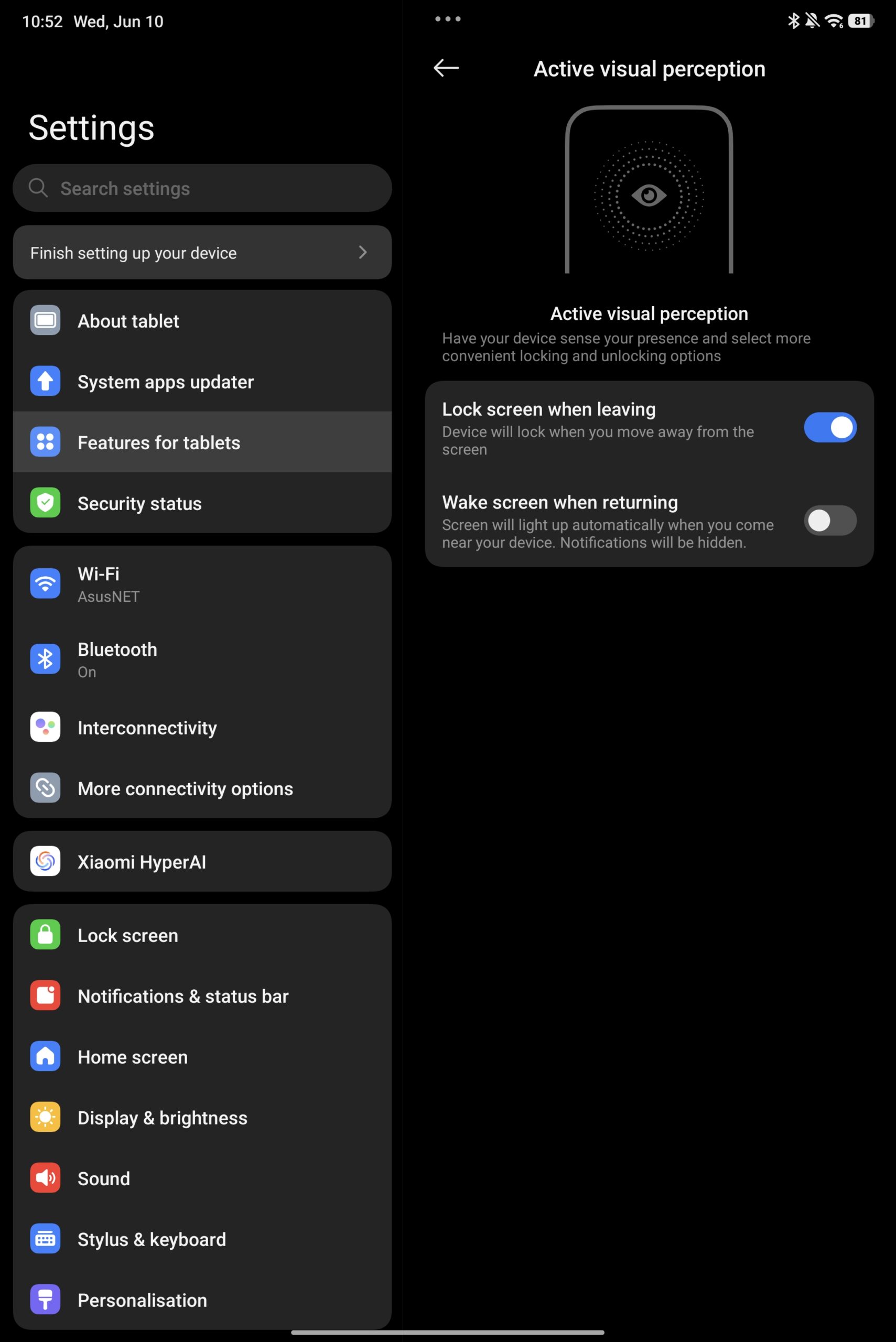
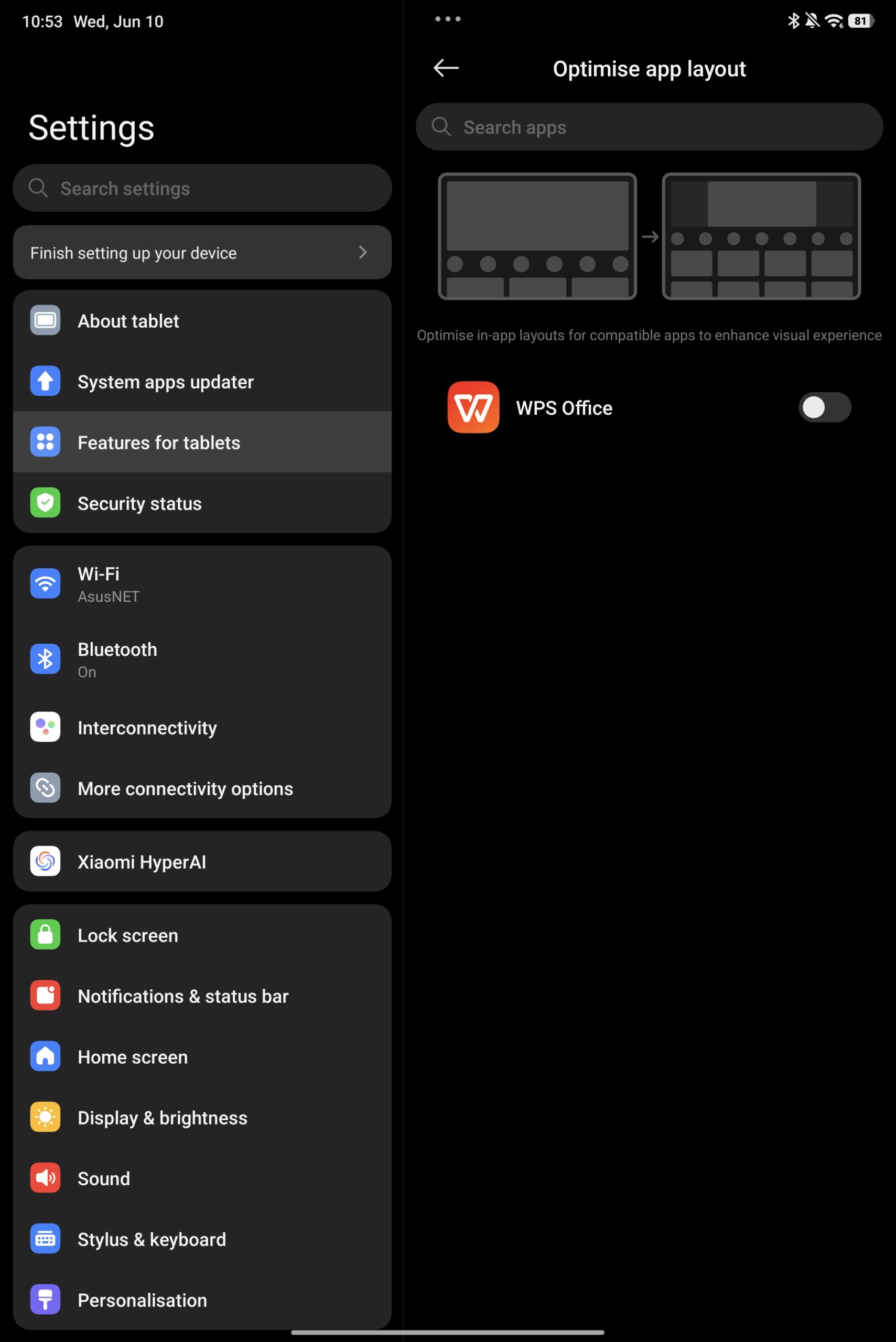
The floating window mode is well implemented: multiple applications can be kept open at the same time, moved around the screen, or minimized into a side panel. Workstation Mode is also available, presenting multiple apps in resizable windows with a bottom taskbar, similar in concept to Samsung DeX. The system includes WPS Office and the built-in Mi Canvas drawing app out of the box. There is also an eye-tracking feature that locks the tablet when the user looks away.
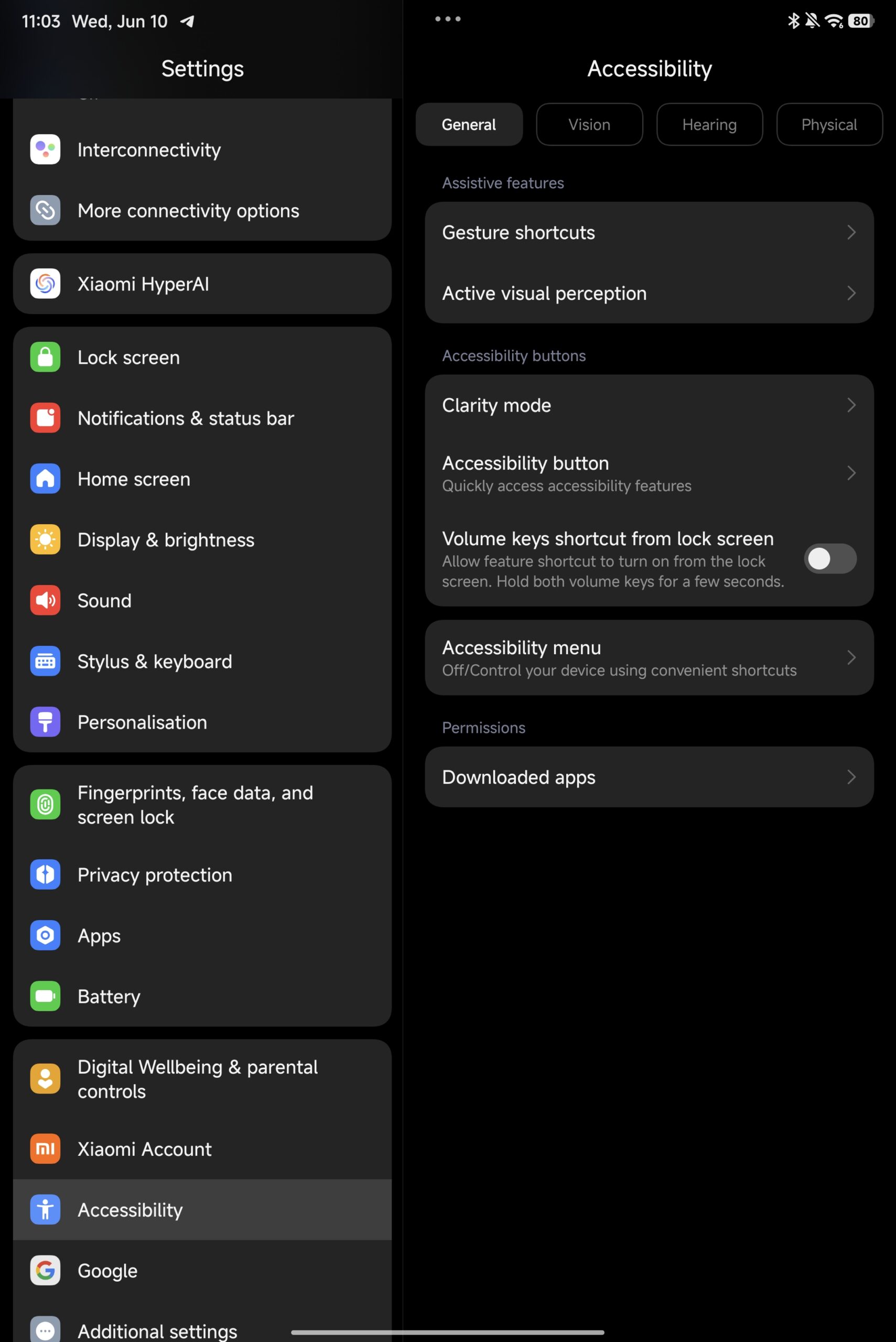
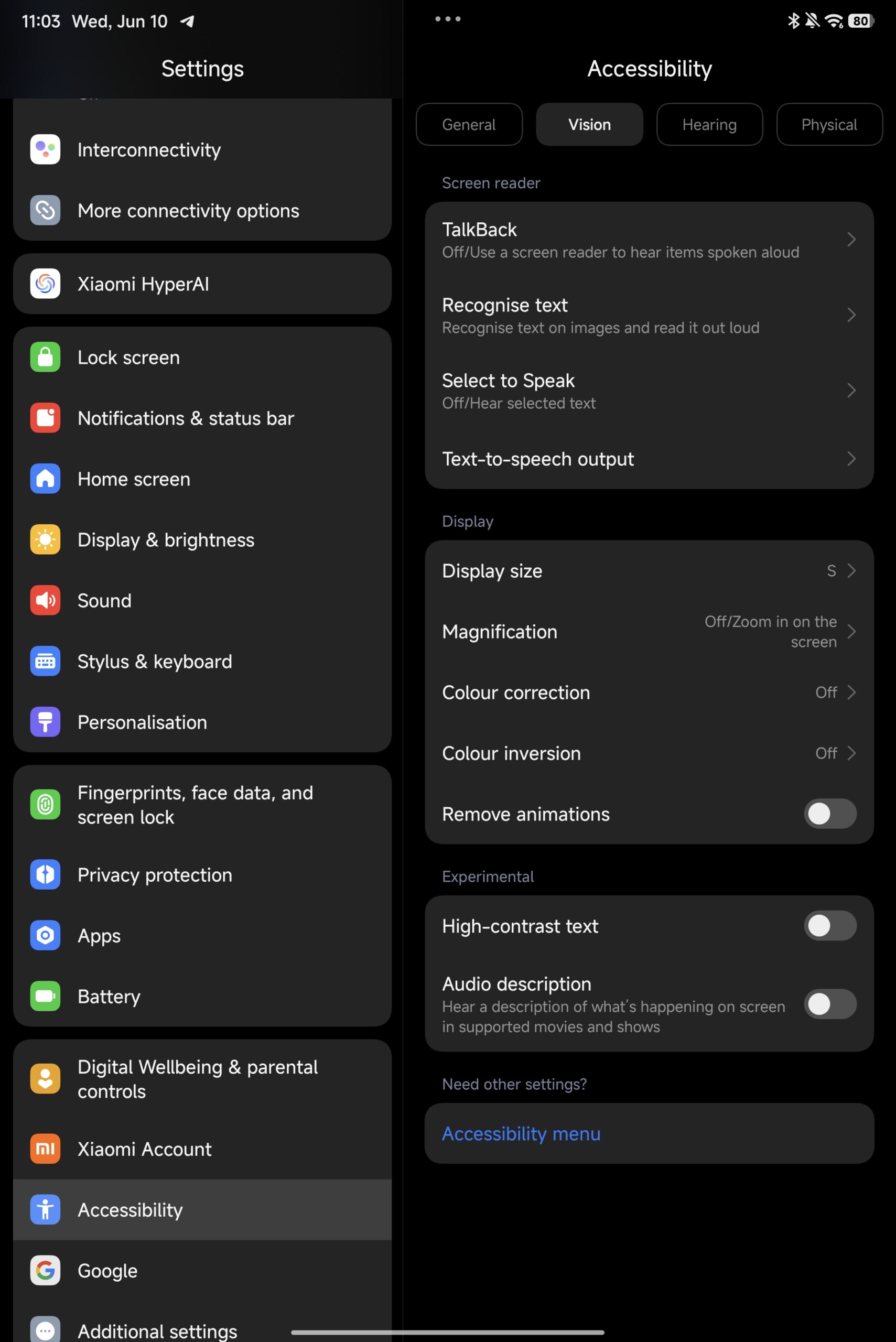
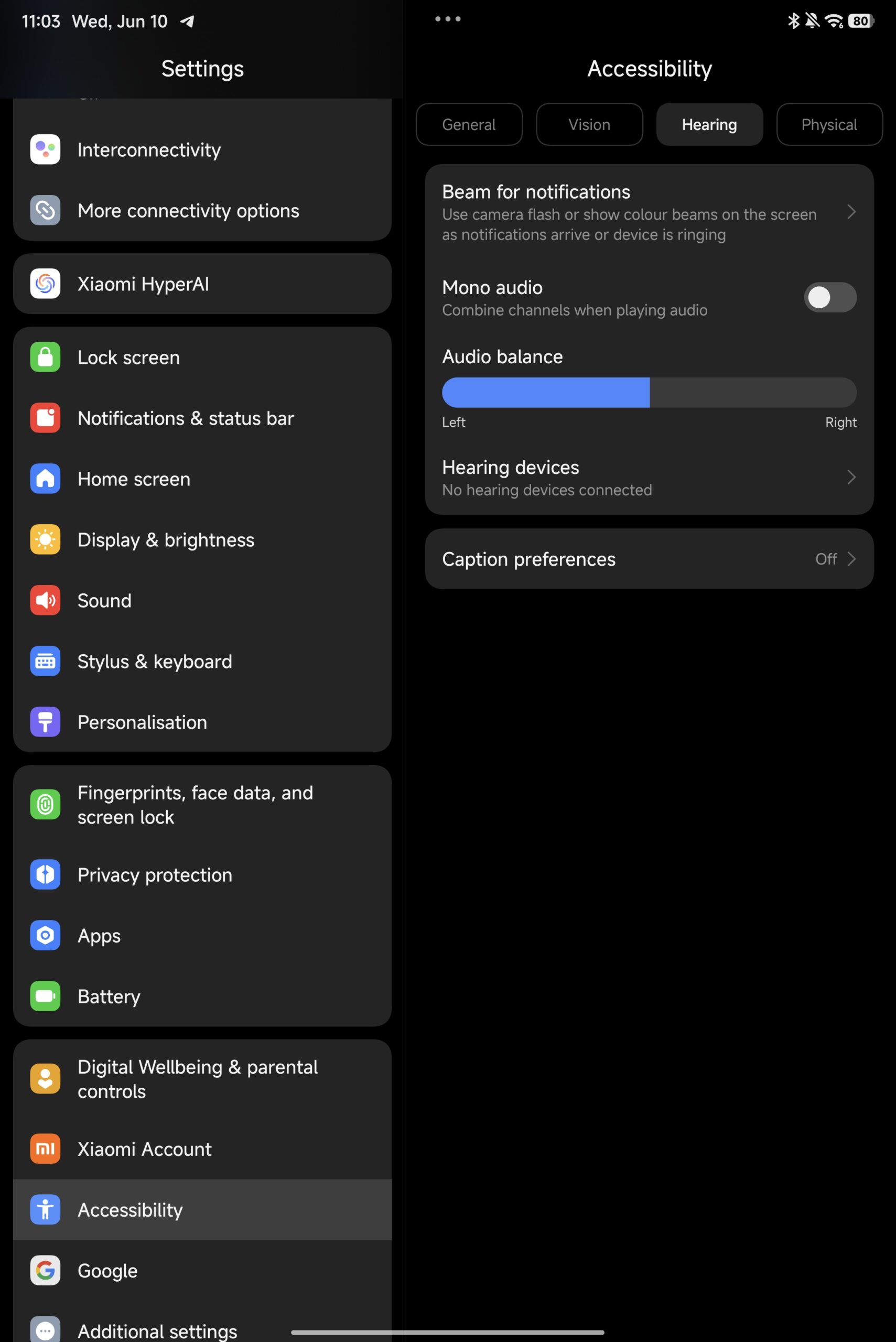
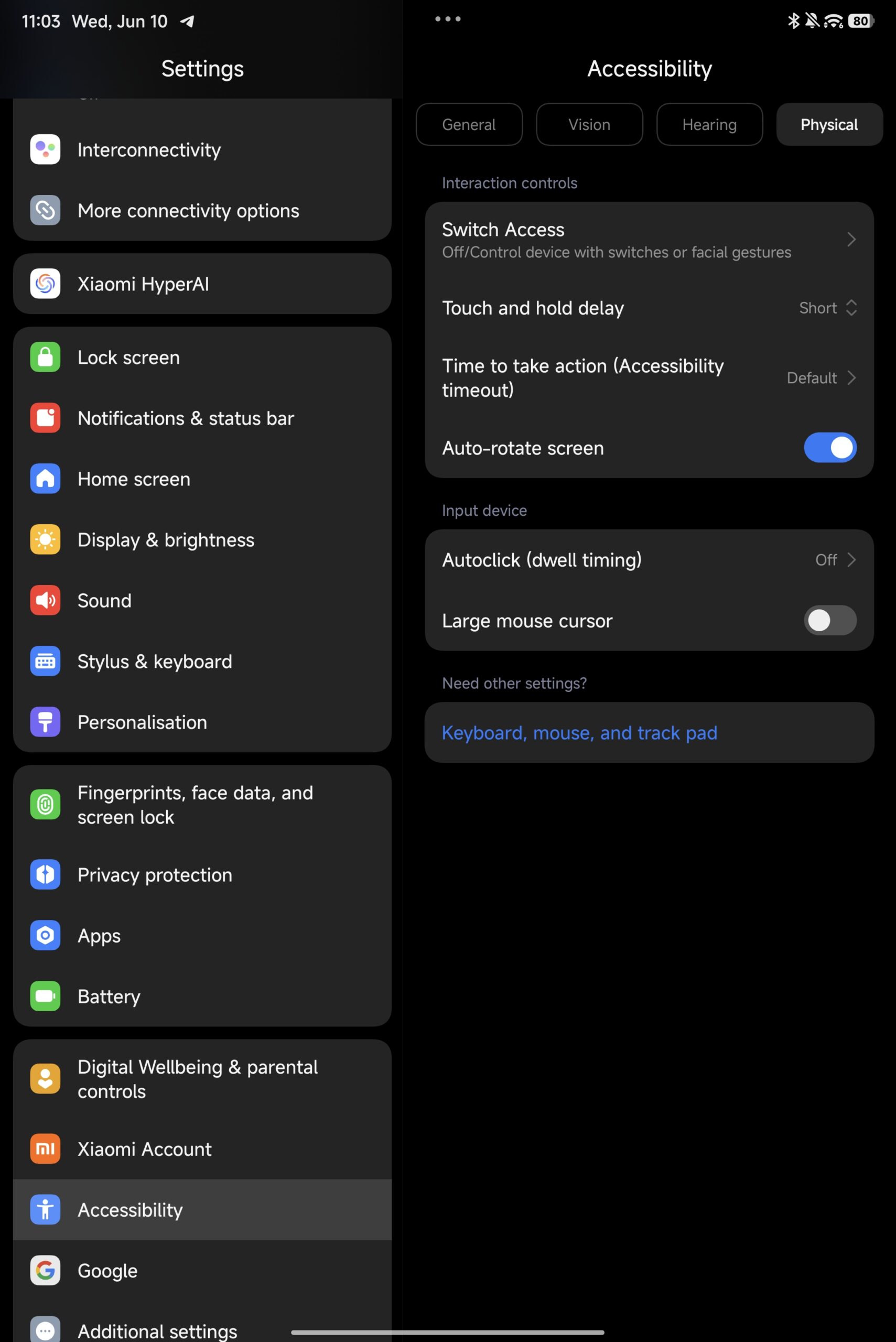
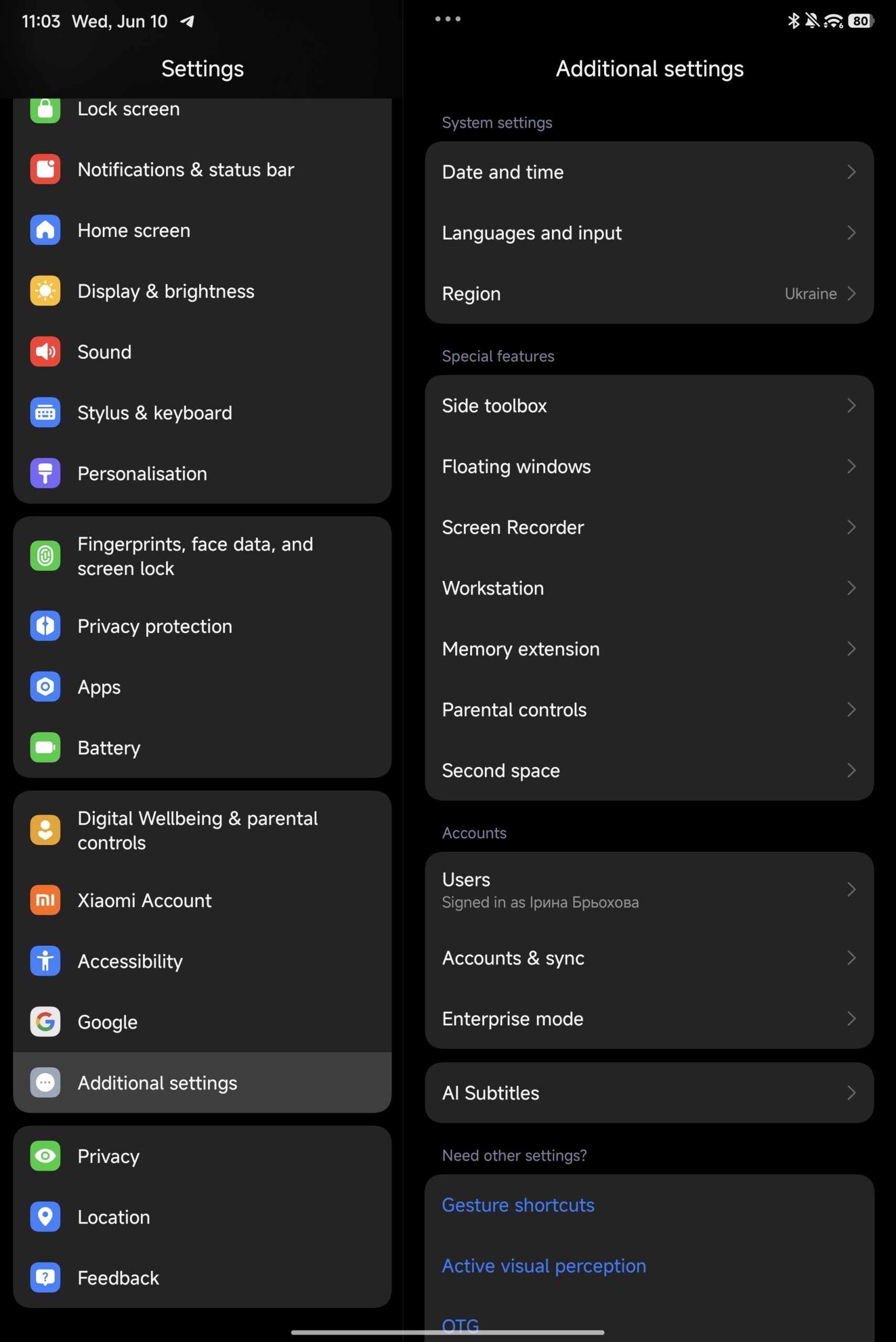
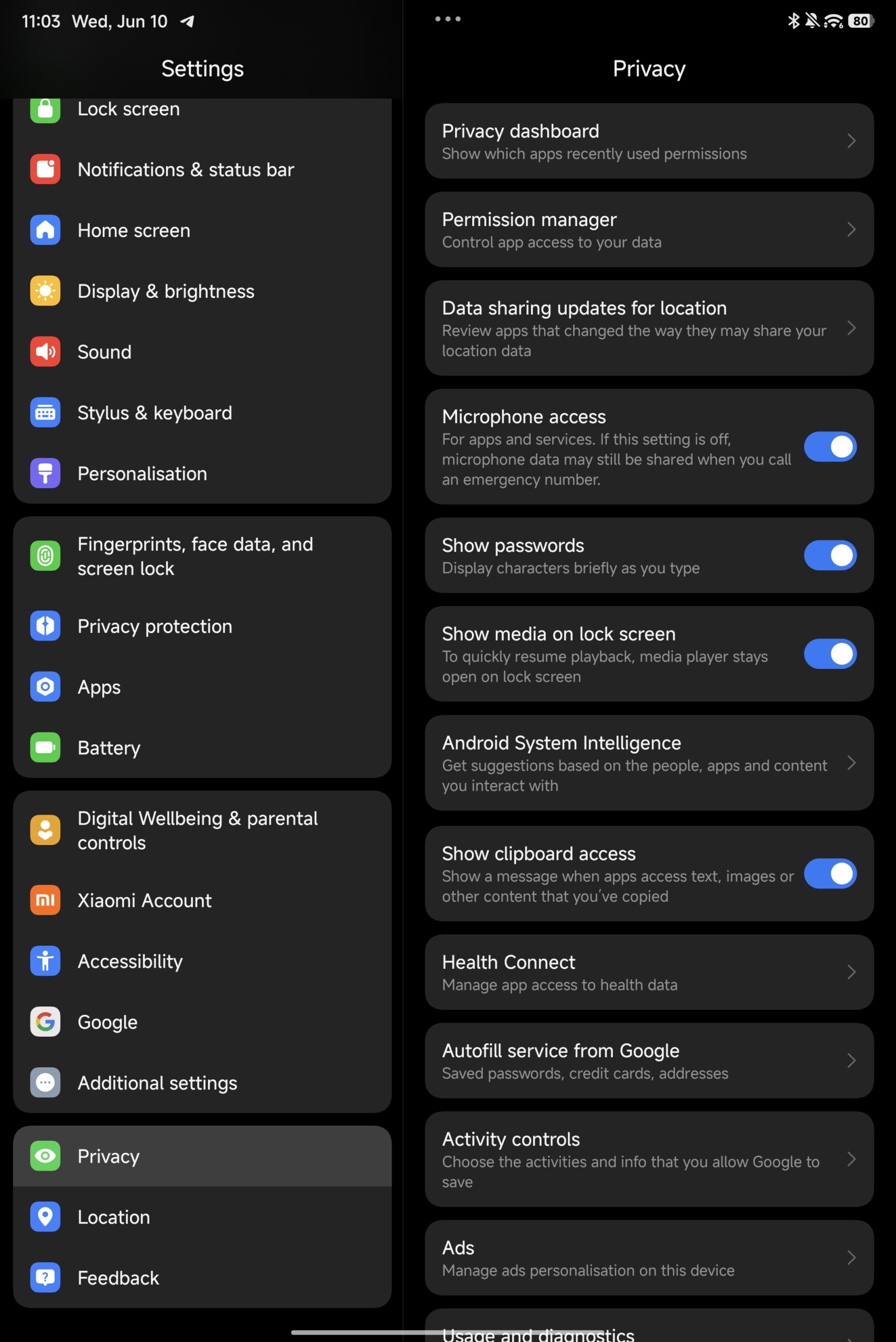
It is worth noting that for full use of office-related functionality, additional accessories will need to be purchased separately. The manufacturer recommends the Xiaomi Pad 8/8 Pro Keyboard or the Pad 8/8 Pro Focus Keyboard (with a touchpad), as well as the Xiaomi Focus Pen Pro.


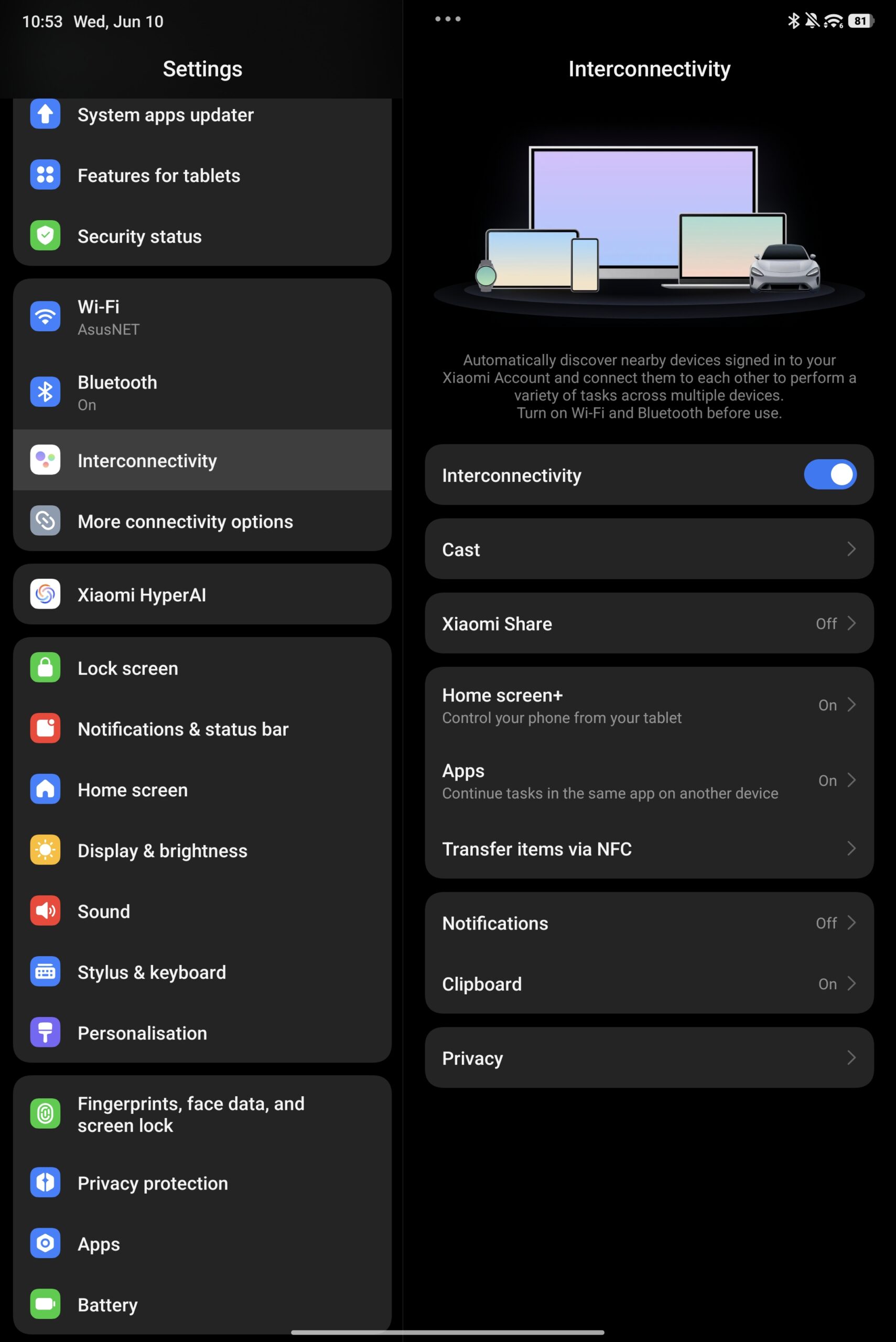
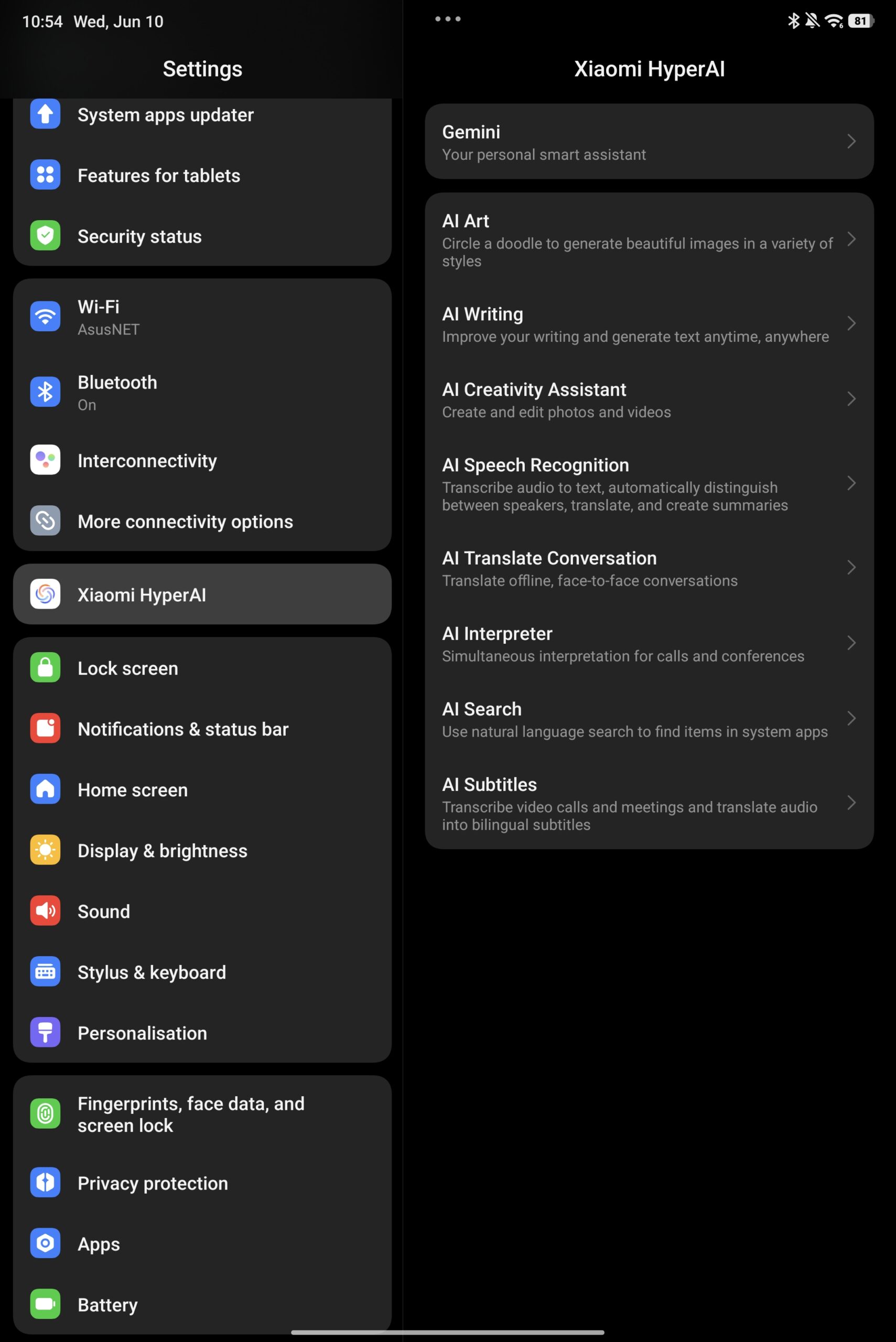
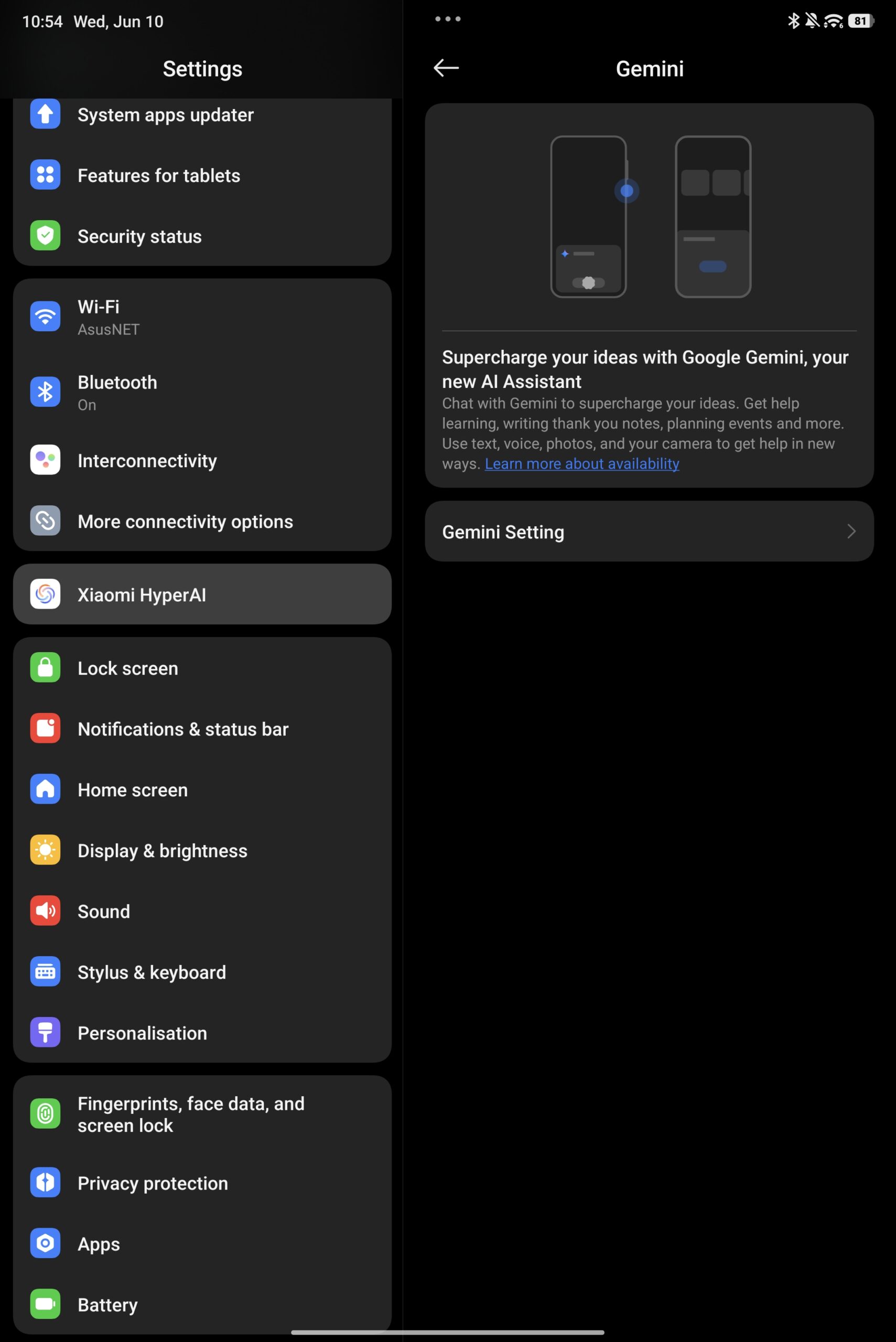
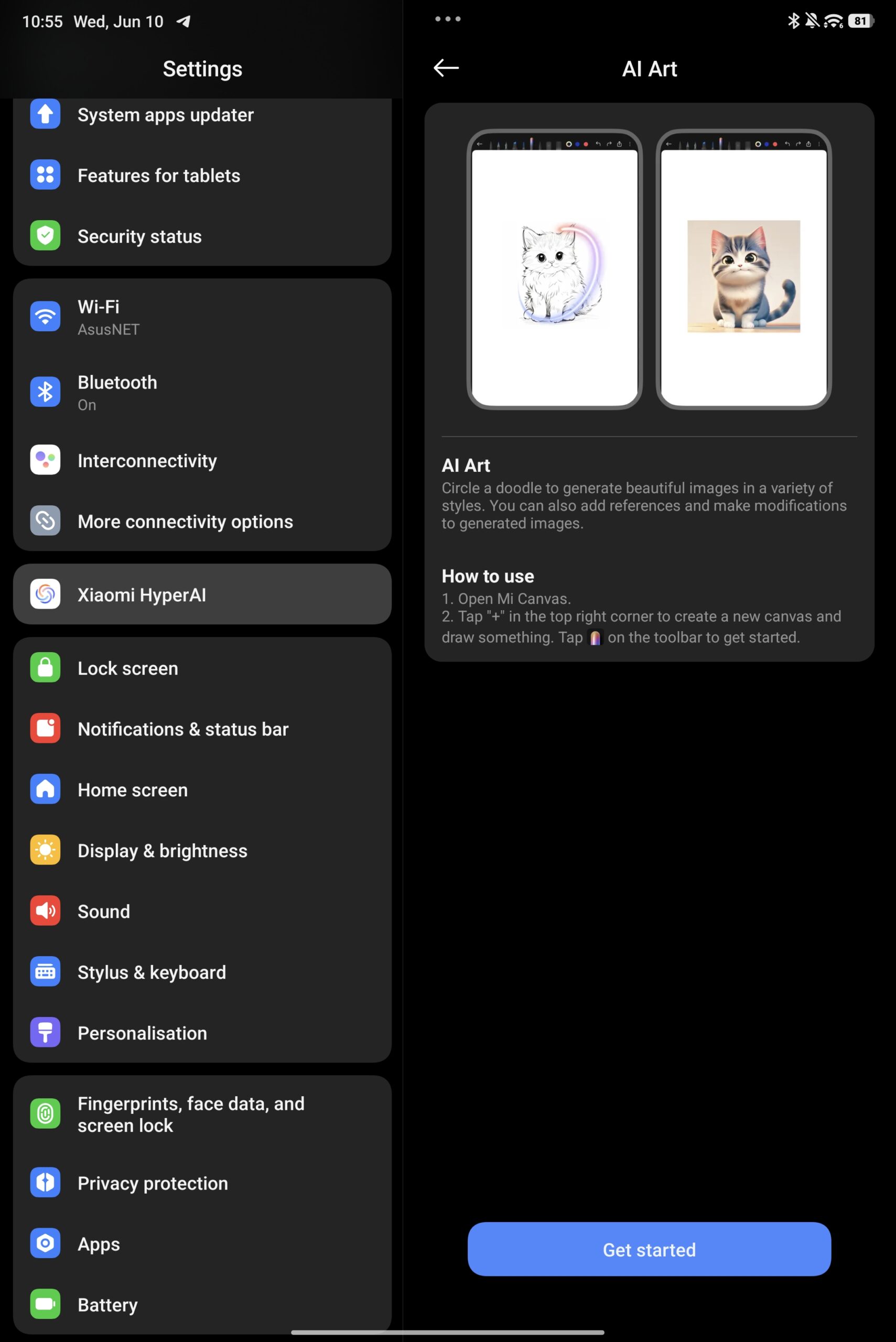
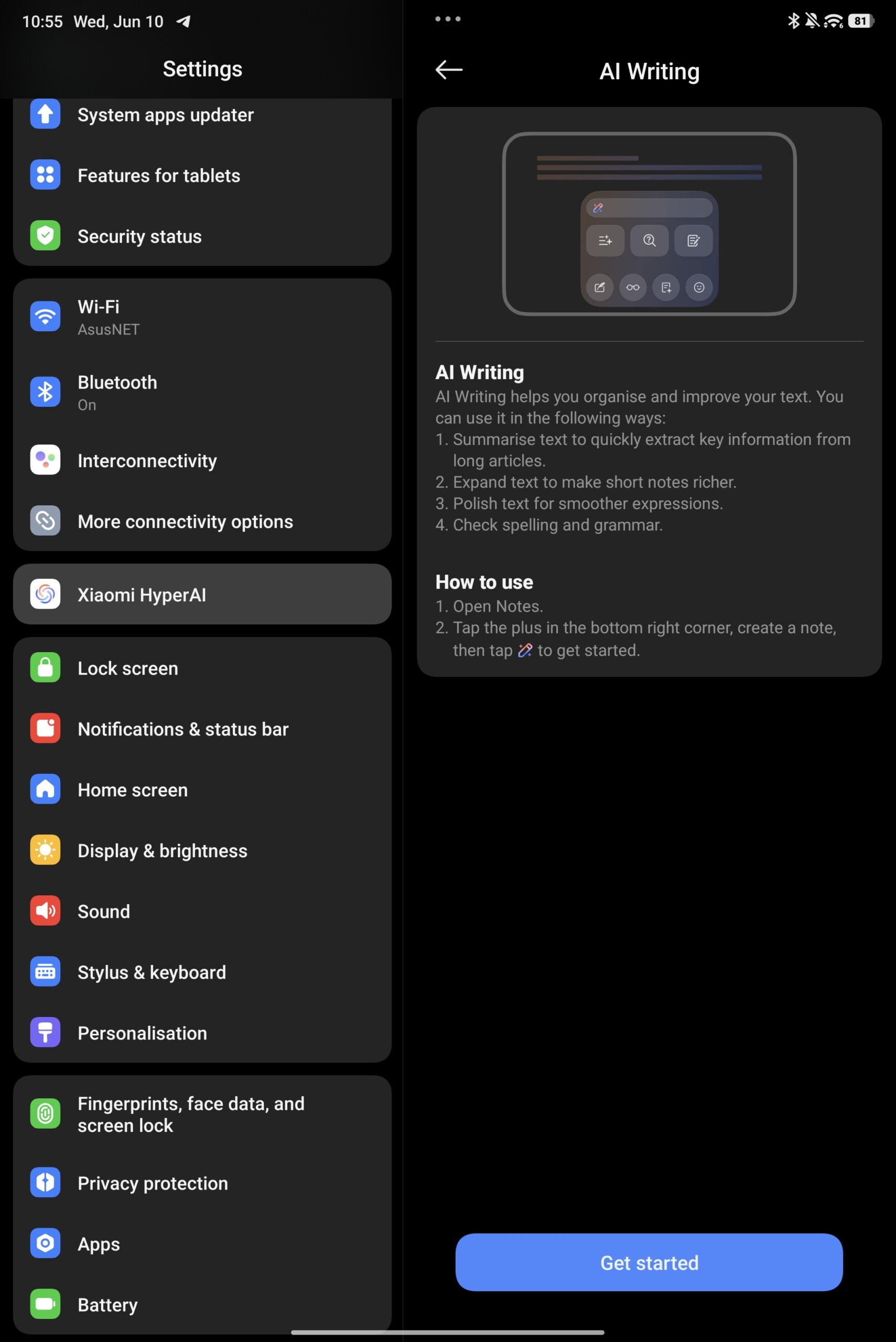
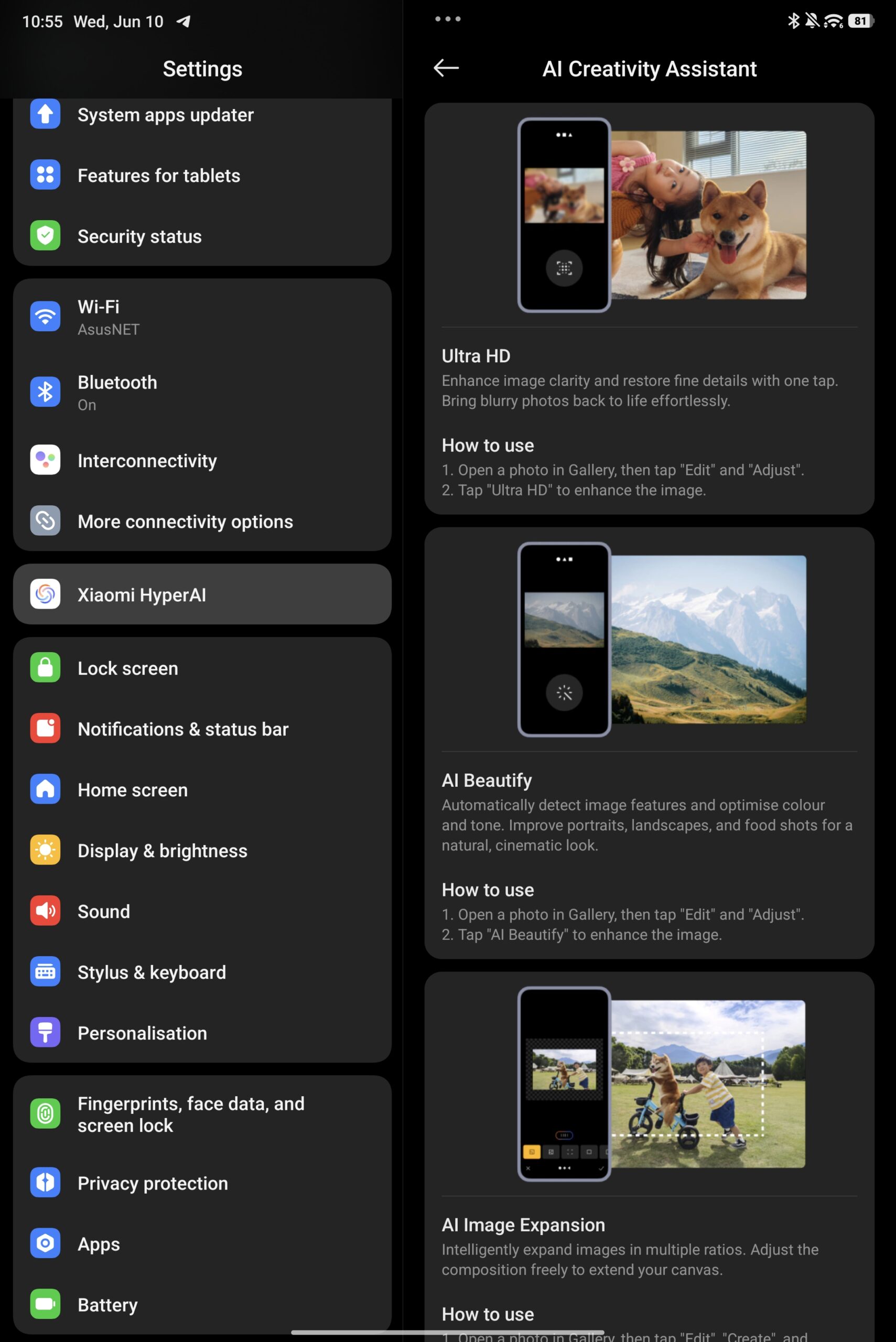
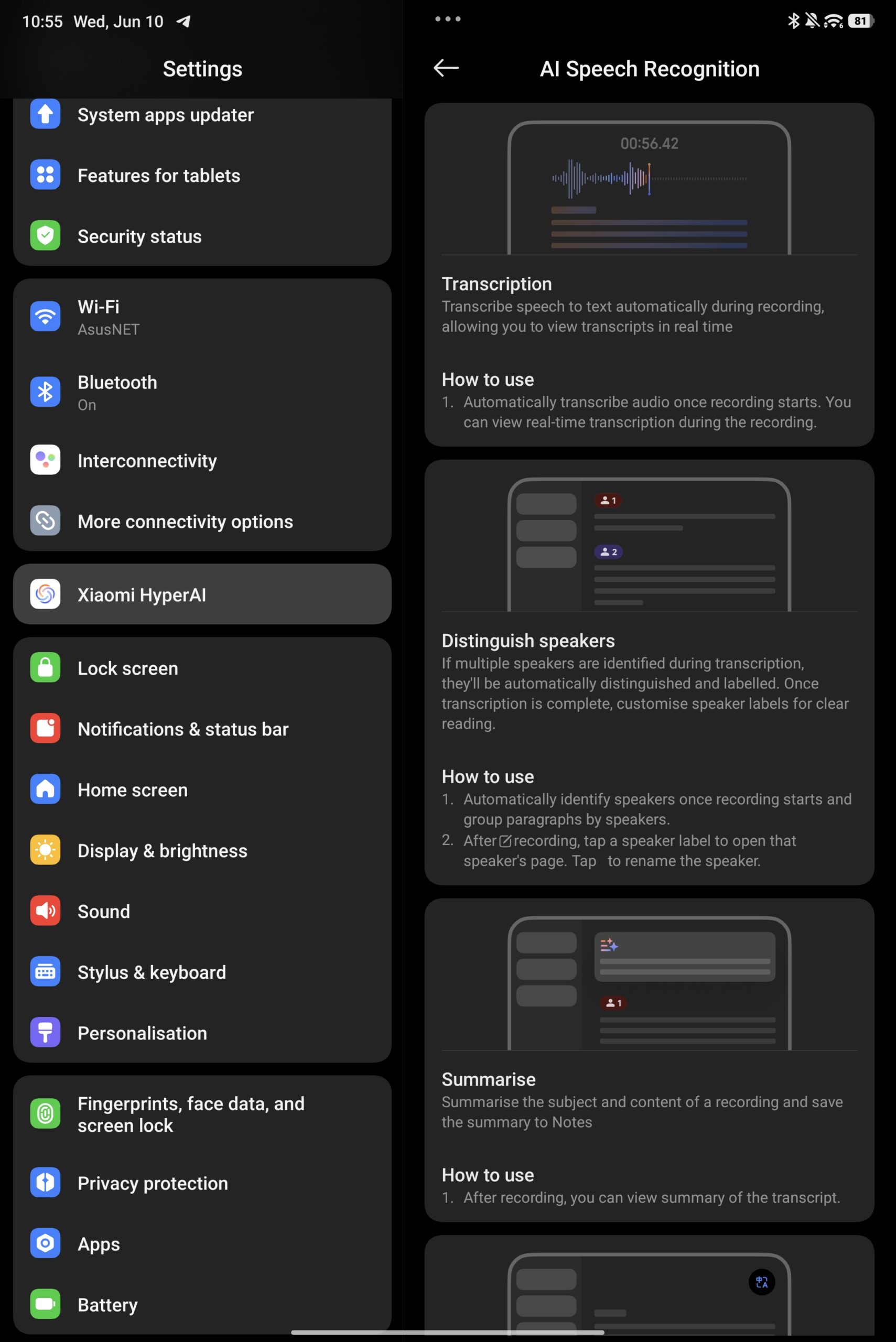
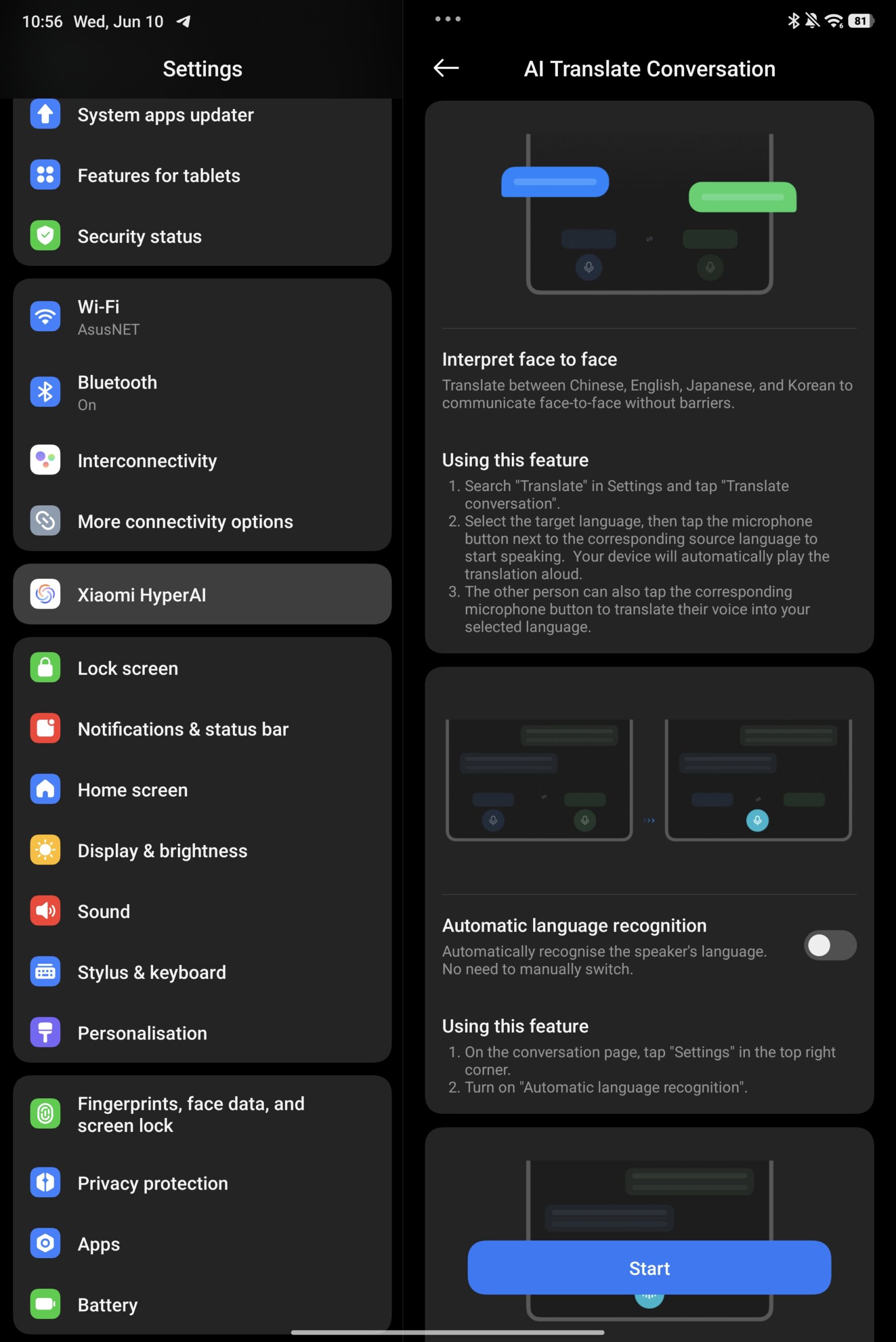
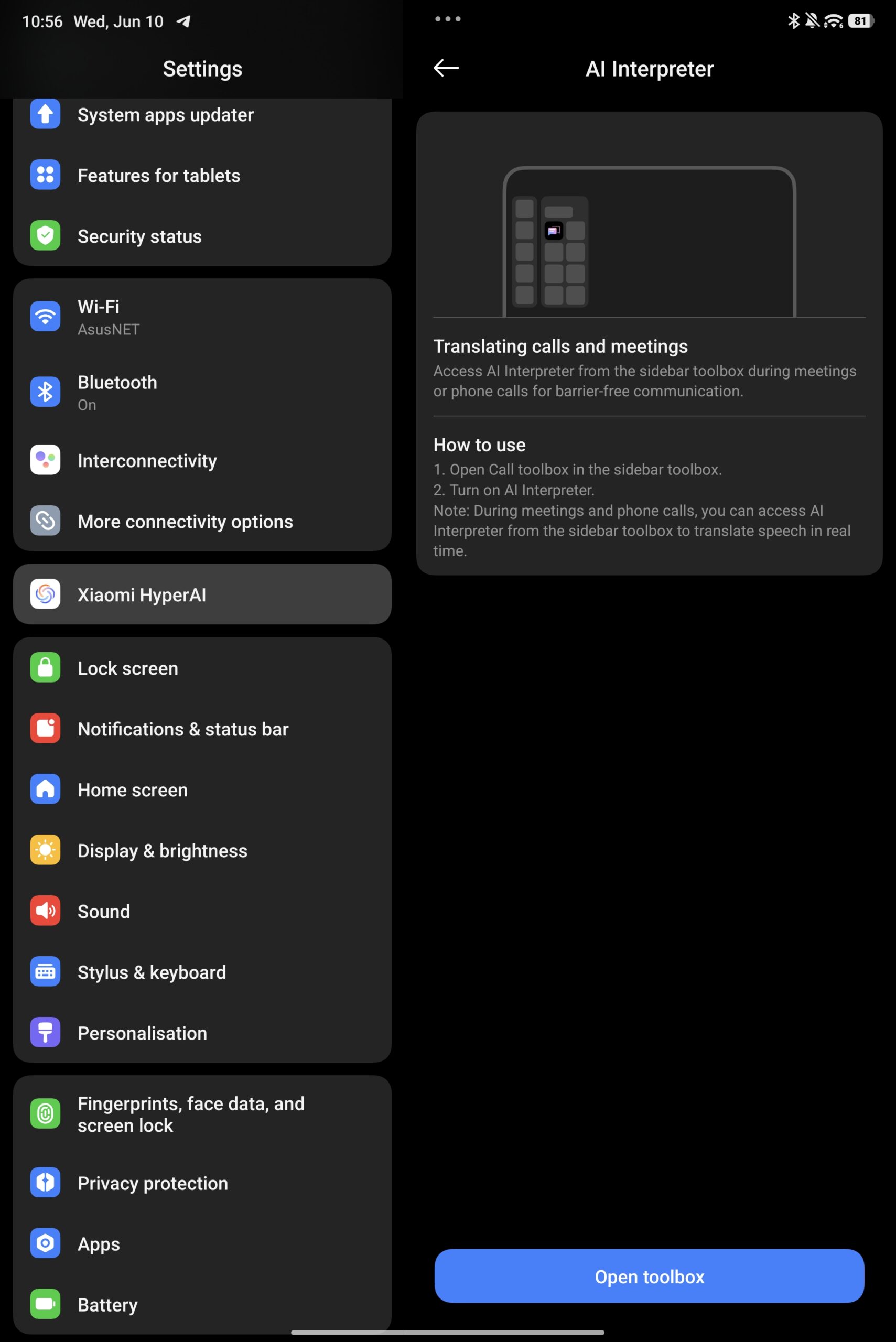
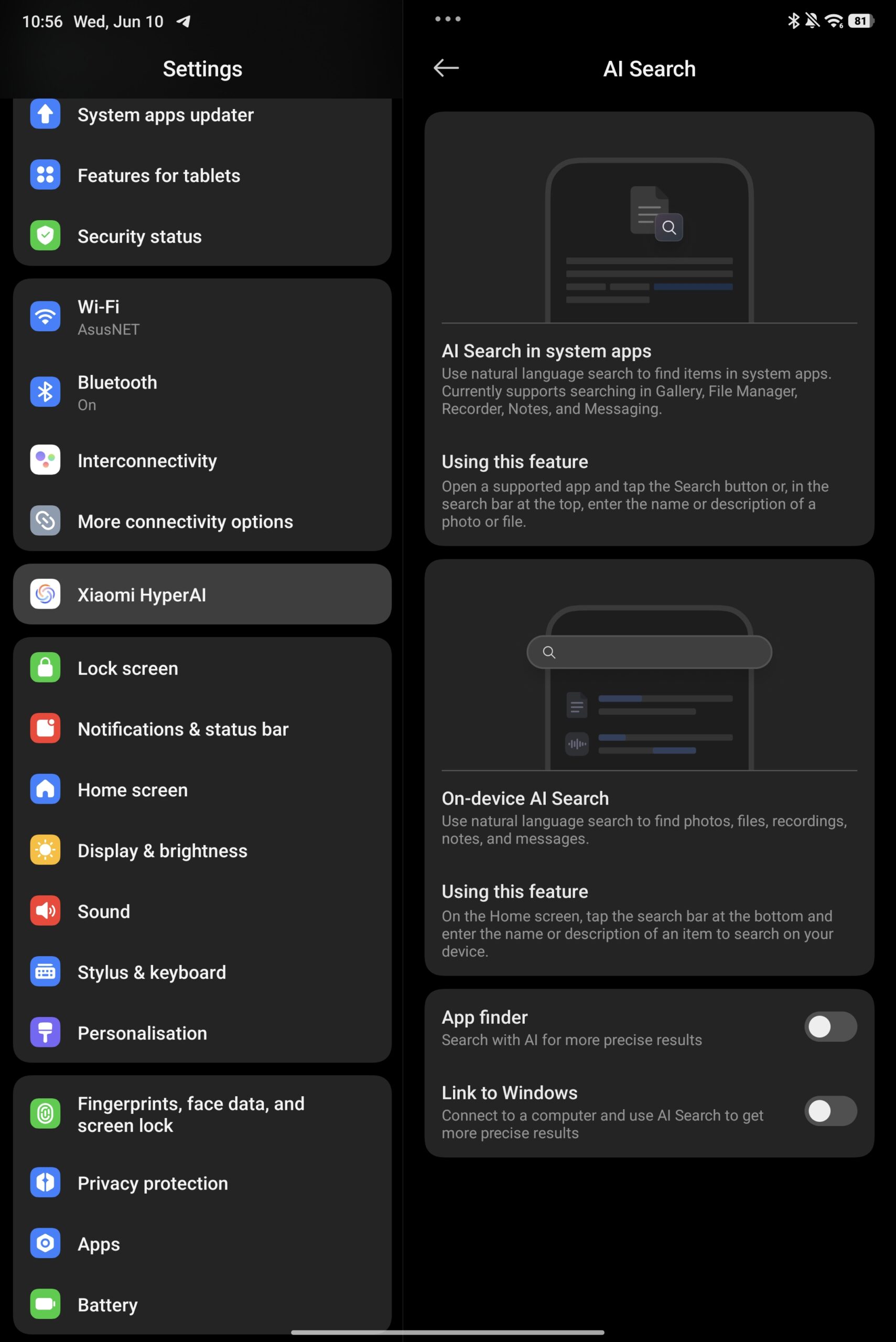
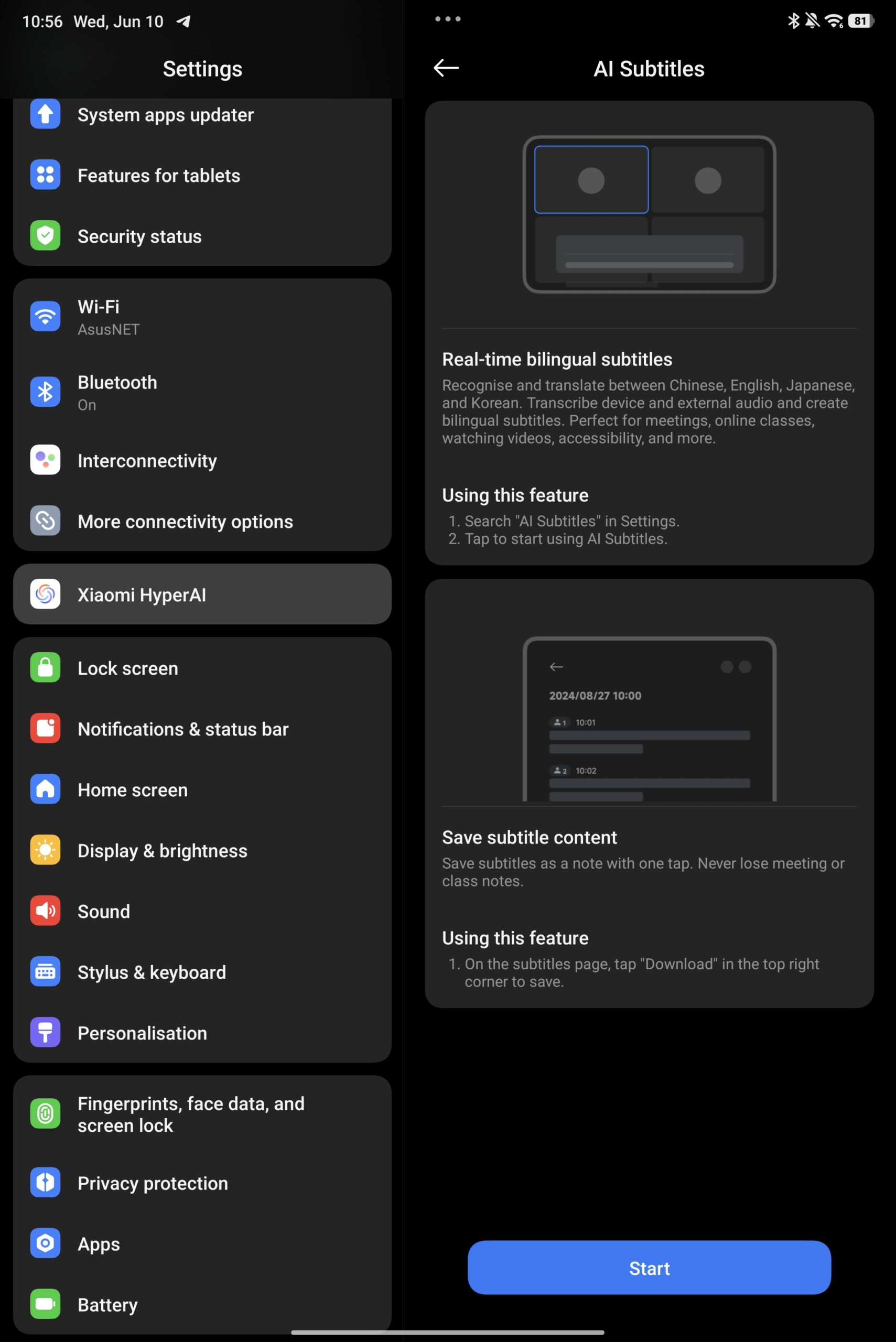
It is also worth mentioning Xiaomi HyperAI, a suite of AI tools integrated into the system. Available features include Gemini as a personal assistant, image generation and editing, writing assistance, speech recognition with automatic transcription, real-time translation of conversations and meetings, AI-generated subtitles, and natural language search within system applications.
Xiaomi Pad 8 Pro Cameras
Let’s be honest: the camera is not a key feature in a tablet. Most users do not rely on a tablet for everyday photography. However, there are practical use cases such as scanning documents, capturing whiteboards during meetings, or photographing sketches for further work. The front camera is primarily intended for video calls.

The main camera is a 50 MP unit with a 1/2.76″ sensor size, f/1.8 aperture, and phase-detection autofocus. It supports video recording up to 4K at 60 fps. For a tablet camera, this is a very solid specification. In daylight conditions, detail levels are high, and colors appear natural. HDR processing works correctly and does not introduce noticeable artifacts. As expected for this class of device, there is no optical stabilization. Available shooting modes include Document, Photo, Portrait, Pro, and Video, along with built-in filters.


The front camera is a 32 MP unit with an f/2.2 aperture and fixed focus. It is positioned on the long side of the tablet, which is convenient for horizontal video calls. It supports Full HD video recording. For video conferencing, this is more than sufficient. The camera module also houses an IR blaster, allowing control of TVs, air conditioners, and other home appliances directly from the tablet. It is a small but useful addition, especially in situations where a remote control is misplaced.
Sound
The tablet is equipped with four speakers (two on each short side). The sound is loud and clear, with Dolby Atmos support. Even at maximum volume, there is no noticeable distortion, which is a positive sign. The manufacturer claims a 200% increase in loudness compared to a standard baseline level. Dolby Atmos and Xiaomi Sound presets are available, along with Hi-Res Audio and Hi-Res Wireless support. When paired with high-quality headphones, the audio performance is genuinely solid.
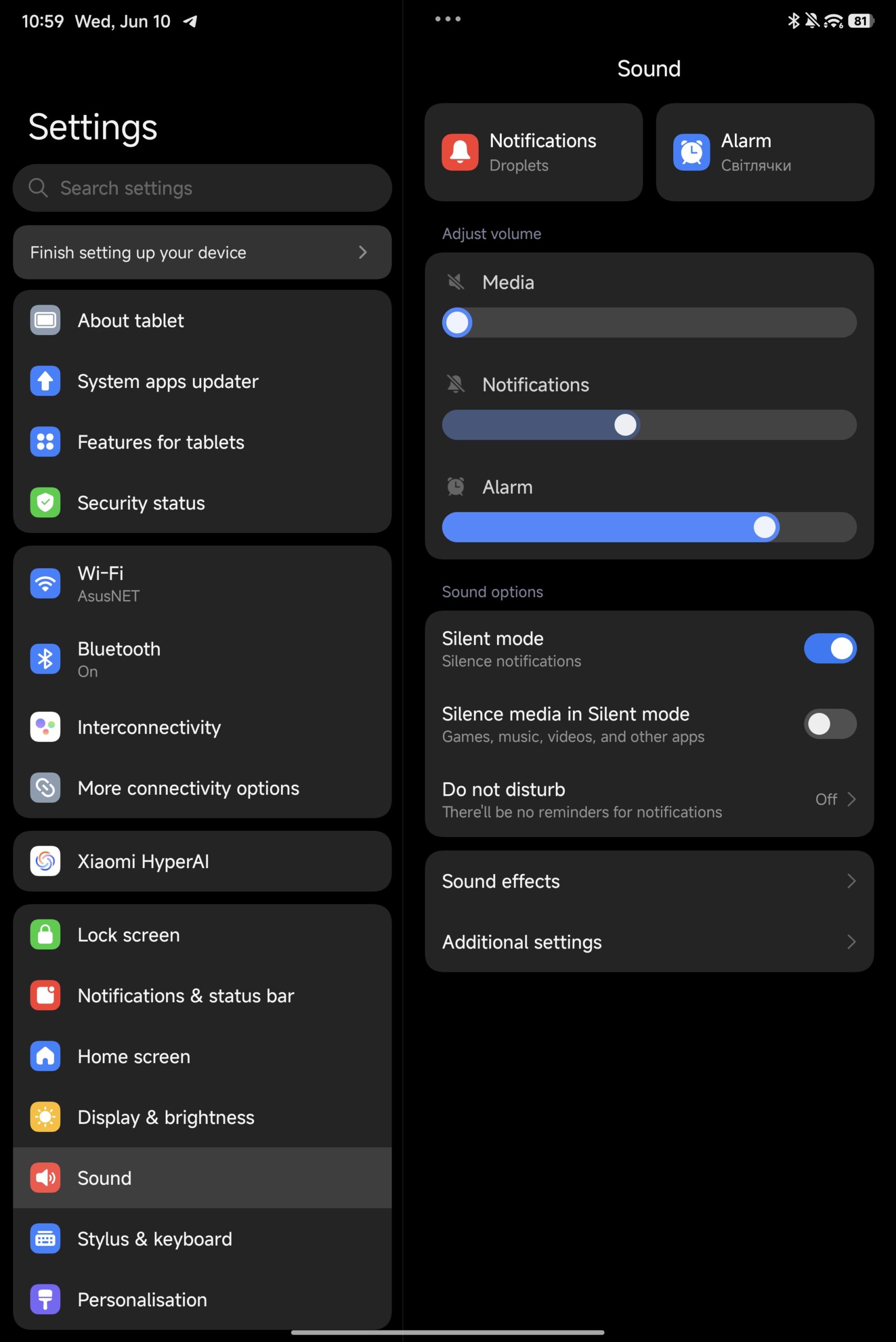
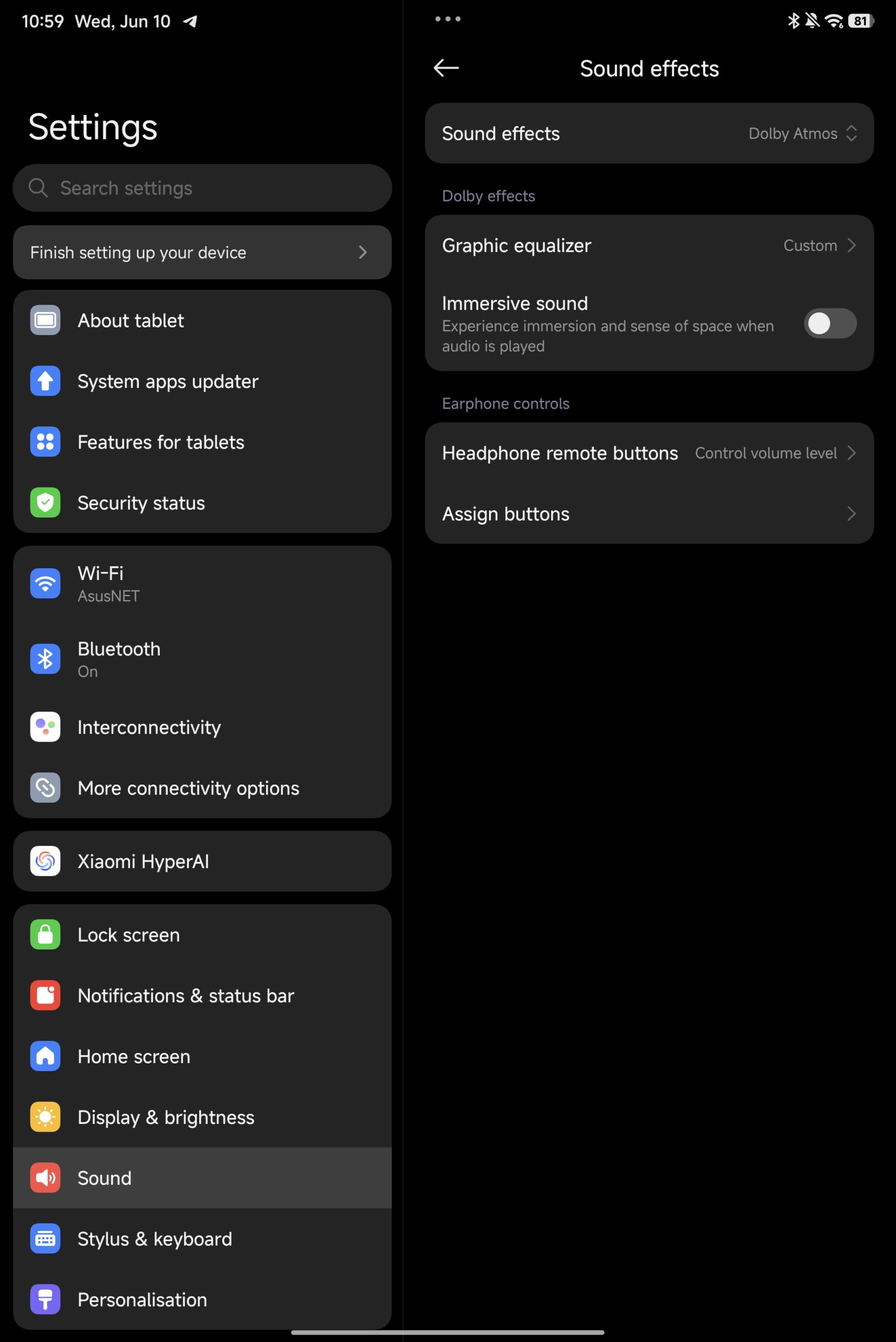
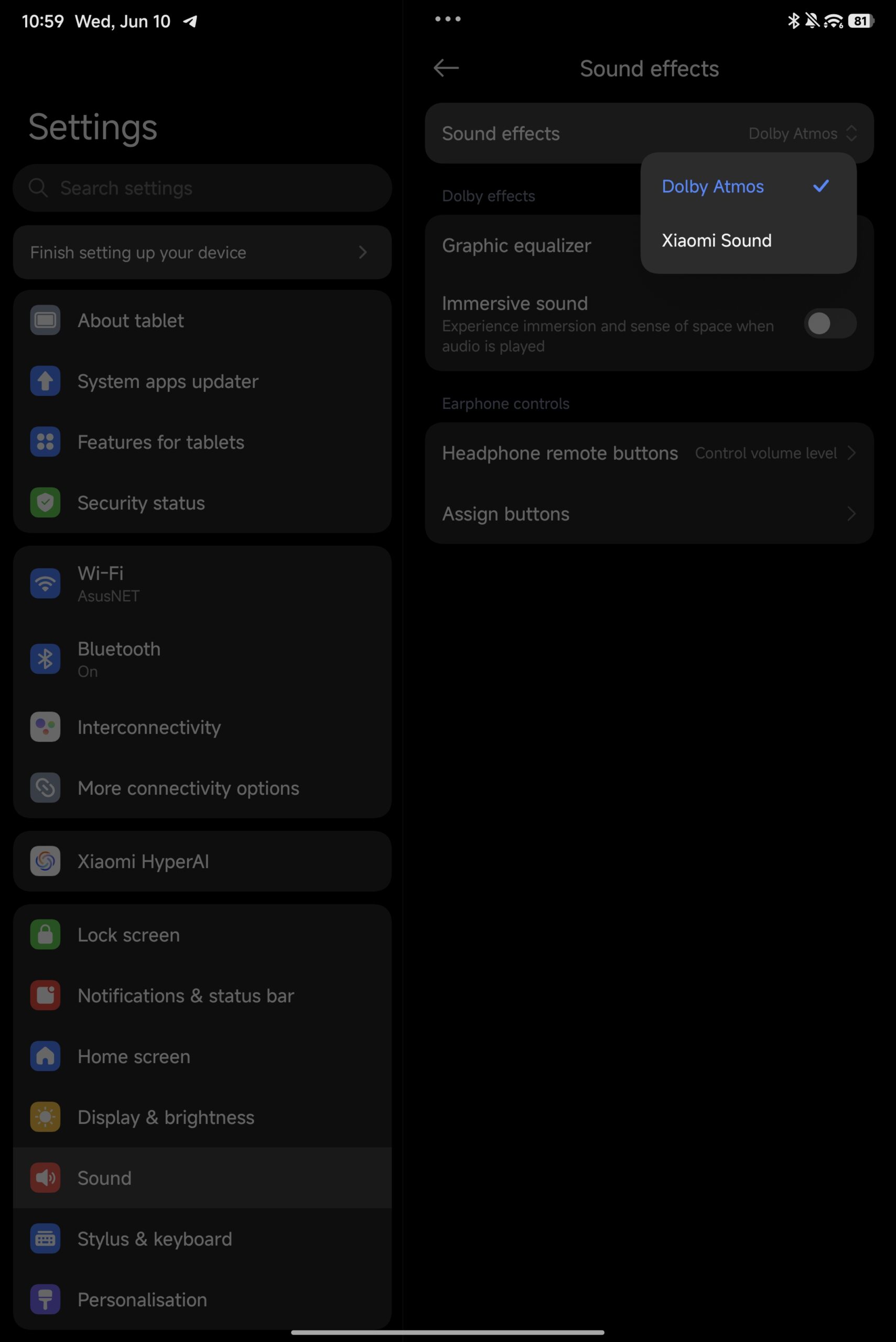
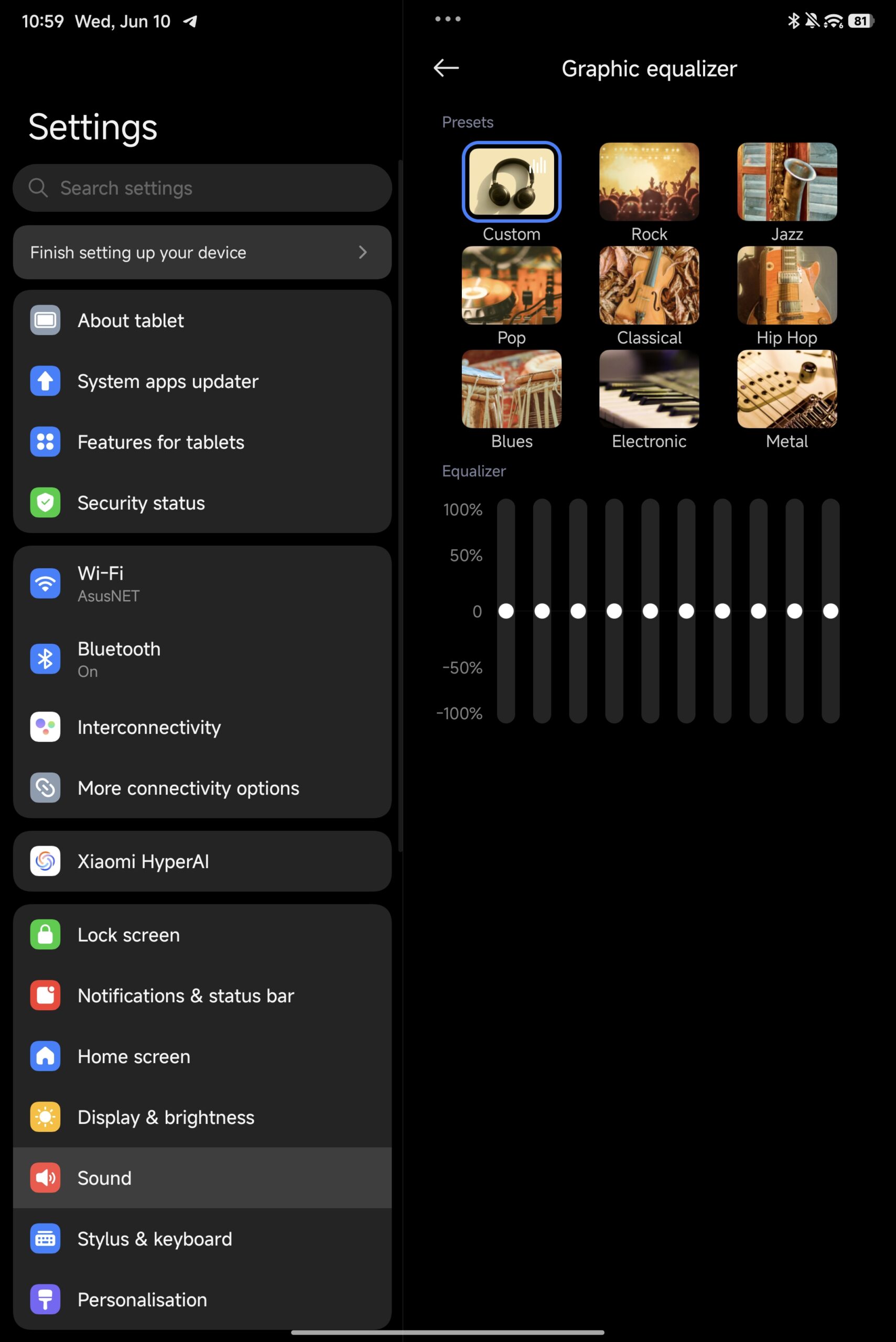
The bass response is typical for a tablet: present, but not something to expect at an exceptional level. For movies, background music, and video calls, the sound quality is more than adequate.
Xiaomi Pad 8 Pro Battery life
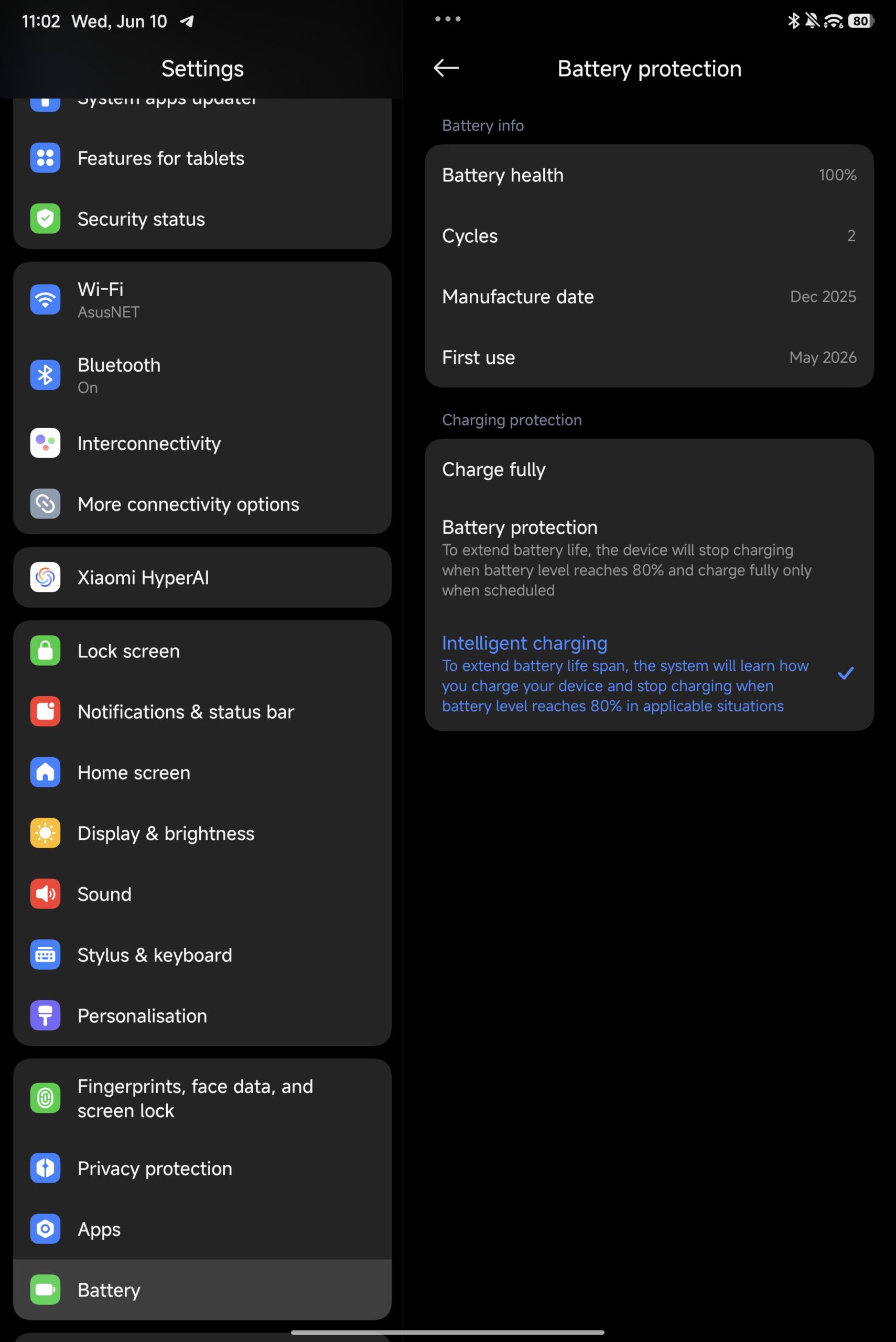
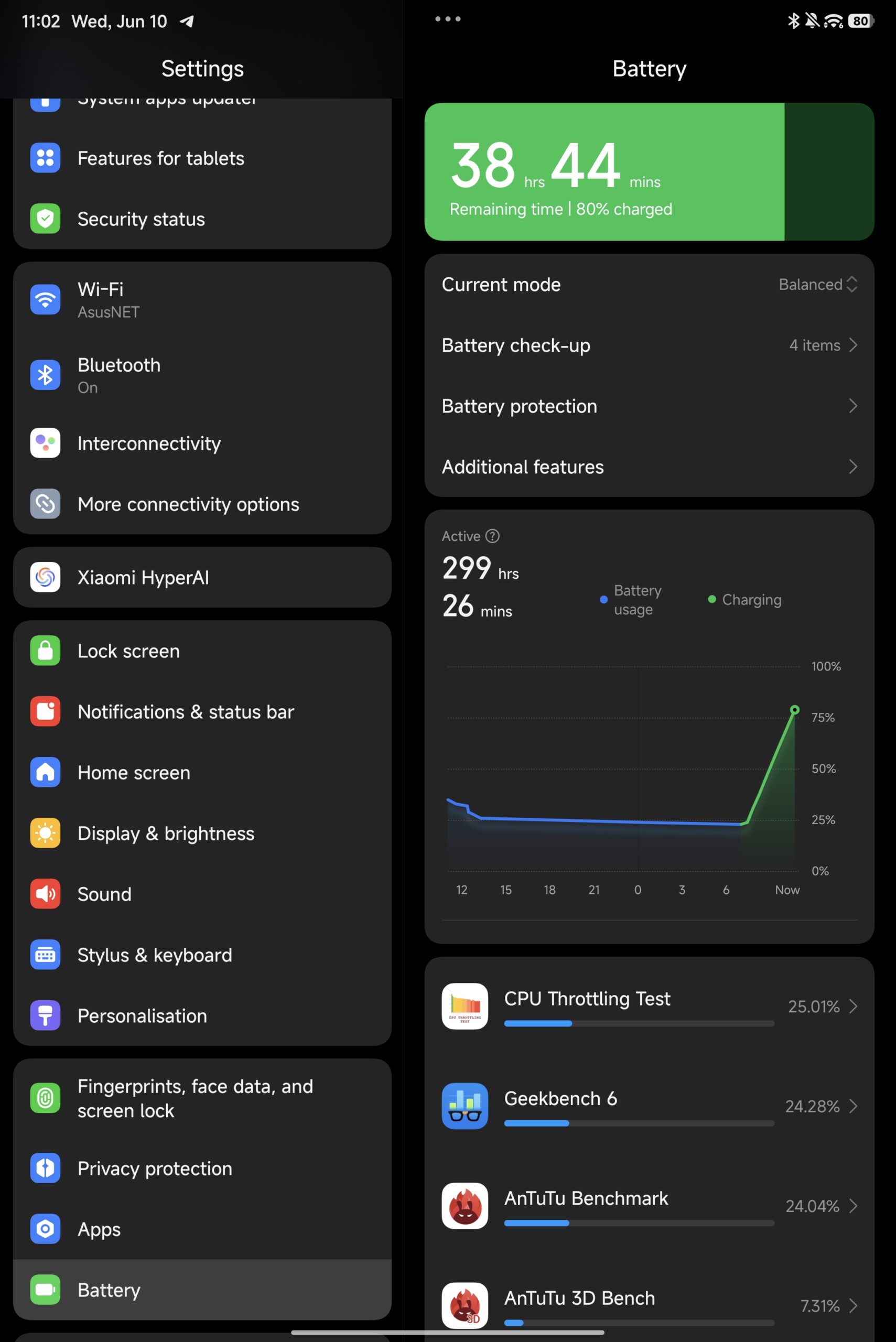
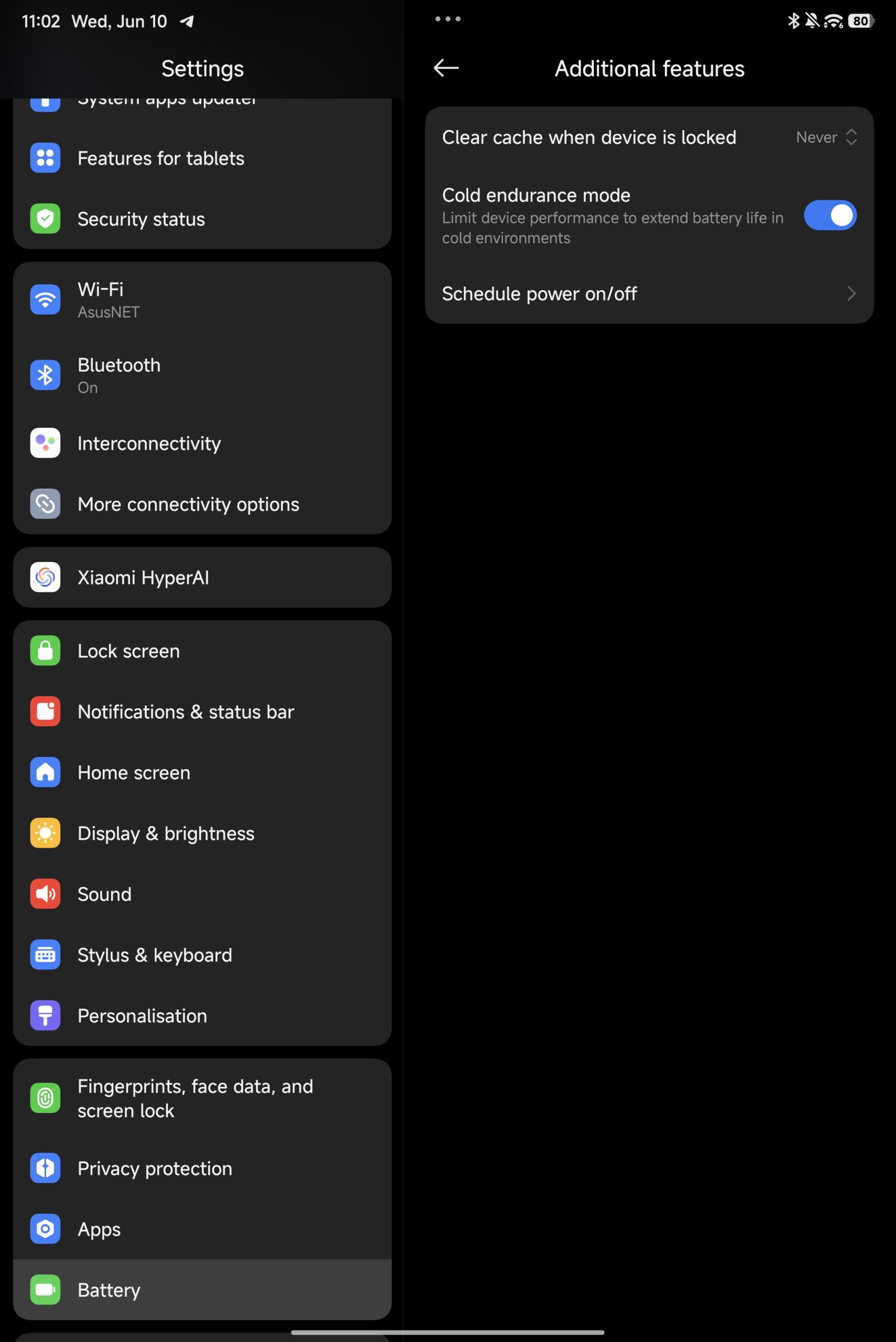
The Xiaomi Pad 8 Pro is equipped with a 9200 mAh battery. In mixed usage (web browsing, video playback, document work, and some gaming), the tablet comfortably lasts a full working day with some reserve. With lighter usage, it can easily last up to two days on a single charge.

The 67 W charging support allows the tablet to go from 0 to 100% in roughly 1.5 hours. It also supports 22.5 W reverse wired charging, meaning it can be used to charge a smartphone or headphones from the tablet itself. In practice, this feature is not used very often, but it is a useful addition when needed.
Read also: Mijia Smart Audio Glasses Review: Stylish Accessory or Headset Replacement?
Competitors
There are, of course, competitors. One example is the Samsung Galaxy Tab S10+ Wi-Fi (12/256 GB). It features a 12.4-inch Dynamic AMOLED 2X display with a 120 Hz refresh rate, IP68-rated protection, and an S Pen included in the box. In terms of performance, it is powered by the Dimensity 9300+, which is noticeably behind the Snapdragon 8 Elite. At the same time, the Galaxy Tab S10+ is priced higher, at around $760.

The OnePlus Pad 3 (12/256 GB Wi-Fi) is priced at around $624. It also uses the Snapdragon 8 Elite, and in its base configuration it even offers more RAM – 12 GB compared to Xiaomi’s 8 GB. Additionally, the OnePlus features a larger 13.2-inch display with a 144 Hz refresh rate. On the other hand, the Xiaomi Pad 8 Pro is more compact, lighter, and more affordable. In the end, the choice between these two models depends on priorities: a larger display versus a more balanced combination of price, size, and overall practicality.

If we look at Apple’s side, the iPad Air 11″ with the M4 chip in the 128 GB configuration is priced at $772. The M4 is currently one of the most powerful mobile chips, and iPadOS offers a mature ecosystem of professional applications for creative work, video editing, and graphics. However, this comes at a higher cost. The base configuration is limited to 128 GB of storage compared to 256 GB on the Xiaomi, the display is capped at a 60 Hz refresh rate, and charging speeds are noticeably slower.

Conclusions
The Xiaomi Pad 8 Pro gives the impression of a device where priorities are set in a balanced and deliberate way. It does not try to stand out through unconventional solutions or experimental features, but instead focuses on powerful hardware, a solid build, good audio, fast charging, and a strong performance reserve that should remain relevant for several years.

Of course, there are compromises, and they are worth noting. The thin chassis forces the chipset to reduce frequencies under sustained heat, the IPS display in this segment still raises the usual question of why OLED is not used, and a charger is traditionally not included in the box. On top of that, there is no GPS or NFC.
In practice, however, most of these drawbacks are less critical. The initial performance headroom of the Snapdragon 8 Elite is large enough that even after throttling, it still provides smooth operation. The high-quality 144 Hz display without PWM delivers such fluid animations that, for most users, the difference compared to OLED becomes negligible.

With support for a stylus, a keyboard case, the Workstation desktop mode, and the preinstalled WPS Office suite, the tablet can act as a practical backup on the go and replace a laptop for most everyday mobile tasks.
Overall, the Xiaomi Pad 8 Pro leaves a very positive impression. It is a fast, well-built, and thoughtfully designed tablet with strong performance headroom, a good display, and broad capabilities for both work and media consumption. If you are specifically looking for an Android tablet, this model is clearly worth considering.
Read also:
- JOYROOM PODIX 140W Review: Compact 5-Port GaN Charger for a Modern Workspace
- Motorola Edge 70 Fusion Review: Slim Mid-Range Smartphone with 7000 mAh Battery
- End of an Era: The Retirement of the American AV-8B Harrier II
- Moto Sound Flow Speaker Review: Portable, Mature Sound Profile
Where to buy Xiaomi Pad 8 Pro