





© ROOT-NATION.com - Use of content is permitted with a backlink.
From January 1, the Roam Like at Home principle has effectively come into force for Ukrainians in European Union countries. Below is a breakdown of how it works and what to be aware of.
Read also: All analytical articles on Root Nation
TABLE OF CONTENTS:
Ukrainian Mobile Services in the EU: Roaming Without Borders
Ukrainian subscribers in EU countries can now use mobile calls, mobile internet, and SMS at the same rates as in Ukraine, without traditional roaming surcharges. For millions of Ukrainians abroad, this is not a minor technical adjustment or a travel-related convenience. It represents a practical step toward Ukraine’s integration into the EU internal market, specifically in the digital and telecommunications domain. Here, integration is reflected not in declarations or memoranda, but in everyday use: making a call home, using navigation, replying to messages, or working online without the risk of receiving an unexpectedly high bill at the end of the month.
This represents a fundamental change in how mobile services are treated. Ukrainian SIM cards effectively cease to be considered “foreign” within the European Union. Calls, SMS, and mobile data across all 27 EU member states operate under the “like at home” principle – without the need to activate special roaming packages, without hidden restrictions, and without the constant need to check account balances after each network connection.

In practical terms, this marks the first time Ukraine has been integrated so deeply into the EU’s single digital space at the level of everyday consumers rather than through isolated projects. What was previously considered a privilege reserved for EU citizens is now becoming a routine standard for Ukrainians as well. It is through such seemingly small details – tariffs, SIM cards, and the familiar network signal on a smartphone screen – that European integration moves from abstraction to a tangible reality experienced on a daily basis.
Read also: Silicon–Carbon (Si-C) Batteries: An Overview of a New Trend in the Smartphone Market
What Changed
The decision to include Ukraine in the Roam Like at Home area was neither spontaneous nor a matter of political improvisation. It is the result of a long and technically complex process that took several years and largely went unnoticed by the general public. Ukraine has gradually aligned its electronic communications legislation with EU standards, covering areas such as the regulatory framework, competition principles, consumer protection, and tariff transparency. In parallel, mobile operators engaged in extensive negotiations on network interoperability, pricing models, traffic volumes, and inter-operator settlement mechanisms.
After the start of the full-scale war in 2022, the European Union and mobile operators introduced temporary and voluntary preferential roaming arrangements for Ukrainians. For millions of people forced to relocate abroad, this was a critical measure that allowed them to stay connected without immediate financial strain. However, these arrangements were exceptions rather than a permanent solution. They required regular extensions, offered a limited scope of free or discounted services, and varied significantly depending on the country and the operator involved.
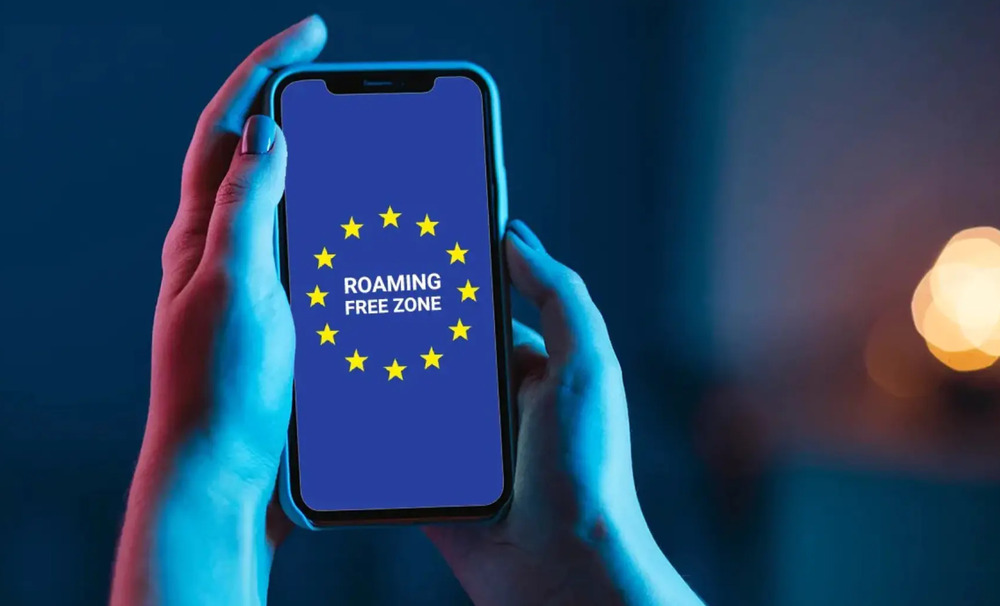

From January 1, this system of temporary arrangements is replaced by a fundamentally different approach: the systematic and legally закреплене inclusion of Ukraine in the European roaming area. This is not a goodwill gesture or another extension of preferential terms, but a full alignment with the rules of the EU internal market in the telecommunications sector. In effect, Ukraine has become the first country outside the European Union and the European Economic Area to gain access to the full Roam Like at Home regime.
This decision goes far beyond the introduction of more convenient tariffs for subscribers. It reflects a level of trust in Ukraine’s regulatory environment, confirms technical and legal compatibility with the European market, and sets a precedent that until recently would have seemed unlikely. Ukraine is, for the first time, integrating into one of the core segments of the EU internal market not through special exemptions, but under the same general rules – this is where the strategic significance of the decision lies.
Read also: What to Expect in the World of Technology in 2026
How It Works in Practice
For the average user, these regulatory decisions, inter-operator agreements, and years of negotiations translate into a very simple and largely invisible experience. There are no major announcements or “fine-print instructions.” A Ukrainian with an active Ukrainian SIM card, upon crossing the border into any of the 27 EU member states, will not notice the transition into roaming in its traditional sense.
In practical terms, this means that subscribers can:
- Make calls under their standard domestic tariff, without higher per-minute rates and without roaming surcharges for incoming or outgoing calls
- Send SMS messages without additional charges, under the same conditions as in Ukraine
- Use mobile internet within the limits of their tariff plan – for navigation, messaging apps, work-related tasks, banking applications, and online services
No separate activations, manual settings, or “roaming buttons” in operator apps are required. Roaming works automatically once the phone registers on a European operator’s network, and the user’s tariff remains the same as at home. Essentially, the smartphone behaves as if the subscriber has simply moved from one region in Ukraine to another.

This changes the very logic of using mobile services abroad. There is no longer a need to buy local SIM cards, search for Wi-Fi, or constantly monitor data usage for fear of unexpected charges. Mobile connectivity ceases to be a source of stress and returns to being a basic infrastructure service – just as familiar as electricity or access to water.
Importantly, this rule works both ways. Subscribers of European mobile operators can also use their services in Ukraine without roaming fees. This simplifies travel, business communications, the operations of international companies, humanitarian organizations, and journalists, as well as everyday communication between Ukraine and the European Union.
In summary, “Roam Like at Home” is not just a convenient service for tourists or displaced individuals. It is another indicator of Ukraine’s deeper integration into the European space at the level of everyday practices – where integration is felt not in political statements, but on a smartphone screen, without extra settings and without borders.
No Extra Charges, but Within the Rules
Despite the appealing and somewhat simplified idea of “no extra charges,” the Roam Like at Home regime does not mean the complete absence of rules. It operates within a clearly defined framework that has long been in place across the European Union and applies equally to all users, regardless of the SIM card’s country of origin. Ukraine does not receive special exemptions or additional restrictions – the rules are the same as those for EU citizens.
The Fair Use Principle
A key safeguard of the system is the so-called fair use principle. Mobile operators have the right to intervene if a SIM card is used predominantly or exclusively abroad, rather than in the country where it was purchased and registered.
It is important to note that this does not apply to short trips, vacations, business travel, or even extended stays of several months in another EU country. The fair use mechanism is intended to prevent permanent residence abroad with little or no “home” usage in Ukraine. In such cases, the operator may issue a warning and, only if the rules are completely ignored, apply restrictions or minimal surcharges as defined by EU regulations.
Mobile Internet Limits
A separate consideration is mobile internet. For some plans – particularly those with large or “effectively unlimited” data packages – there may be a limit on the amount of traffic available for roaming without extra charges. This is standard practice across Europe and not specific to Ukrainian connections.
Once the set limit is reached, the operator may either reduce network speeds or apply a nominal additional fee for each megabyte used. Importantly, these conditions are not arbitrary: they are clearly regulated, transparent, and must be communicated to the subscriber in advance.
Read also: Windows as an Agentic Operating System: Current State and Future Prospects
Tariffs Remain Tariffs
The “Roam Like at Home” system does not change the basic tariff structure. If a plan in Ukraine includes a certain number of minutes, SMS, or gigabytes of mobile data, these allowances apply while in EU countries as well. This is not a universal unlimited plan or a “premium mode” for everyone, but a mechanism to equalize usage conditions regardless of borders.
The key point is that there are no extra charges simply for being in another EU country. Subscribers pay for their existing plan – and only for that. There are no hidden roaming surcharges, no sudden spikes in service costs, and no need to check each time how much usage abroad will cost.
In effect, “Roam Like at Home” does not eliminate rules – it replaces chaotic and expensive roaming with a predictable, transparent, and fair system. This is why the regime is considered one of the most tangible achievements of the EU single market and is now extended to Ukraine.
Read also:
- Breakthrough Development: Scientists Create Artificial Muscles Activated by Ultrasound
- What’s Wrong with AI Browsers?
Who Really Benefits
For Refugees and Temporary Relocators
For millions of Ukrainians living in EU countries since 2022, the “Roam Like at Home” regime is more than a convenience – it provides a tangible relief in everyday life. Keeping a Ukrainian phone number ensures continuous contact with family and friends, access to banking apps, government services, electronic documents, two-factor authentication, and messages from employers and volunteer organizations. All of these services, which have become critical infrastructure for survival and adaptation abroad in recent years, no longer require extra expenses or constant technical compromises.
The need to juggle multiple SIM cards, transfer accounts to other numbers, or repeatedly explain why a Ukrainian number is “out of service” effectively disappears. For people already living in uncertainty, this reduces a small but constant source of stress – one that accumulates from everyday practicalities.

For Frequent Travelers
Business trips, short journeys, regular border crossings, and transit through multiple EU countries are no longer logistical challenges. There is no need to purchase local SIM cards in advance, search for eSIM services, compare tariffs, or spend money on temporary roaming packages. A Ukrainian number works reliably in Berlin, Warsaw, or Rome – under a single plan and without additional conditions.
This is especially important for people who operate on the move: journalists, volunteers, drivers, consultants, and experts who travel between countries for practical reasons rather than tourism. Connectivity is no longer a variable – it becomes a reliable constant.
For Businesses and Freelancers
For businesses, small enterprises, and freelancers, stable mobile connectivity without a “roaming factor” means reduced costs and simplified processes where minor but systemic obstacles previously existed. Calls to clients, negotiations, access to corporate services, banking verifications, and work platforms are no longer tied to the country of residence.
Work between Ukraine and the EU becomes less fragmented even in the details: there is no need to change numbers for contracts, get confused with contacts, or explain to partners why connectivity is temporarily “more expensive.” Altogether, this reduces bureaucracy, increases predictability, and brings cross-border work closer to the standards of the EU single market.
Ultimately, “Roam Like at Home” functions not just as a telecommunications service, but as a tool for everyday normalization of life between Ukraine and the European Union – for those displaced abroad, for those constantly on the move, and for those maintaining economic ties across borders.
Read also: Explaining the Fourth Dimension in Simple Terms: Insights from a Renowned Physicist
Europe Without Roaming – In Everyday Details
Although it may seem purely technical at first glance, Ukraine’s integration into the Roam Like at Home zone extends far beyond the telecommunications sector. It is not just about tariffs, minutes, or gigabytes, but about changing Ukraine’s status within the European space at a practical, everyday level.
In effect, this means Ukraine’s inclusion in the EU’s internal digital market – one of the most regulated and complex segments of the single market. This is a space governed by strict rules on competition, consumer protection, pricing transparency, and mutual trust among regulators. Joining this space is a direct confirmation that Ukraine’s electronic communications system is recognized as compatible with the European framework – not just declaratively, but through actual, functioning mechanisms.
The second dimension is trust in Ukraine’s regulatory environment. “Roam Like at Home” would not be possible without confidence that rules are enforced, decisions are implemented, and the market operates according to clear and predictable standards. For the EU, this signals that Ukraine is capable not only of formally harmonizing its legislation but also of maintaining its long-term implementation.
The third, and perhaps most important, aspect is the practical impact experienced not by officials, diplomats, or negotiation teams, but by ordinary people. Integration stops being an abstract term in official documents and becomes a tangible experience that is easy to explain in simple terms: a Ukrainian phone number works across Europe without roaming charges.

In practice, this is another area where the border between Ukraine and the European Union becomes less noticeable – not on the map, but in everyday life. From January 1, “Roam Like at Home” for Ukrainians in the EU is no longer a temporary concession, an exception, or a gesture of solidarity – it becomes the norm. A Ukrainian number in Europe no longer means extra costs, complicated conditions, or constant tariff checks.
The decision has a tangible economic effect, reducing expenses for households, businesses, and mobile users. It carries social value by maintaining connections between people, families, and communities divided by borders. And it has symbolic significance as yet another confirmation that Ukraine is gradually integrating into the European space – not only politically, but in small yet meaningful daily details.
European integration is often perceived as a complex, distant political process with lengthy negotiations and conditions. Yet sometimes it appears remarkably simple: a phone in your pocket that works without roaming – no matter which EU country you are in. It is through these “simple” things that the sense of a shared space without borders begins to take shape.
Read also:
- Rare Earth Metal Situation: Whoever Controls the Resources, Rules the World
- How Chinese Companies Circumvent the US Ban on AI Chips
- How to Spot Fake Photos: New Challenges of the Digital Age

