





© ROOT-NATION.com - Use of content is permitted with a backlink.
Today, we’ll look at how to capture the Perseids with a smartphone camera – what you’ll need and how to set up your device for this type of shooting.
August nights are an ideal time to watch and photograph shooting stars. During this period, the Perseids take center stage in the night sky, known as one of the brightest and most recognizable meteor showers of the year.
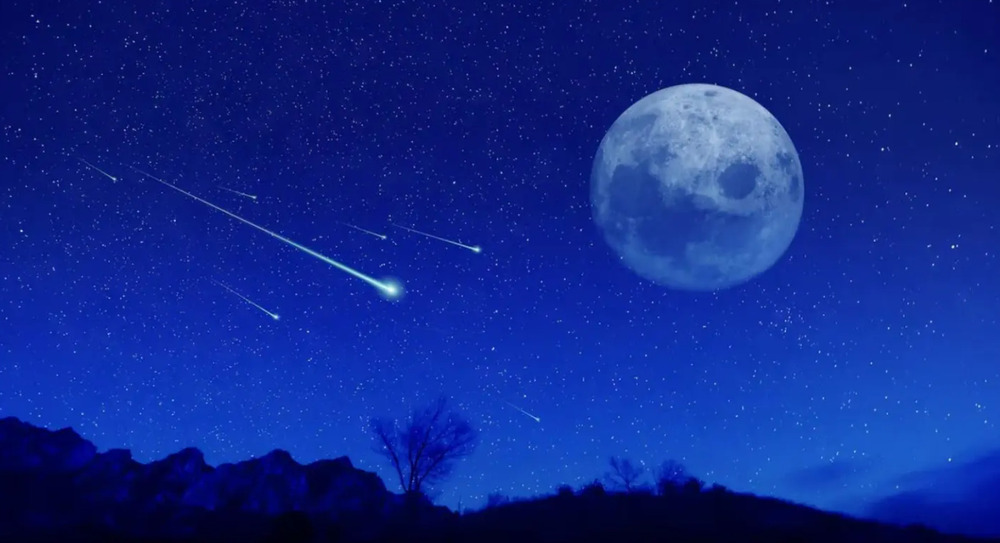
What exactly is this celestial event, where can you see it, and how can you capture its beauty with a camera or even a smartphone? Below, you’ll find practical tips to help you preserve the memory of this phenomenon in the form of striking photographs.
Read also: ІSex Robot Industry: New Rules in the Age of Technology
TABLE OF CONTENTS:
What are the Perseids?
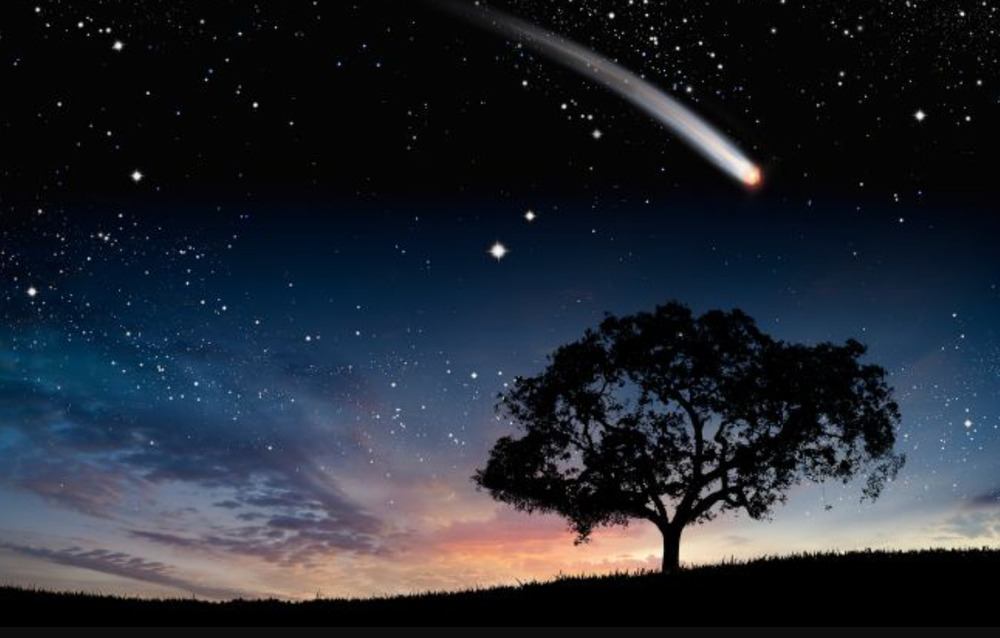
The “shooting stars” visible in August are actually tiny fragments of cosmic dust and rock left behind by the comet 109P/Swift–Tuttle. Each year, Earth passes through this trail of debris, and the particles, entering the atmosphere at speeds of up to 59 km/s, burn up and create bright streaks of light.
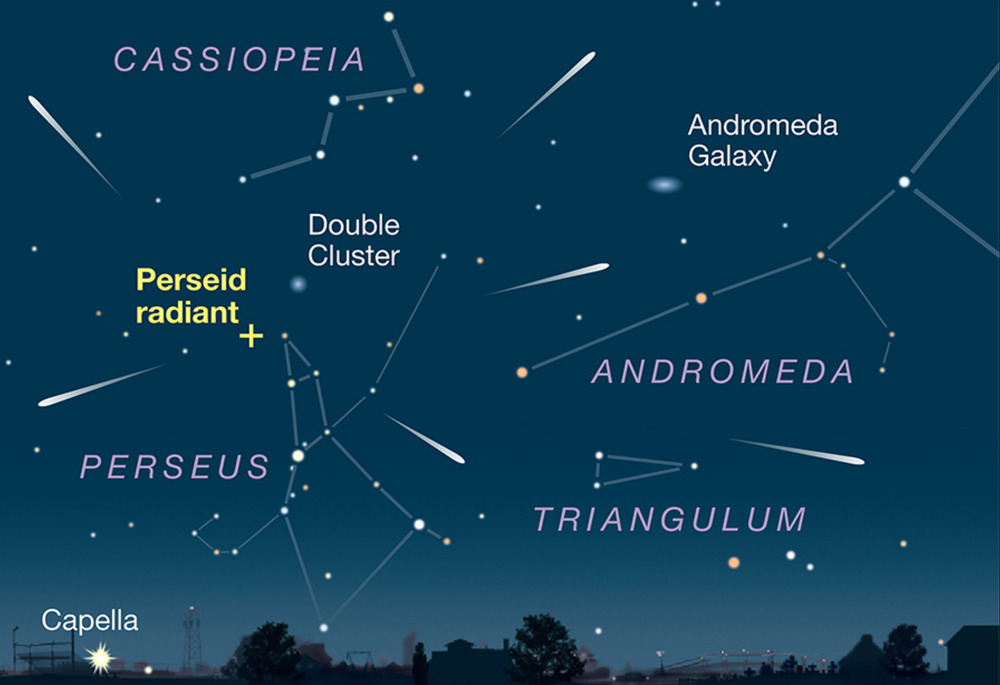
They are called the “Perseids” because the meteors appear to originate from a point in the constellation Perseus – a spot in the sky known as the radiant. The best viewing conditions are in dark areas, far from city lights, where the full depth of the night sky becomes visible.
Read also: ChatGPT-5 from OpenAI: What the New AI Model Can Do
Perseids 2025: when is the best time to watch them?
In 2025, the Perseid meteor shower will peak on the night of August 12–13. Under clear skies and away from urban light pollution, it’s possible to see up to a hundred meteors per hour at peak activity – a natural fireworks display without any pyrotechnics.
It’s worth noting that the Perseids can be observed not only on the peak night. The nights before (August 11–12) and after (August 13–14) also offer plenty of bright meteors. The shower remains active until August 24, but these mid-August dates provide the best chance to capture the most vivid bursts and long light trails against the dark sky.
Read also: Rare Earth Metal Situation: Whoever Controls the Resources, Rules the World
Where is the best place to observe the Perseids?
While it’s possible to watch the meteor shower from a balcony or a patch of grass near an apartment building, the real spectacle of the Perseids is best experienced far from the city, where the sky is untouched by artificial light.
A simple rule applies: the darker it is on the ground, the brighter it is in the sky. Cities produce too much artificial light – street lamps, signs, illuminated facades, light spilling from windows – all combining into a dome of light pollution that drowns out fainter stars and meteors. If your goal is not just to see but also to photograph the Perseids, head as far as possible from populated areas, to a place where the darkness is genuine and the stars shine without interference.
A useful tool for planning is the light pollution map (lightpollutionmap.info). On this map, blue areas mark true dark-sky spots with ideal conditions for night photography. Yellow and red zones indicate places dominated by artificial light, where the chances of capturing a striking image are minimal. The best locations are designated dark-sky parks – protected areas where artificial light is kept to a minimum, leaving the night to silence and stars.
Another important point is where to aim the camera. While meteors can appear across the sky, the Perseids seem to radiate from the constellation Perseus, currently located in the northeastern part of the horizon. If the night sky feels like an unlabeled map to you, try using a smartphone app like Google Sky Map or Stellarium (I personally use and recommend Stellarium).
Коли опинитеся на місці, є одне правило: жодних яскравих екранів і жодних поглядів на Місяць. Навіть короткий контакт із яскравим світлом “перезавантажує” акомодацію очей, і щоб знову роздивитися тьмяні зорі, знадобиться кілька хвилин. Тож збережіть темряву для себе і своїх знімків.
Read also: Motorola Moto Buds Loop Review: More Than Just a Stylish Accessory
How to photograph the Perseids – practical tips
Most of us now use smartphones for photography, so it’s natural to want to capture a shooting star with one. Just a few years ago, I would have advised against trying, as the results would likely have been disappointing. However, mobile cameras have improved significantly, and a skilled smartphone user can now capture decent shots of the Perseids or the night sky.
That said, don’t expect it to be as simple as photographing a cup of coffee or a cat on a windowsill. Also, keep in mind that smartphone images will differ noticeably from those produced by traditional cameras with larger sensors and fast lenses. In professional astrophotography, physics plays a critical role, and smartphones have their limitations in this regard.
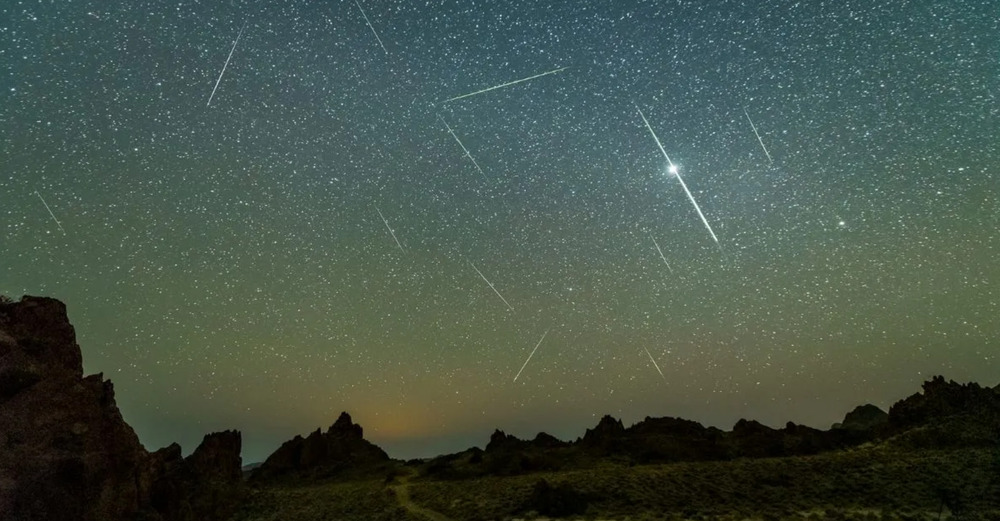
The ideal option for night sky photography is even an affordable mirrorless camera with manual controls and interchangeable lenses. But if you don’t have one on hand, that’s not a problem. It’s still worth trying – modern smartphones with the right settings and a tripod can deliver surprisingly good results. Sometimes, working within limitations pushes us to be creative, which is part of the experience.
Switch to manual mode
Start by enabling the manual (Pro) mode in your camera app. Most modern smartphones have this feature. If your device doesn’t include it by default, third-party apps can help you adjust settings manually.
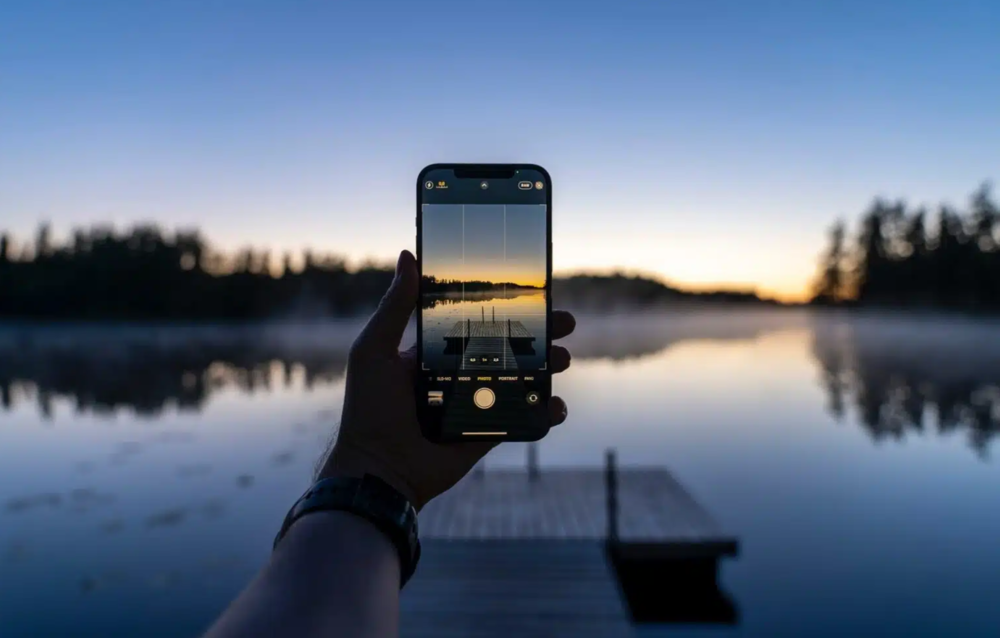
Manual mode lets you control key settings such as shutter speed, ISO sensitivity, and in some cases, aperture. For example, certain smartphones even allow you to adjust the aperture value. While this feature is rare on smartphones, it’s quite common on traditional cameras.
Forget about shooting handheld. A tripod is a must
If you plan to mount your smartphone on a tripod, make sure the holder is sturdy and doesn’t wobble even with a light breeze. Inexpensive “selfie tripods” usually aren’t suitable, as they’re too flimsy for serious night photography.
Capturing the Perseids as long light trails requires a long exposure, ideally 20–30 seconds or more. With exposures this long, even the slightest camera movement can ruin the shot. To avoid this, use a remote shutter release – via a smartwatch, Bluetooth remote, or at least the camera’s timer set to a 5–10 second delay – to prevent shake caused by pressing the shutter button.
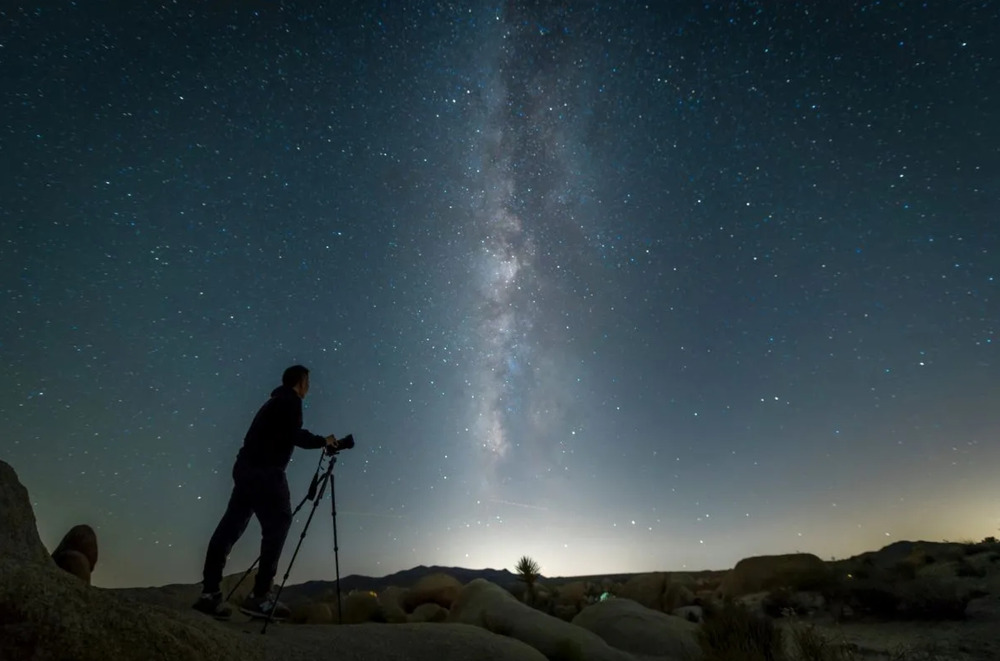
One more detail: many modern smartphones, cameras, and lenses feature image stabilization. This technology is helpful in most cases, but when the camera is mounted on a tripod, stabilization can actually cause slight movements that blur the image. For traditional cameras and lenses, it’s best to turn off stabilization in this situation. However, on smartphones, it’s usually better to leave it on, as their algorithms handle stabilization differently.
Read also: How to Spot Fake Photos: New Challenges of the Digital Age
A bright lens is essential
Night sky photos generally look best in wide-angle formats. If you’re shooting the Perseids with a camera that has interchangeable lenses, an ideal focal length is between 10 and 24 mm. This range captures a large portion of the sky and creates a sense of space.
It’s best to use a wide aperture – around f/2.8 or even f/1.4 if your gear supports it. A larger aperture lets in more light, increasing your chances of capturing even the fainter meteors.
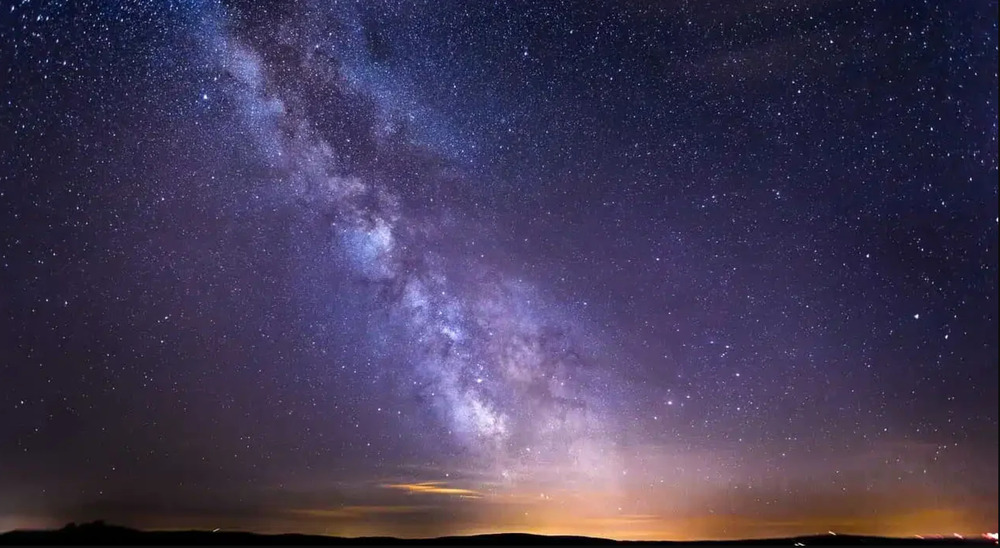
When it comes to smartphones, using the ultra-wide-angle lens is usually a mistake. These modules tend to have “darker” apertures (higher f-numbers), which significantly reduces the quality of night shots. For photographing the Perseids, stick to your phone’s brightest lens – typically the main camera with an aperture around f/1.8, f/1.6, or f/2.2. Remember: the lower the f-number, the more light the lens lets in, which improves results in low-light conditions.
Read also: Cryptography: What It Is and How It Works
Be careful that there is no noise in the photo instead of shooting stars
Next, adjust the ISO sensitivity. The general rule is straightforward: higher ISO makes it easier to capture a shooting star, but the trade-off is increased noise and reduced detail. On modern cameras, working safely within an ISO range of 1600 to 3200 is common.
For smartphones, it’s more complicated – high ISO levels quickly degrade image quality. A good starting point is ISO 800, but it’s best to experiment with several settings. Take test shots at different ISO values and choose the balance where noise doesn’t overly affect the image.
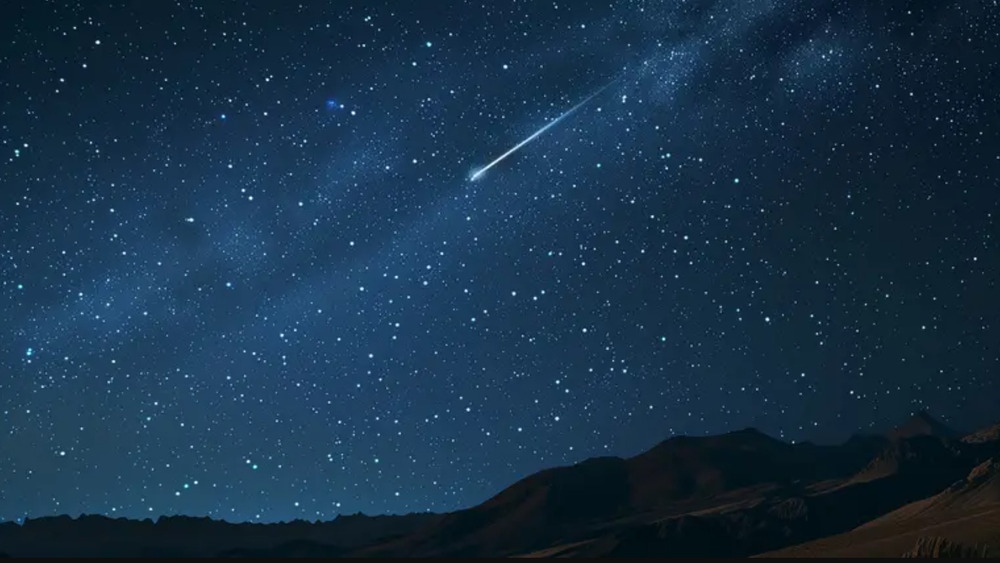
Manual focus is preferred, though it’s not always easy to achieve. One reliable method is to focus on the Moon first, then switch off autofocus to prevent the camera from shifting focus during the shoot.
For more impressive Perseid photos, consider using an intervalometer – a feature that automatically takes shots at set intervals. Many cameras have this function, and it’s also available on some smartphones and remote control apps. Using an intervalometer allows you to capture a series of images that can later be combined into a single photo, showing multiple shooting stars that wouldn’t appear in just one exposure.
Read also: How to Use Microsoft PowerToys
And one more thing…
August nights can be chilly, especially outside the city where temperatures may drop to just above freezing. Dress warmly and consider bringing a blanket or a thermos with a hot drink.
Don’t forget the technical side: spare memory cards or enough free space on your smartphone, as well as extra batteries or power banks. There’s nothing worse than realizing in the middle of a remote night that your storage is full or your only battery is dead.
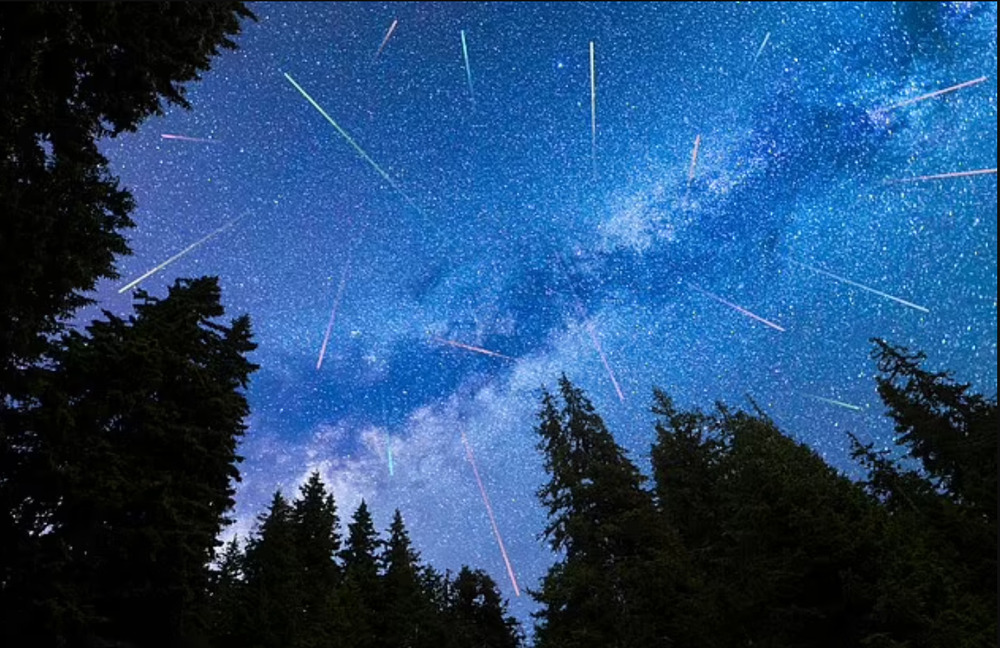
One small comfort to consider is a reclining chair or any comfortable lounge seat. This way, you can spend hours watching the sky without straining your neck and simply enjoy the experience. Even if the photos don’t turn out this time, you’ll still have vivid memories of those silver streaks quietly cutting through the darkness of an August night.
The Perseids are the perfect excuse to get out of town and enjoy new experiences.
Chasing “shooting stars” can be a great reason to leave behind the noise and lights of the city, head to a place where the dark sky reveals its depth, and spend a night in nature’s company. It’s not only an opportunity to capture striking images but also a chance to break from routine, embrace a sense of adventure, and simply enjoy the quiet beneath millions of lights overhead.
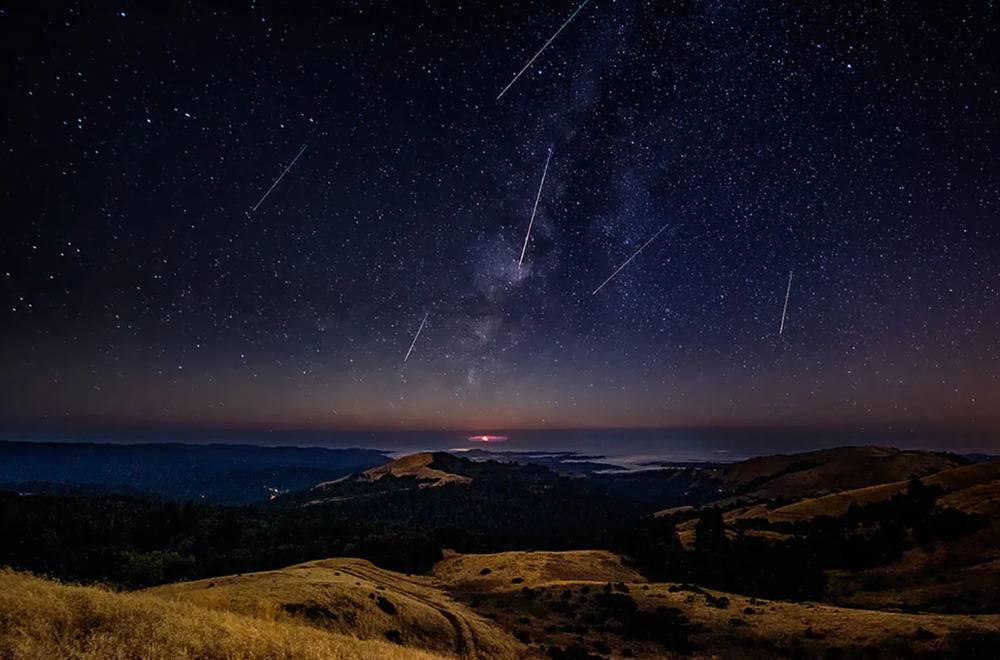
This is what I appreciate about photography. It motivates you to go places you might not visit otherwise. It pushes you out of your comfort zone, makes you wake up in the middle of the night, endure the cold wind, and wait for hours. In return, it offers moments that live on in your memory far longer than any photo in an album.
Read also:
- The Third World War of Browsers: Has It Already Begun?
- OpenAI’s New Superpower: What Is a ChatGPT Agent?
- AI in Medicine: Is the Future Already Here?

