© ROOT-NATION.com - Use of content is permitted with a backlink.
If you follow Japanese game designer Hideo Kojima on Instagram, you likely noticed that early last month he teased a set of unusual white devices, one of which clearly featured the ASUS ROG logo. The reveal referred to the ROG KJP collaboration – a “Ludens”-themed series created in partnership with Kojima Productions, with visual design led by Yoji Shinkawa, known for his character work on Metal Gear and Death Stranding.
Read also:
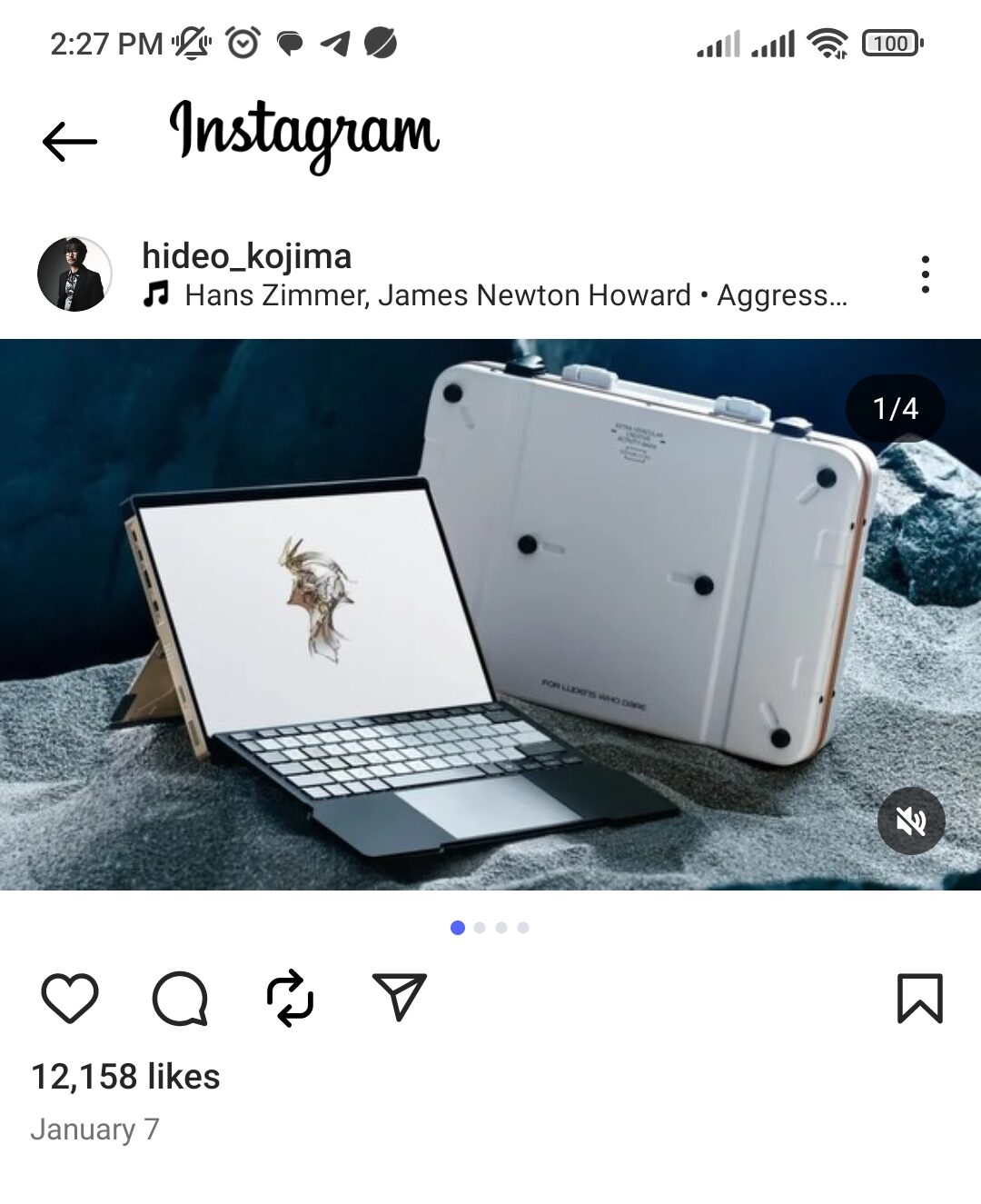

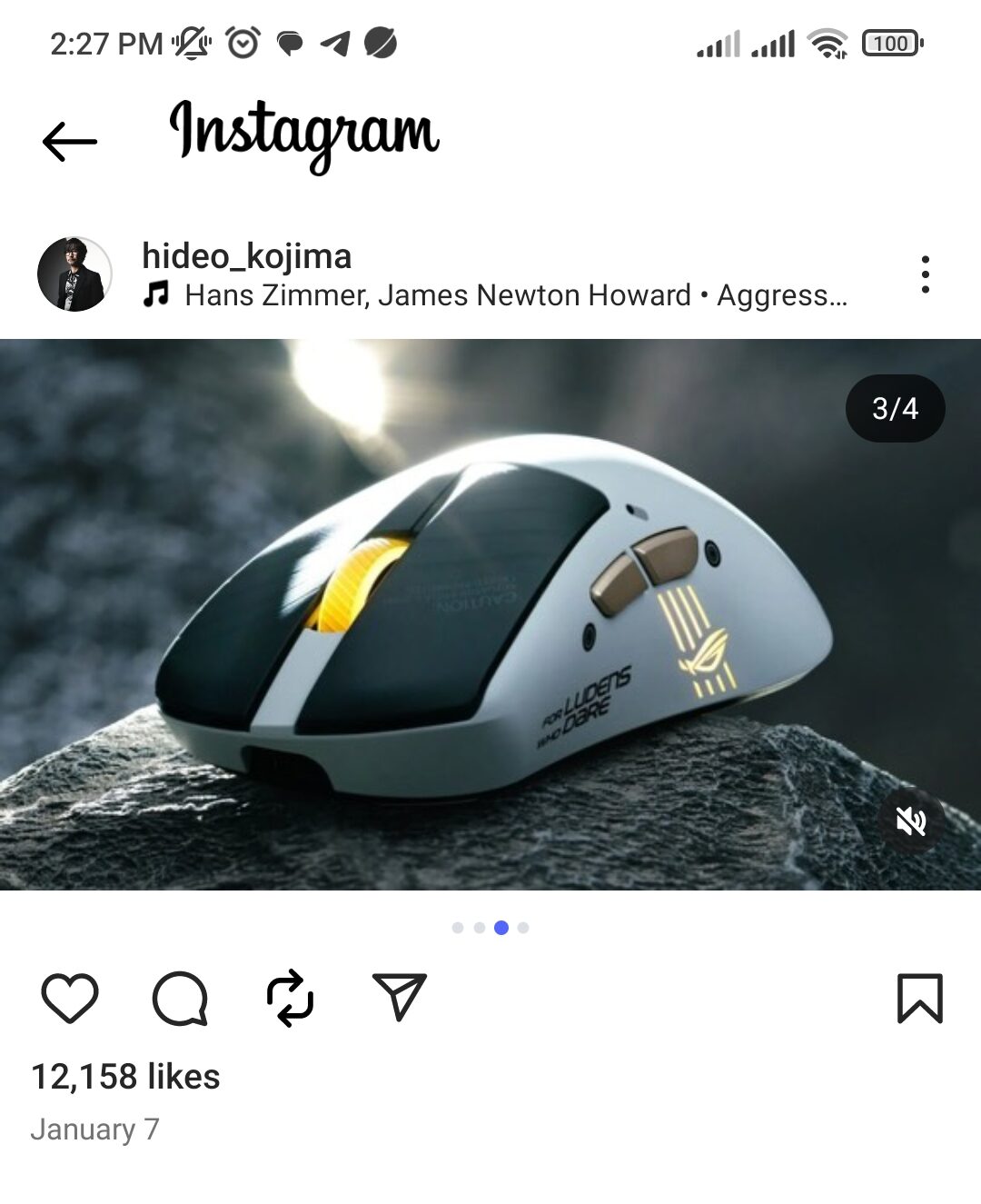

The series includes the ROG Flow Z13-KJP convertible laptop, the ROG Delta II-KJP headset, the ROG Keris II Origin-KJP mouse, and the ROG Scabbard II XXL-KJP gaming mat. These devices have only recently become available for purchase, making a review timely. In this review, we will examine the new products in detail, with particular attention to their design. Technically, the devices have not changed significantly – essentially, I have already covered this headset and mouse in previous discussions. The situation is different for the laptop and the mat, which will be addressed in detail in their respective sections.
TABLE OF CONTENTS:
ROG KJP Design Concept: Homo Ludens
Hideo Kojima is widely recognized as one of the most influential game designers, known for his long tenure at Konami and for creating the Metal Gear series. In 2015, Kojima left Konami amid a public dispute with management, before completing Metal Gear Solid V: The Phantom Pain, which resulted in significant content being cut and a final chapter that many considered unfinished. Around the same time, Sony provided support and resources for Kojima to establish his independent studio, Kojima Productions, granting him both budget and creative freedom. This studio produced Death Stranding, which also gained significant attention. The studio’s mascot, Ludens, is depicted in a futuristic spacesuit, a concept designed by Yoji Shinkawa, who also contributed to the character designs in the Metal Gear series and Death Stranding.

The Ludens concept served as the basis for the ROG KJP series design. But who is Ludens, and what does he represent? Visually, Ludens appears as a figure in a high-tech Extra-Vehicular Activity (EVA) Creative Suit. He is often depicted holding a flag bearing the Kojima Productions logo. The name references the Latin term Homo Ludens, meaning “playing human.” The suit itself symbolizes the evolution of games beyond mere entertainment, positioning them as immersive worlds for exploration facilitated by technology. The ROG KJP series is designed with a similar purpose in mind, acting as equipment for navigating and interacting with this “digital space.”

As previously noted, the series comprises several devices: a convertible laptop, a headset, a mouse, and a gaming mat, all sharing a unified design language. Essentially, with the exception of the tablet, these devices are redesigns of ASUS flagship models released last year. From a technical standpoint, they remain largely unchanged; therefore, this review does not include detailed specifications or performance tests – instead, references to earlier reviews are provided. The primary focus here is on the new design and the modifications introduced through this collaboration.

Read also:
- ASUS ROG Herculx Review: ARGB GPU Support Bracket
- ASUS ROG Gladius III Core Mouse Review: Asymmetric Design, Hot-Swap Switches, New Switch Technology, and Gear Link
ROG Scabbard II XXL-KJP Gaming Mat
It makes sense to start with the basics – the mat – since it is likely the first item you would place on your desk after acquiring the ROG KJP set. The ROG Scabbard II XXL-KJP can essentially be seen as a redesign of the previous ROG Scabbard II Arctic Grey XXL. This particular mat has not been covered in my reviews before, so it will be examined in more detail here.
The mat is supplied in a branded cardboard box featuring a design that differs from the typical ROG series packaging. The first notable change in the ROG KJP series is the packaging design. All devices in the series, with the exception of the tablet, come in minimalist black-and-white boxes featuring the Kojima Productions and ROG logos, along with other design elements.


The mat itself is an XXL-sized gaming surface (900 × 400 mm) featuring a nano-coating that repels water, oil, and dust.

The surface features a large-scale print of the Ludens suit along with the Kojima Productions and ROG logos. Special attention is given to the slogan: the well-known ROG motto, “For Those Who Dare,” has been adapted for this collaboration as “For Ludens Who Dare.”
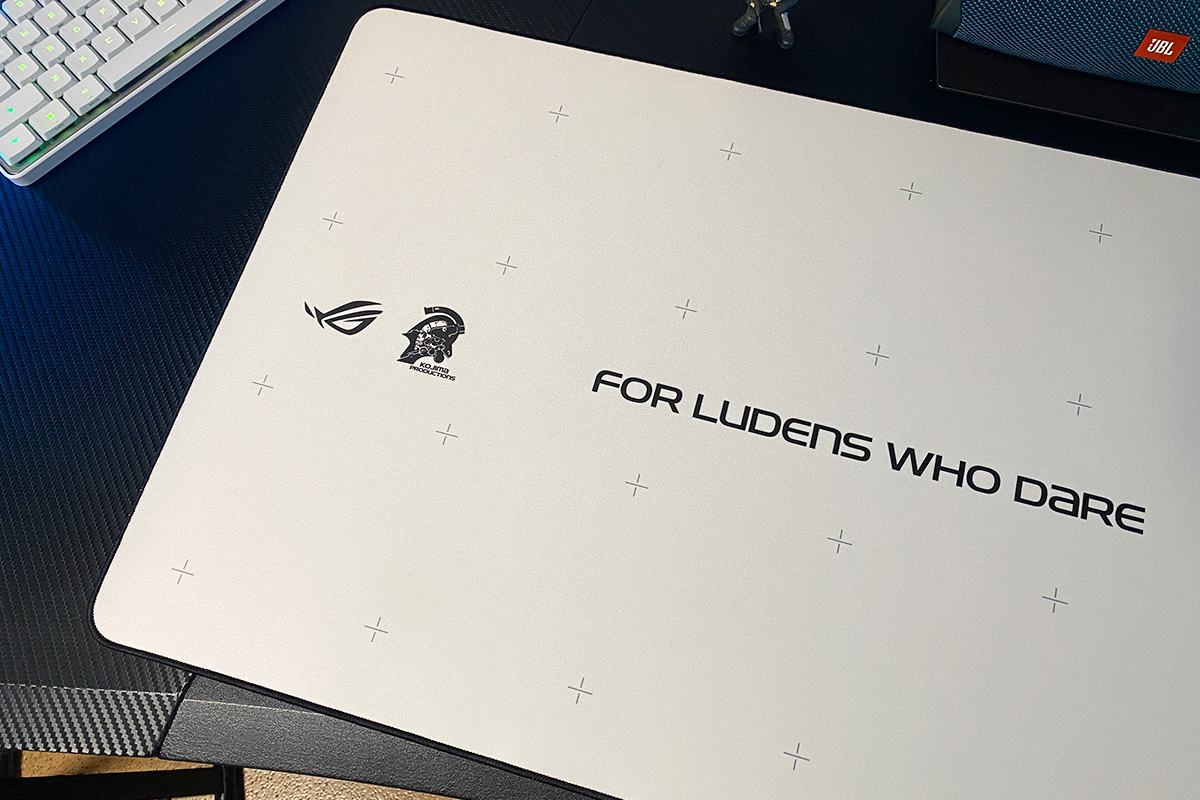
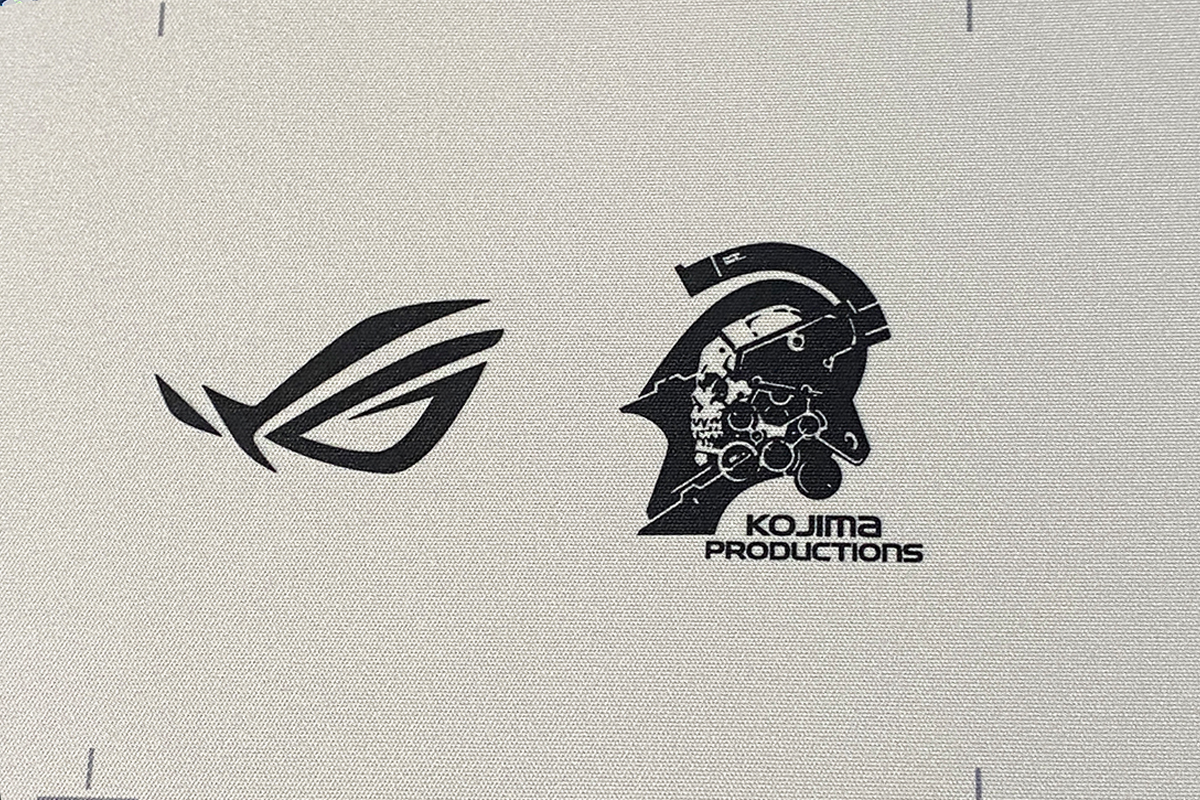
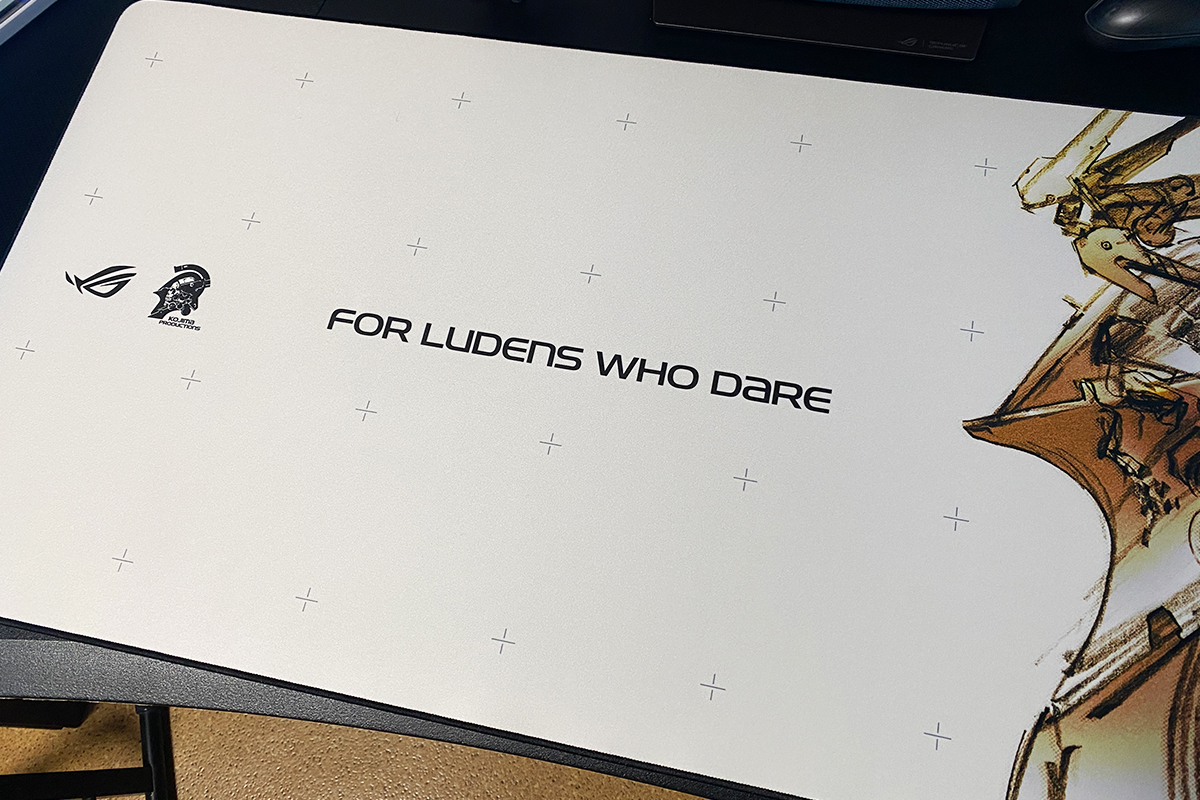
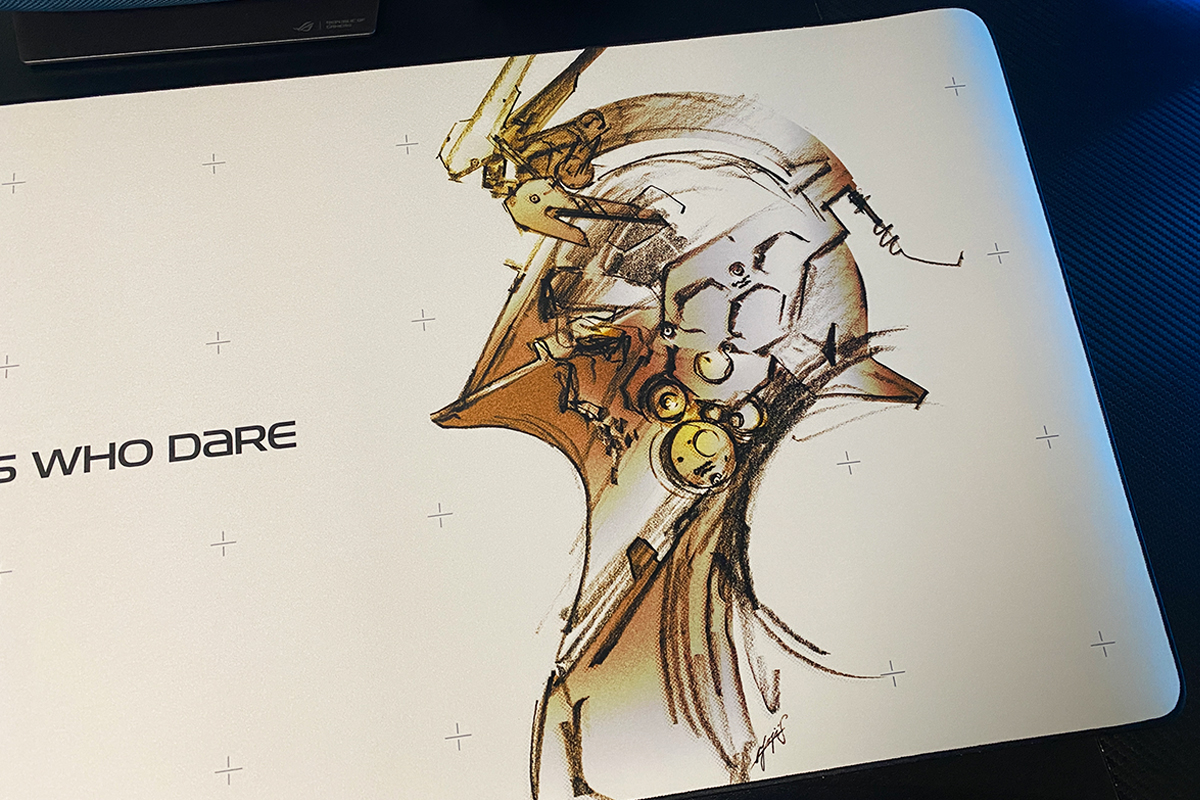
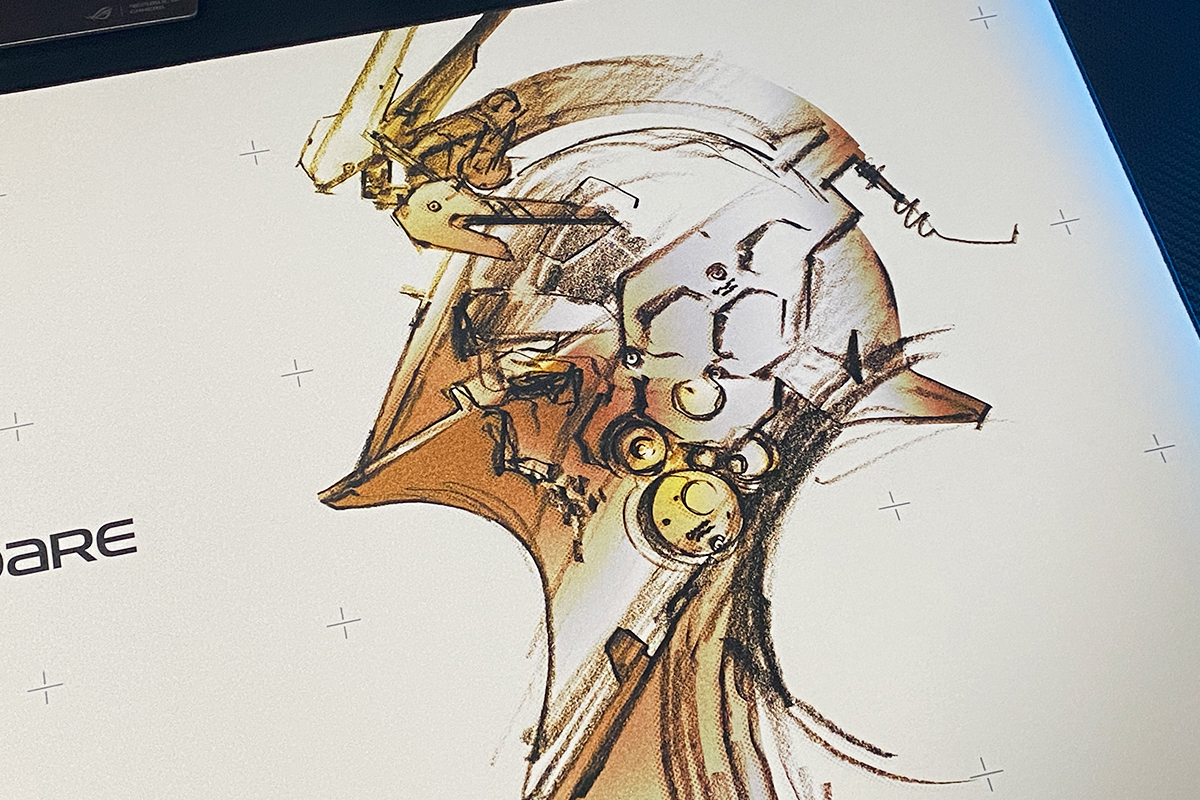
As with the previous model, the mat’s textile surface features a specialized coating that not only provides protection but also makes it approximately 1.5 times smoother compared to standard fabric surfaces. At the same time, it maintains sufficient friction for precise control. In practical terms, the ROG Scabbard II XXL-KJP functions as a hybrid Speed/Control surface.


The mat has a thickness of 3 mm, consistent with the previous model. Along the edges, it features narrow, low-profile stitching, which ASUS states is 12% less raised than comparable models and positioned closer to the surface. This design reduces friction and enhances comfort during extended use. In practice, the edge stitching is barely noticeable, causing no rubbing or pressure on the hand.


The mat’s base is rubberized and features a textured pattern. In practical use, it sits firmly on the desk and is virtually impossible to move accidentally.

In terms of user experience, the mat performs very well. Its smooth surface allows any mouse to glide effortlessly while providing a comfortable resting place for the hand. At the same time, it offers a good level of control, with enough friction to slow the mouse when needed. Overall, as noted earlier, the ROG Scabbard II XXL-KJP is a solid Speed/Control mat, now presented in an exclusive design.

Regarding pricing, the new mat is listed on the official ASUS store at $79 / €67, approximately $23 / €20 higher than the previous model. At the time of this review, launch discounts were available, reducing the price by $16 / €14. Acquiring the mat at this discounted rate represents a reasonable value for a premium gaming surface with a limited-edition design. At full price, it is somewhat expensive, though still modest compared to the cost of other devices in the KJP series. With that, we can move on to the other products.

Read also:
- Review of ASUS ROG Harpe II Ace and ROG Sheath II XXL: An Esports Mouse and Gaming Mat with Cooling Surface
- ASUS ROG Strix Scope II X Keyboard Review: Hot-Swap Support, Clean Design, and an Accessible Price
ROG Delta II-KJP Gaming Headset
The next item in terms of packaging size is the gaming headset. Similar to the mat, the headphones come in an updated black-and-white box.


Essentially, the ROG Delta II-KJP is a redesign of the original ROG Delta II flagship model, which was reviewed last year. In this updated version, only the design has changed. Technical specifications, included accessories, and software features remain the same. Consequently, the focus here will be on the new design, with other aspects addressed briefly.
The package contents remain unchanged – as in the basic version, it includes:
- headset
- detachable microphone with windshield
- set of replacement ear pads made of breathable fabric
- 2.4 GHz RF wireless adapter
- USB-C to USB-A adapter
- 1.5 m USB-C to USB-A charging cable
- 2 m 3.5 mm cable
- user manual
- warranty documentation
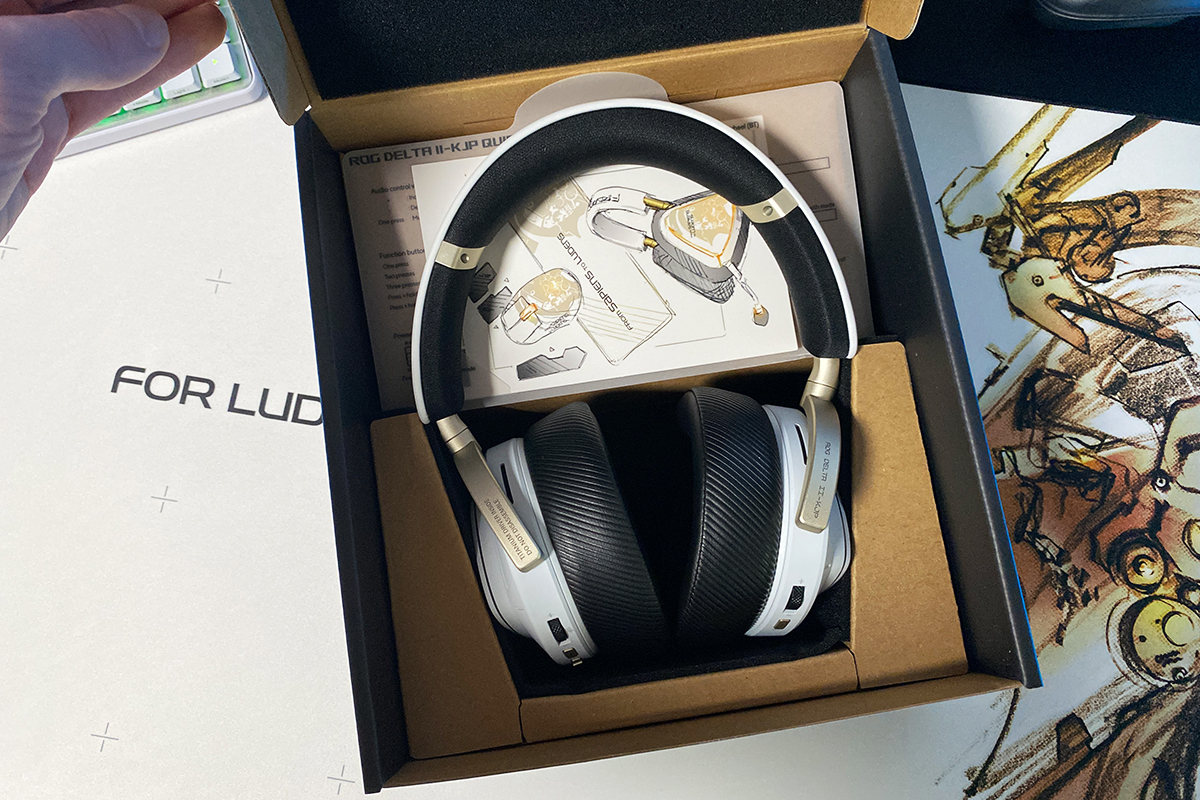
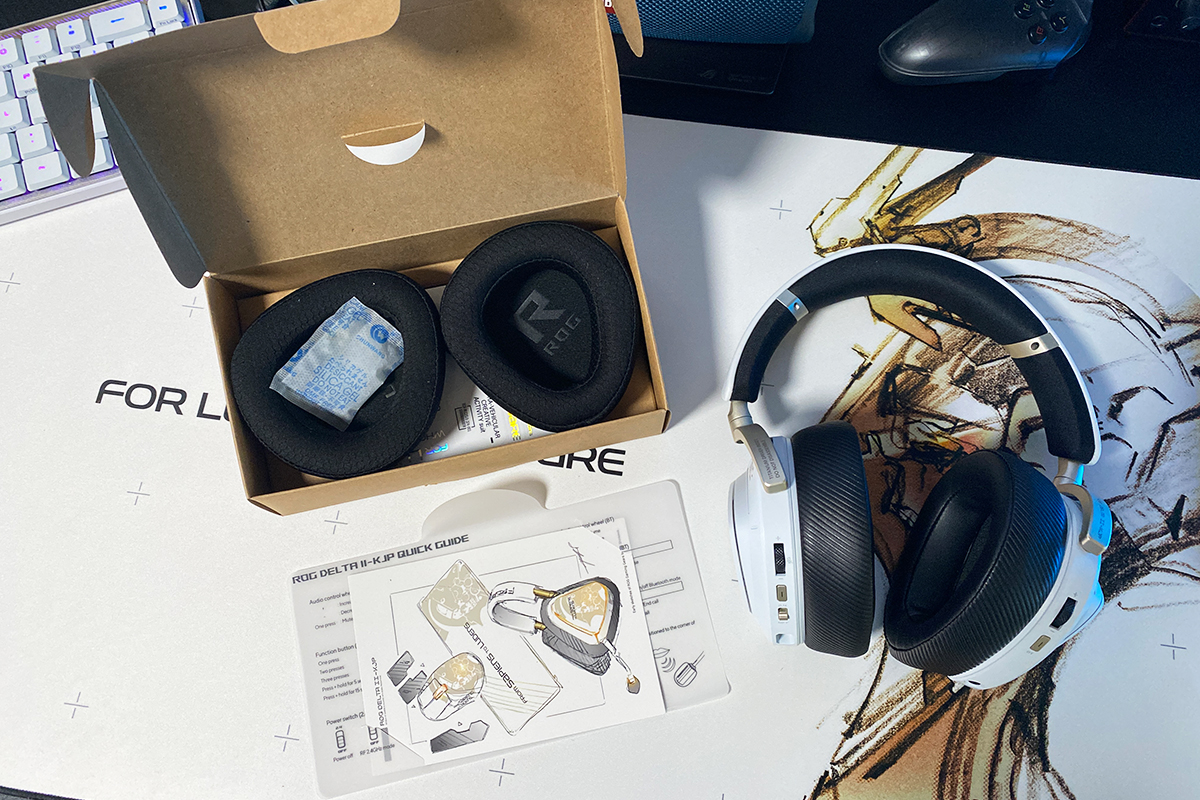
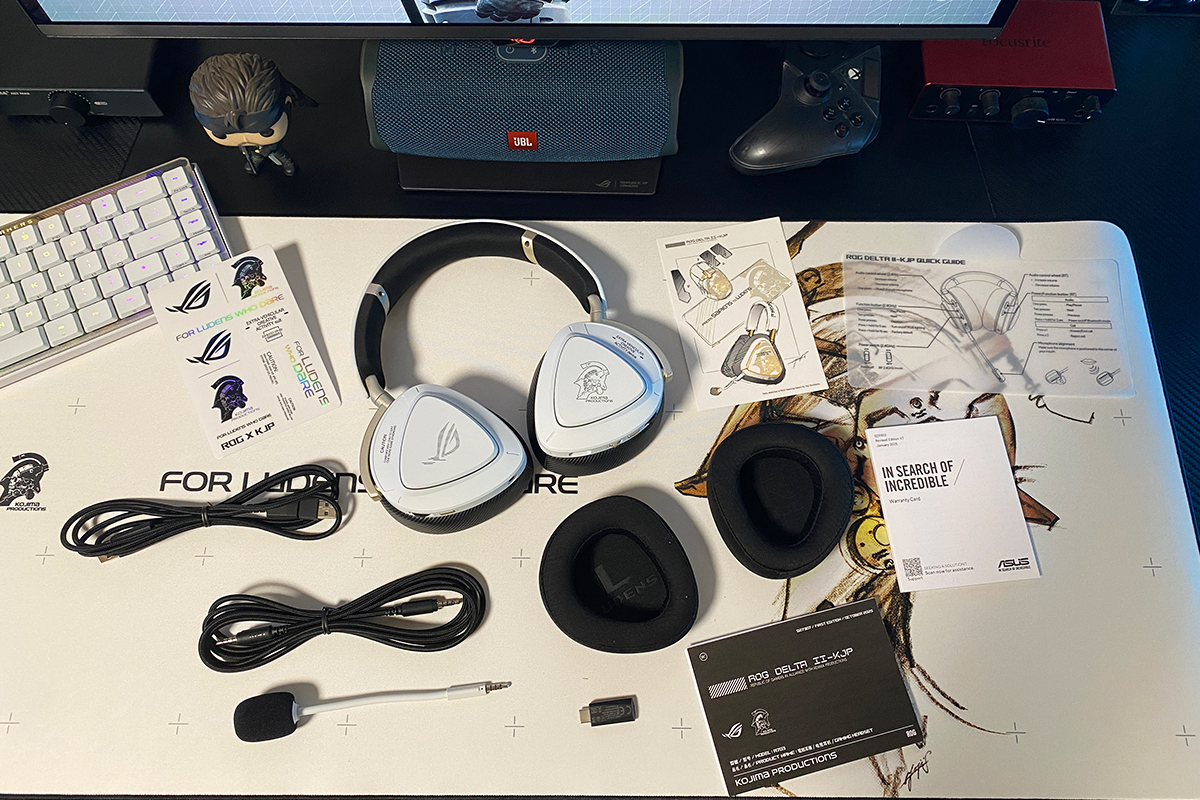
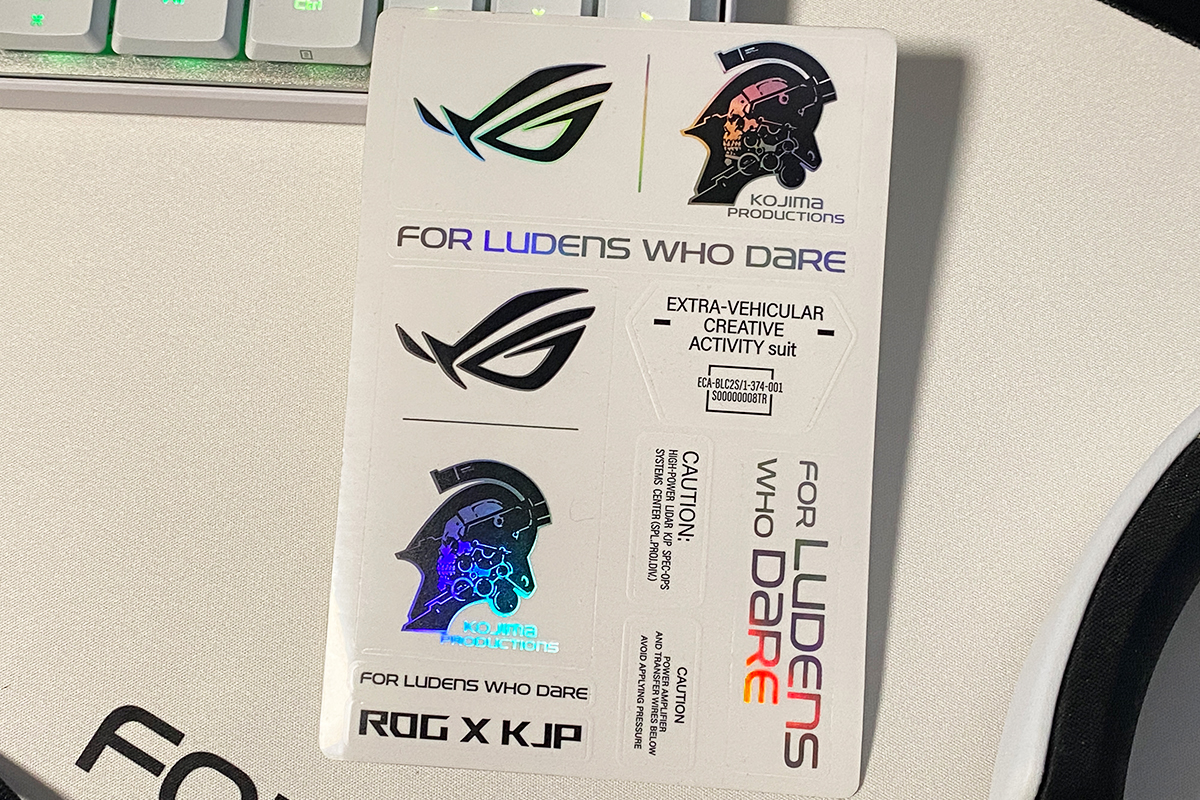
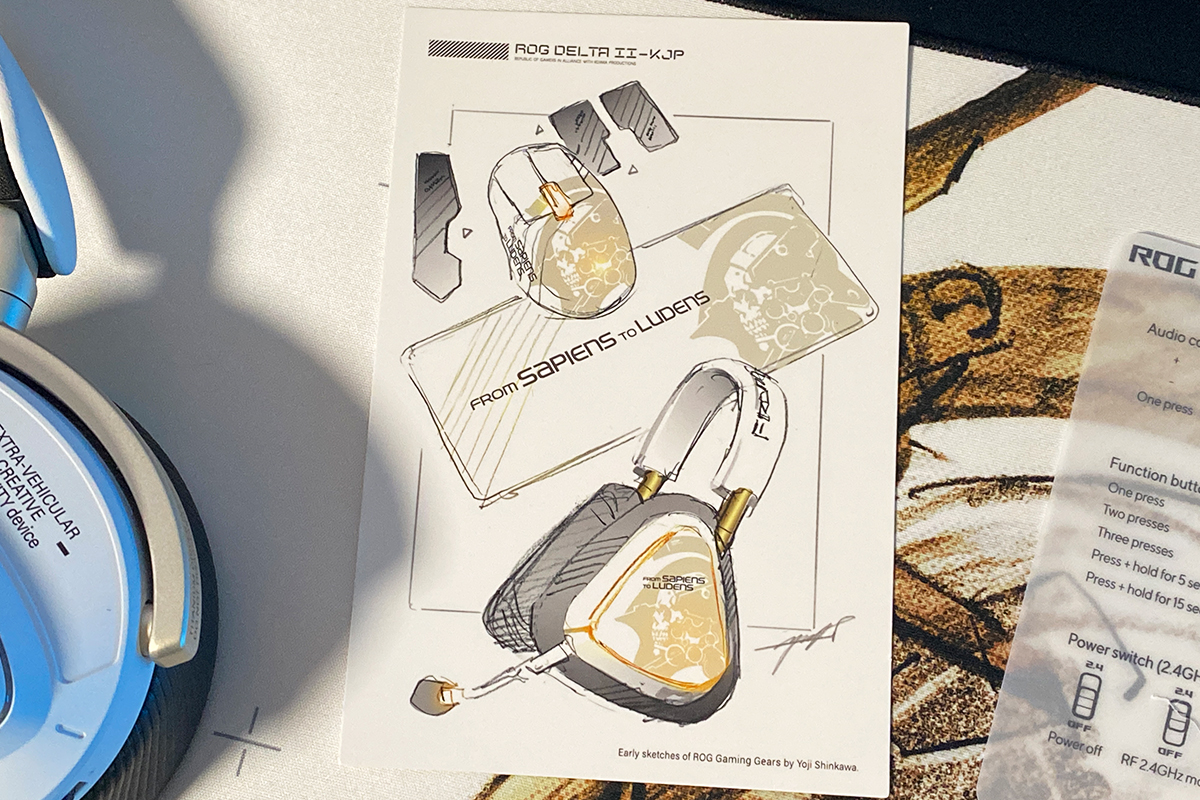
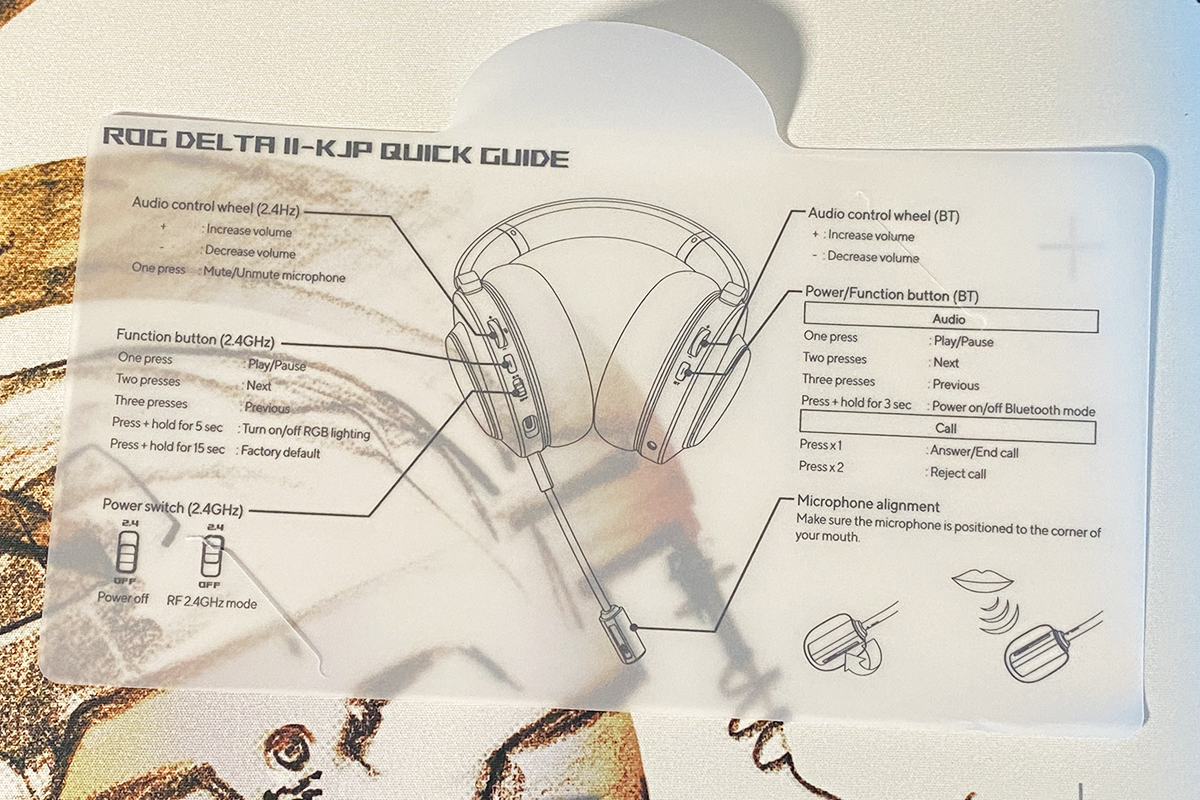
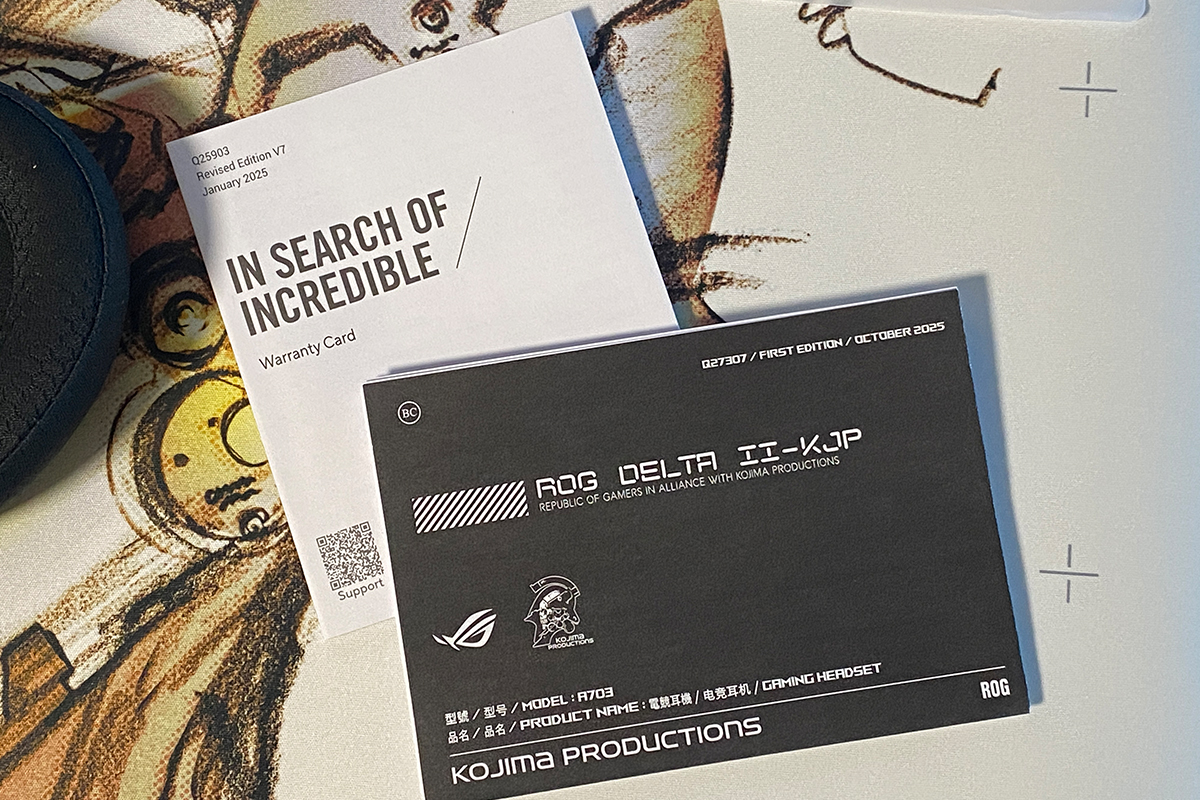
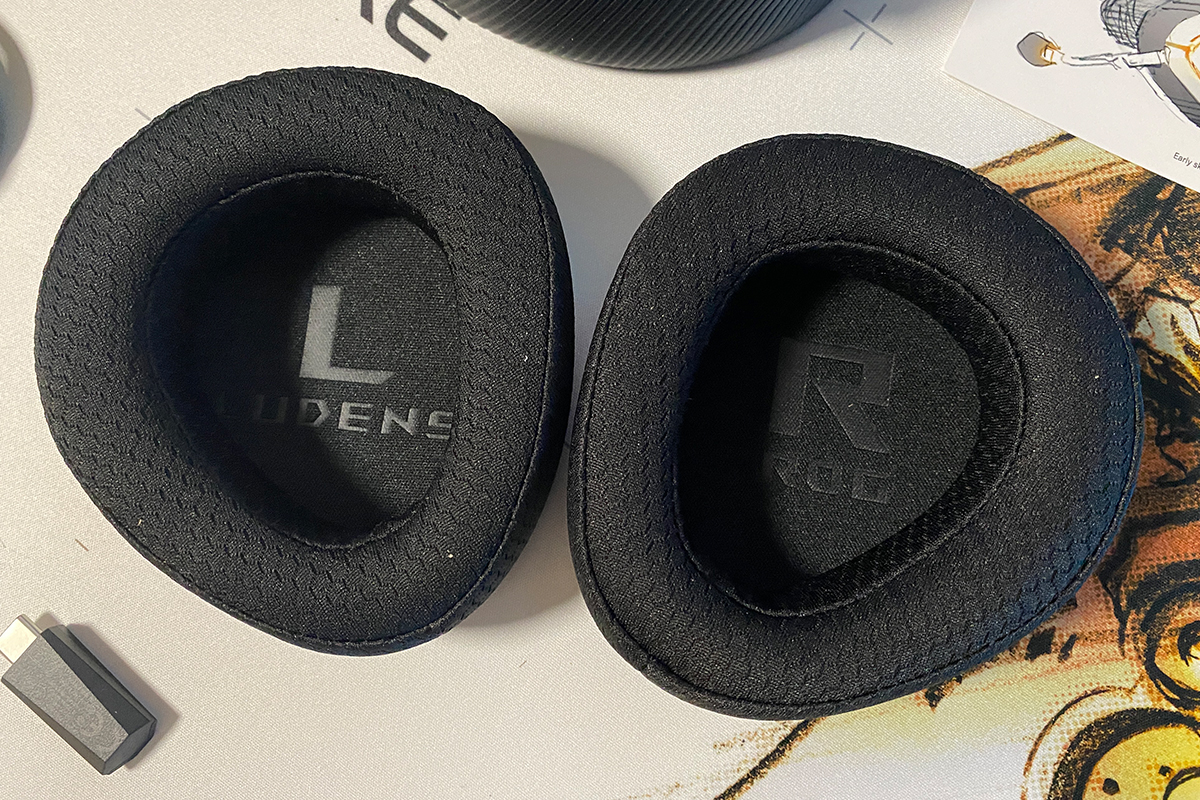
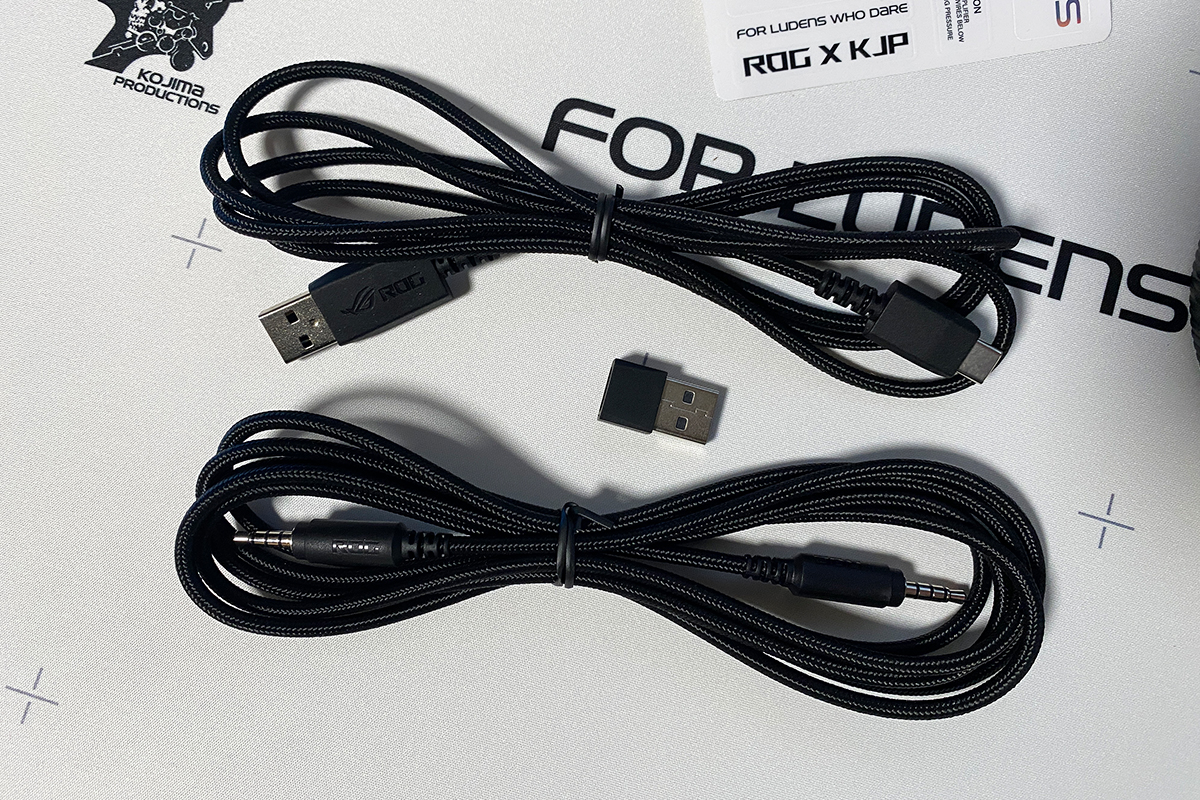
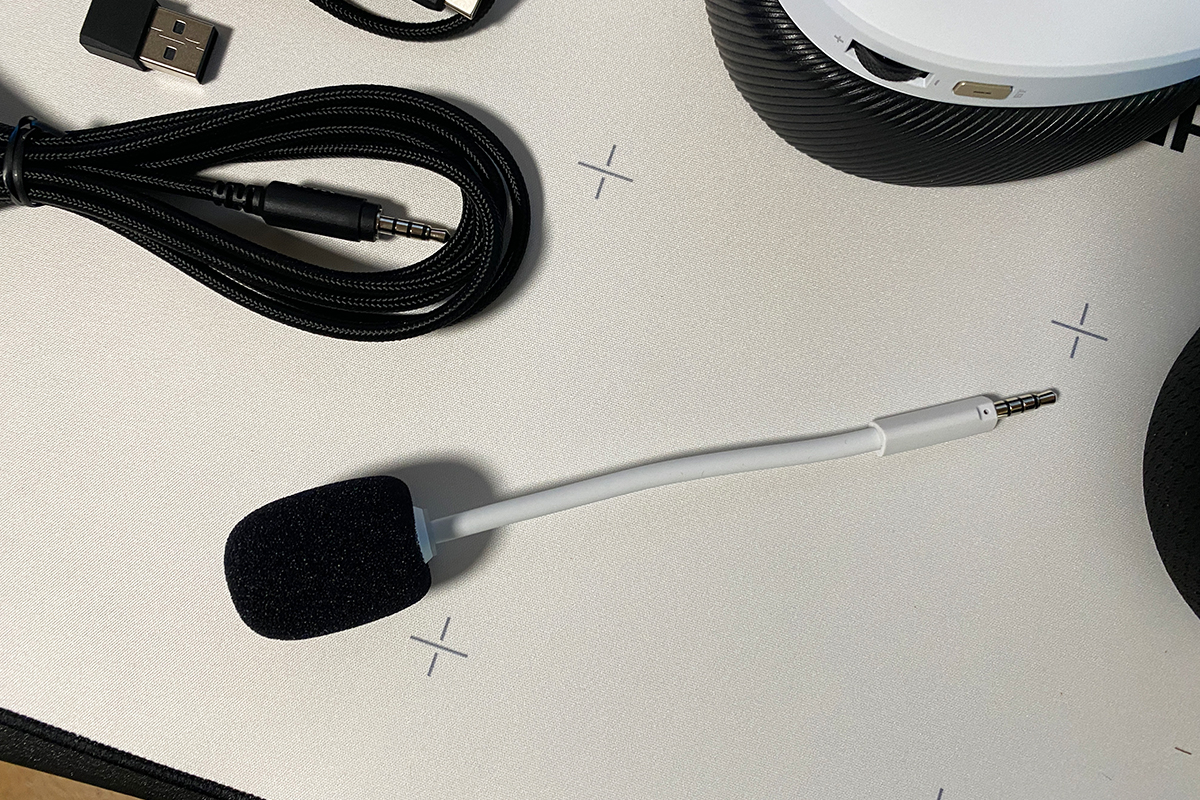
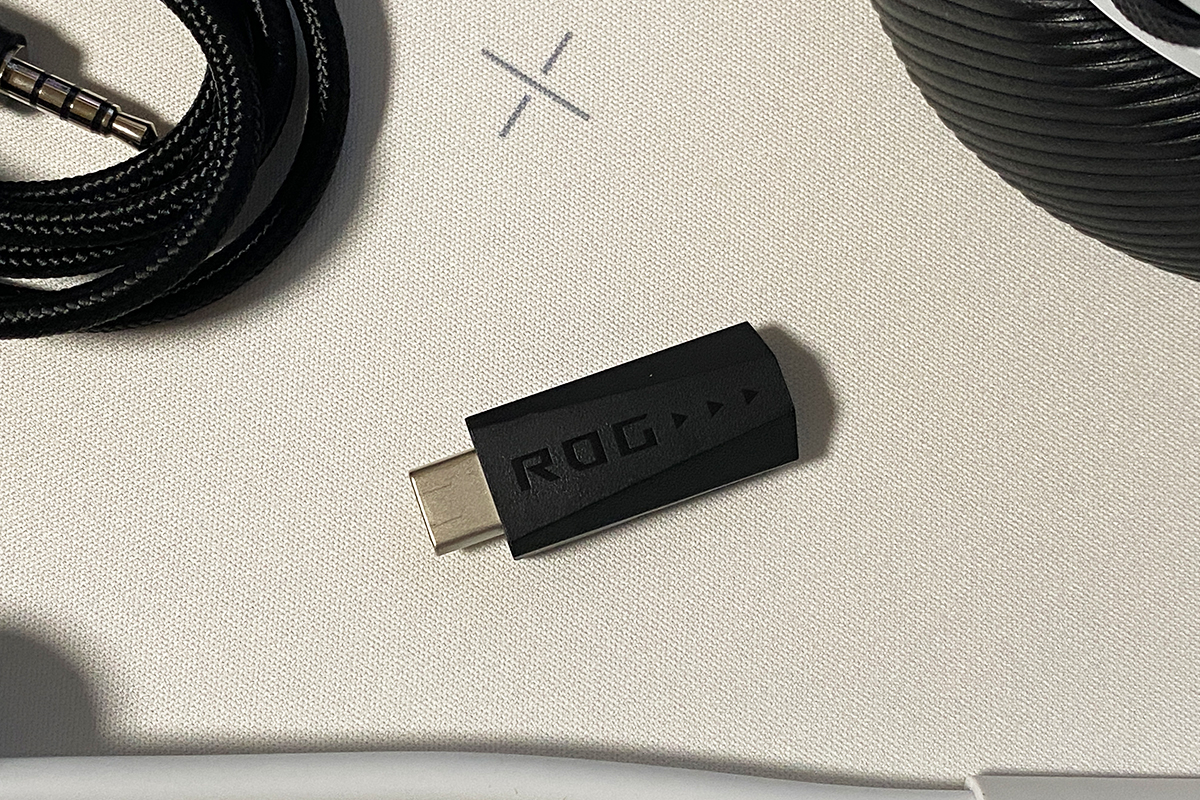
The only changes in the package are a new set of stickers styled for the KJP series and a small promotional card featuring Hideo Kojima’s signature on the left and Yoji Shinkawa’s on the right.

In terms of shape and materials, the headphones remain unchanged, but their design has been completely updated. The new KJP headset features an all-white finish with gold accents in Yoji Shinkawa’s signature style. These are complemented by the inscription Extra-Vehicular Activity Device, referencing the Ludens suit (EVA Creative Suit) discussed earlier.


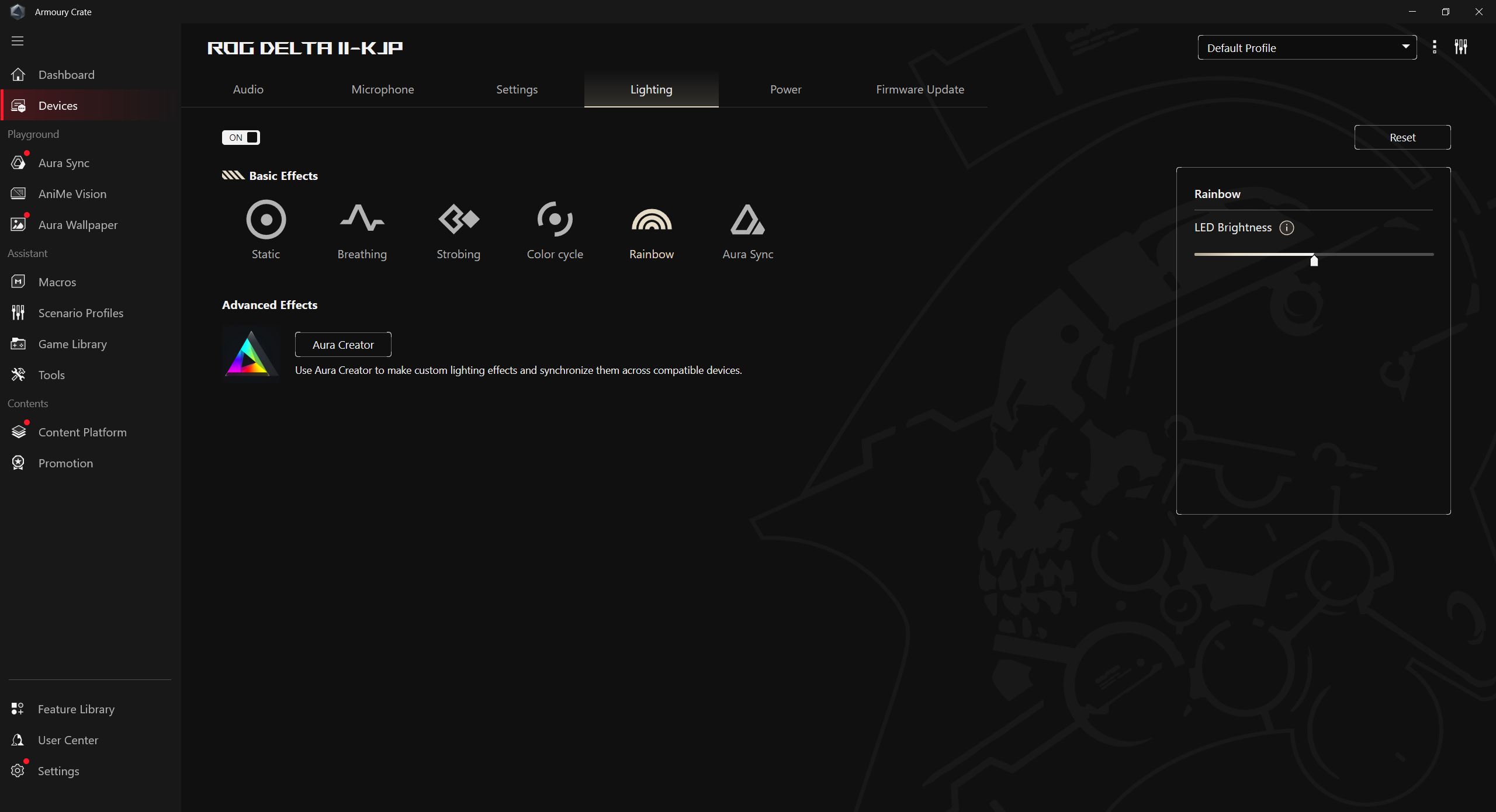
The ROG logo on the left ear cup has been redesigned and enlarged, while the right ear cup features the Kojima Productions logo. Both logos, along with the triangular trim, include full RGB lighting compatible with Aura Sync.


The signature slogan For Those Who Dare has also been adapted for this collaboration, as seen on the mat.

The stock ear cushions remain unchanged; like the base model, the headphones come with a pair of synthetic leather pads. The only modification is the channel labeling inside the ear cups: the left now displays L-Ludens and the right R-ROG.


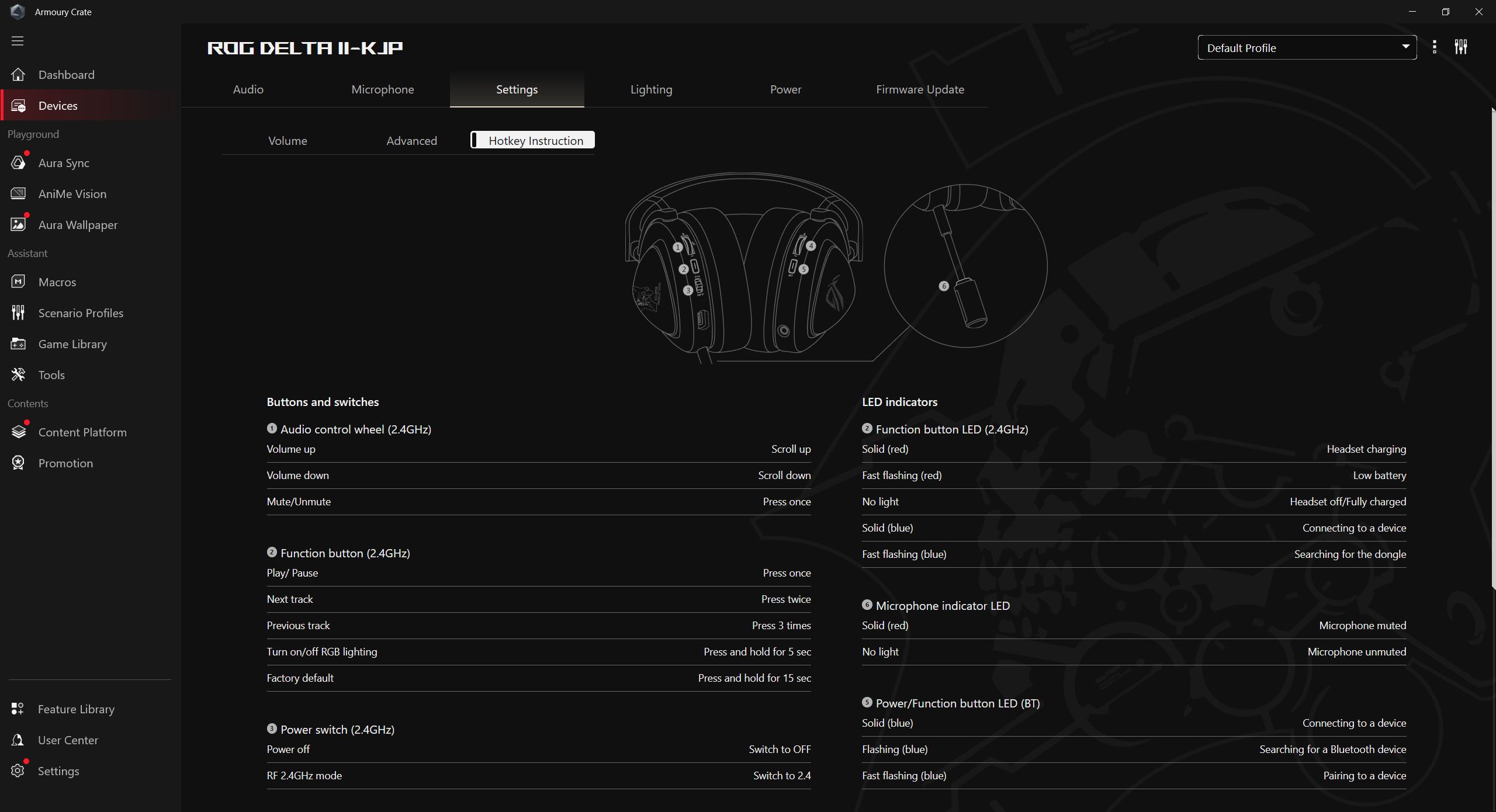
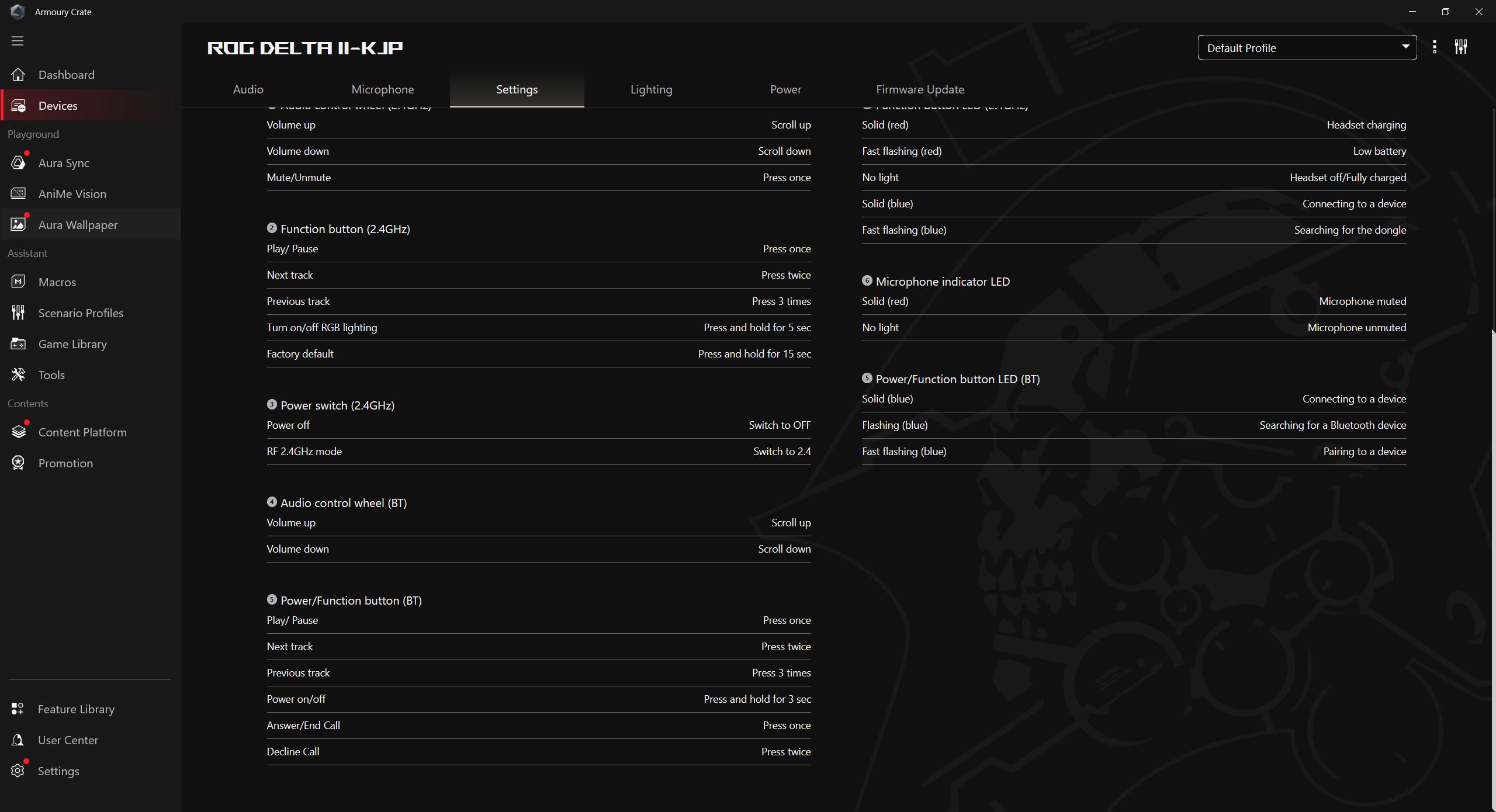
The controls on the ear cups remain unchanged; in the KJP model, all buttons and switches are positioned exactly as they are on the original ROG Delta II.


In terms of technical specifications, this remains the same flagship ROG Delta II headset: dual 50 mm drivers with titanium coating, a frequency response of 20 Hz–20 kHz, 32 Ω impedance, LC3+ codec support in wireless mode, and virtual 7.1-channel audio. Detailed impressions of the sound and feel were covered in the review of the original model.

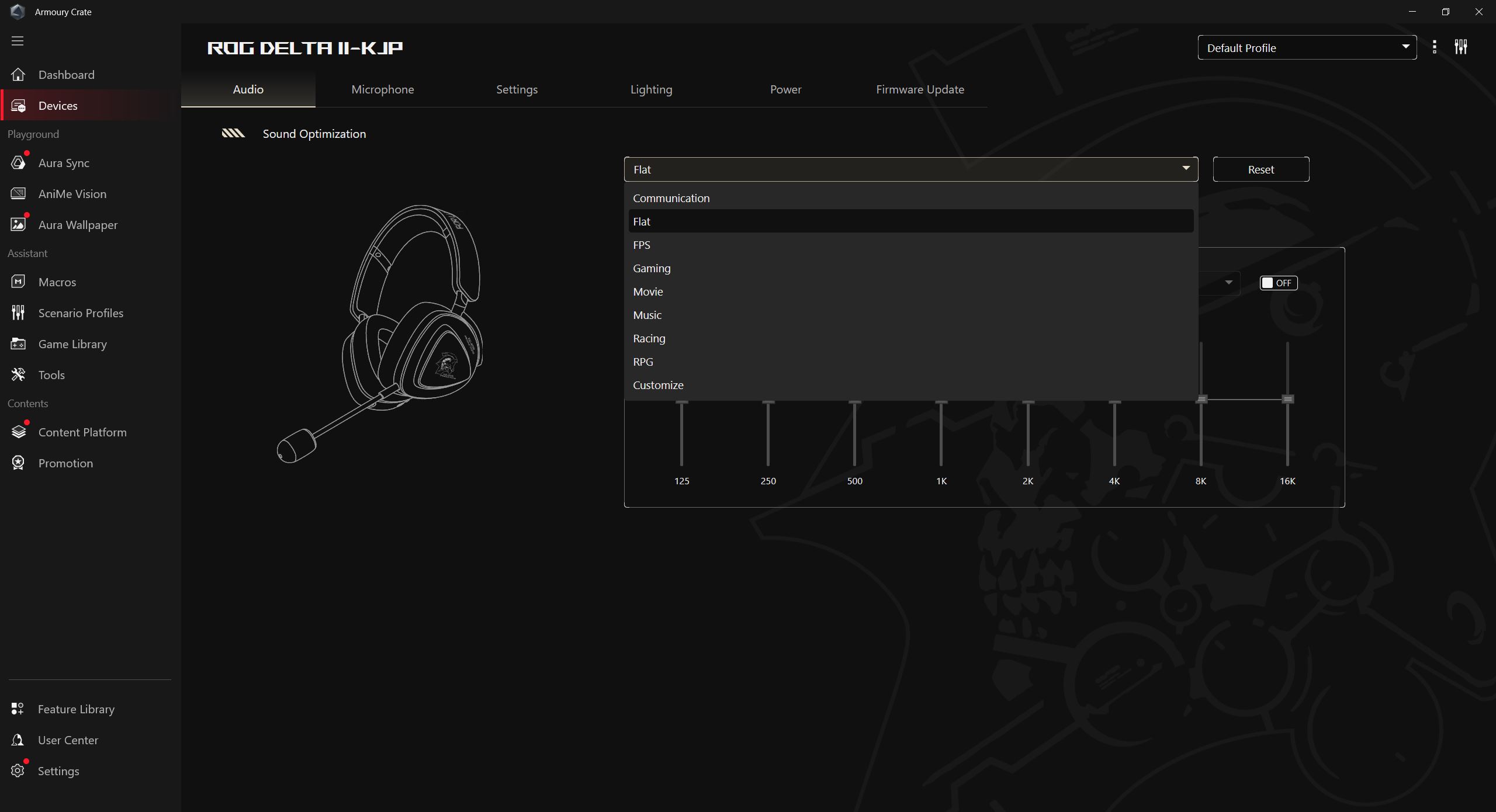
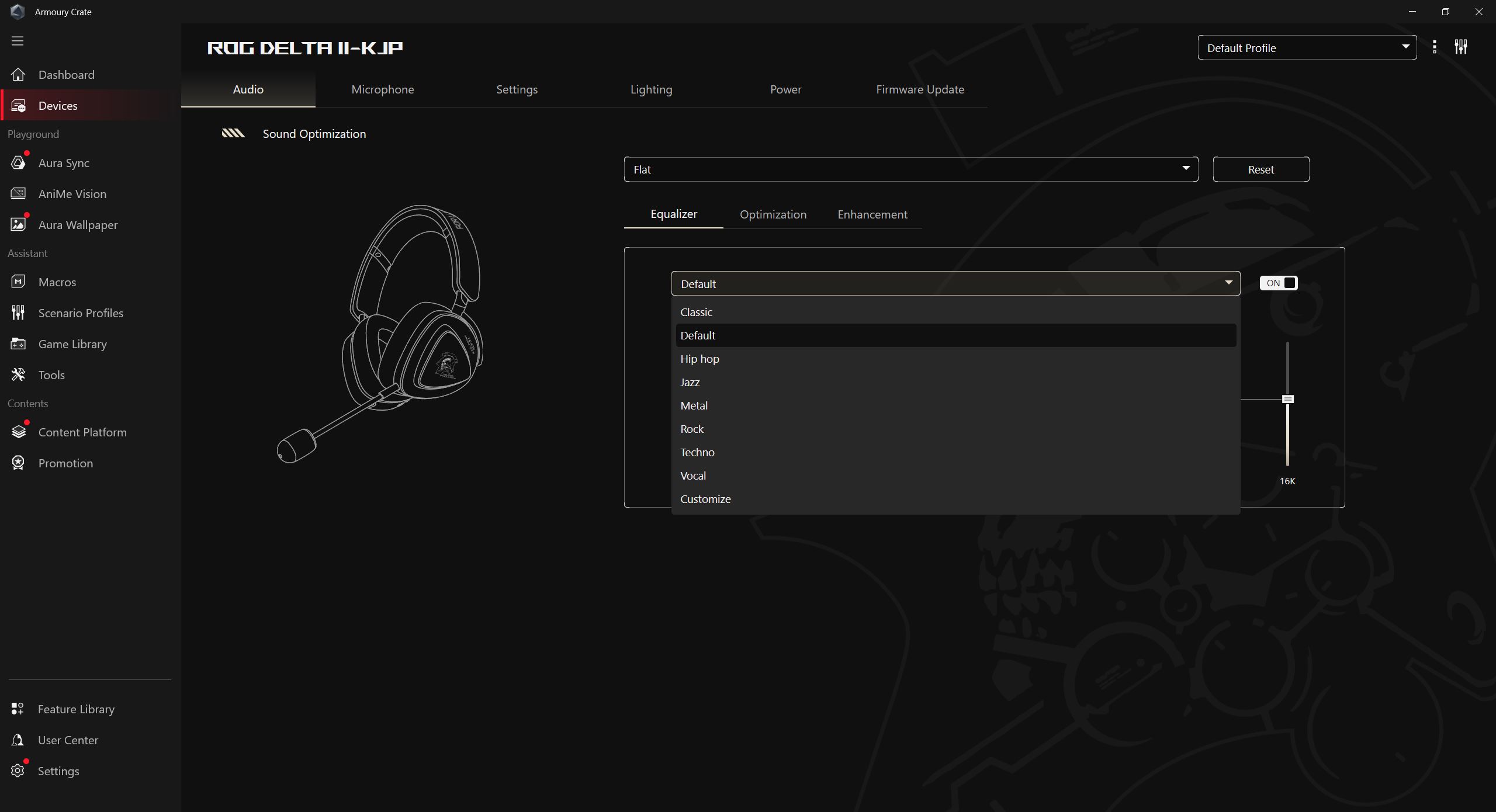
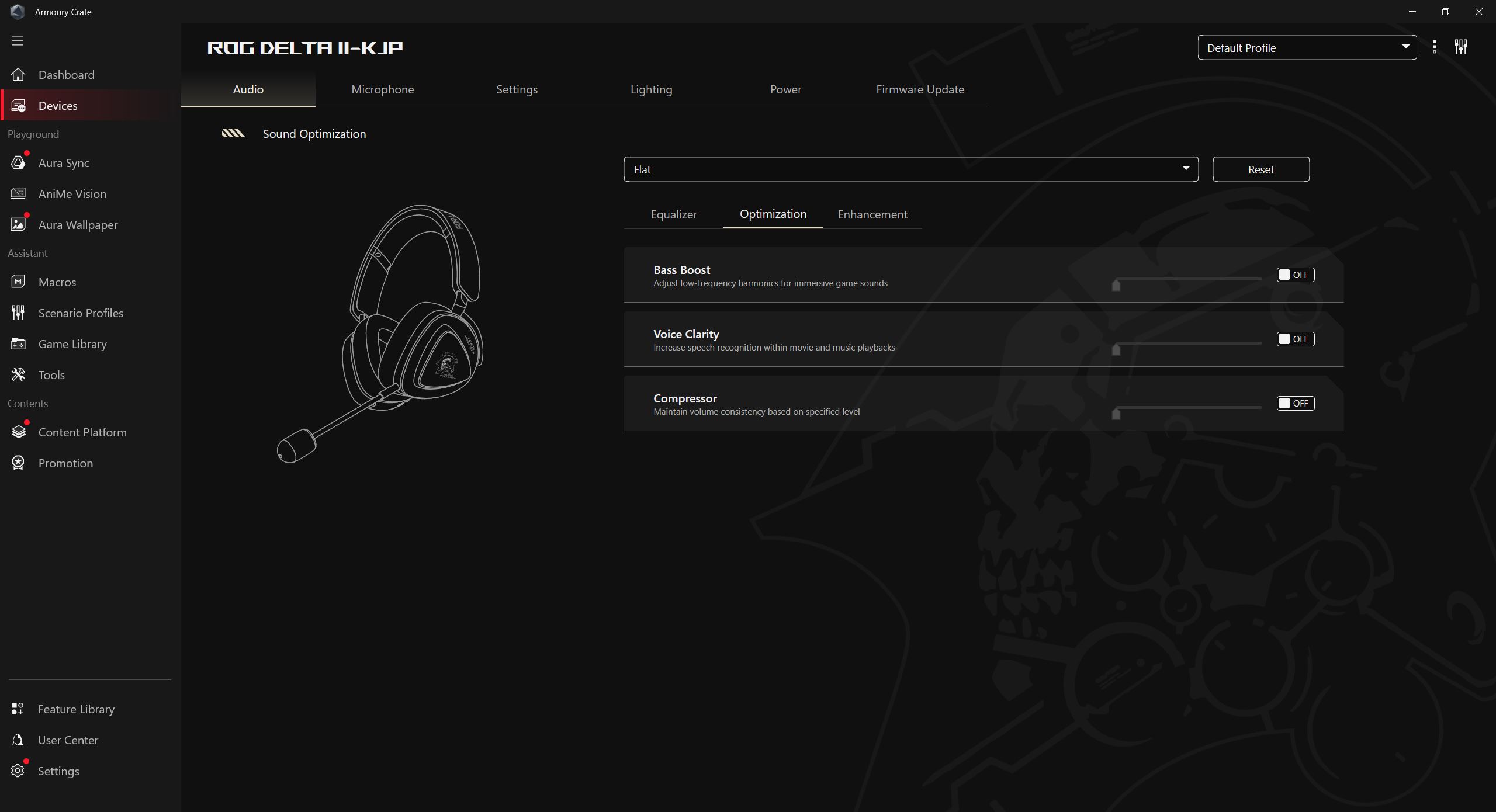
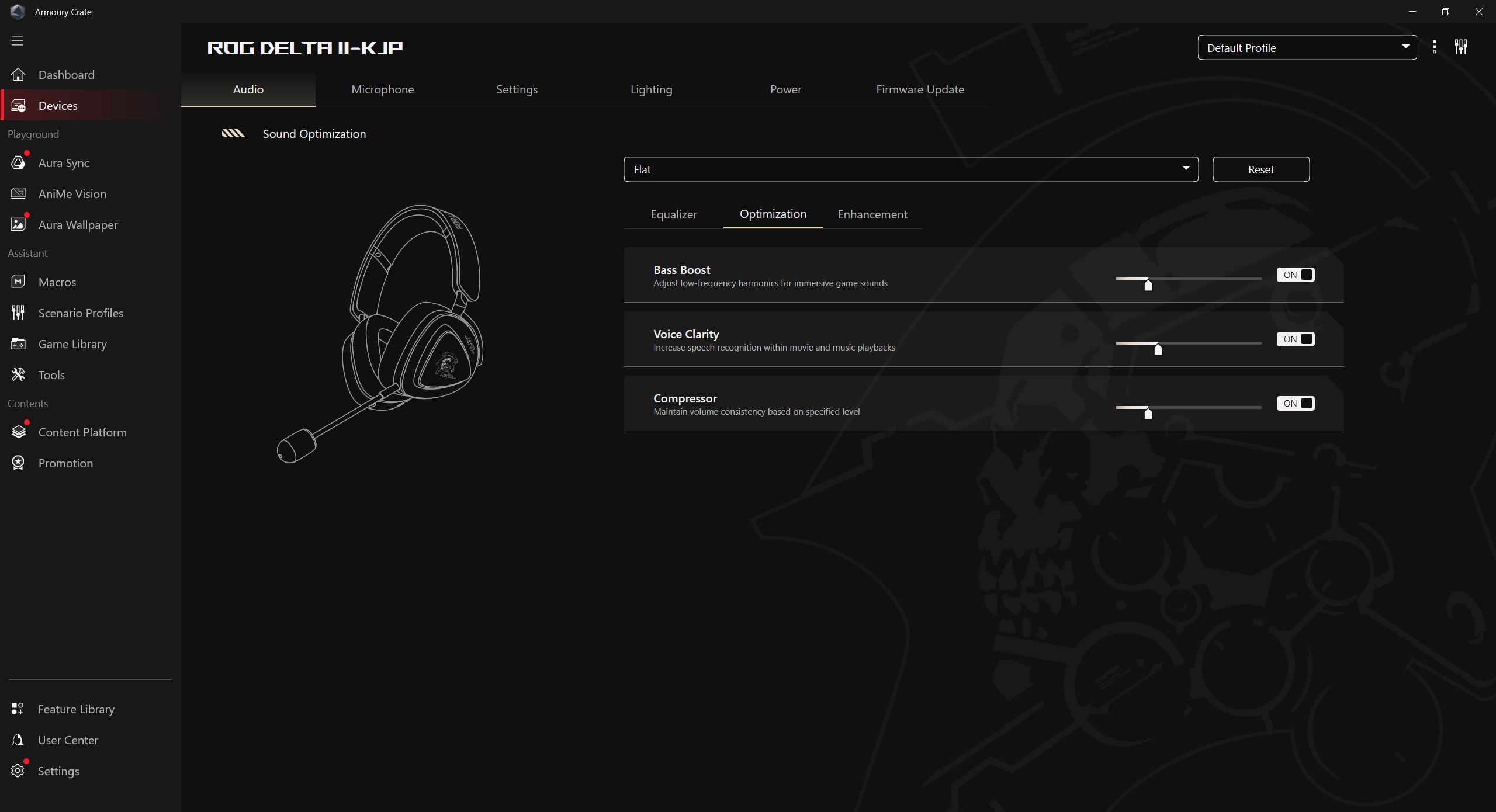
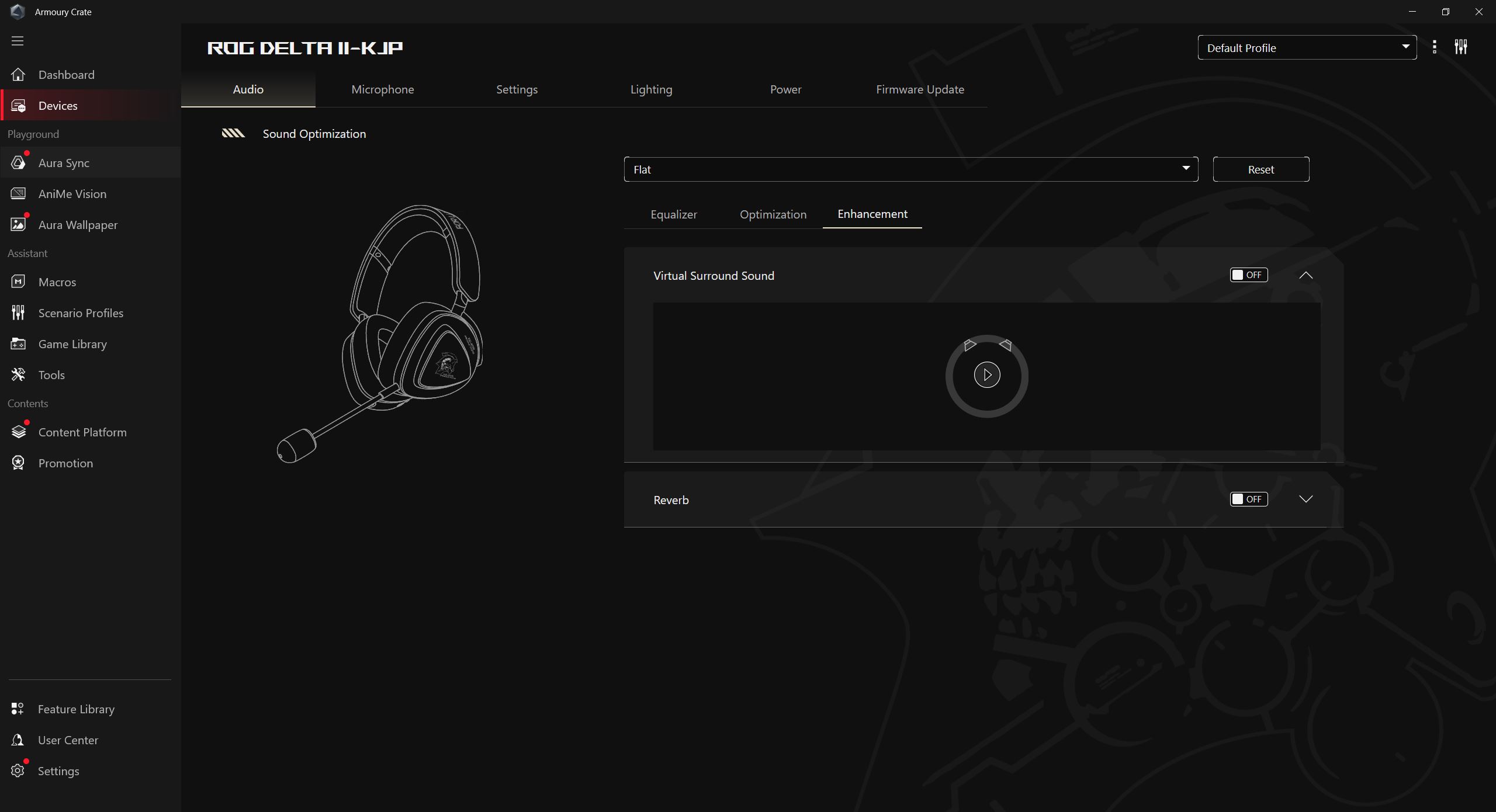
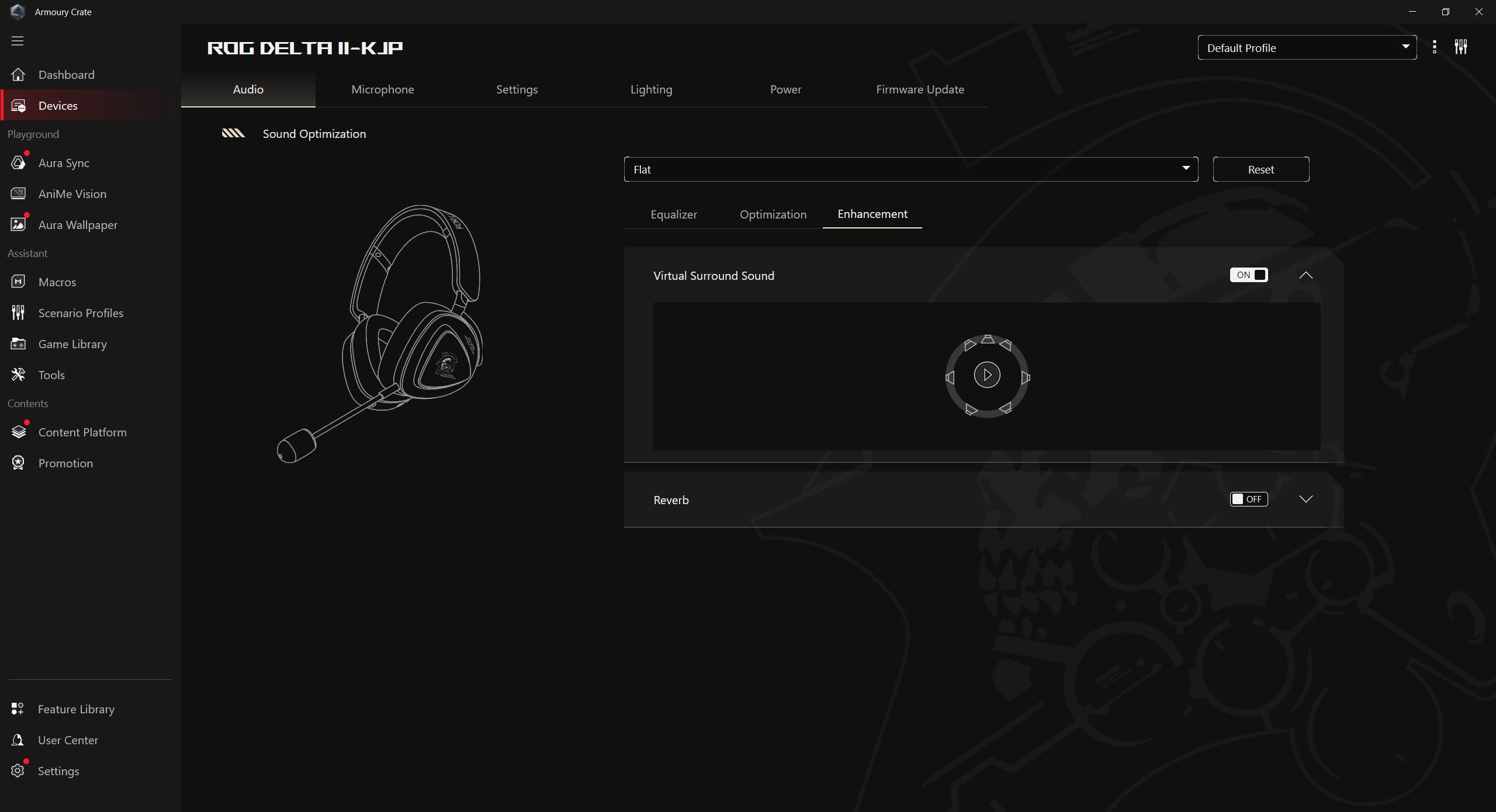
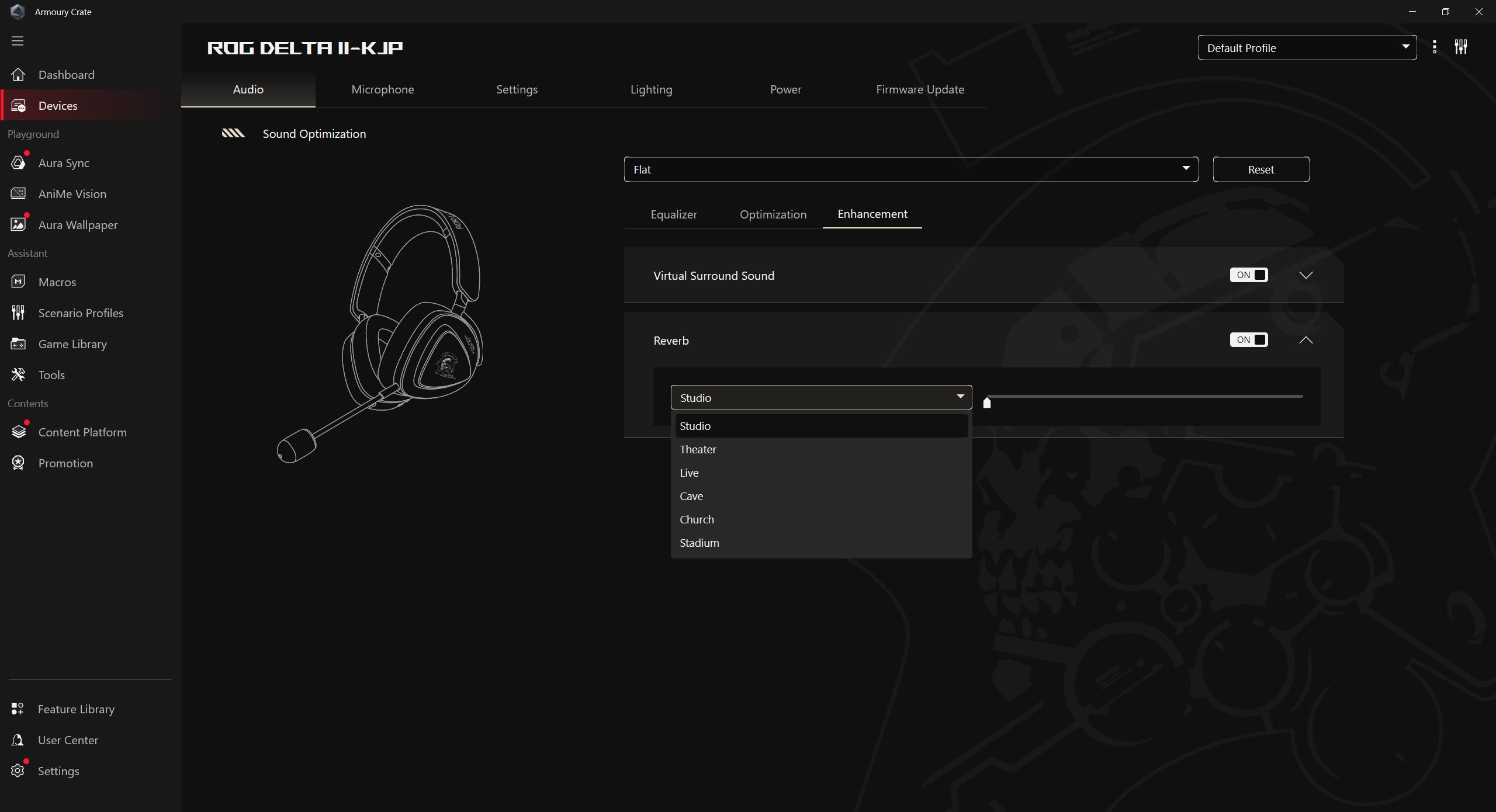
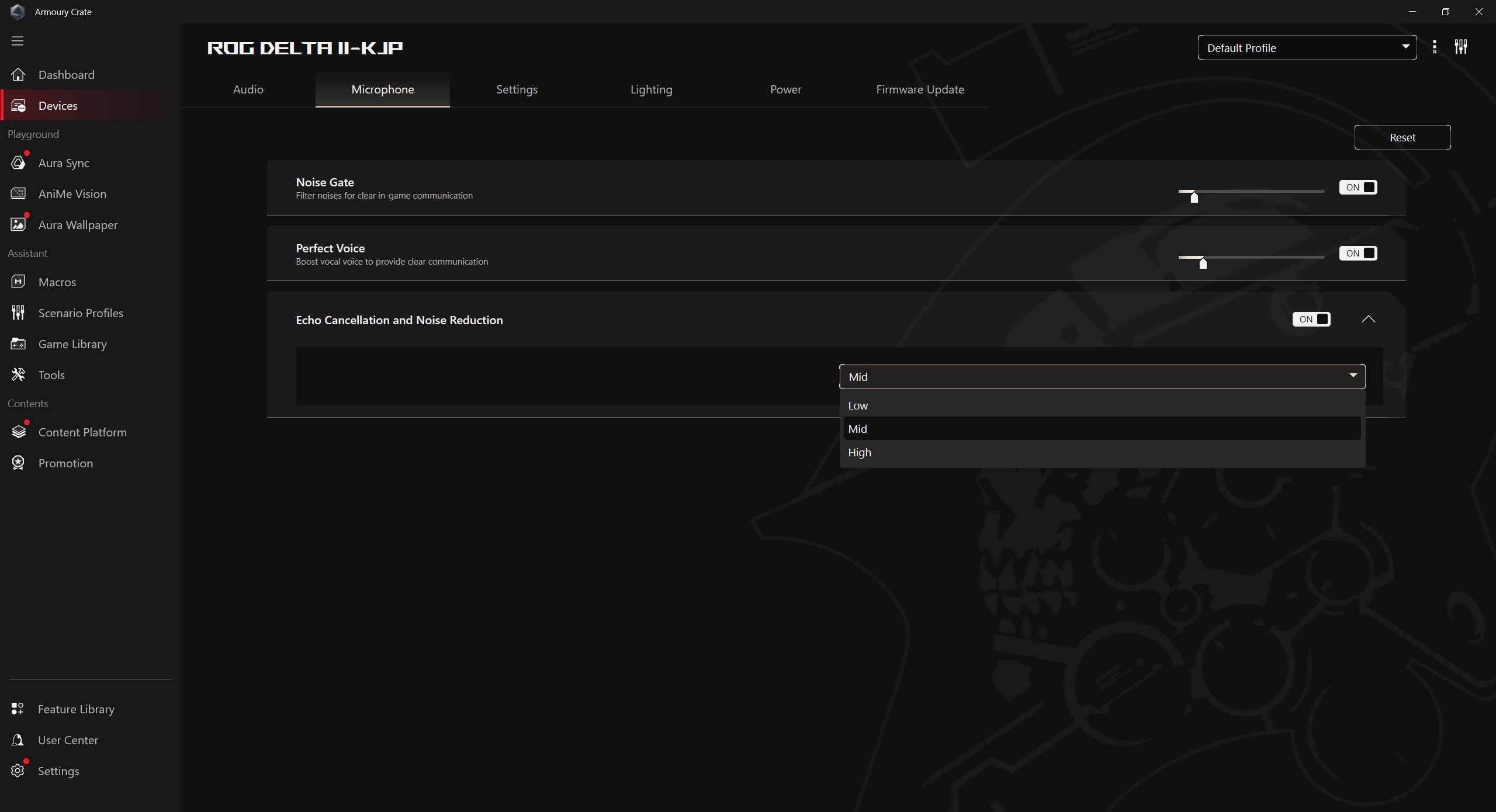
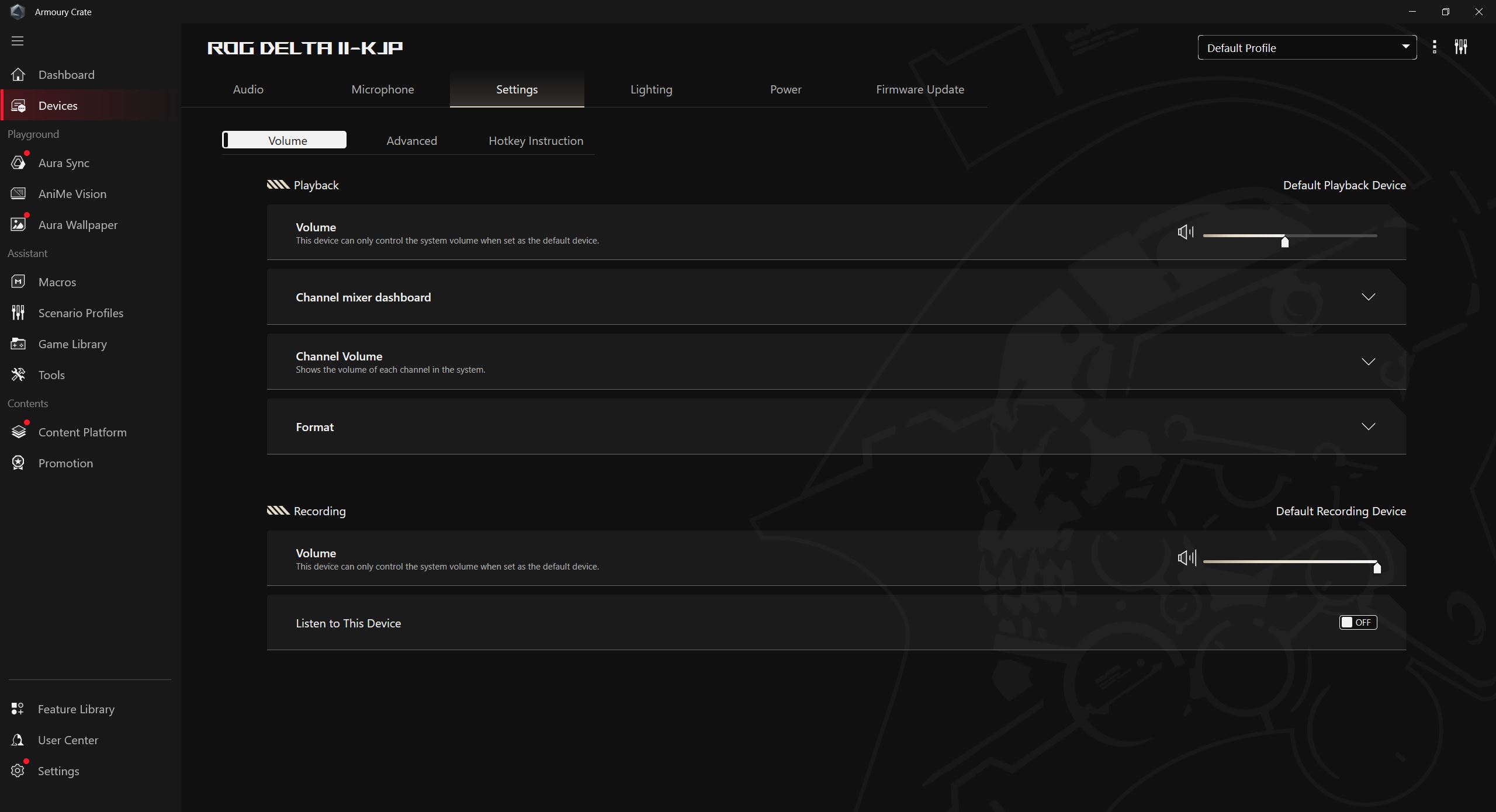
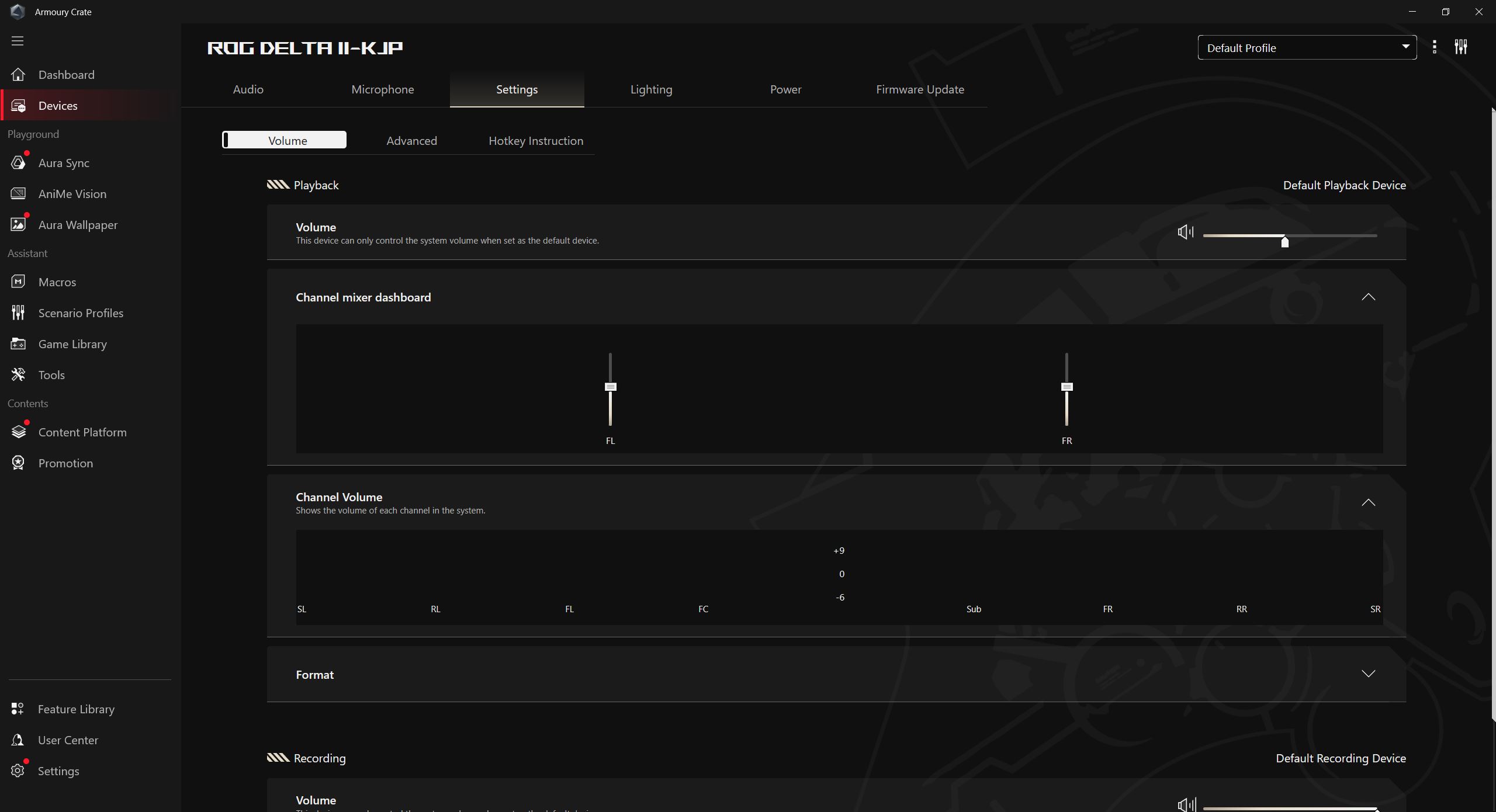
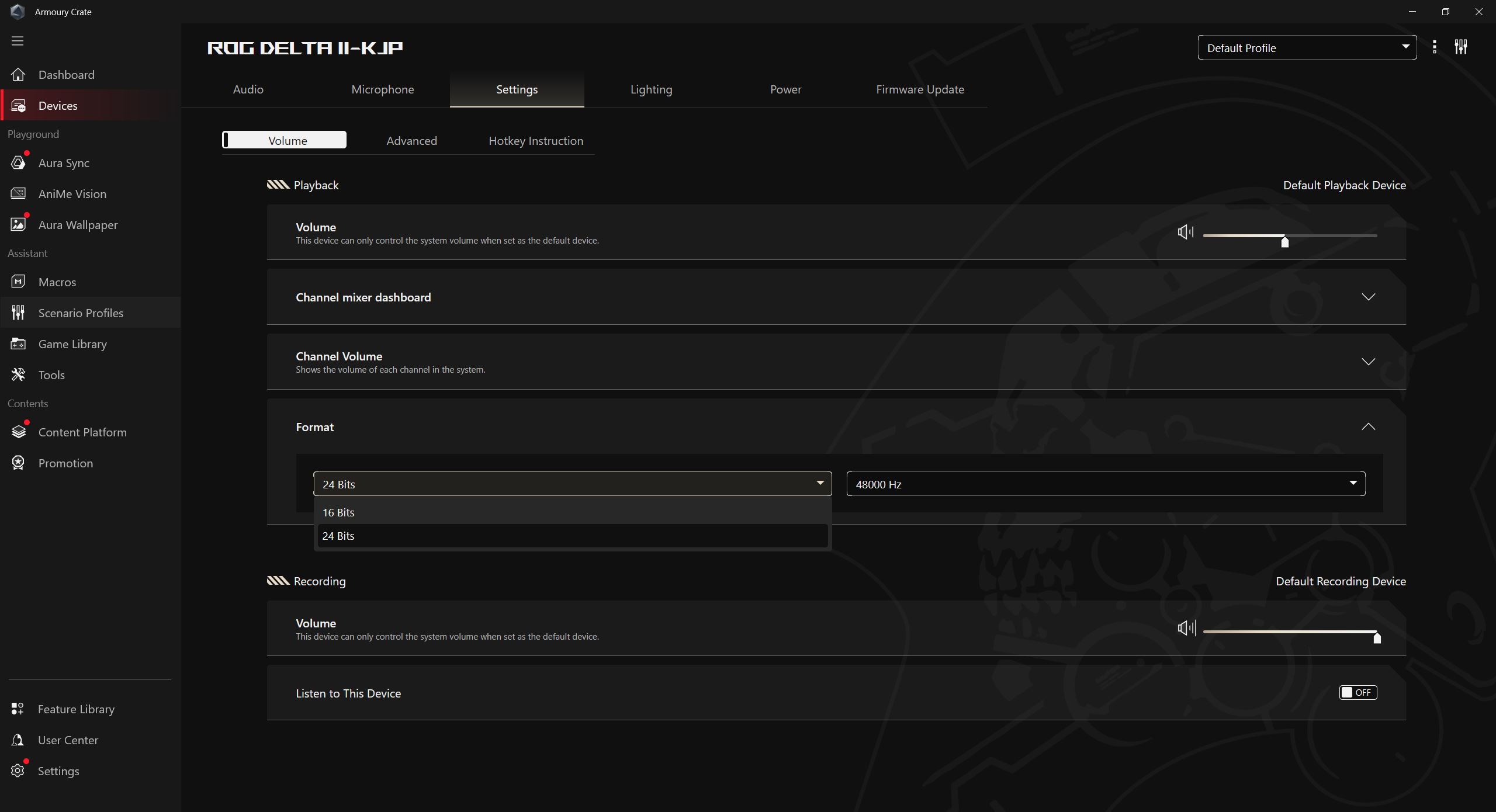
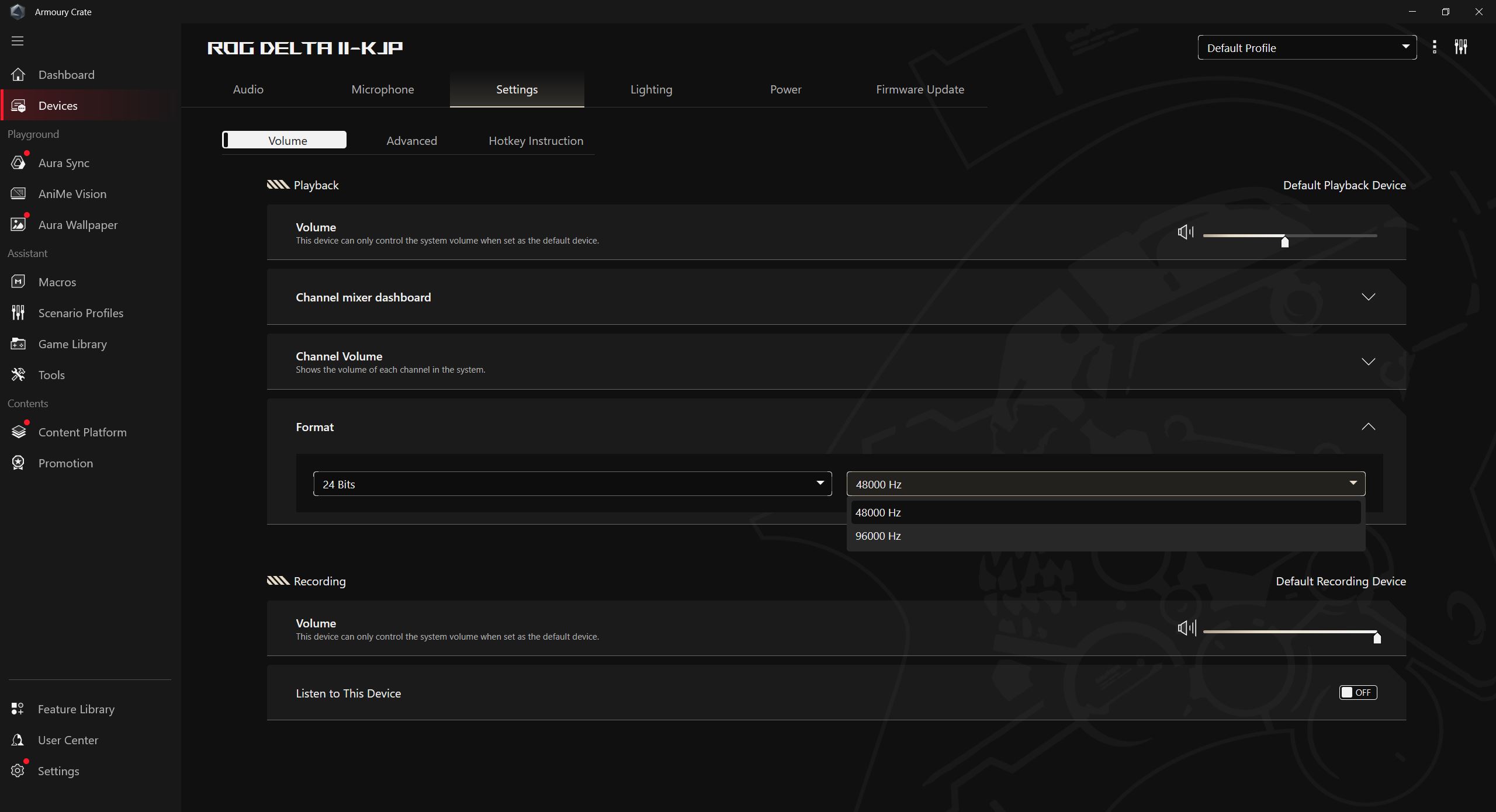
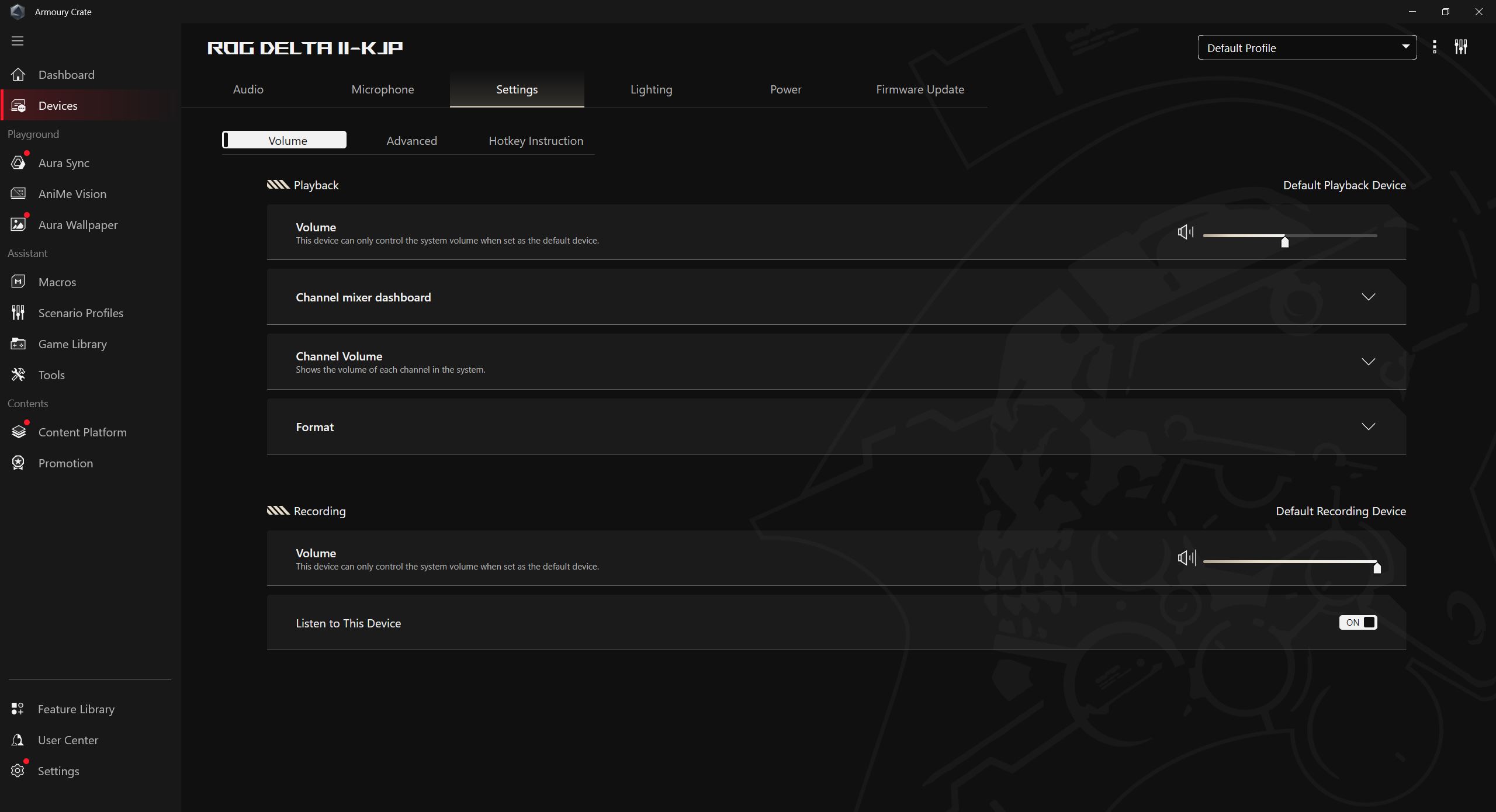
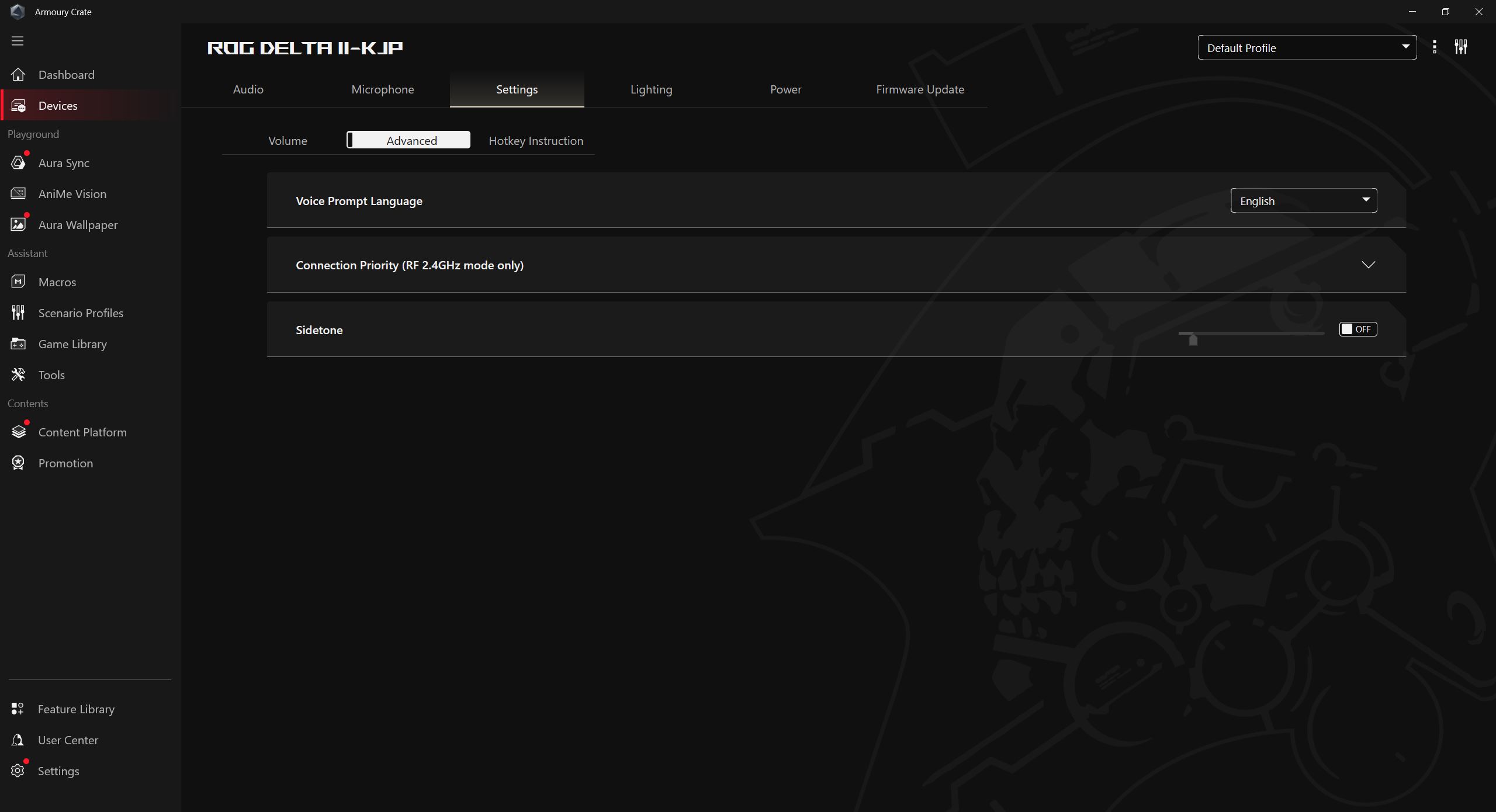
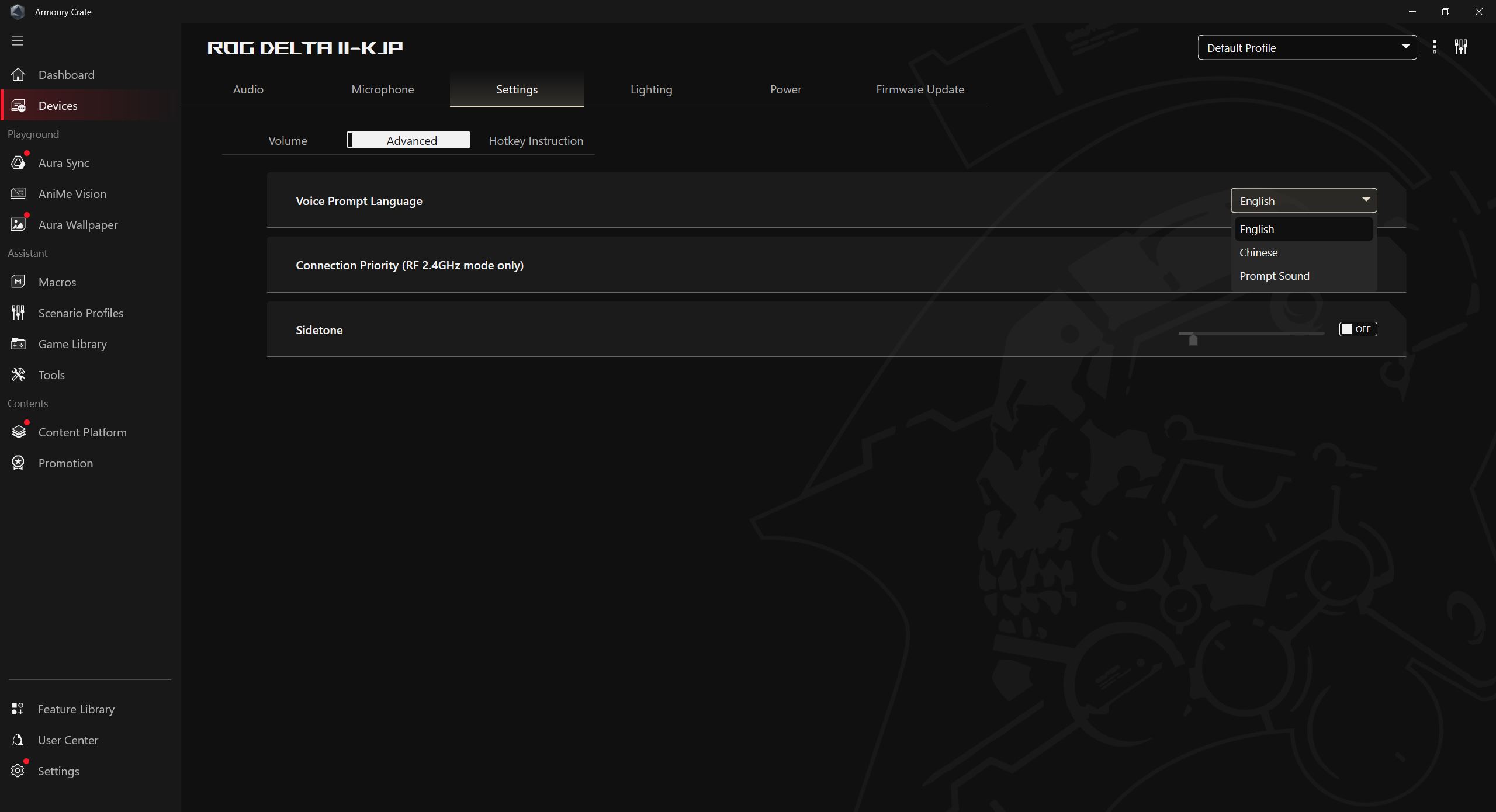
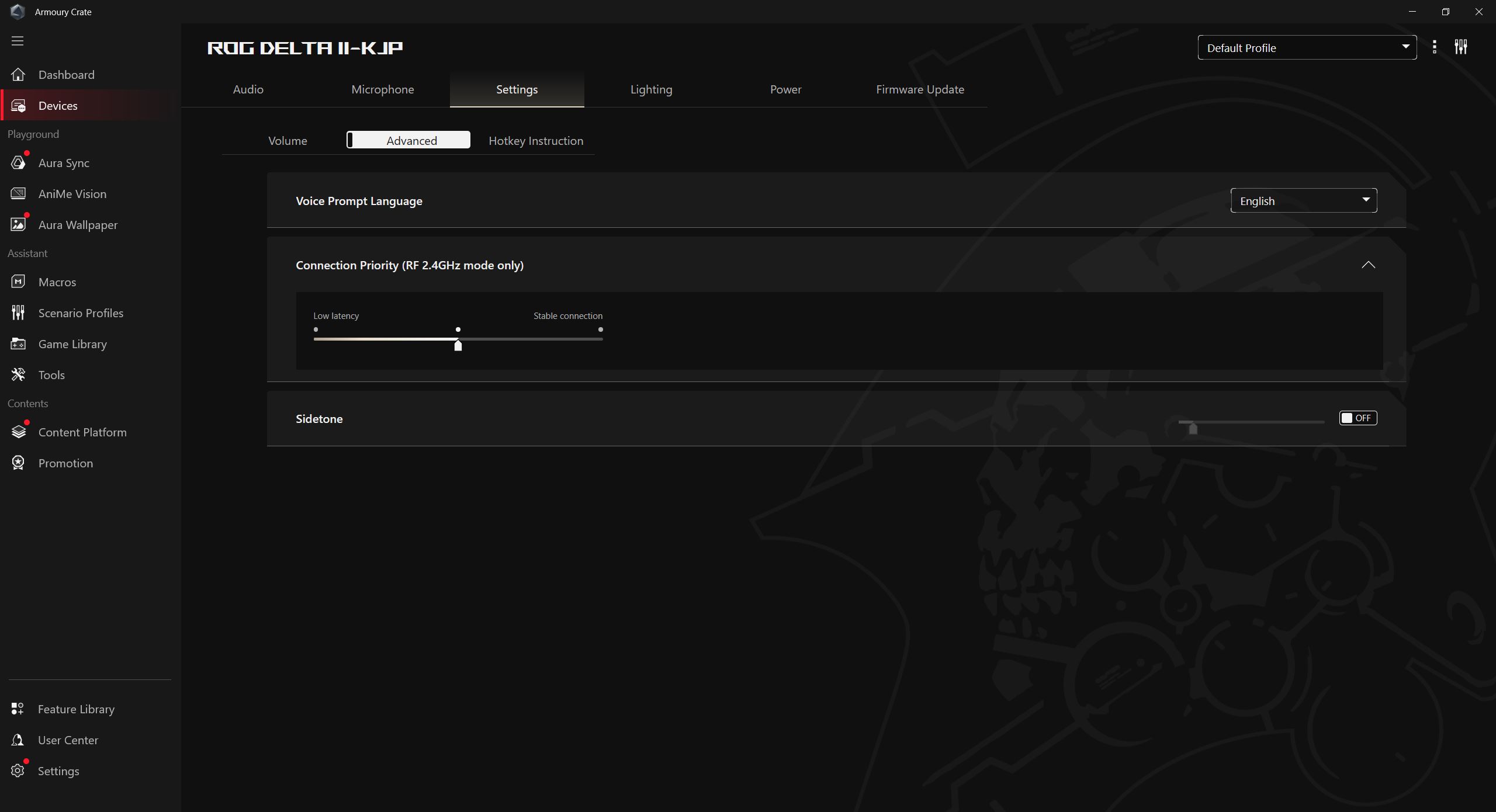
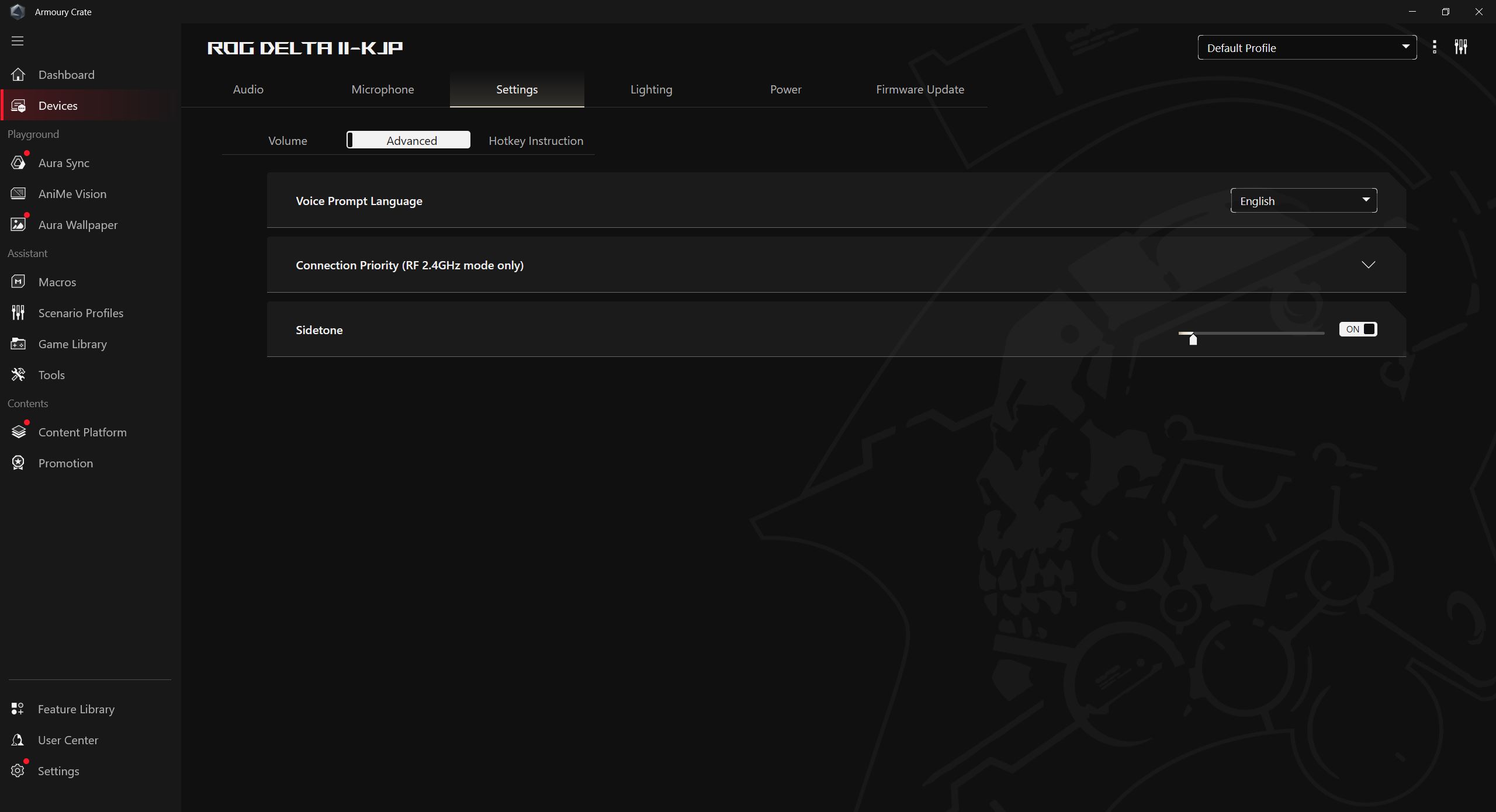
The software component remains unchanged. Like the base model, the ROG Delta II-KJP can be configured using the standard Armoury Crate application. The settings themselves are identical, with the exception of an exclusive Kojima Productions-themed background. Support for the new web-based Gear Link application has not been added. Given the headset’s price and the fact that ASUS now includes it with all new ROG devices, this feature could have reasonably been included.
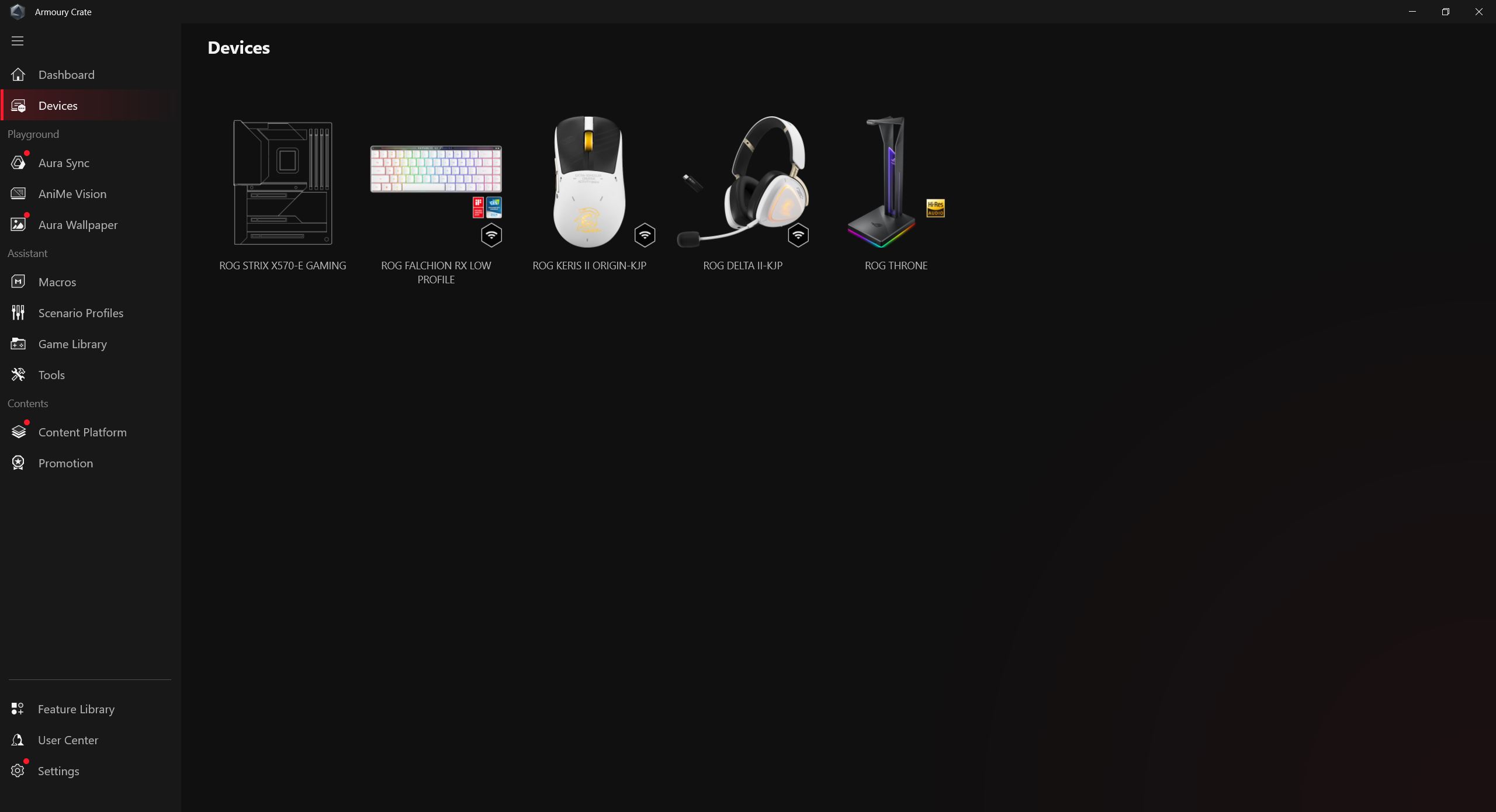
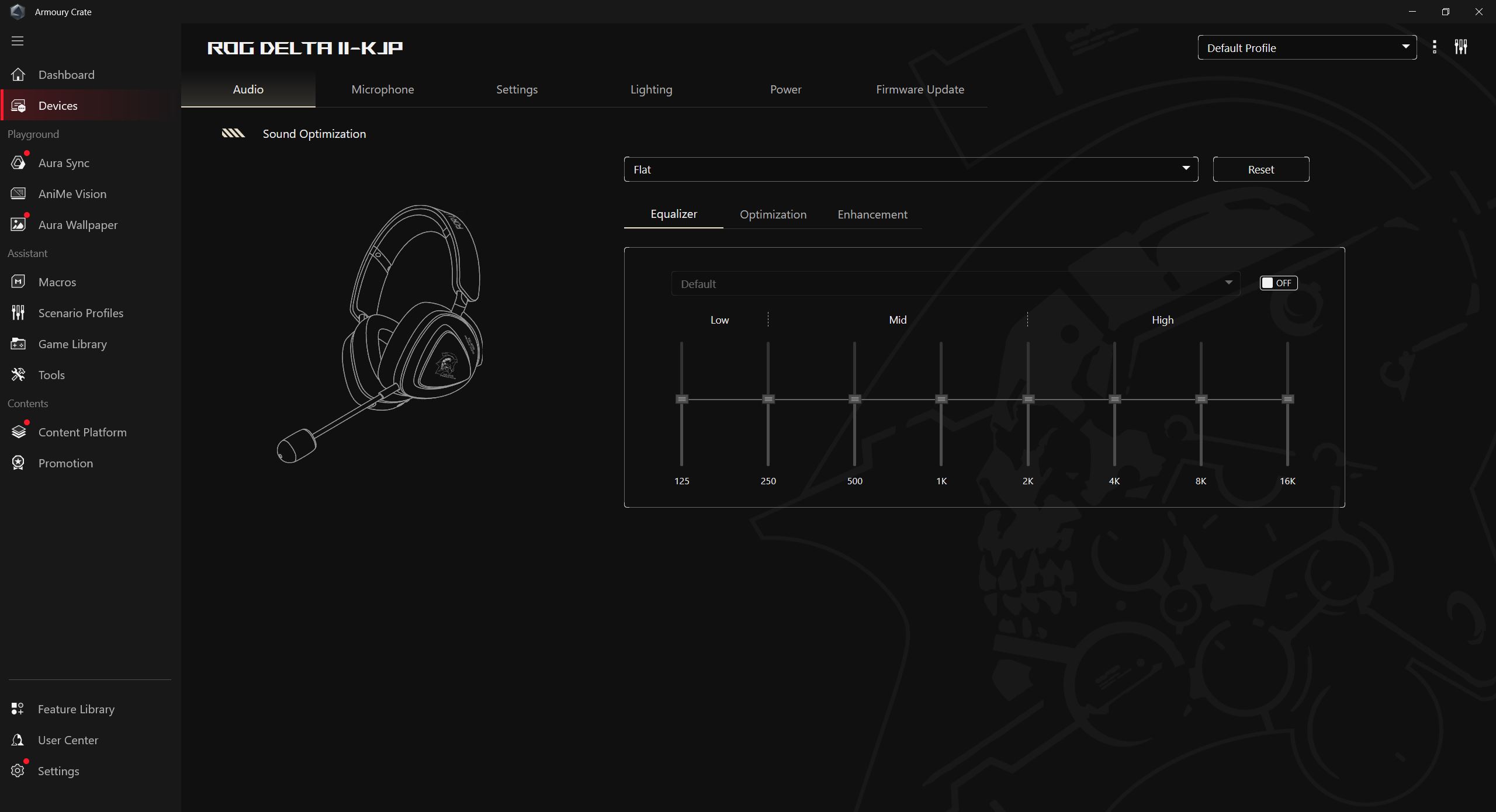





Since the headset’s price has been mentioned, it’s worth addressing directly. The new KJP model is listed on the official ASUS store at $426 / €359, nearly $150 more than the launch price of the original version. This seems disproportionately high for a redesign and collaboration alone. However, at the time of this review, a launch discount was available, reducing the price to $324 / €273, which is a more reasonable value for the device.

Read also:
- ASUS ROG Azoth X Keyboard Review: Futuristic Design, Hot-Swap Support, and OLED Display
- ASUS ROG Falchion Ace HFX review: Gaming Keyboard with Magnetic Switches
ROG Keris II Origin-KJP Mouse
Arguably one of the most interesting devices in the collaboration is the ROG Keris II Origin-KJP mouse, which is essentially a redesign of the previous flagship ROG Keris II Origin model. The packaging for the updated version follows the same black-and-white theme used for the headset and mat.


Like the headset, the KJP mouse differs from the base model only in design. A detailed review of the standard ROG Keris II Origin is available in the link above. Here, as with the headphones, the focus will be concise, emphasizing the design and changes introduced by the collaboration.
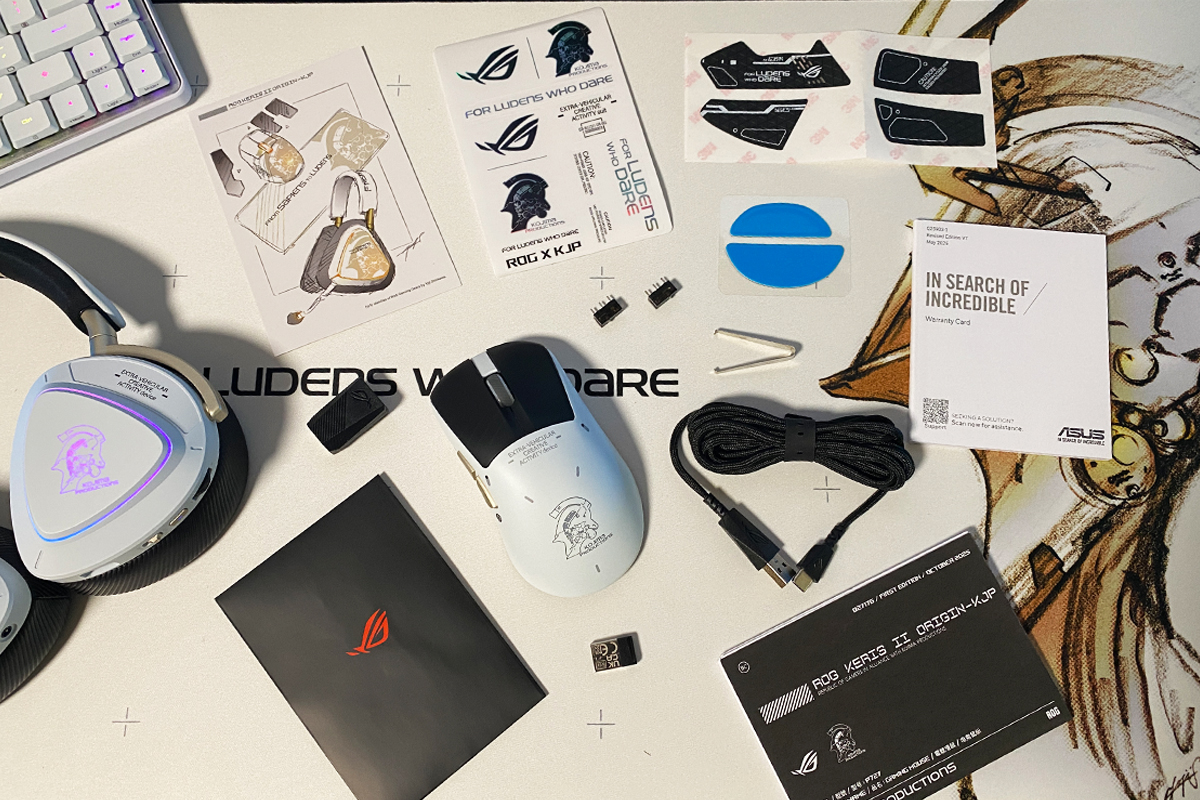
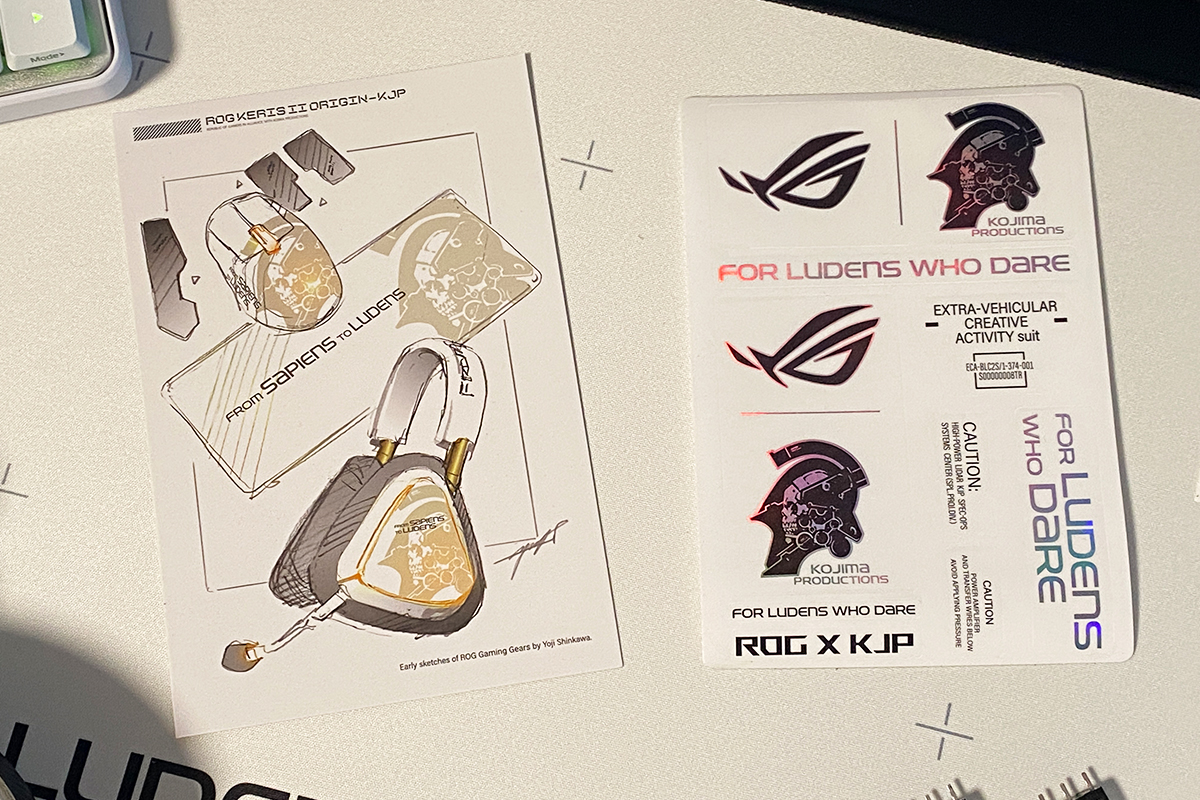
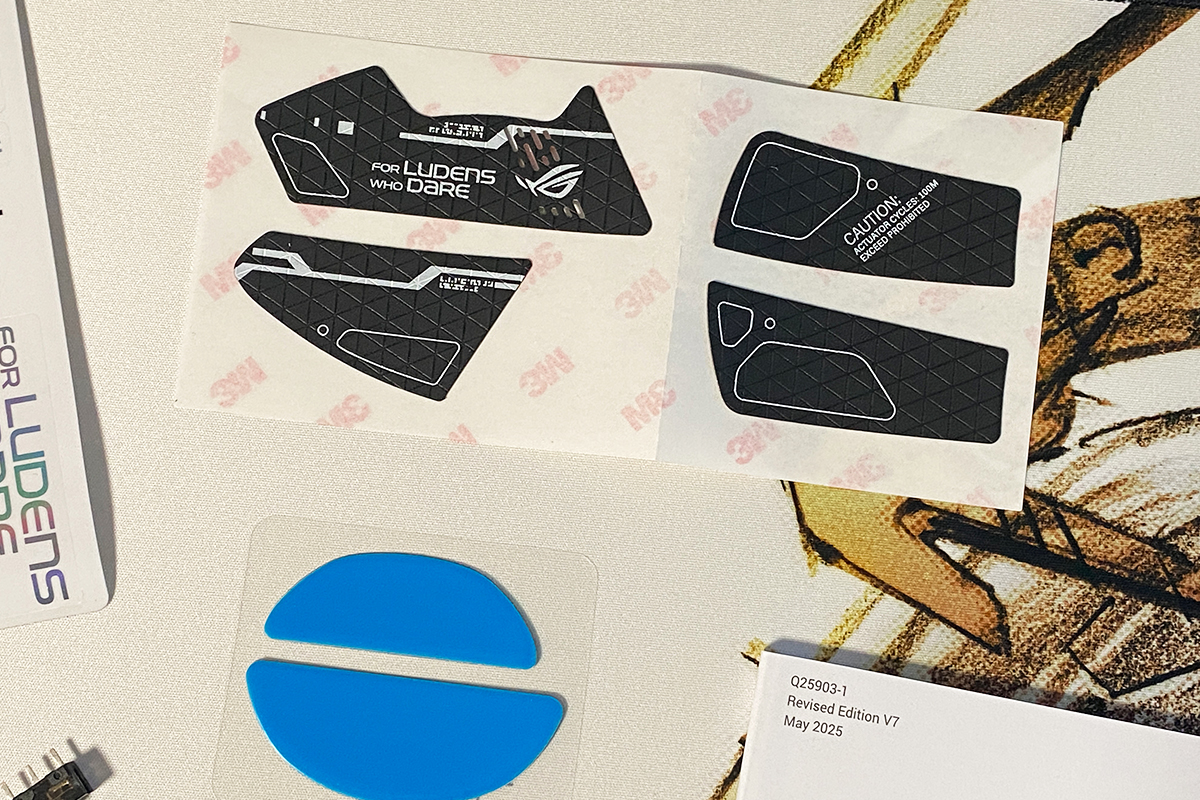
Starting with the package: the contents remain the same, with only the design of certain elements updated – specifically, the adhesive grips and branded stickers. A promotional card featuring the signatures of Hideo Kojima and Yoji Shinkawa has also been added, as with the headset. The package includes the following items:
- mouse
- ROG Omni Receiver wireless adapter (2.4 GHz)
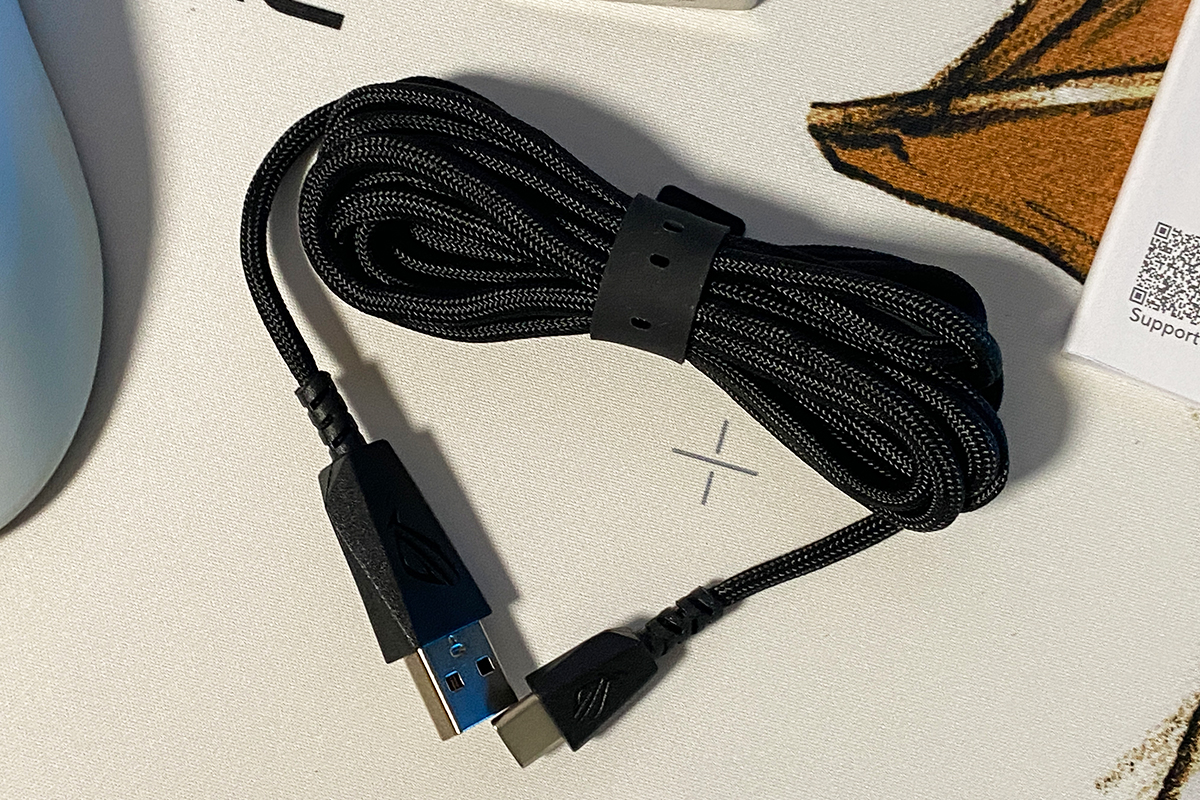
- USB-A to USB-C adapter
- ROG Paracord detachable cable
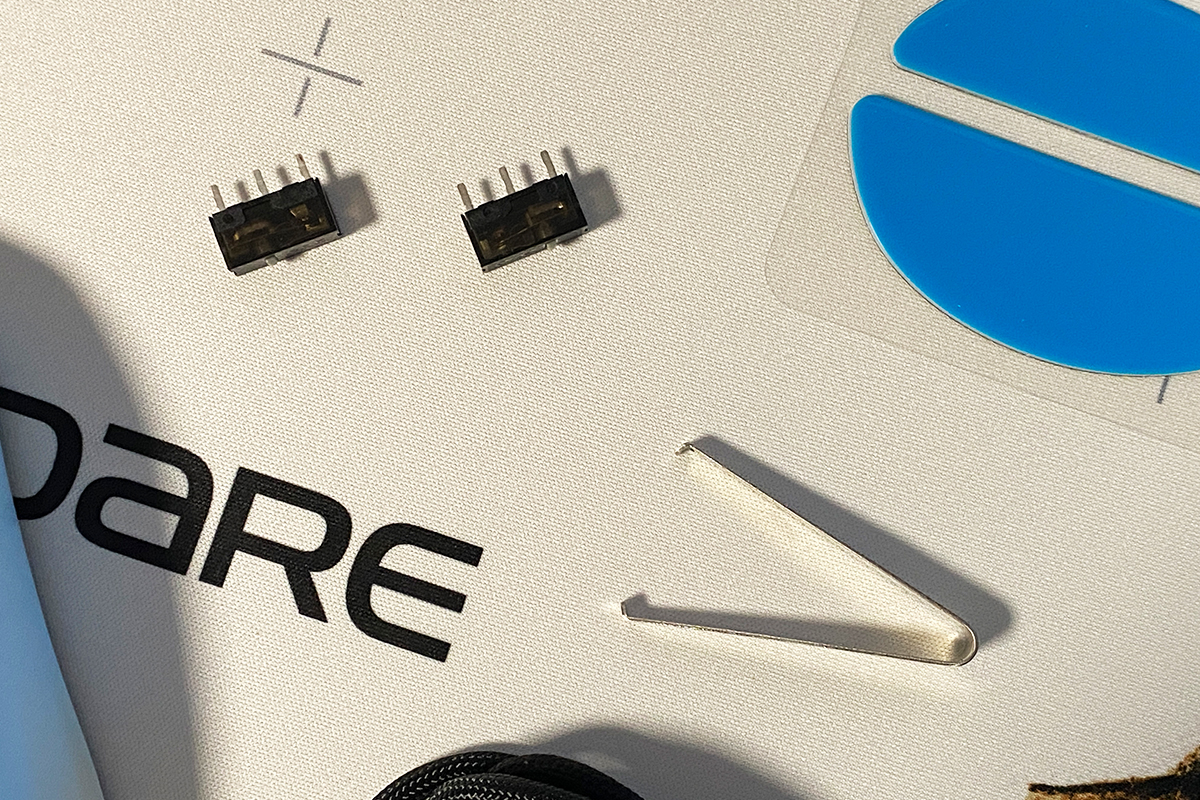
- two spare ROG Micro Switches II
- tweezers for quick switch replacement
- set of branded KJP-style adhesive grips
- set of replaceable Teflon glides
- set of branded ROG stickers
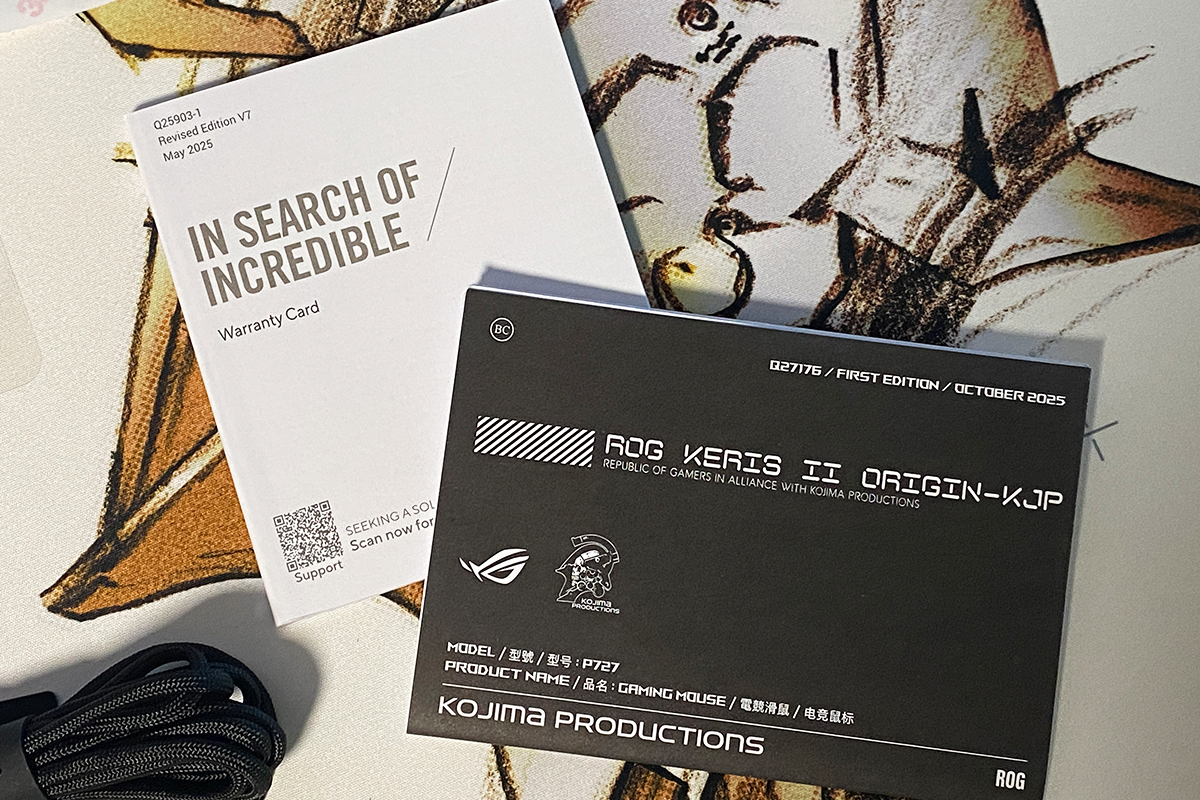
- user manual
- warranty booklet
- thank you promo card
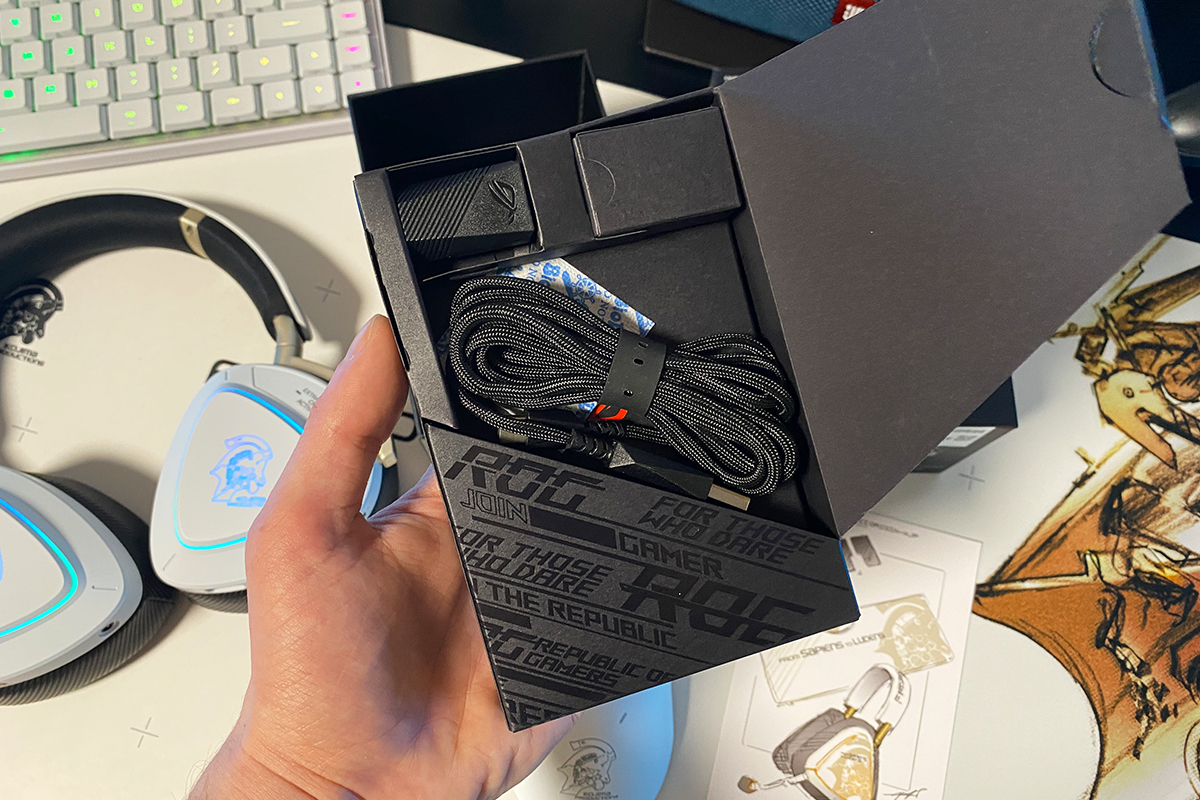
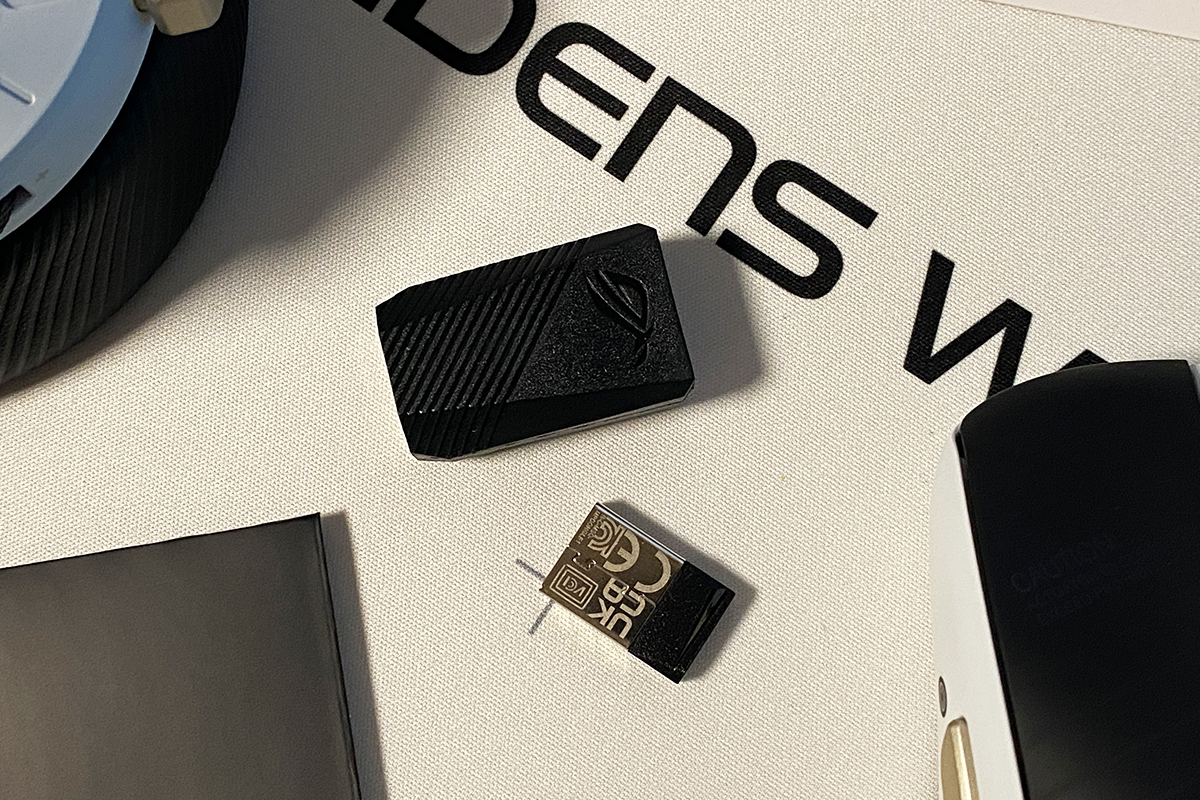
It’s worth noting that, like the base model, the mouse supports an 8000 Hz polling rate in wireless mode. However, achieving this requires a separate accessory – the ROG Polling Rate Booster adapter – which is not included in the standard package. Considering the relatively high price of the updated KJP model, it would have been reasonable for ASUS to include this accessory in the box.

In terms of shape, the KJP mouse remains unchanged, but the design has been completely revamped. The updated Keris II Origin features contrasting black main buttons, gold side buttons, and a collaboration-specific slogan. The ROG and Kojima Productions logos on the body include RGB lighting compatible with Aura Sync. From a peripheral enthusiast’s perspective, this device stands out as the most appealing in the new series.
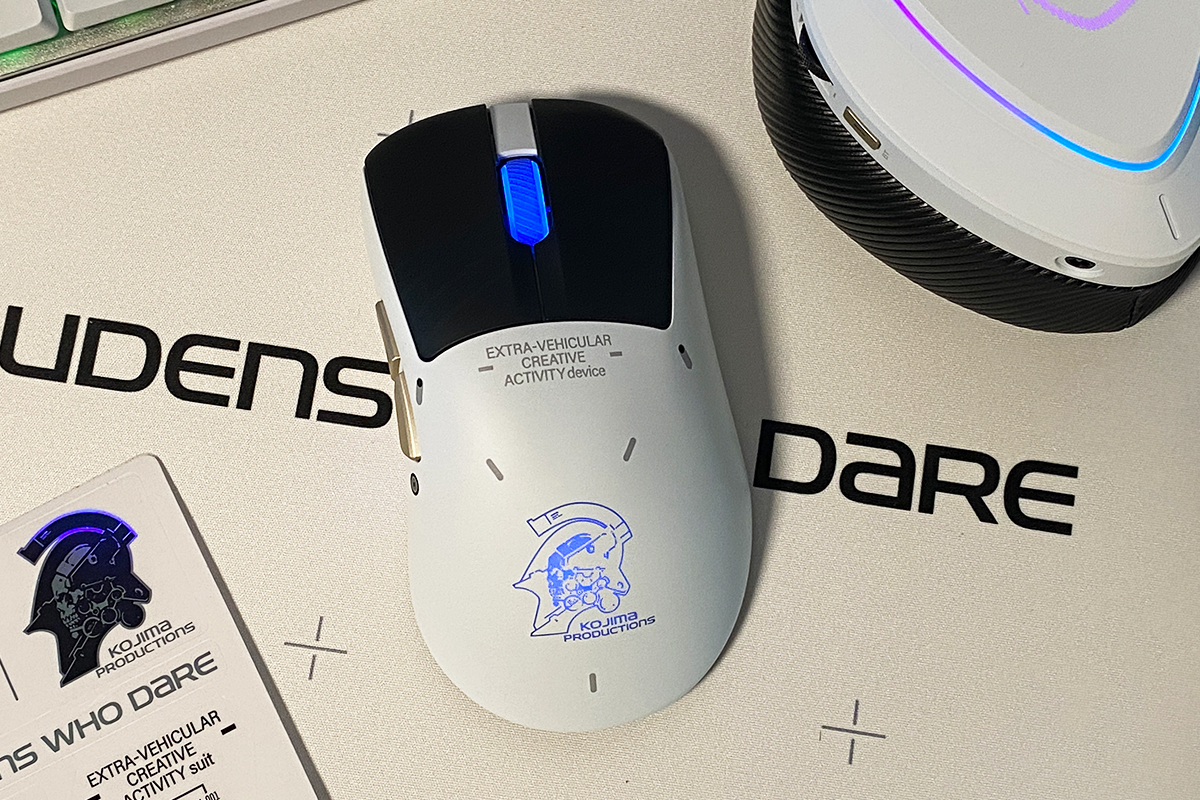
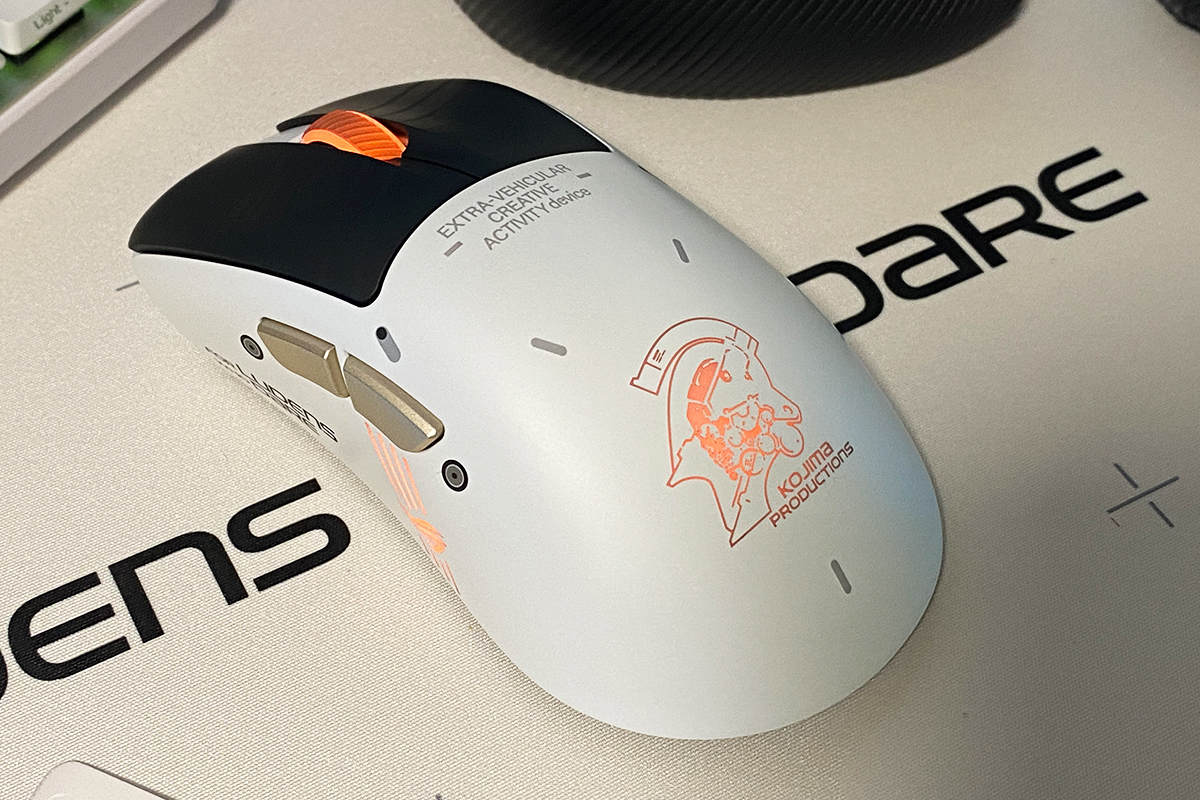
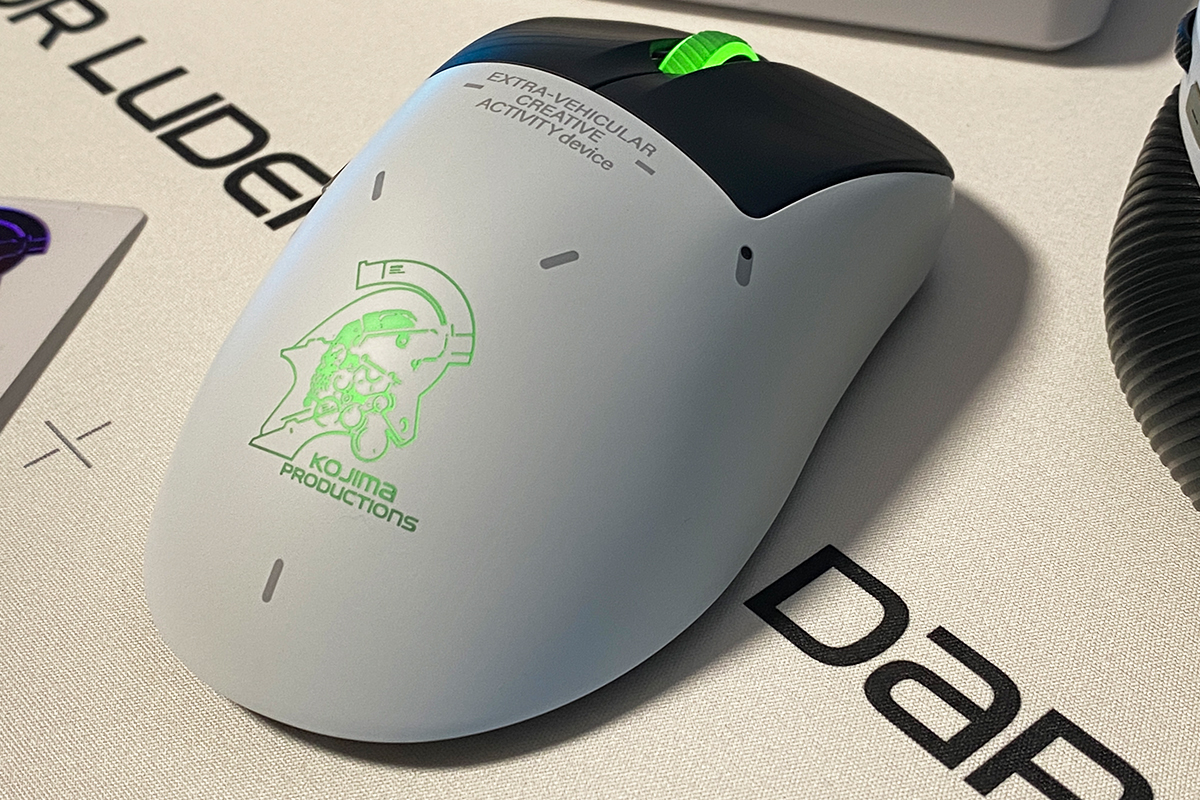
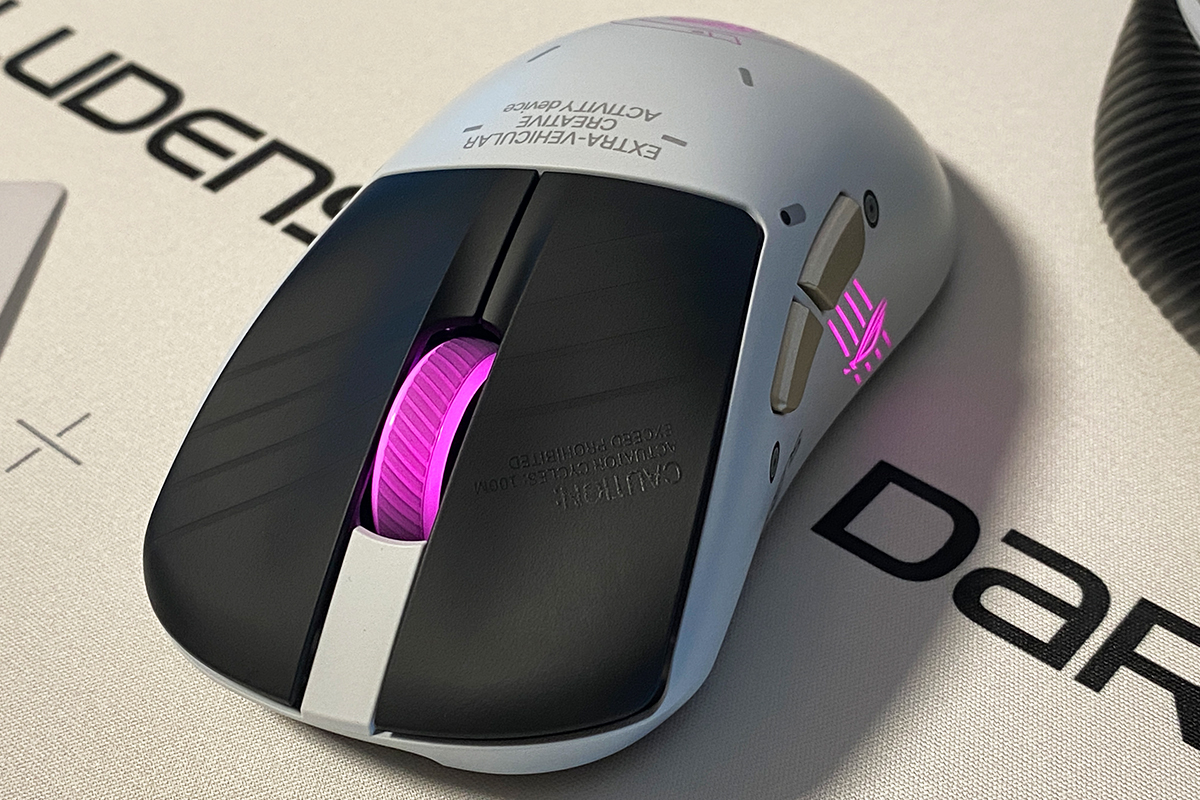
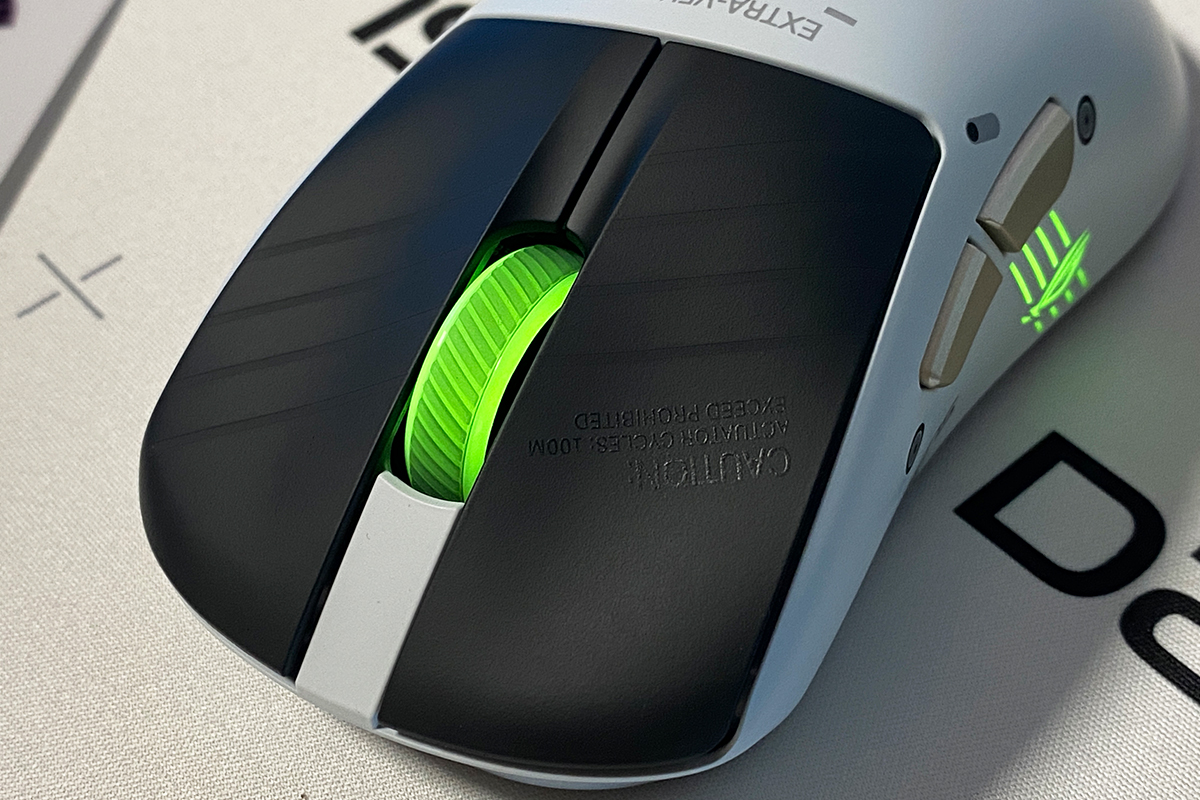
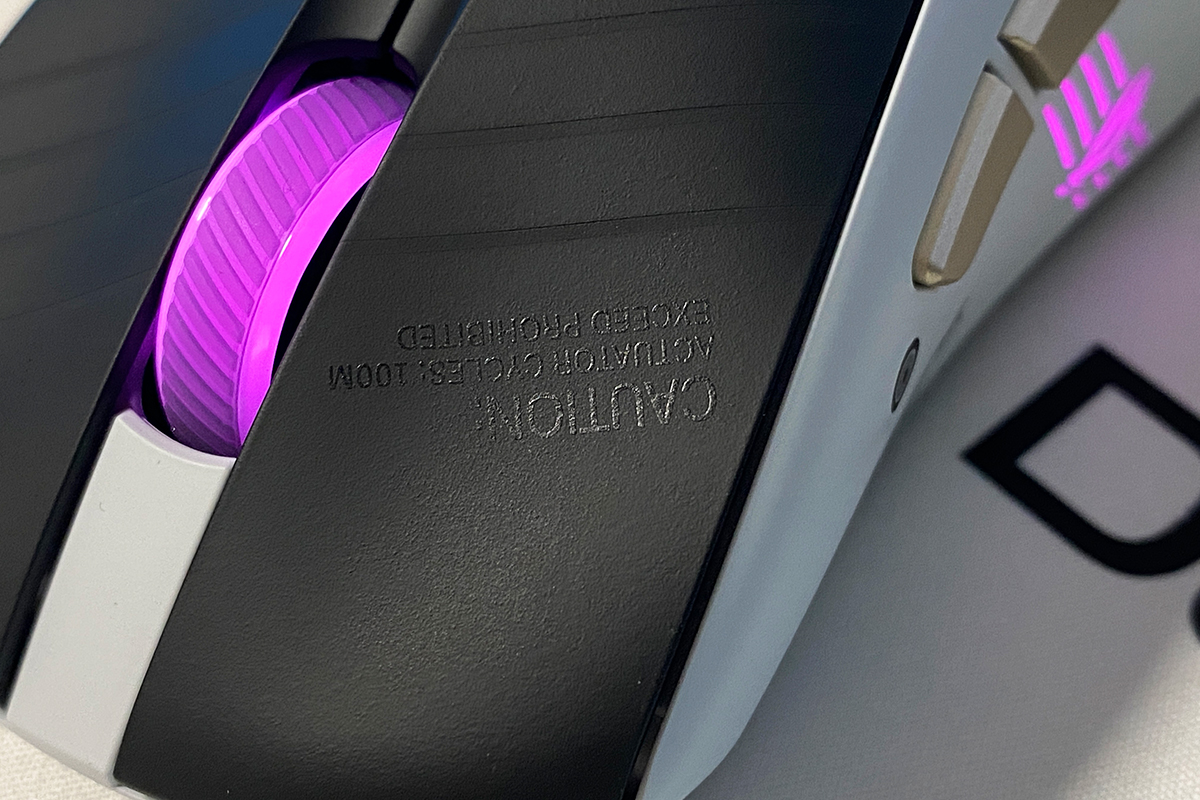
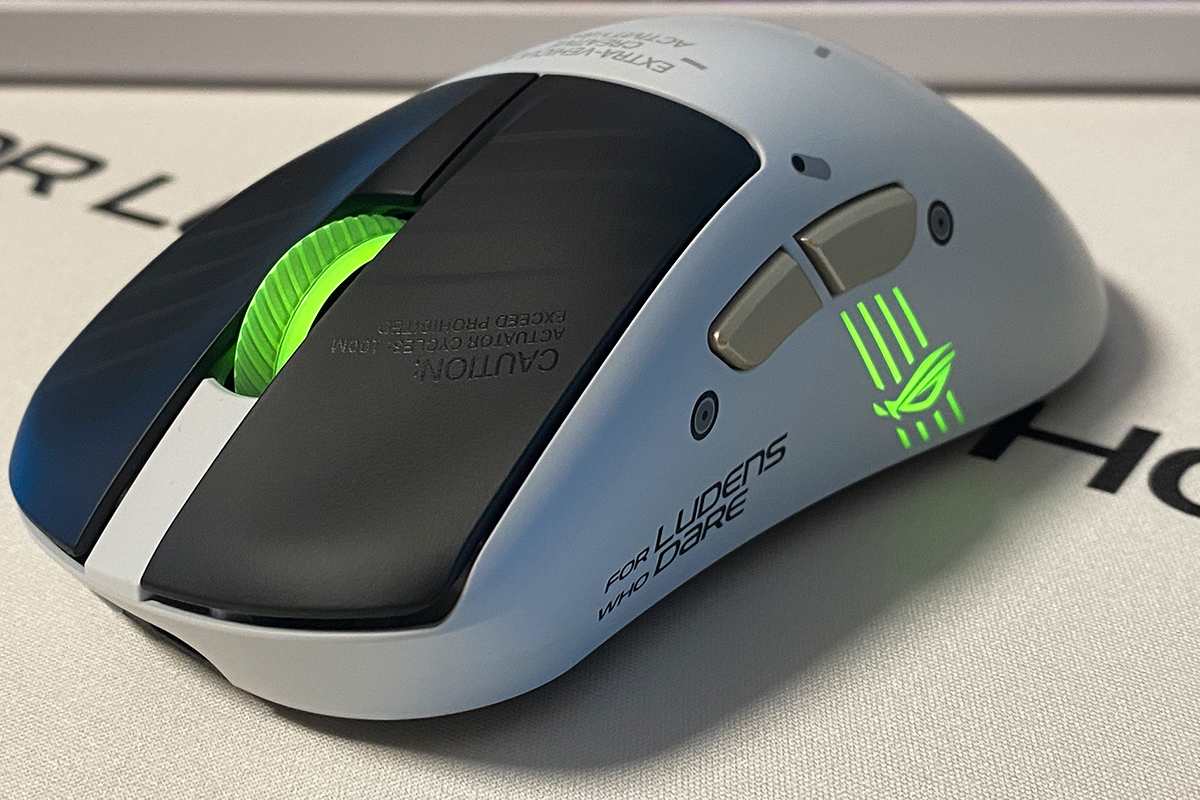
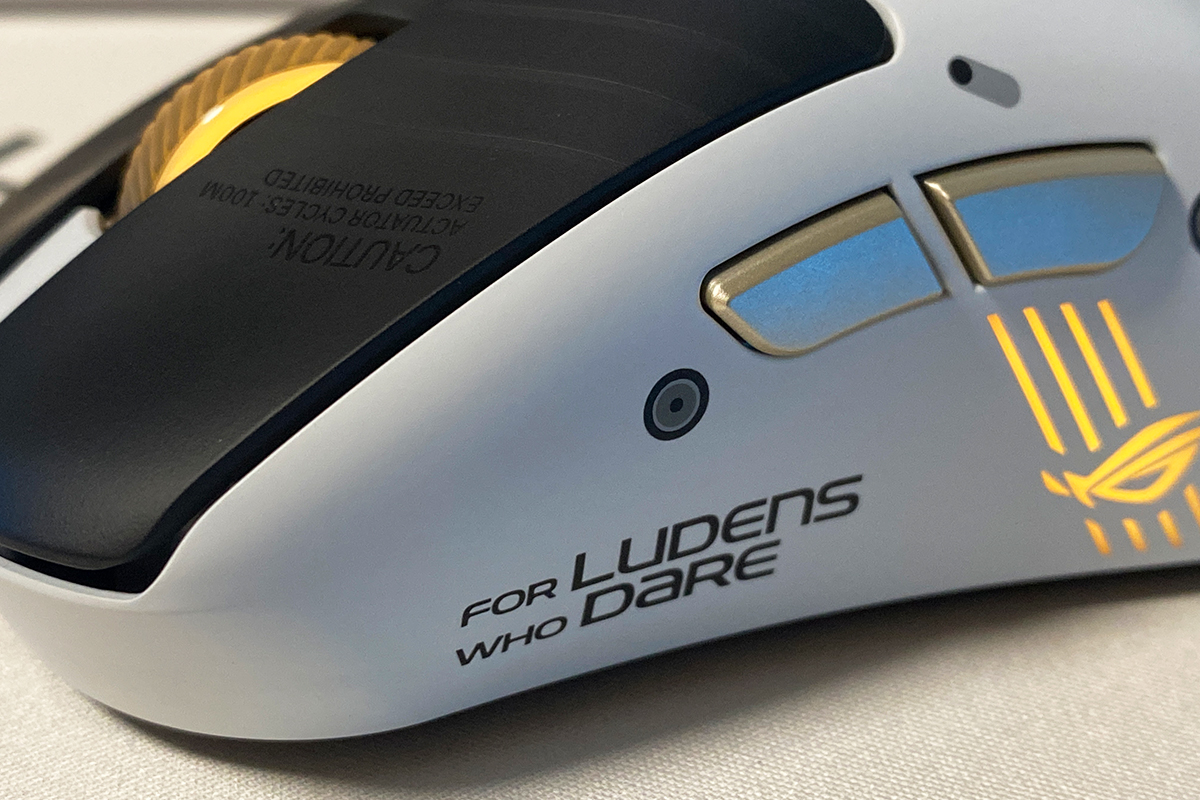
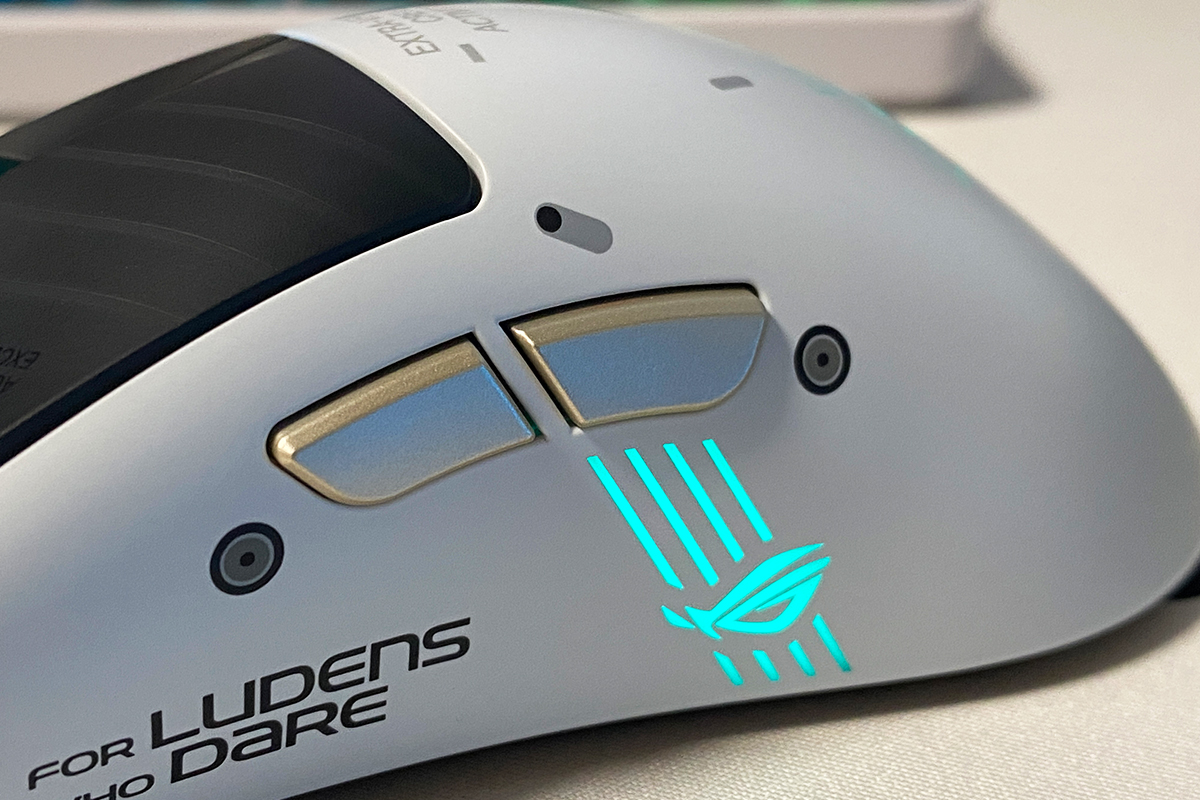
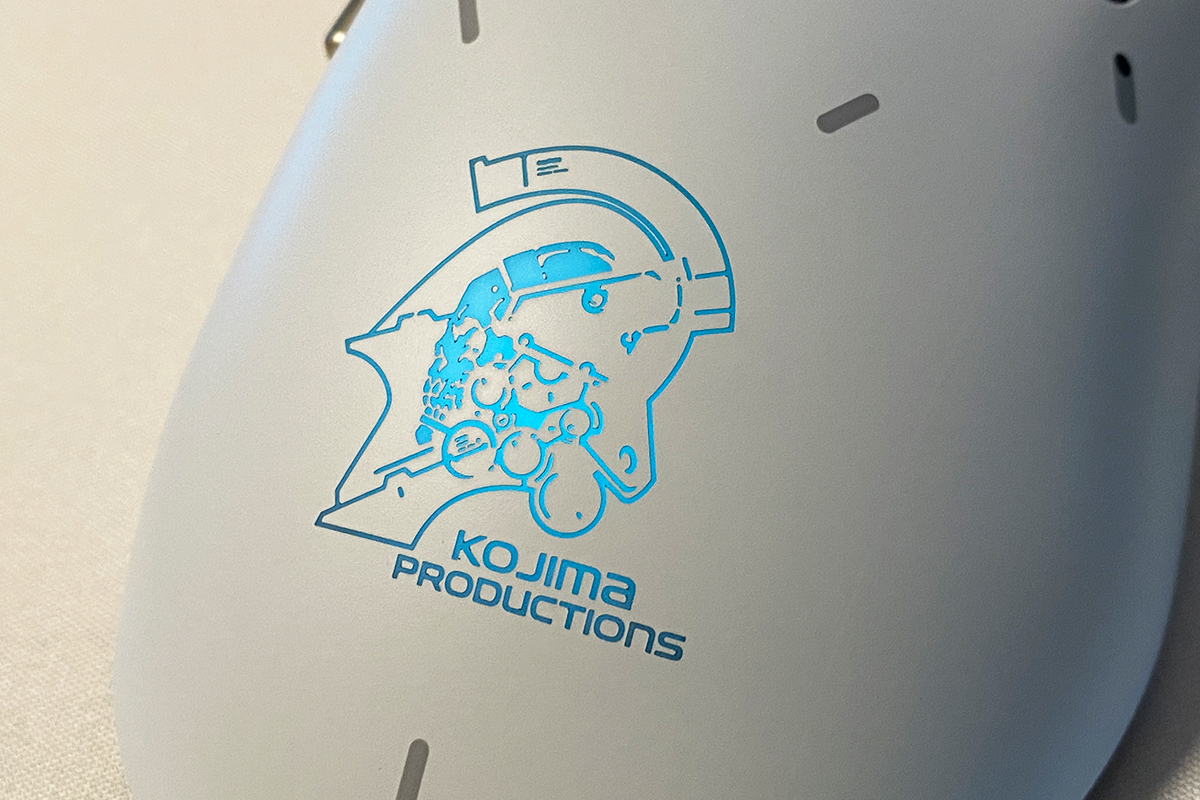
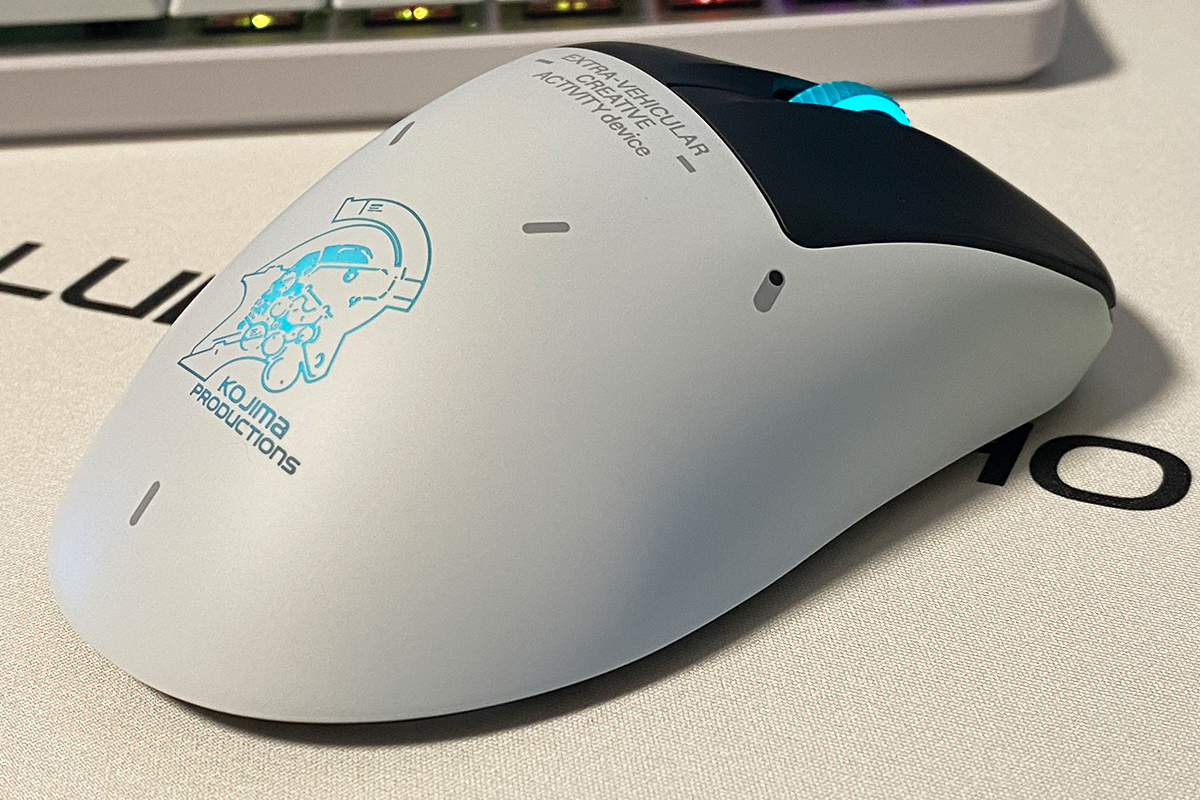
The internal components of the KJP version are identical to those of the base Keris II Origin. It features a modified ROG AimPoint Pro optical sensor with Track-On-Glass technology (42,000 DPI, 750 IPS, 50 G) and ROG Micro Switch II buttons rated for 100 million clicks. The ROG Push-Fit Switch Socket II system, which allows switches to be replaced without soldering, is also included.

The only difference from the base model noted in the official specifications is weight. The original mouse weighed 65 g, while the KJP version is listed at 63 g. This 2-gram reduction may be due to the redesigned main buttons, although the materials appear unchanged. In any case, the difference is minor and not significant enough to warrant further focus.

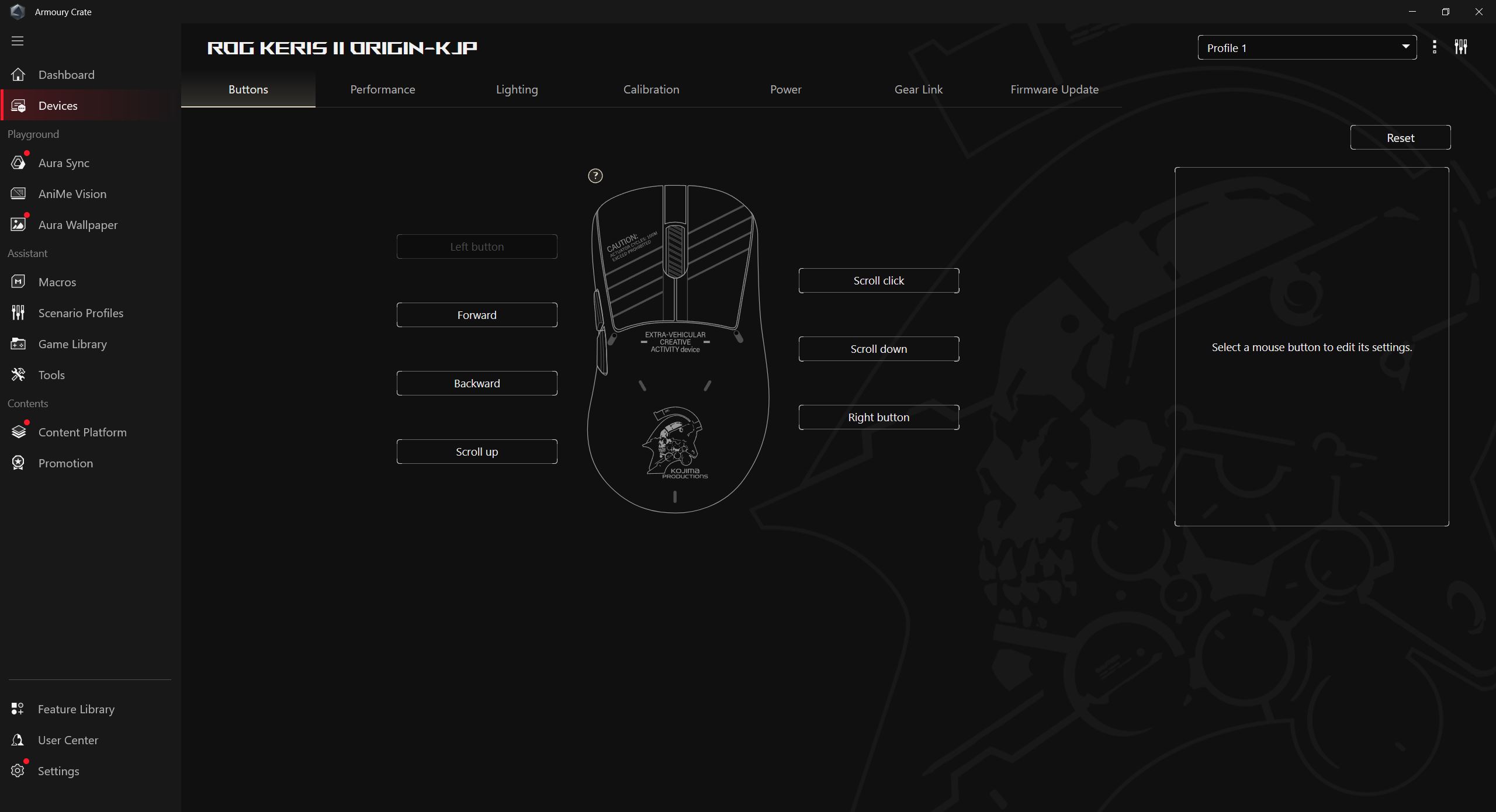
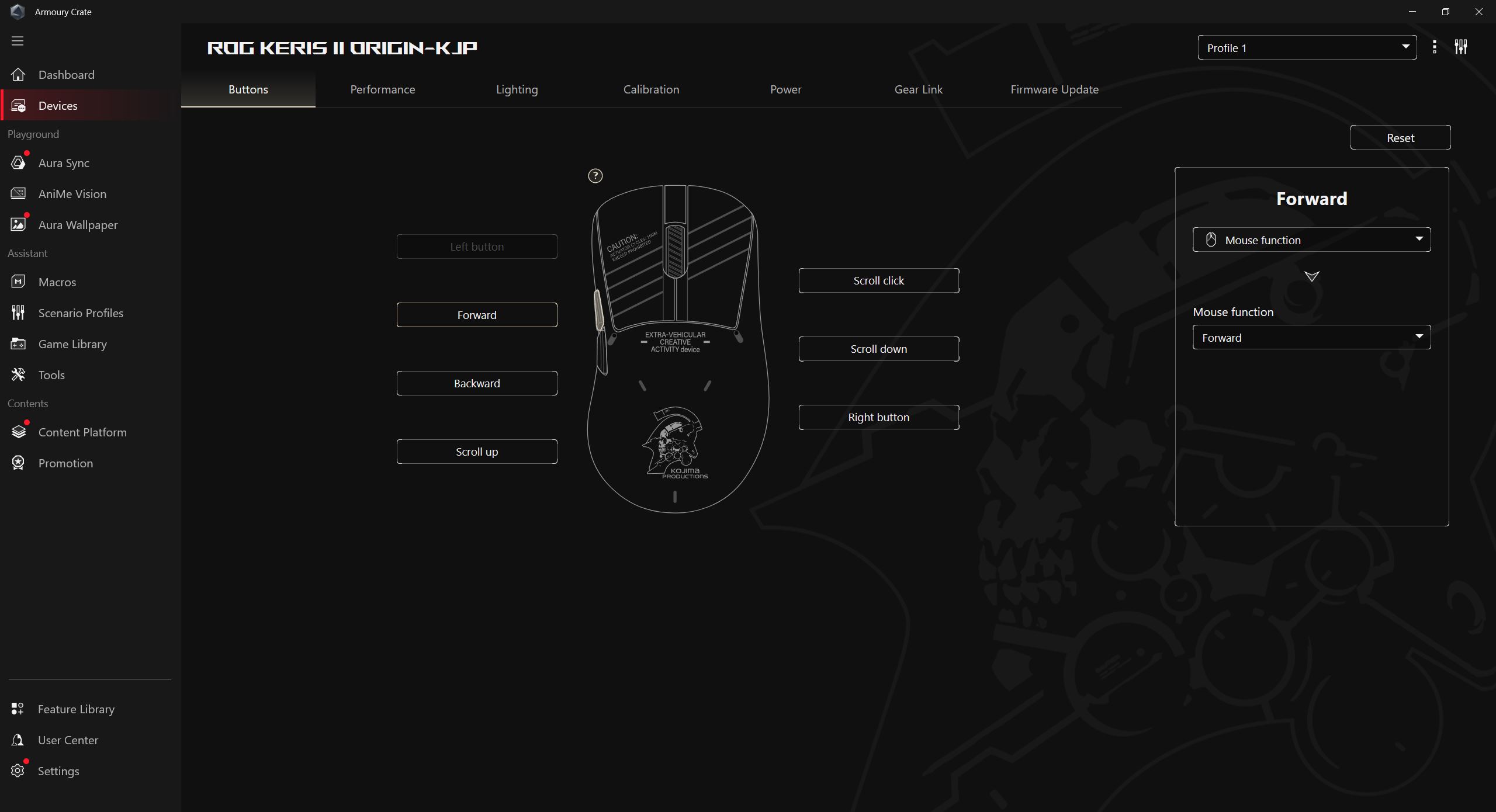
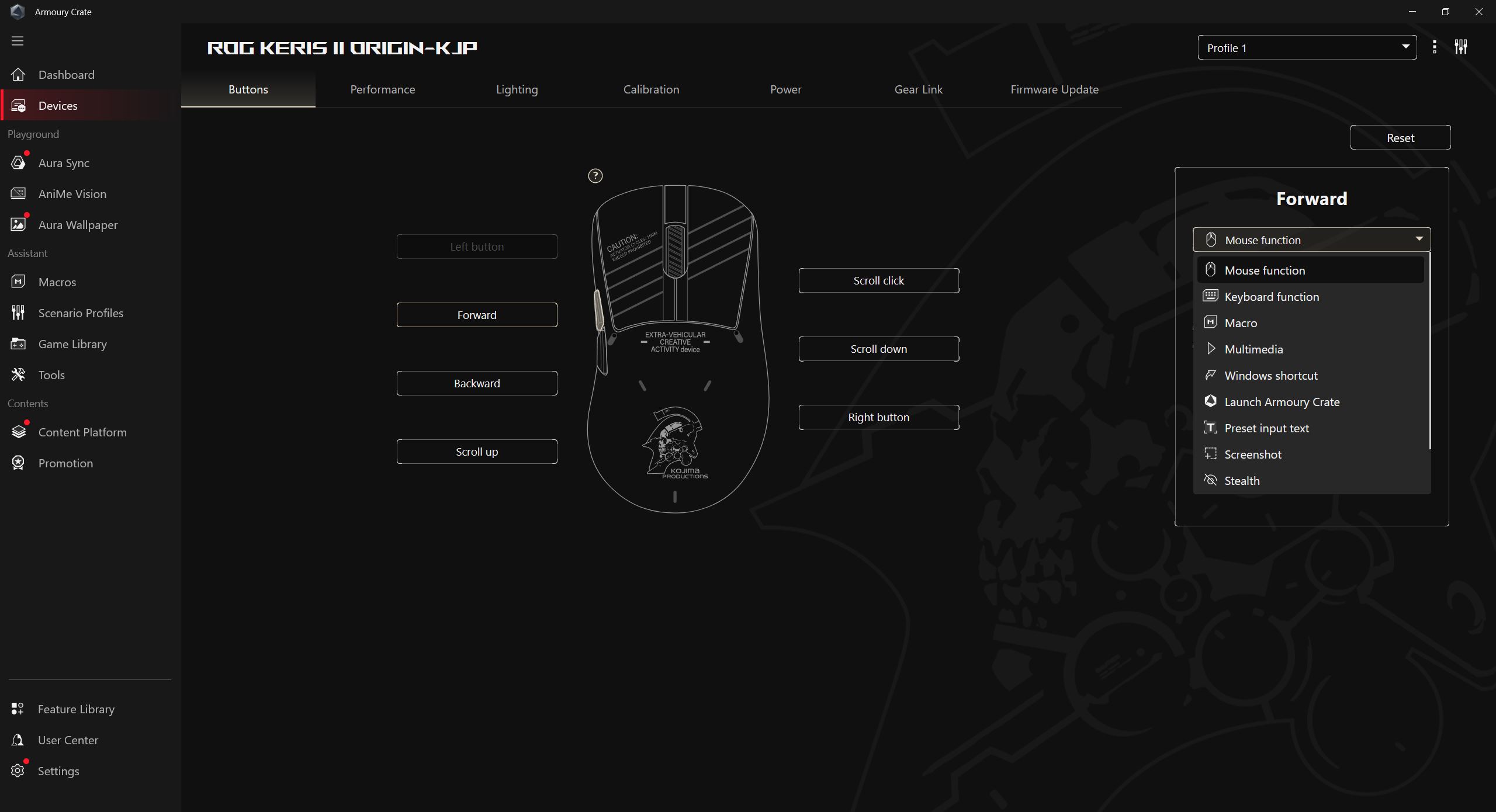
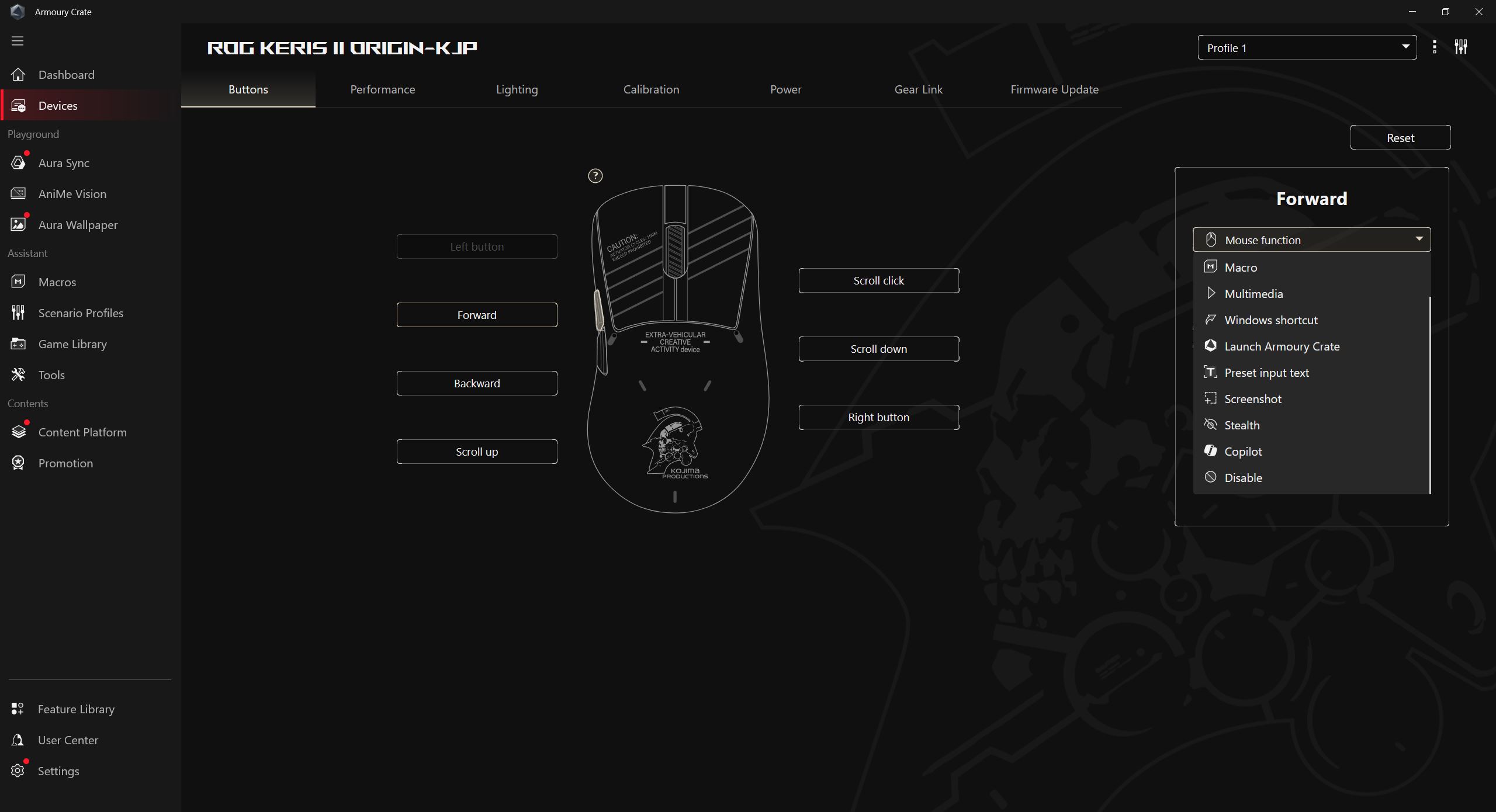
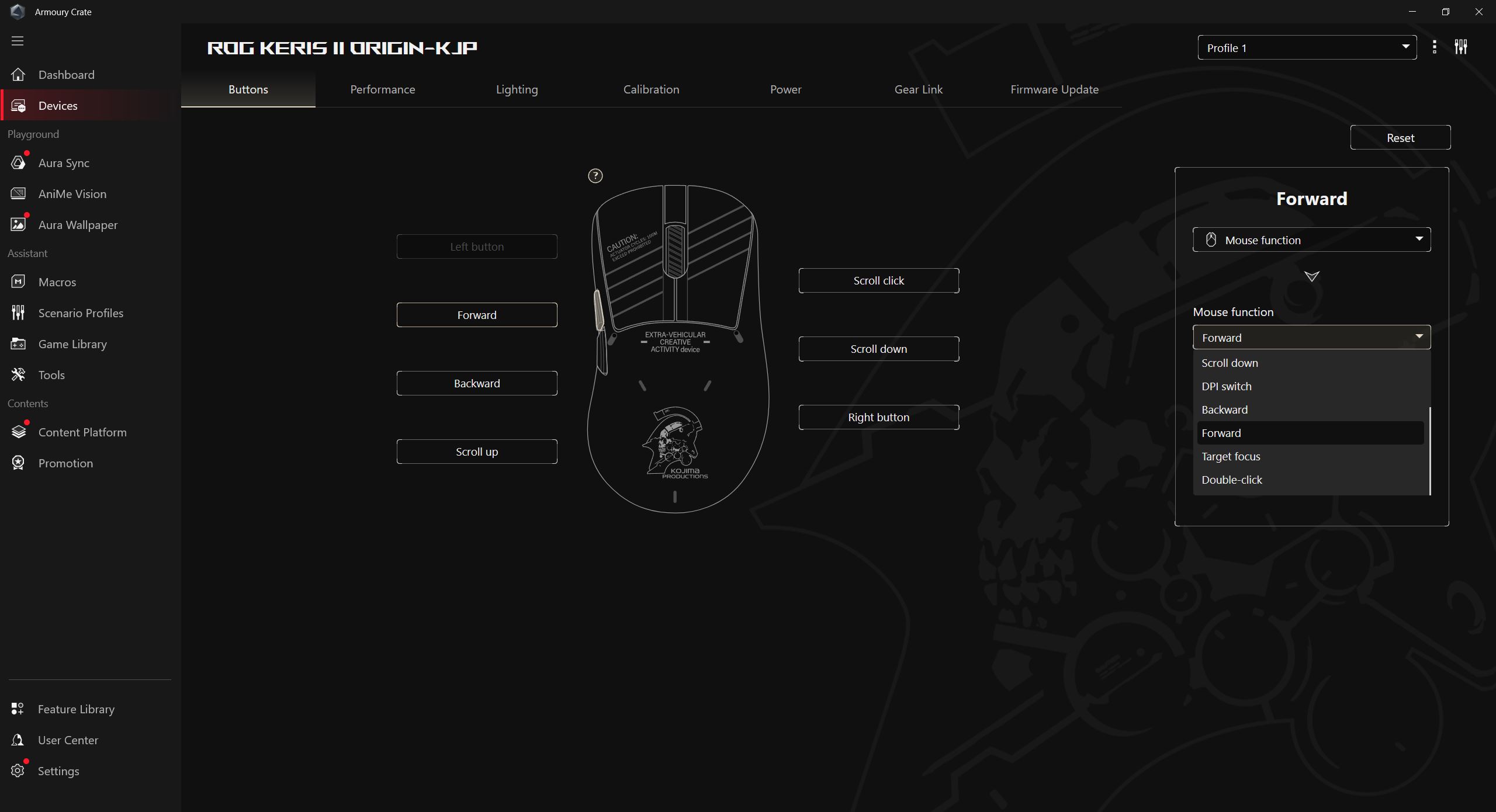
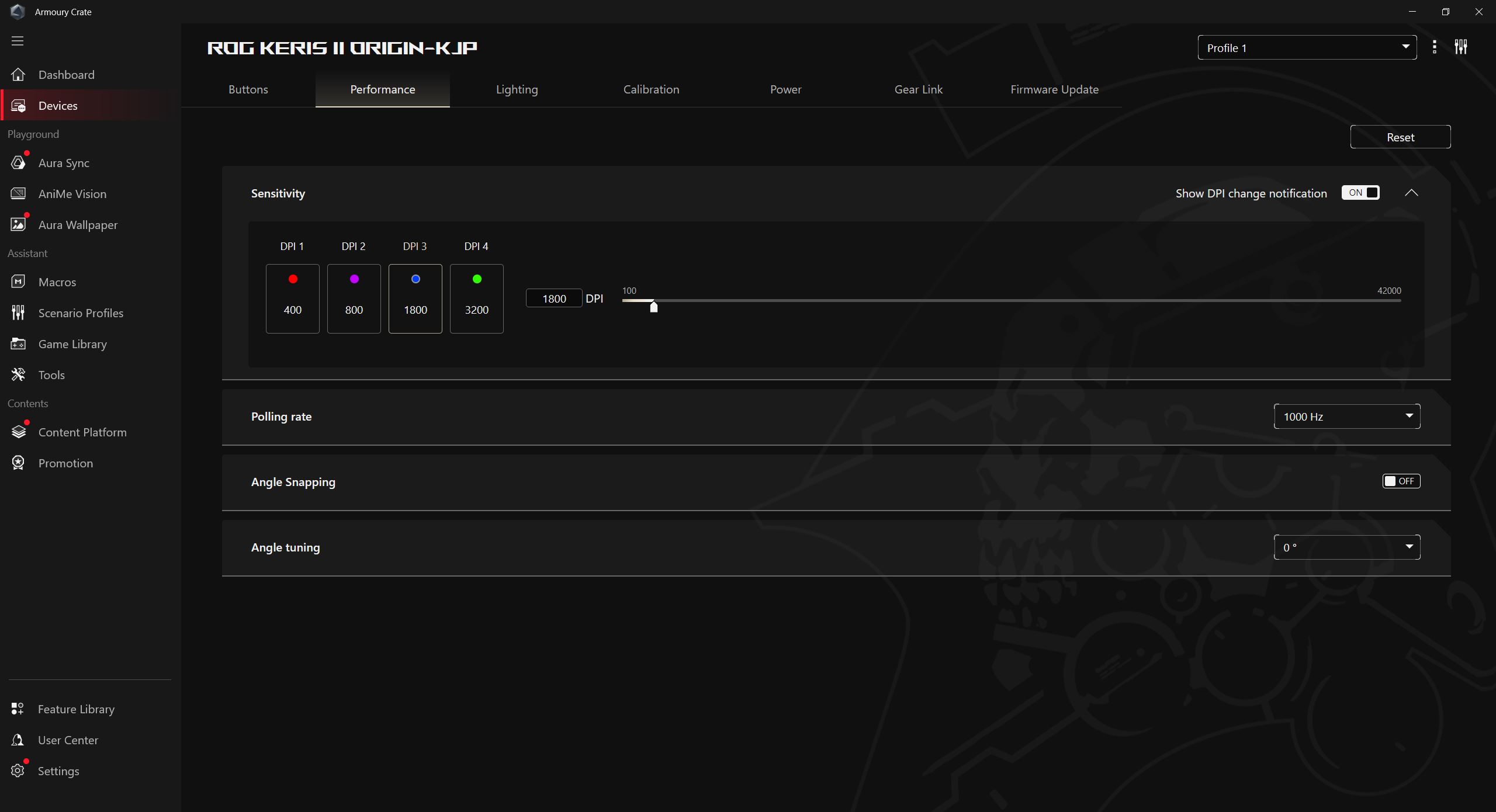
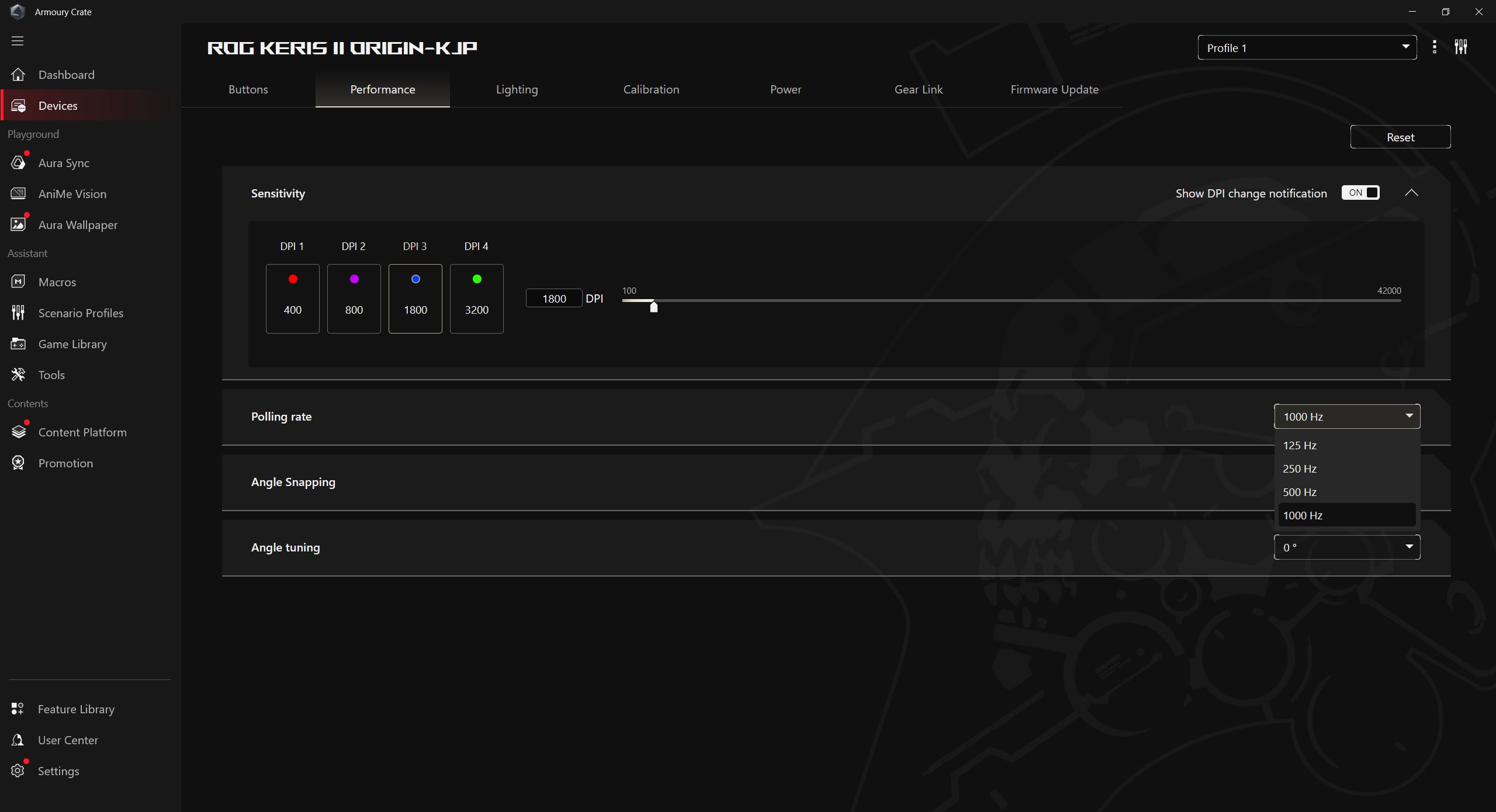
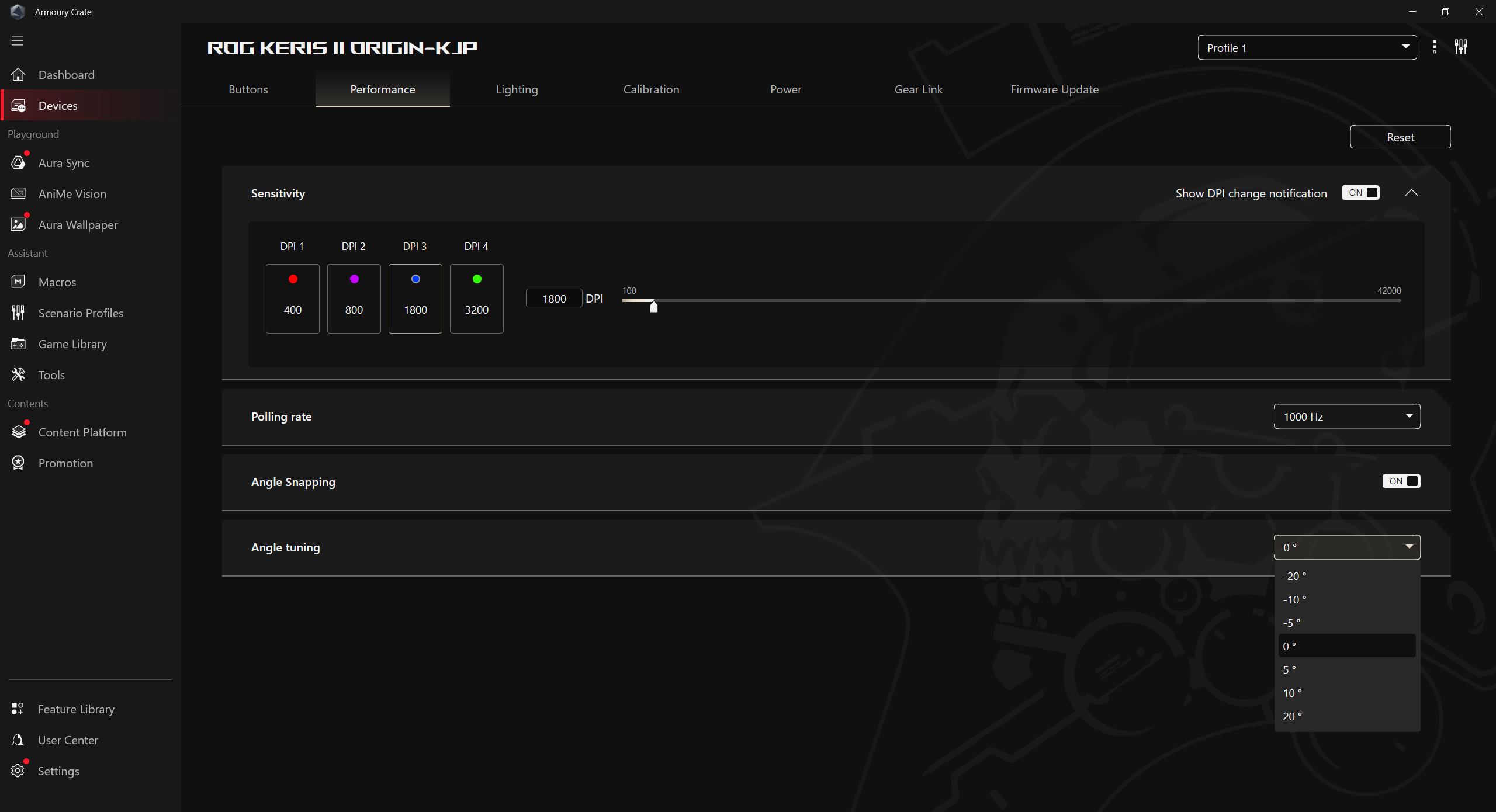
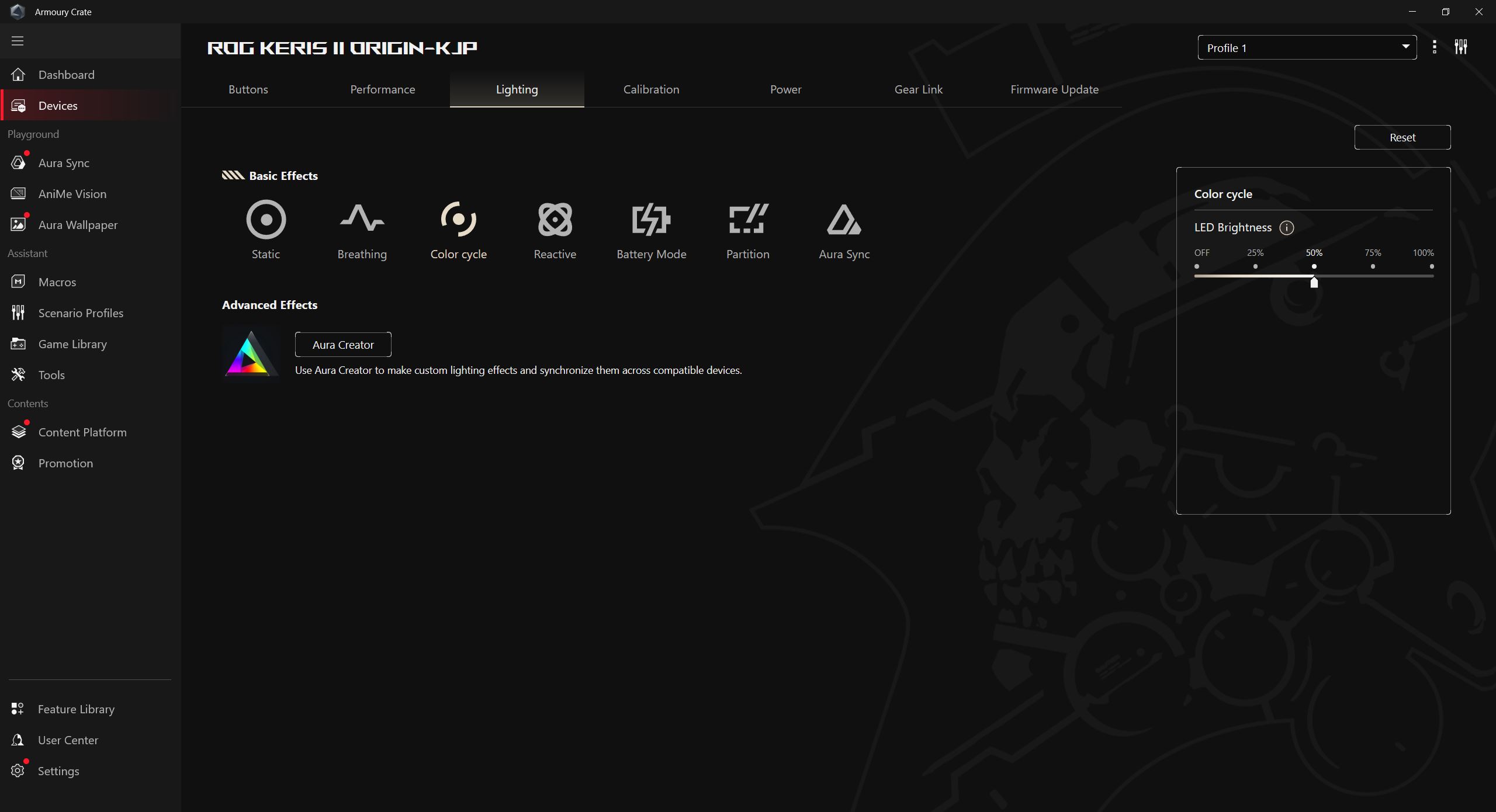
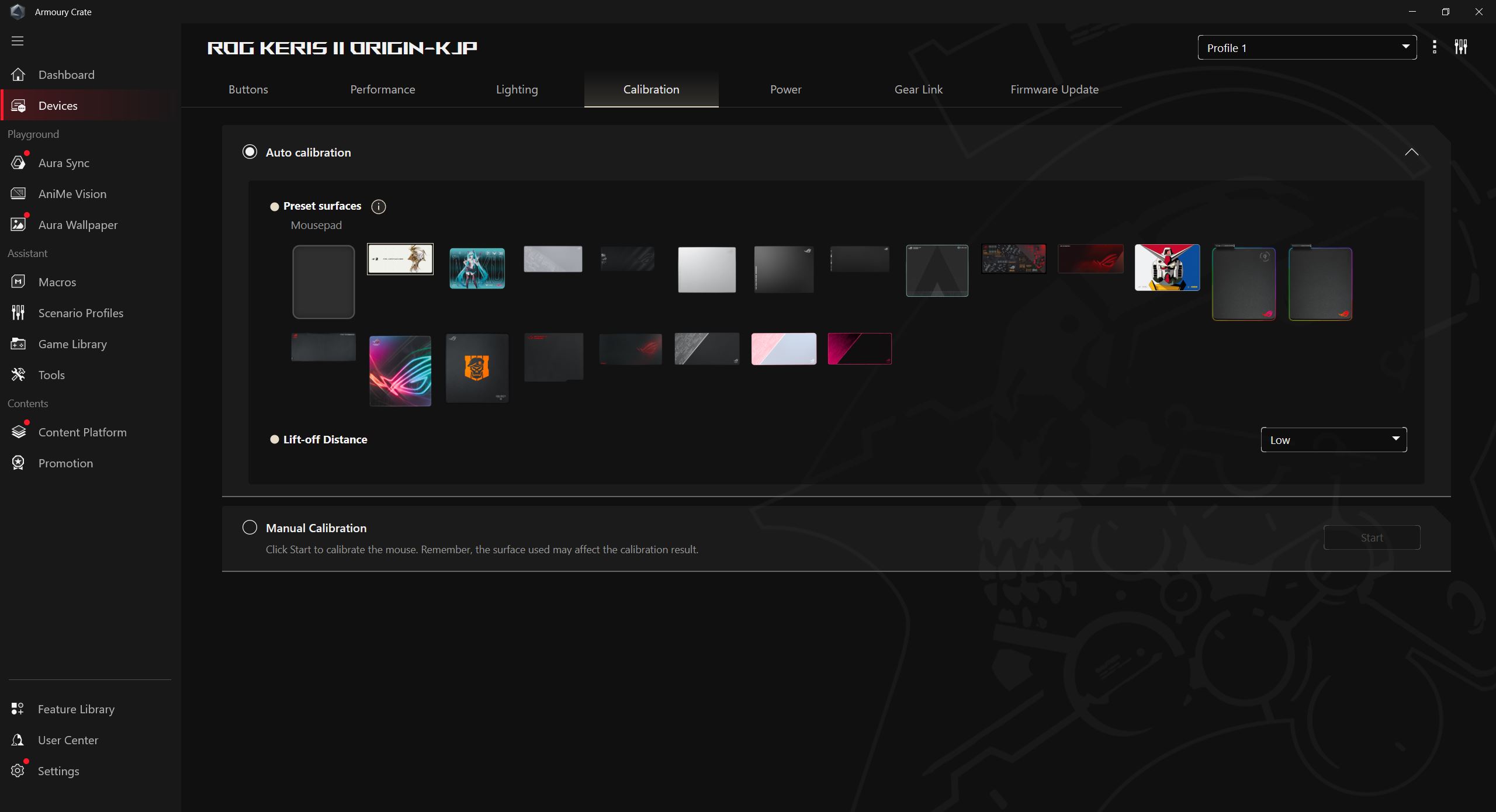
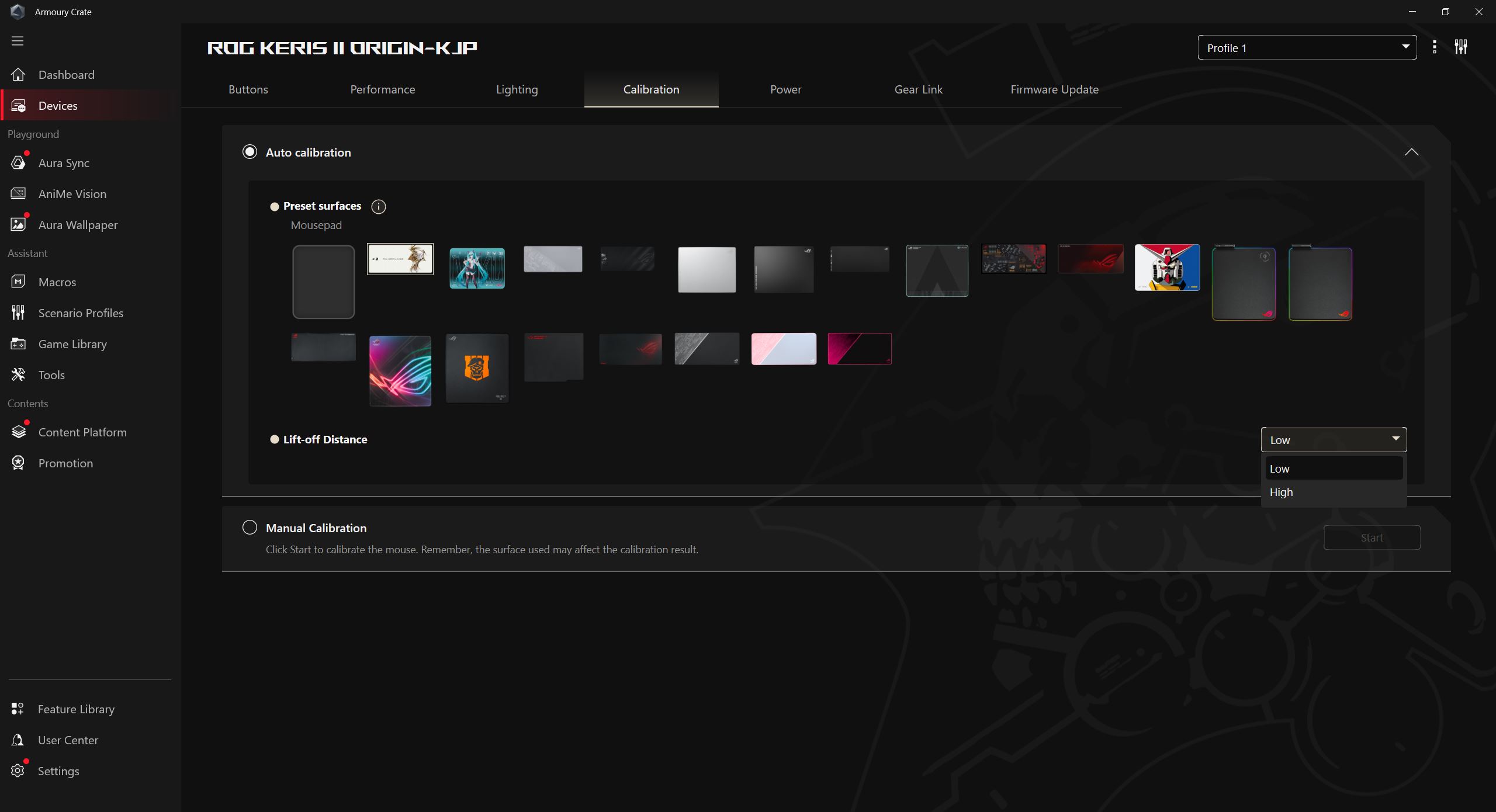
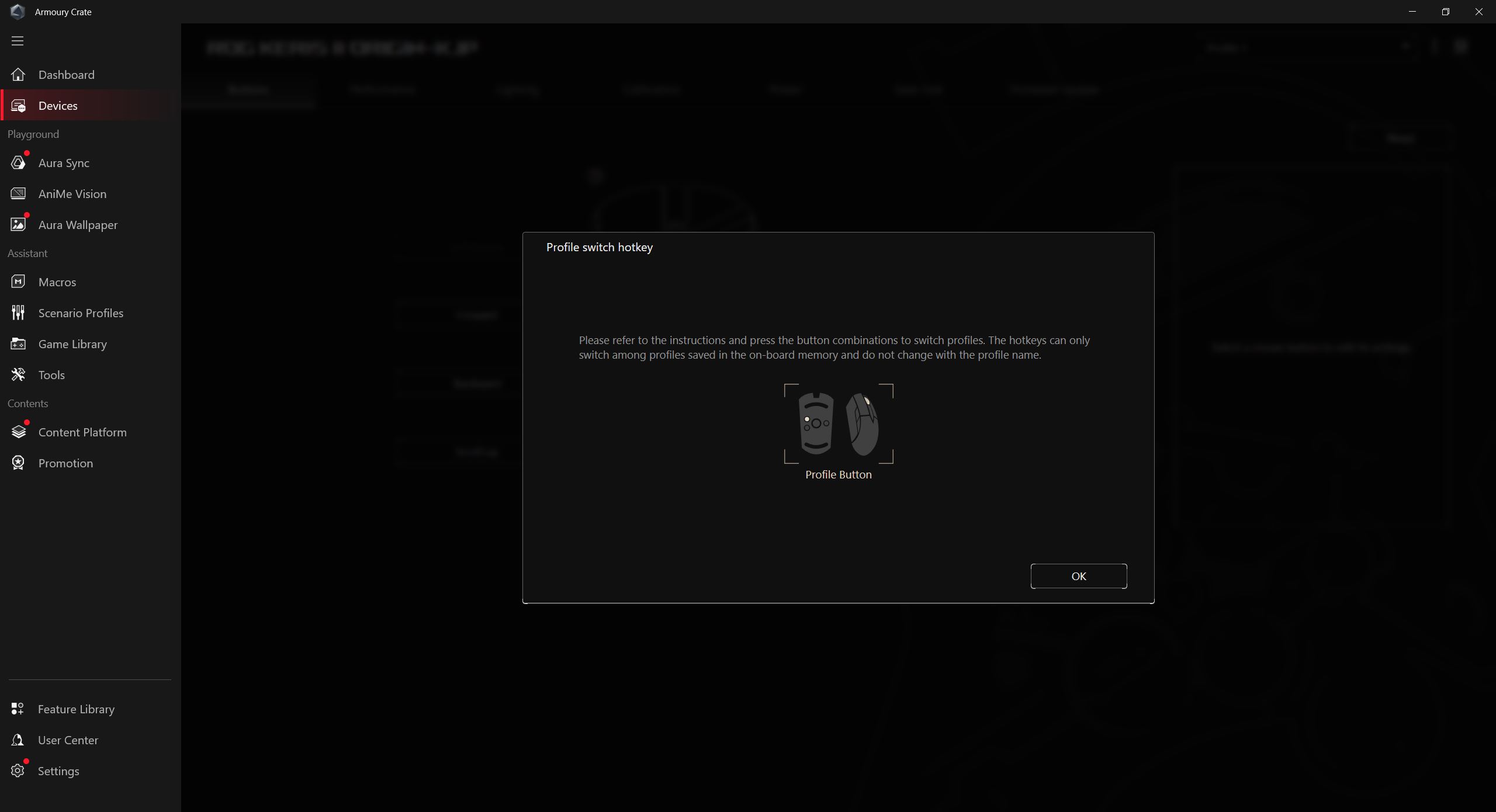
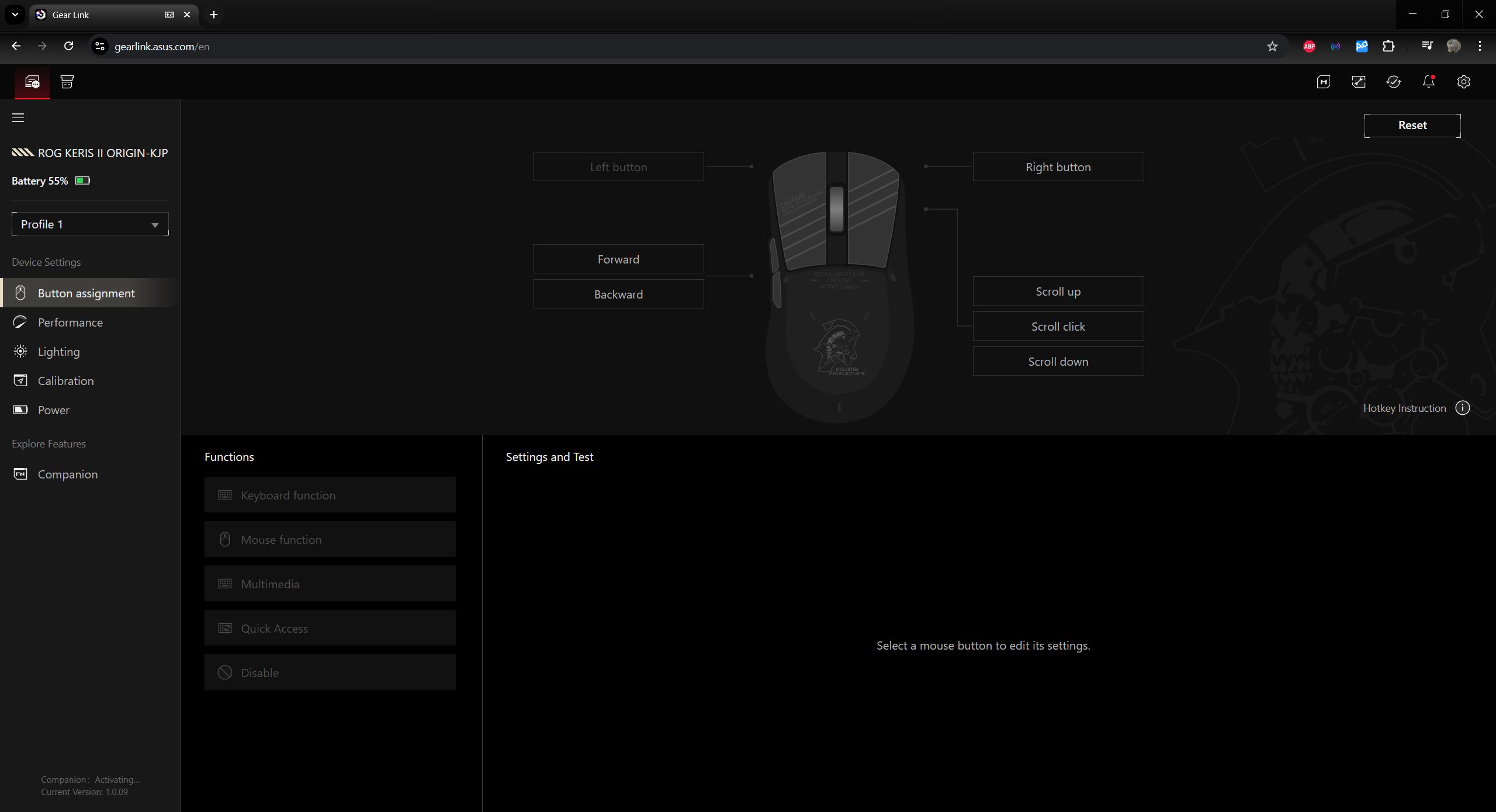
The software remains unchanged. Like the base model, the Keris II Origin-KJP supports both the standard Armoury Crate application and the new web-based Gear Link. After reviewing the settings in both applications, there are no changes aside from an exclusive Kojima Productions-themed background in Armoury Crate. A gallery of screenshots with all settings is provided below for reference.
Armoury Crate








Gear Link


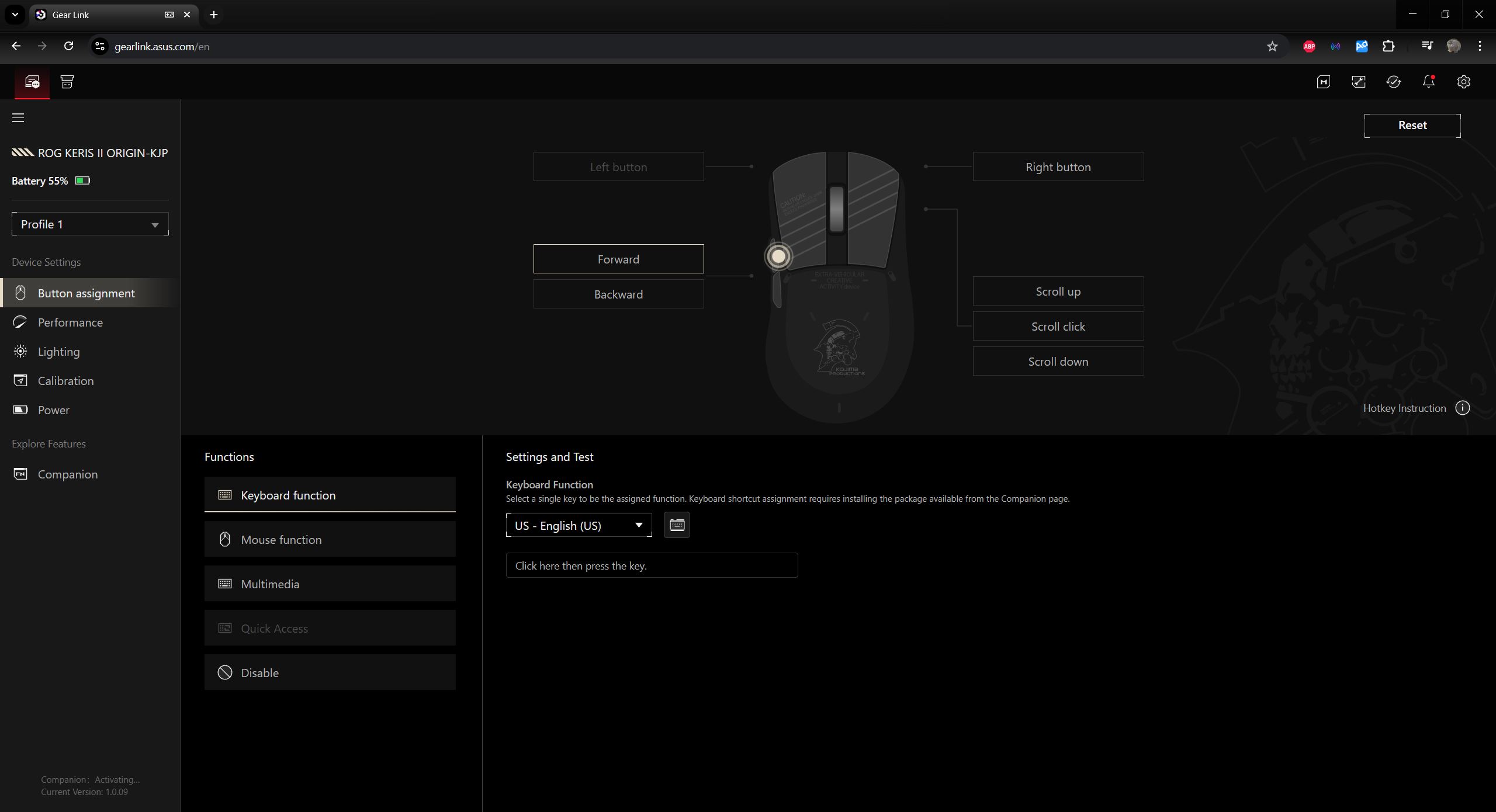
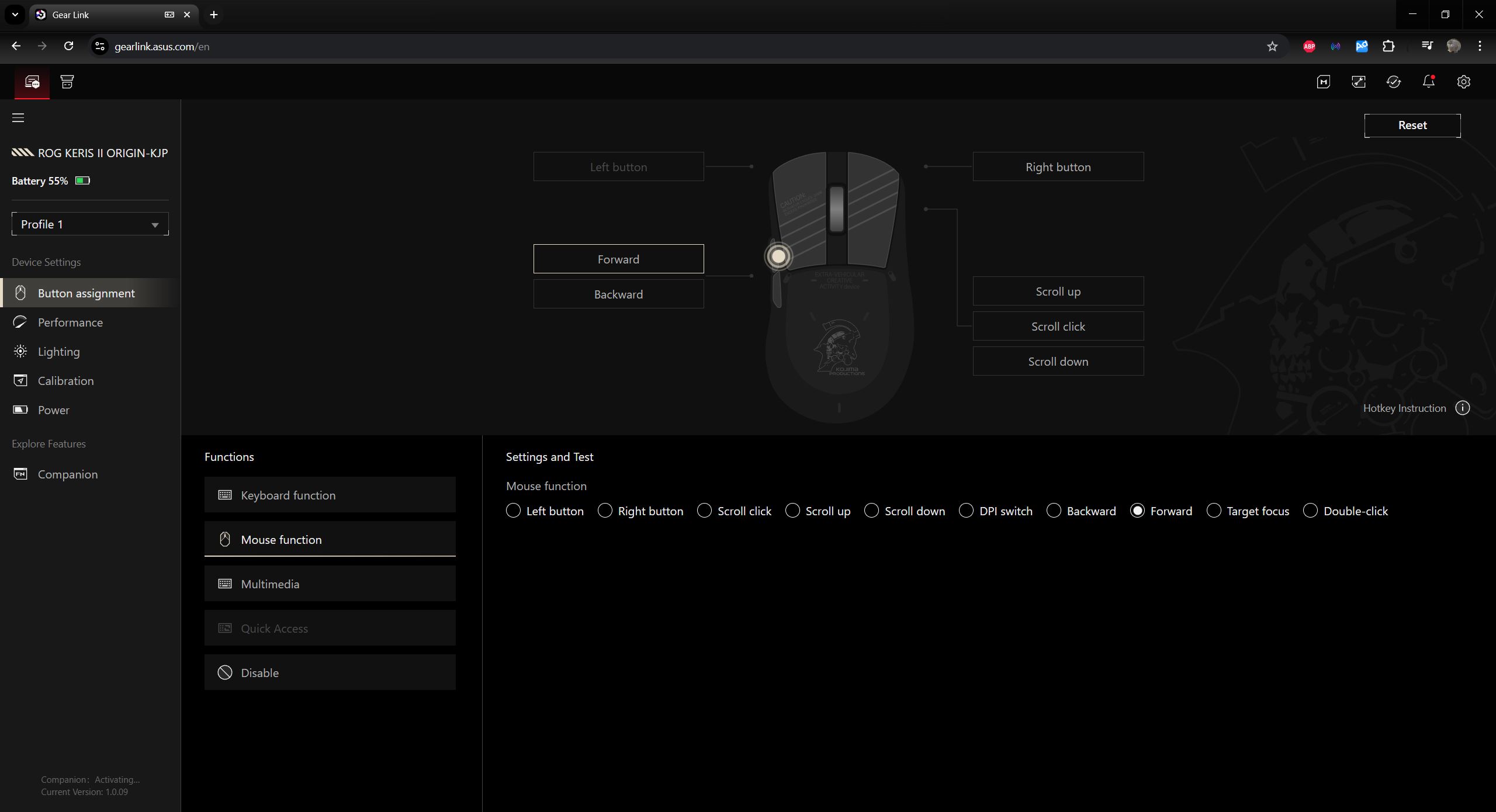
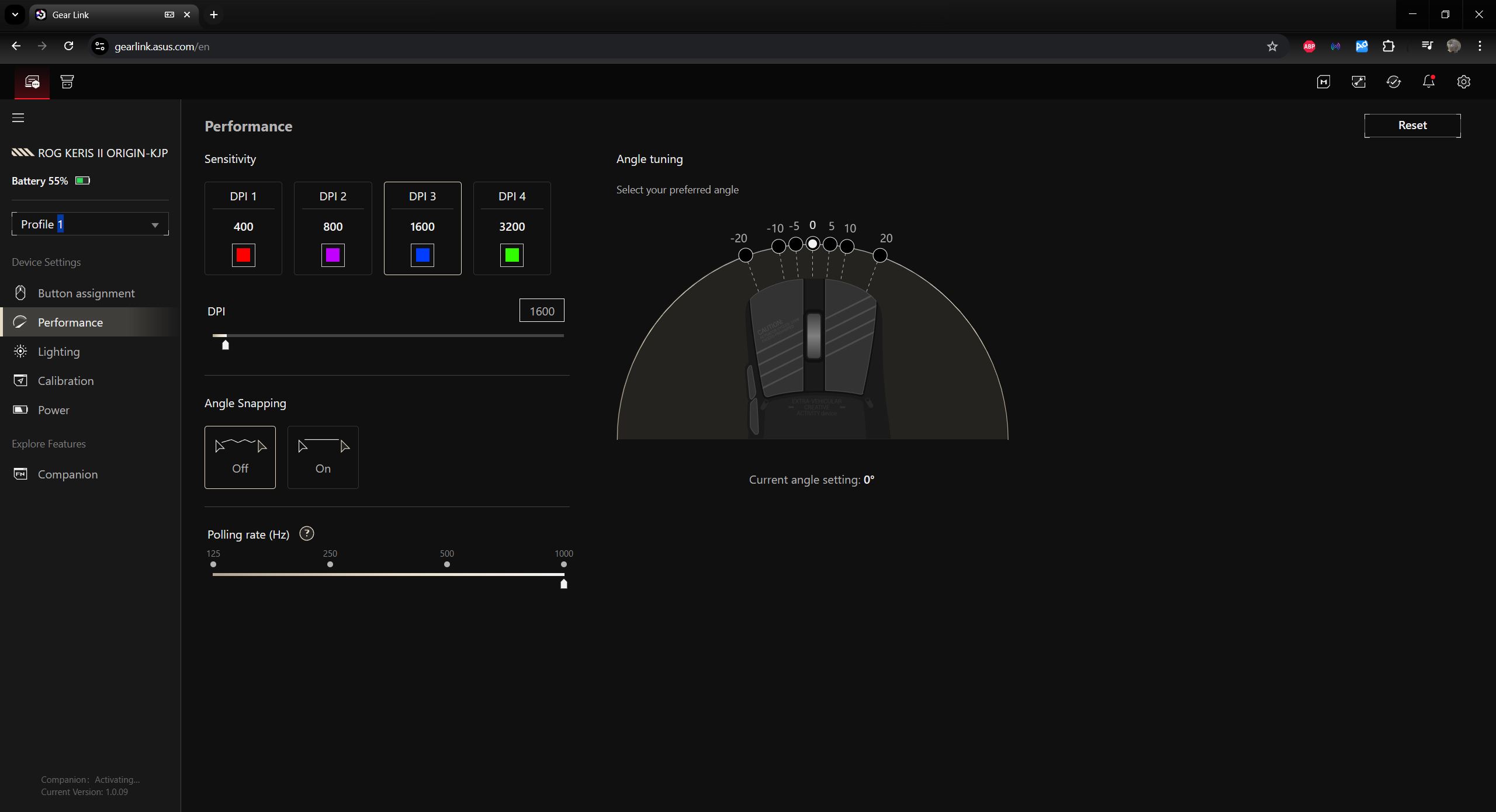
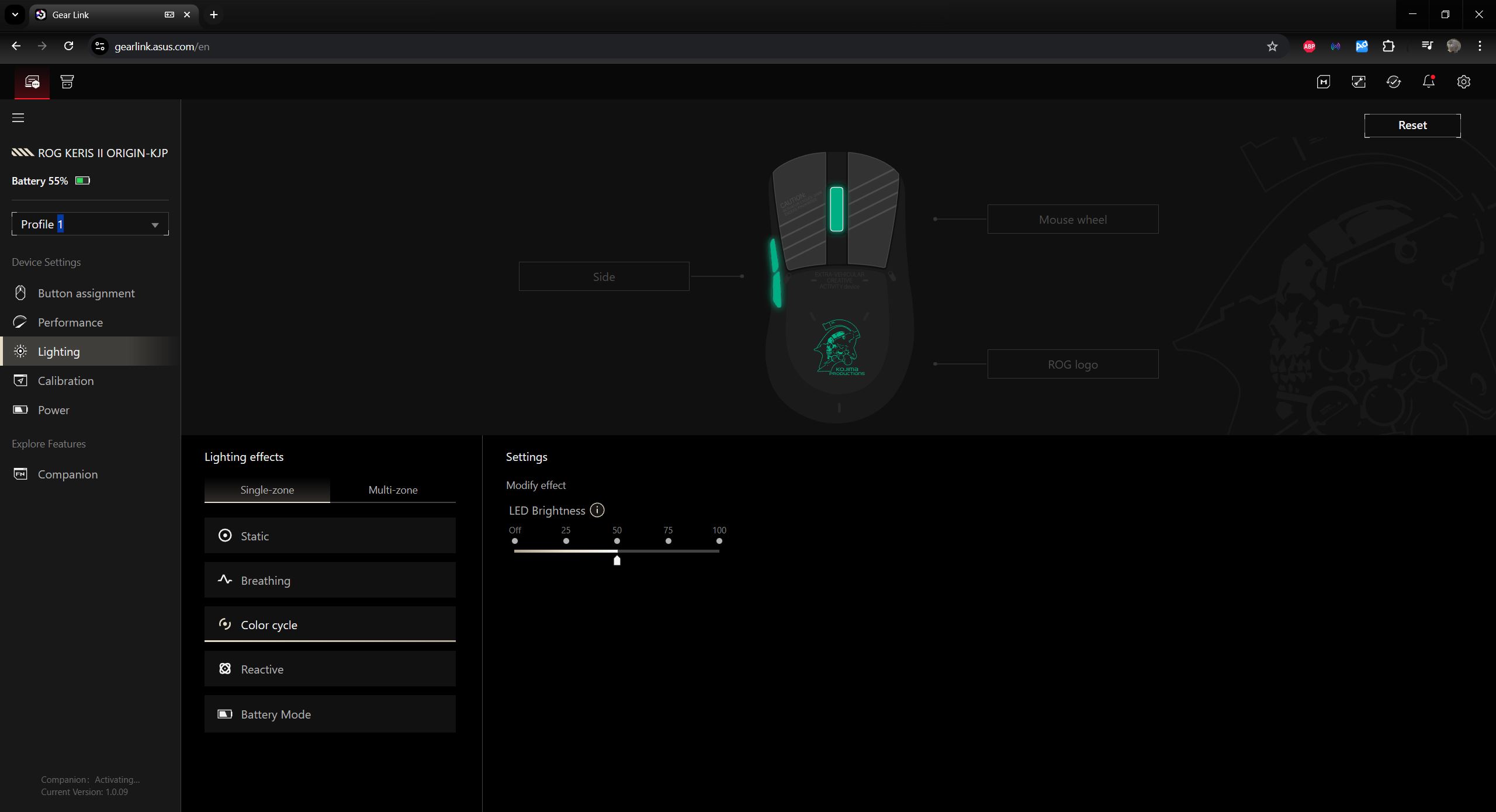
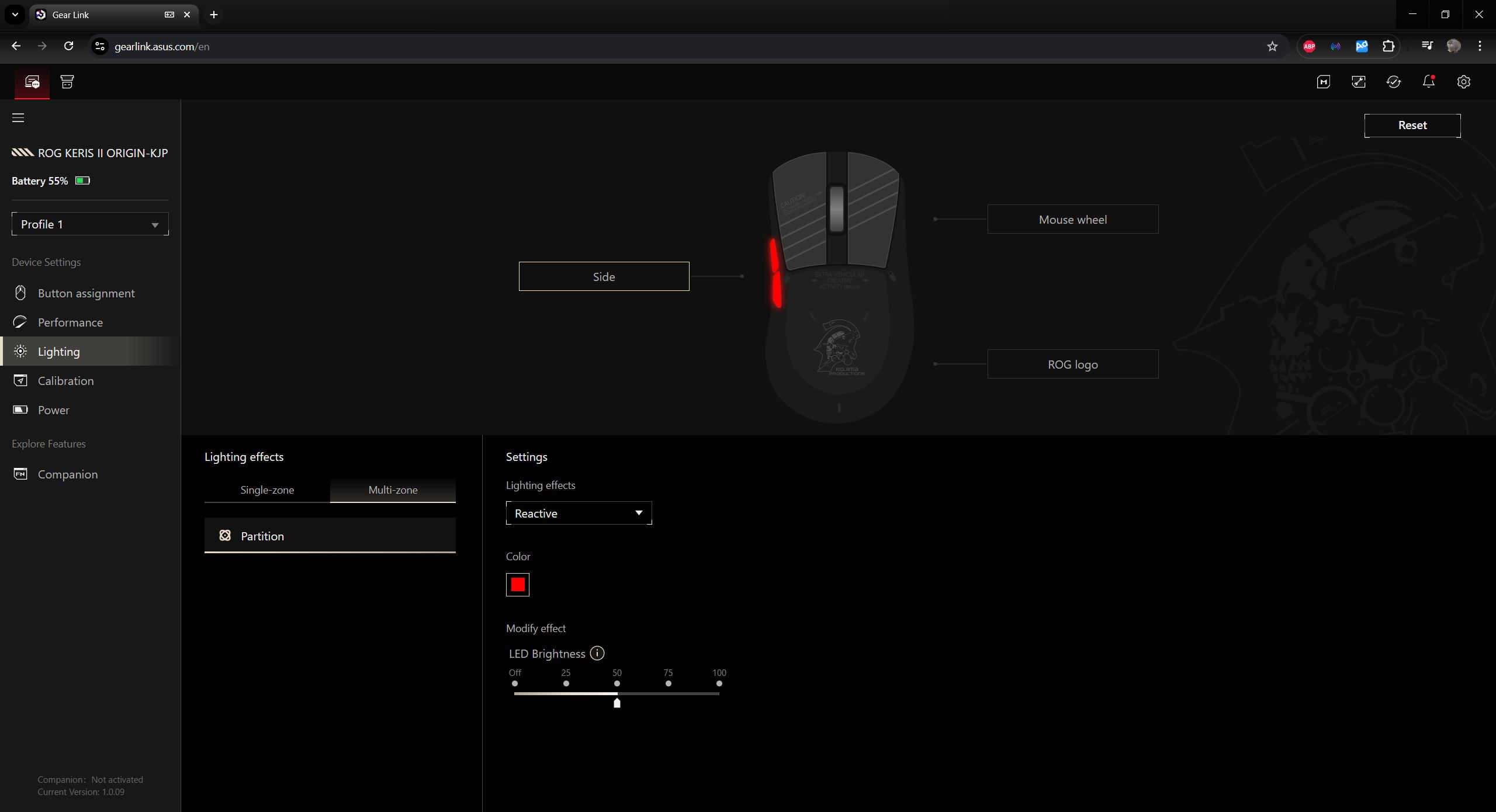




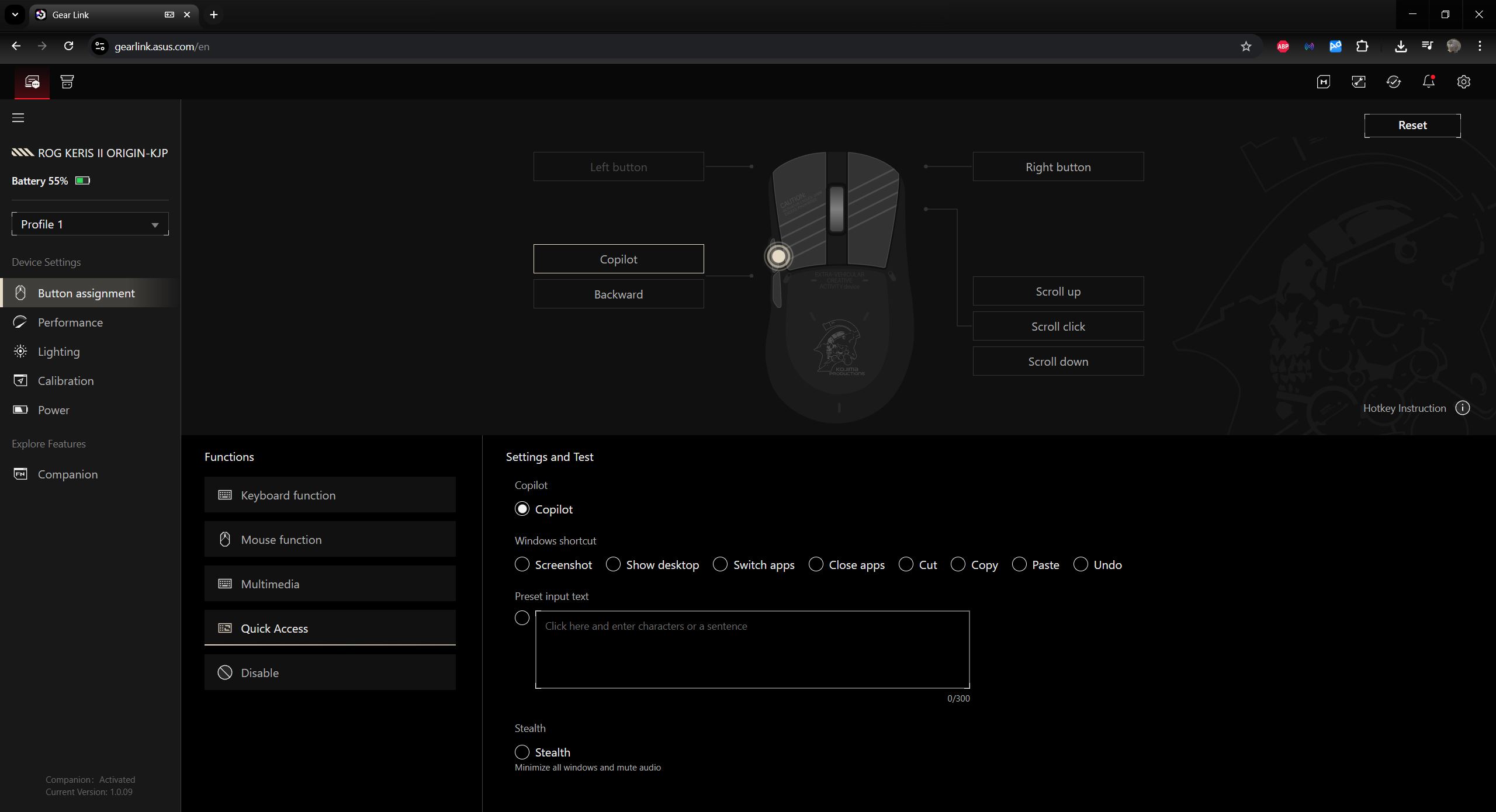

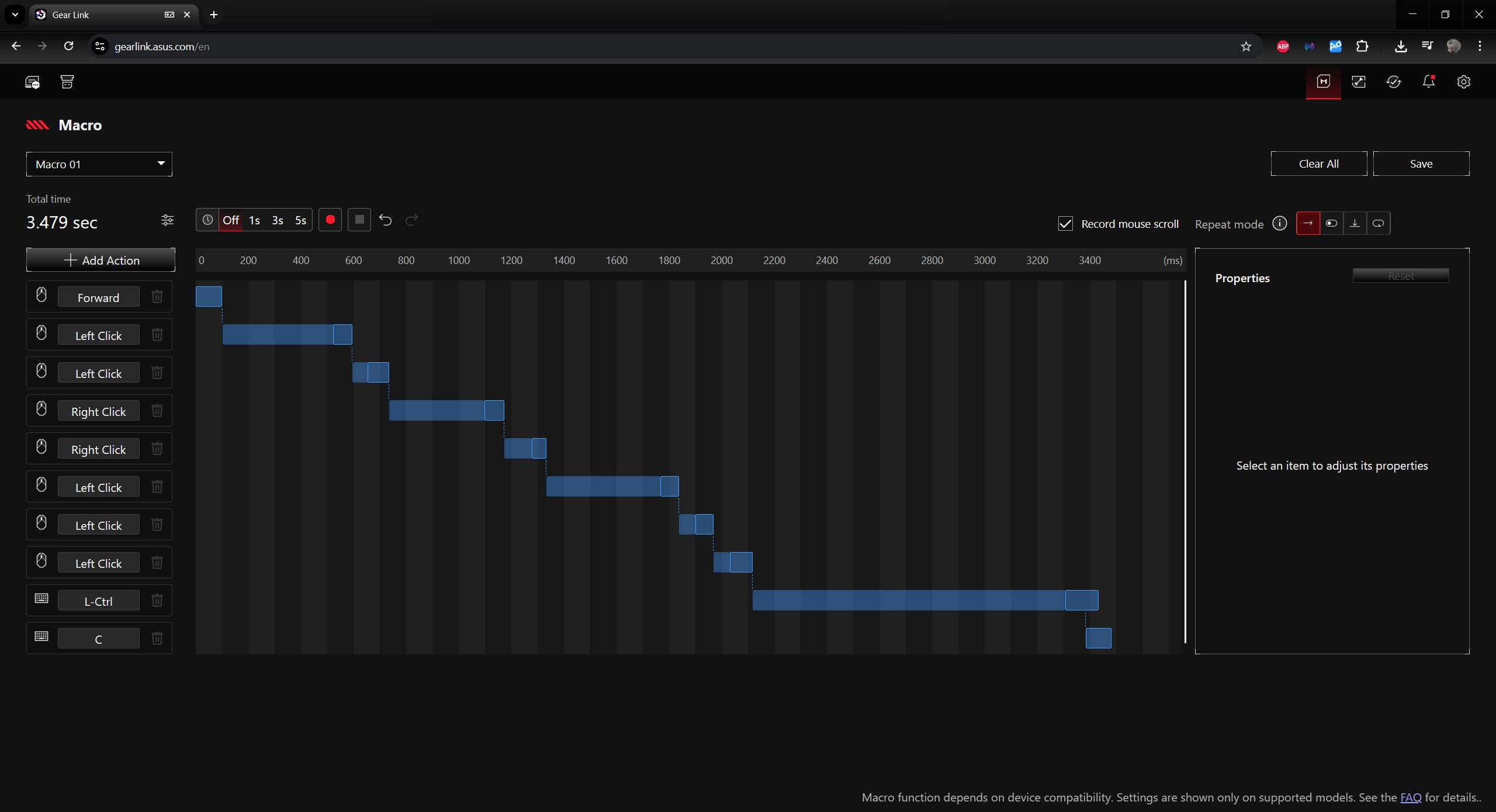







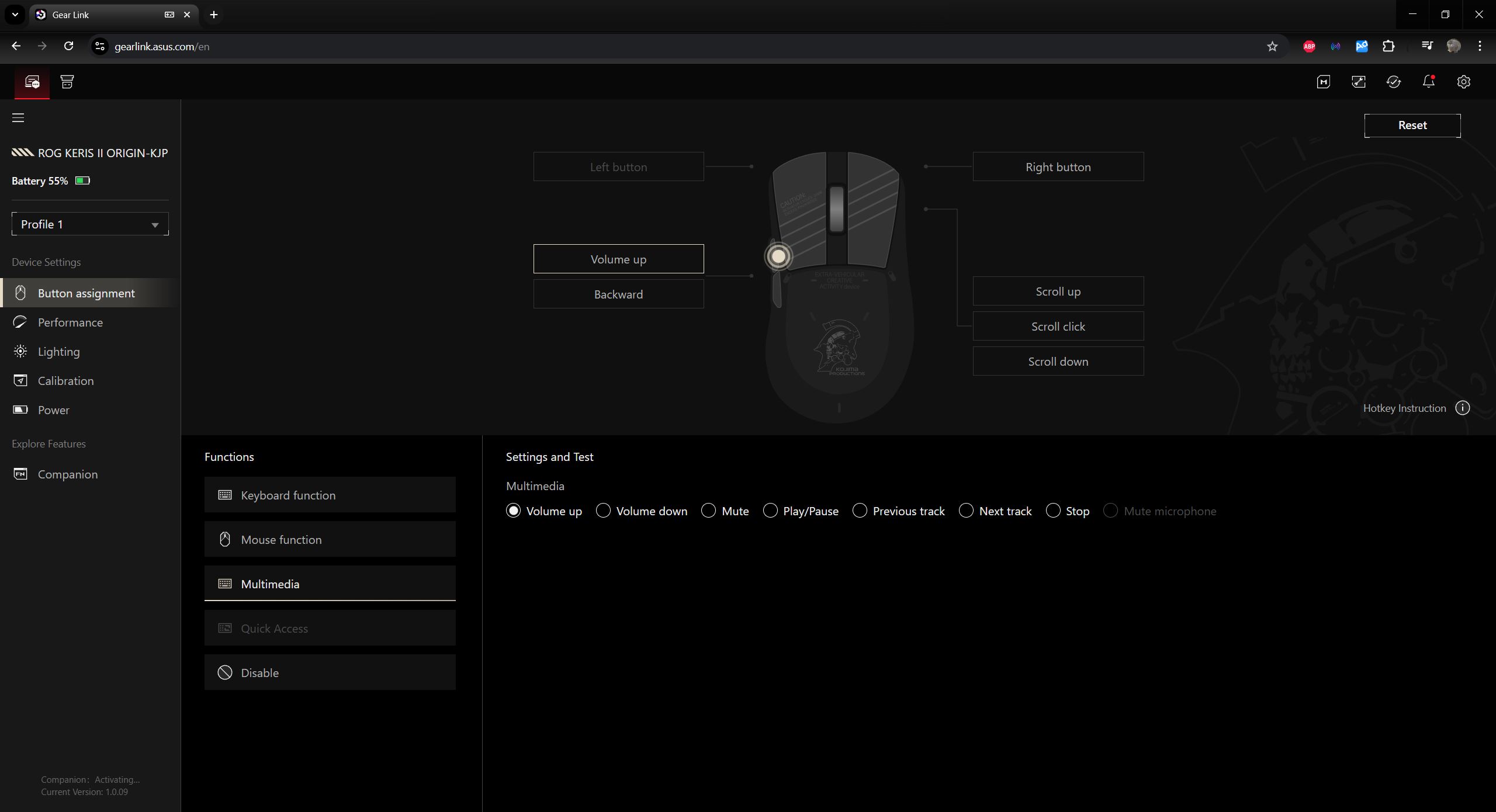
Regarding pricing, like the headset, the updated mouse is more expensive than the base model. The full price of the Keris II Origin-KJP on the official ASUS website is $222 / €189, roughly $85 / €72 higher than the original version, which seems excessive – especially considering that the ROG Polling Rate Booster adapter is not included. However, at the time of this review, a launch discount was available, reducing the price to $173 / €146. This, in my view, represents a more reasonable cost and a fairer premium for the collaboration.

My impressions of the base Keris II Origin were detailed in the previous review. In short: it’s an excellent mouse, with a comfortable shape, pleasant materials, well-positioned side buttons, and very quiet main button clicks. The same applies to the KJP version. Personally, I found the KJP model even more appealing; it feels as though the body material has become slightly more refined, even though the core material remains unchanged. Overall, in my subjective view, the Keris II Origin-KJP is a must-have – not only for fans of Kojima Productions and ROG but for anyone who values high-quality, comfortable, and distinctive mice.

Read also:
- ASUS ROG STRIX GS-BE18000 Review: Wi-Fi 7 for Gamers
- ASUS ROG Ryuo IV SLC 360 ARGB Liquid Cooling Review: Functional Elegance
ROG Flow Z13-KJP Convertible Laptop
Looking closely at Kojima’s post, the main highlight becomes apparent – the most interesting and unusual device in the KJP series. The ROG Flow Z13-KJP is a gaming convertible laptop featuring the signature futuristic Ludens-inspired design. Unfortunately, it will not be officially sold in Ukraine, so I do not have physical access to the unit and cannot show it in person. Nevertheless, it would be unwise to ignore its presence, as the entire visual identity of the KJP collection was built around this device by Shinkawa.

In terms of specifications, the ROG Flow Z13-KJP is a high-performance gaming laptop featuring an AMD Ryzen AI MAX+ 395 processor, an AMD Radeon 8060S GPU, and 128 GB of LPDDR5X RAM. It comes with a 13.4-inch ROG Nebula display and a detachable keyboard. The chassis is made from a high-quality aluminum alloy with precision CNC machining, and the package includes a custom protective carrying case reminiscent of the courier parcel from Death Stranding.


Additional photos and detailed specifications for the ROG Flow Z13-KJP are available on the official ASUS website via the provided link.
Conclusions
In summary, the new KJP series is, in my view, very well executed. All devices in the set feature a distinctive, original design that should appeal not only to fans of Kojima, Shinkawa, or ROG, but also to general gamers. The devices themselves are high-end, as was evident in my reviews of the base models, but the updated visual design gives them an added sense of premium quality. For example, the mouse provides a noticeably enhanced experience.

In my view, the KJP series has no significant drawbacks. The main point of debate is pricing: without discounts, the devices represent a noticeable markup – on average around $100 – which not everyone may find justifiable for a redesign and collaboration. However, with the launch discounts applied, the prices appear reasonable, and the premium is more defensible. Otherwise, the series offers high-quality peripherals that can be confidently recommended, and the collaboration as a whole is well executed.

Read also:
- Project Silica Explained: A Look at “Digital Immortality”
- Sony – A Ghost of Former Greatness: Why a Once-Legendary Brand Is Becoming a “Museum Exhibit”
- Top 10 Wireless Chargers for Smartphones
Where to buy